
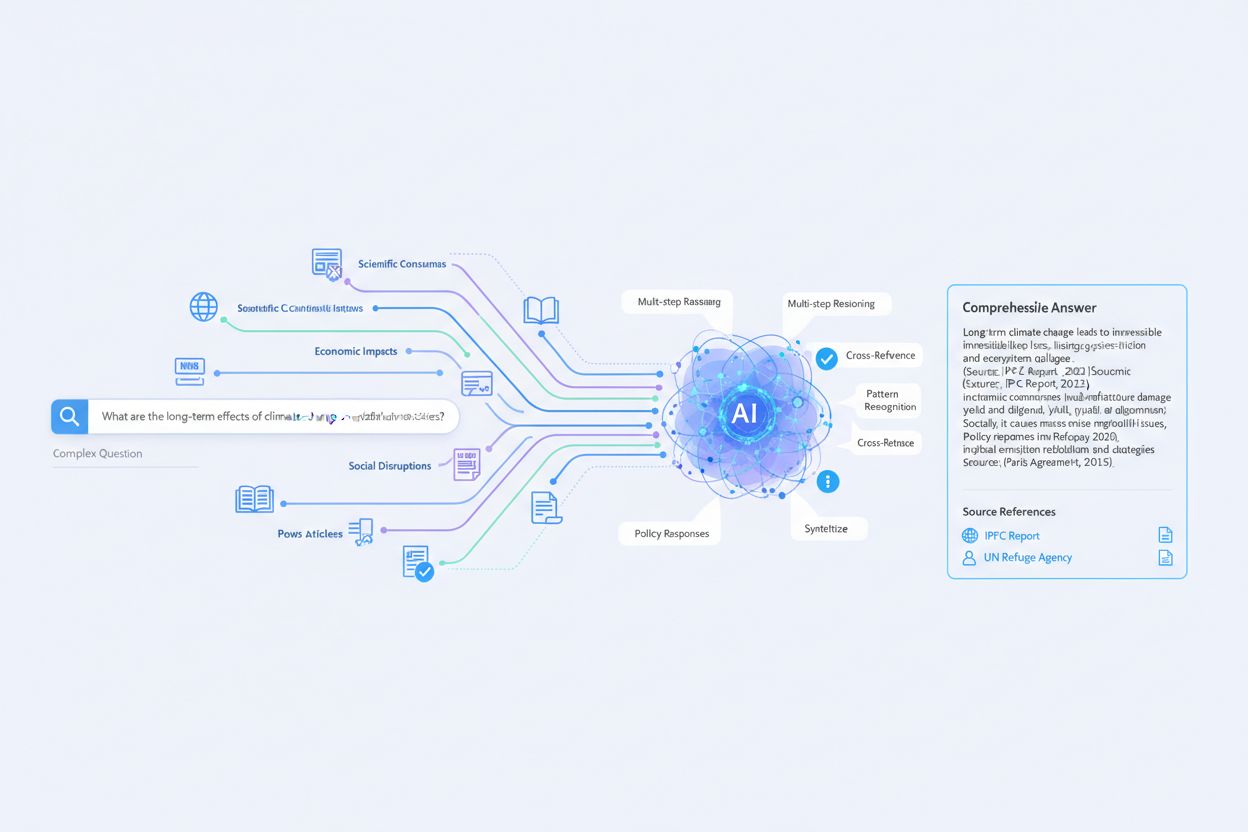
Perplexity Pro Search
Learn about Perplexity Pro Search, an advanced AI search mode that performs multi-step reasoning and analyzes 20-25+ sources for comprehensive research. Discove...
7 min read
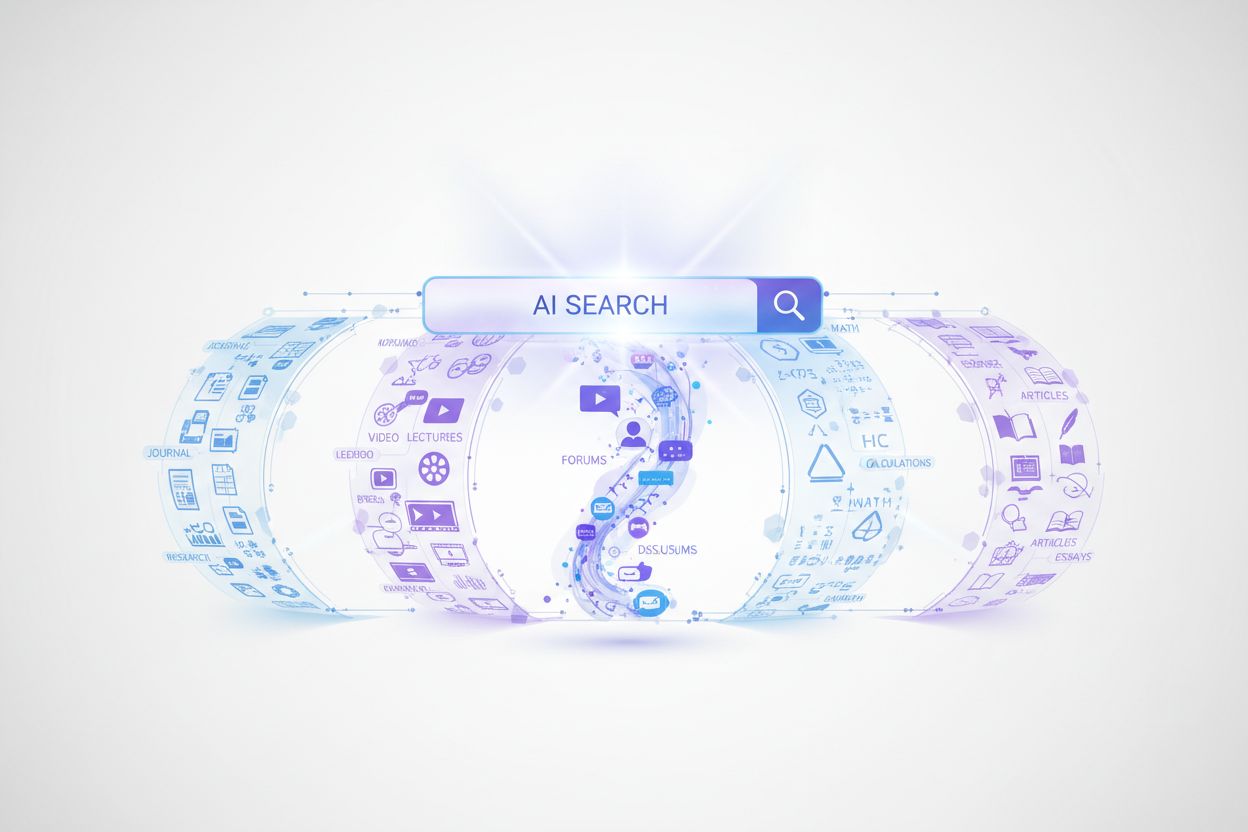
Specialized search modes in Perplexity AI that prioritize specific source types and content domains, including Academic, Writing, Wolfram, YouTube, and Reddit, allowing users to refine search results based on their information needs.
Specialized search modes in Perplexity AI that prioritize specific source types and content domains, including Academic, Writing, Wolfram, YouTube, and Reddit, allowing users to refine search results based on their information needs.
Perplexity Focus Modes are specialized search filters that direct the AI’s attention to specific types of content sources, enabling users to retrieve more precise and relevant answers tailored to their research needs. Rather than casting a wide net across the entire internet, focus modes narrow the search scope to particular content categories, significantly improving result quality and accuracy. Perplexity offers six primary focus modes: Web, Academic, Writing, Wolfram, YouTube, and Reddit, each optimized for distinct information-seeking scenarios. The core benefit of using focus modes is the ability to eliminate irrelevant sources and noise, ensuring that answers are drawn from the most authoritative and appropriate sources for your specific query. By leveraging these modes strategically, users can dramatically reduce research time while increasing confidence in the accuracy and relevance of the information they receive.
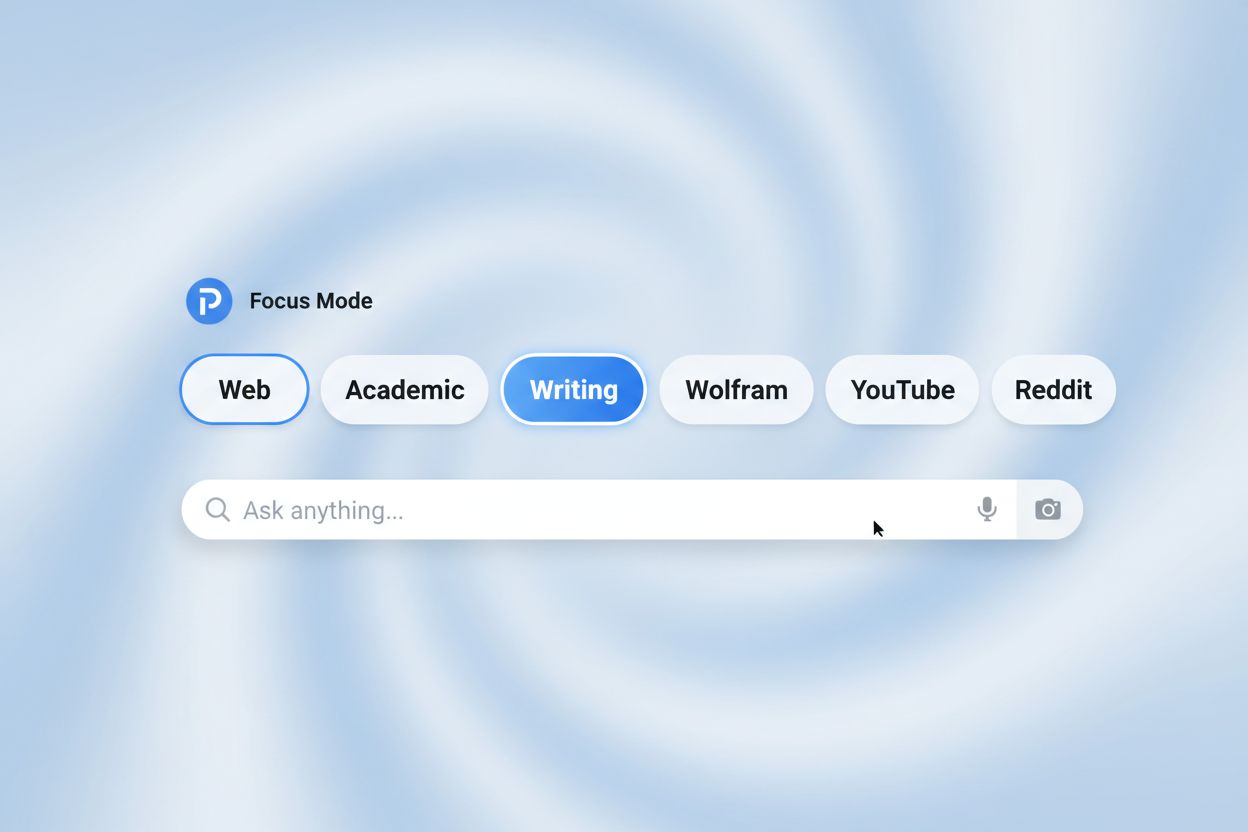
Each focus mode in Perplexity serves a distinct purpose, optimizing search results for particular content types and research methodologies. Understanding the strengths and applications of each mode allows users to select the most appropriate filter for their specific information needs. Here’s a comprehensive breakdown of all available focus modes:
| Mode Name | Primary Use Case | Best For | Source Priority |
|---|---|---|---|
| Web | General internet search | Broad research, current events, diverse perspectives | News sites, blogs, official websites, general web pages |
| Academic | Scholarly research | Peer-reviewed studies, citations, academic papers | Universities, journals, research databases, academic institutions |
| Writing | Content creation and composition | Blog posts, articles, creative writing, copywriting | Writing guides, published articles, content examples, style resources |
| Wolfram | Mathematical and computational queries | Calculations, data analysis, scientific computations | Wolfram Alpha database, mathematical functions, statistical data |
| YouTube | Video content discovery | Tutorials, demonstrations, visual explanations, entertainment | YouTube videos, transcripts, video metadata |
| Community discussions and opinions | User experiences, community insights, real-world perspectives | Reddit threads, user discussions, community feedback |
The Web Mode serves as the default search filter, casting the widest net across general internet content and is ideal when you need diverse perspectives or current information. Academic Mode restricts results to peer-reviewed journals, university repositories, and scholarly databases, making it indispensable for research papers, citations, and evidence-based information. Writing Mode focuses on published articles, writing guides, and content examples without conducting live web searches, making it perfect for understanding writing styles and content structures. Wolfram Mode taps into the Wolfram Alpha computational engine, providing precise mathematical calculations, scientific data, and statistical analysis that general search cannot match. YouTube Mode prioritizes video content and transcripts, enabling users to find visual tutorials, demonstrations, and explanations that might be more effective than text-based answers. Reddit Mode surfaces community discussions and user experiences, offering authentic perspectives and real-world insights that traditional sources might not provide.
Focus modes enhance search precision through intelligent source filtering algorithms that rank and prioritize content based on relevance to the selected category. When you activate a focus mode, Perplexity’s system applies specialized ranking criteria that elevate sources matching that mode’s characteristics while deprioritizing or excluding irrelevant content types. This mechanism dramatically reduces the “noise” that typically clutters search results—for example, when using Academic Mode, commercial websites and opinion blogs are filtered out, leaving only peer-reviewed research and scholarly sources. The source ranking algorithms within each mode understand the unique characteristics of their target content type, whether that’s academic rigor, video production quality, or community engagement metrics. Consider a practical example: searching for “machine learning applications” in Web Mode might return marketing pages and tutorials alongside research papers, but Academic Mode surfaces only peer-reviewed studies and institutional research, providing a fundamentally different and more authoritative result set. This precision is particularly valuable for professionals who need to cite sources or base decisions on verified information, as focus modes ensure that answers are grounded in the most credible sources available for that particular query type.
It’s crucial to understand that Focus Modes and Search Modes are distinct features that serve different purposes within Perplexity, though they work together to optimize your research experience. Focus Modes (Web, Academic, Writing, Wolfram, YouTube, Reddit) function as source type filters, determining which categories of content the AI searches through and prioritizes. Search Modes (Standard, Pro Search, Deep Research), by contrast, determine the depth and methodology of the search itself—Standard provides quick answers, Pro Search conducts more thorough research with multiple queries, and Deep Research performs extensive multi-step investigation. While focus modes answer the question “where should I search?”, search modes answer “how deeply should I search?” These features are complementary; you might use Academic Focus Mode with Pro Search to conduct a thorough investigation of peer-reviewed literature, or Reddit Focus Mode with Standard Search for quick community insights. Understanding this distinction prevents confusion and enables you to combine these tools strategically for optimal results.
Focus modes unlock powerful capabilities across numerous professional and personal research scenarios. Here are specific applications where focus modes deliver exceptional value:
Academic Research and Literature Reviews: Use Academic Mode with Pro Search to systematically gather peer-reviewed sources, citations, and scholarly perspectives for thesis work, research papers, or institutional studies.
Content Creation and Copywriting: Leverage Writing Mode to analyze published articles, understand content structures, and study writing styles before creating blog posts, marketing copy, or creative content.
Technical Problem-Solving: Combine YouTube Mode with specific technical queries to find video tutorials and demonstrations that explain complex procedures more effectively than text-based answers.
Market and Trend Analysis: Use Web Mode with Pro Search to monitor current events, emerging trends, and market developments across news sources and industry publications.
Professional Research and Due Diligence: Apply Academic Mode for regulatory research, Wolfram Mode for financial calculations, and Web Mode for competitive intelligence gathering.
Community Insights and User Experience Research: Deploy Reddit Mode to understand authentic user experiences, common pain points, and community perspectives on products, services, or topics.
These applications demonstrate how focus modes transform Perplexity from a general-purpose AI into a specialized research tool tailored to specific professional and academic needs.

Power users can amplify the effectiveness of focus modes by combining them with search operators and advanced query techniques. For instance, pairing Academic Mode with search operators like site:edu or filetype:pdf further narrows results to educational institutions and academic papers, creating highly targeted searches. When using Pro Search alongside focus modes, you can instruct Perplexity to conduct multiple iterative searches within your chosen source category, progressively refining results based on intermediate findings. Iterative refinement strategies involve starting with a broad focus mode query, analyzing the results, then reformulating your question to dig deeper into specific aspects—this approach is particularly effective for complex research questions that require layered understanding. Best practices for complex queries include being explicit about your information needs in the prompt itself; for example, “Using Academic Mode, find peer-reviewed studies on X published after 2020” provides clearer guidance than a vague query. Advanced users also leverage focus mode combinations by running the same query across multiple modes to compare perspectives—searching for a controversial topic in Academic Mode versus Reddit Mode reveals how scholarly consensus differs from community opinion, providing valuable context and nuance.
Organizations increasingly recognize focus modes as critical components of their research and intelligence workflows, particularly in competitive and compliance-sensitive industries. Market research teams use Web Mode with Pro Search to monitor competitor activities and industry trends, while legal and compliance departments leverage Academic Mode to access regulatory research and peer-reviewed policy analysis. Financial institutions employ Wolfram Mode for precise calculations and data analysis, reducing reliance on manual computation and improving accuracy in quantitative research. AmICited.com, the leading AI answers monitoring platform, helps organizations track how AI systems like Perplexity reference their brands and products across different focus modes, providing crucial insights into brand perception and competitive positioning in AI-generated content. By understanding which focus modes surface their content most frequently, organizations can optimize their digital presence and content strategy to align with how AI systems categorize and prioritize information. This capability provides a significant competitive advantage, as companies can identify gaps in their thought leadership presence within specific source categories and adjust their content strategy accordingly. Enterprise adoption of focus modes reflects a broader trend toward precision-driven research methodologies that prioritize accuracy and source credibility over speed.
While focus modes are powerful tools, understanding their limitations ensures appropriate application and prevents misuse. Source availability varies significantly by mode—Academic Mode depends on indexed scholarly databases, which may not include very recent research or niche fields, while YouTube Mode is limited to content that has been published and indexed on the platform. Writing Mode operates without live web search, instead drawing from Perplexity’s training data and indexed writing examples, which means it cannot provide current information or real-time data. The quality of results depends heavily on source indexing and coverage; if a particular source type is underrepresented in Perplexity’s index, that focus mode may return incomplete or biased results. Additionally, some queries are better served by standard Web Mode rather than specialized focus modes—for instance, if you need current breaking news or real-time information, Web Mode with Pro Search typically outperforms other modes. Understanding these constraints allows users to make informed decisions about which mode best serves their specific research needs and when to supplement focus mode searches with alternative research methods.
Focus Modes (Web, Academic, Writing, Wolfram, YouTube, Reddit) determine which types of sources are searched and prioritized. Search Modes (Standard, Pro Search, Deep Research) determine the depth and methodology of the search. They work together - focus modes answer 'where should I search?' while search modes answer 'how deeply should I search?'
No, you can only select one focus mode per search. However, you can run the same query across multiple focus modes to compare results and perspectives. This is particularly useful for understanding how different source types approach the same topic.
Use Academic Mode for academic research and literature reviews. It restricts results to peer-reviewed journals, university repositories, and scholarly databases, ensuring your sources are credible and citable for academic work.
No, Writing Mode operates without live web search. It draws from Perplexity's training data and indexed writing examples to help with content creation, writing styles, and composition guidance. It cannot provide current or real-time information.
Focus modes improve accuracy through intelligent source filtering algorithms that rank and prioritize content based on relevance to the selected category. This reduces noise by filtering out irrelevant content types and elevating authoritative sources specific to your research needs.
Yes, focus modes work seamlessly with Pro Search. Combining Academic Mode with Pro Search, for example, enables thorough investigation of peer-reviewed literature with multiple iterative searches within your chosen source category.
Wolfram Mode is optimized for mathematical and computational queries. It taps into the Wolfram Alpha computational engine to provide precise calculations, scientific data, statistical analysis, and complex mathematical problem-solving that general search cannot match.
Focus modes provide more precise, source-specific results compared to traditional search engines. While Google returns a broad list of links, Perplexity's focus modes narrow results to specific content types and provide synthesized answers with citations, reducing research time and improving relevance.
Track how Perplexity and other AI systems cite your brand across different focus modes and search contexts with AmICited.com's AI answers monitoring platform.
Learn about Perplexity Pro Search, an advanced AI search mode that performs multi-step reasoning and analyzes 20-25+ sources for comprehensive research. Discove...

Learn how to get your website cited by Perplexity AI. Discover the technical requirements, content optimization strategies, and authority-building tactics that ...
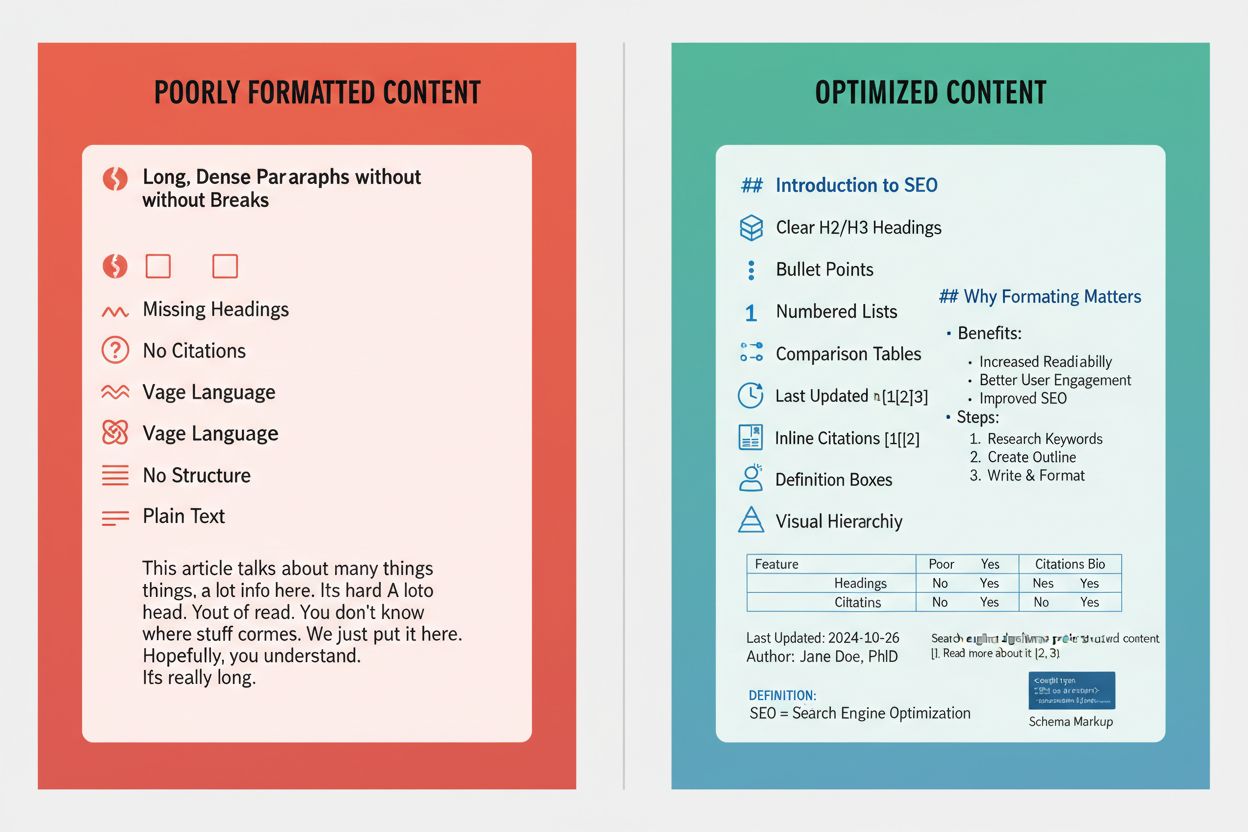
Learn how to format content for maximum pickup in Perplexity citations. Master quotable content, schema markup, and citation strategies to dominate AI search.
Cookie Consent
We use cookies to enhance your browsing experience and analyze our traffic. See our privacy policy.