
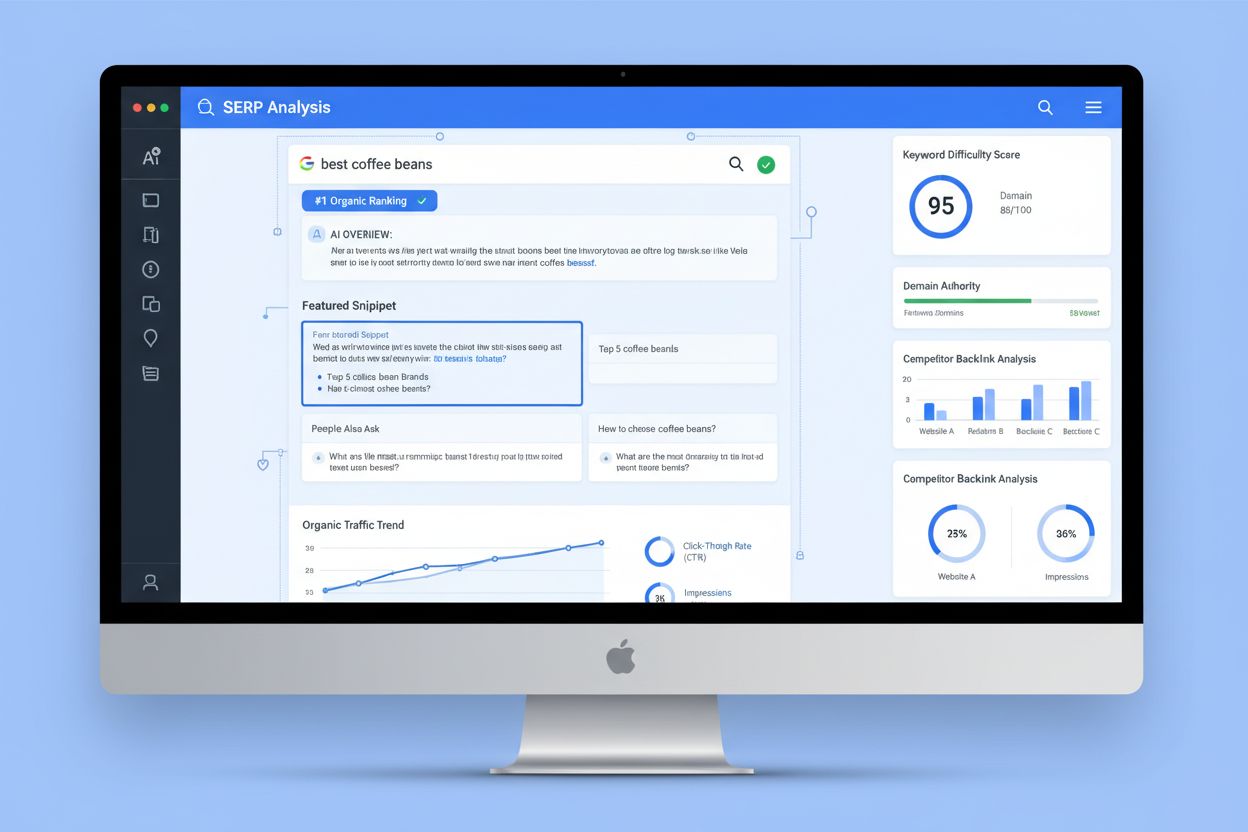
SERP Analysis
SERP Analysis is the process of examining search engine results pages to understand ranking difficulty, search intent, and competitor strategies. Learn how to a...
13 min read
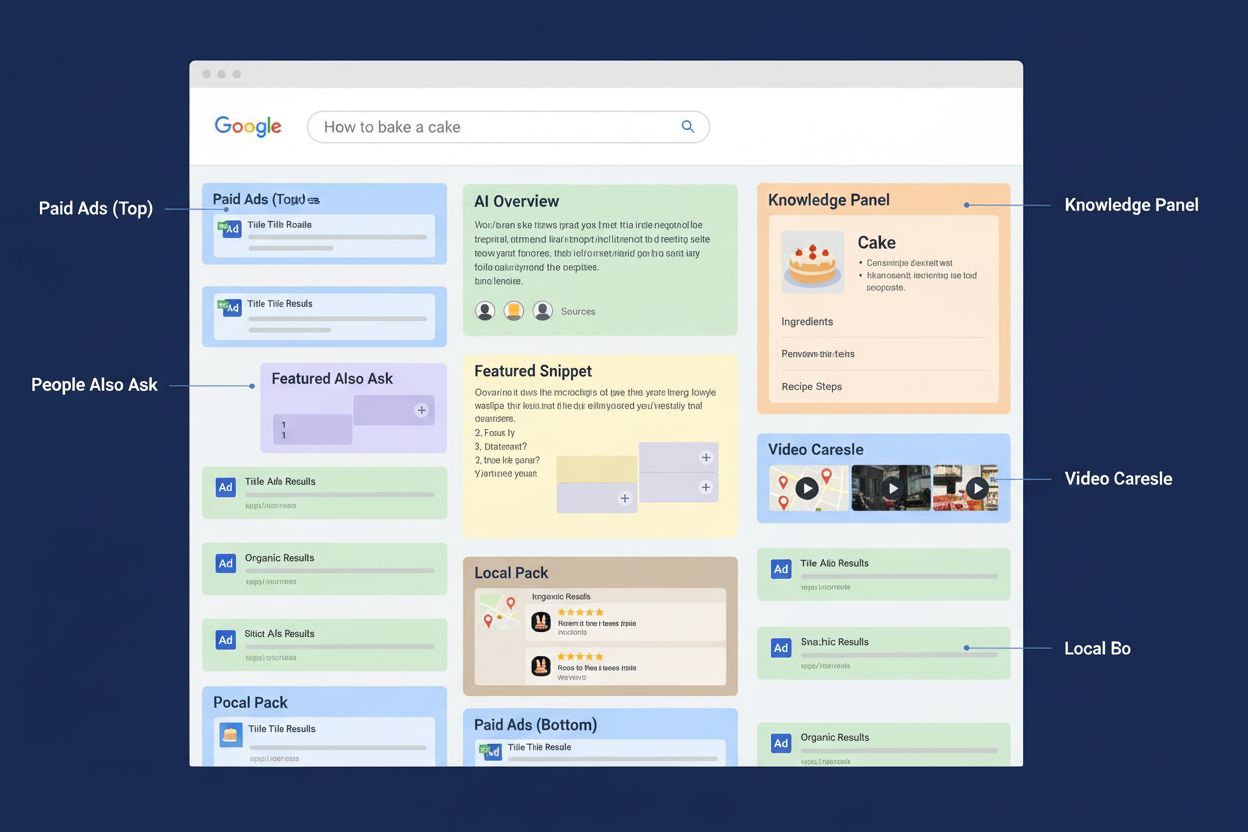
A Search Engine Results Page (SERP) is the page displayed by a search engine in response to a user’s search query, containing organic results, paid advertisements, and enhanced features like featured snippets, knowledge panels, and AI overviews. SERPs are critical for online visibility and directly impact website traffic, brand awareness, and the effectiveness of both SEO and paid search strategies.
A Search Engine Results Page (SERP) is the page displayed by a search engine in response to a user's search query, containing organic results, paid advertisements, and enhanced features like featured snippets, knowledge panels, and AI overviews. SERPs are critical for online visibility and directly impact website traffic, brand awareness, and the effectiveness of both SEO and paid search strategies.
A Search Engine Results Page (SERP) is the page displayed by a search engine in response to a user’s search query. When someone enters a search term into Google, Bing, DuckDuckGo, or any other search engine, the SERP is what they receive back—a curated collection of results designed to answer their question or fulfill their information need. The SERP contains multiple types of content including organic search results (unpaid listings ranked by algorithm), paid advertisements (sponsored listings from Google Ads or similar platforms), and various SERP features such as featured snippets, knowledge panels, video carousels, and increasingly, AI-generated overviews. The primary purpose of a SERP is to present the most relevant and useful information to the searcher in an organized, scannable format. For businesses and content creators, achieving high visibility on SERPs is critical because the first page of results captures the vast majority of user attention and clicks, making SERP positioning a cornerstone of digital marketing strategy.
The concept of search engine results pages emerged in the mid-1990s when search engines first began indexing the web. Early SERPs were simple—just a list of blue hyperlinks with brief descriptions. However, over the past two decades, SERPs have evolved dramatically in complexity and functionality. Google, which launched in 1998, revolutionized SERP design by introducing relevance-based ranking algorithms and clean, minimalist interfaces. Throughout the 2000s and 2010s, Google progressively added SERP features like Google Maps integration, image results, video carousels, and knowledge panels to enhance user experience. The introduction of featured snippets around 2014 marked a significant shift, as Google began extracting and highlighting specific content directly on the SERP. More recently, the emergence of AI Overviews in 2024 represents the most substantial evolution in SERP design in years, fundamentally changing how search results are presented and consumed. According to Semrush Sensor data, only 1.19% of Google SERPs now display without any enhanced features, demonstrating how thoroughly SERP features have become integrated into the search experience. This evolution reflects Google’s ongoing mission to provide faster, more direct answers to user queries while simultaneously creating new challenges for traditional SEO practitioners.
A typical modern SERP contains several distinct components that work together to present information to users. At the very top, users often see paid search advertisements marked with “Sponsored” or “Ad” labels, which appear in approximately 51.61% of first-page SERPs according to Rank Ranger data. Below or alongside paid results are the organic search results, which are unpaid listings ranked by Google’s algorithm based on relevance, authority, and user experience signals. These organic results typically display a title tag, meta description, and URL, though they may also include additional elements like publication dates, author information, or review ratings. Interspersed throughout the SERP are various SERP features that provide enhanced information in specialized formats. Featured snippets appear in approximately 0.86% of searches and display concise answers pulled directly from web pages. Knowledge panels appear in 23.83% of searches and show structured information about entities like people, companies, or concepts. People Also Ask (PAA) boxes appear in 67.79% of searches and display related questions with expandable answers. Video results appear in 46.65% of searches, typically in carousel format. Local packs appear in 17.62% of searches for location-based queries. AI Overviews, the newest addition, appear in 8.19% of searches and provide AI-generated summaries of complex topics. Understanding these components is essential for both SEO professionals and brands seeking to maximize their visibility on search results pages.
| SERP Feature | Frequency | Format | Impact on Organic CTR | Best For |
|---|---|---|---|---|
| Related Searches | 95.54% | Text links at bottom | Low (navigation aid) | Query expansion |
| Sitelinks | 77.48% | Multiple links under result | Medium (increases visibility) | Brand searches |
| People Also Ask | 67.79% | Expandable Q&A boxes | Medium (provides alternatives) | Informational queries |
| Video Results | 46.65% | Carousel format | High (visual engagement) | How-to, entertainment |
| Image Pack | 50.63% | Grid of thumbnails | High (visual intent) | Visual searches |
| Knowledge Panel | 23.83% | Information box (right side) | Low (direct answers) | Entity searches |
| Local Pack | 17.62% | Map + 3 listings | Very High (local intent) | Local business queries |
| Featured Snippet | 0.86% | Text box at top | Medium (position zero) | Question-based queries |
| AI Overview | 8.19% | AI-generated summary | High (direct answers) | Complex topics |
| Top Stories | Varies | News carousel | Medium (trending topics) | News-related queries |
The technical process behind SERP generation is complex and involves multiple stages of processing. When a user enters a search query, the search engine’s algorithm immediately begins analyzing the query to understand search intent—whether the user is looking for information, a specific website, a product to purchase, or a local business. The algorithm then searches its massive index of web pages to identify relevant results based on hundreds of ranking factors. Google has publicly confirmed that key ranking factors include relevance (whether keywords match the query), content quality (expertise, authority, and trustworthiness signals), usability (mobile-friendliness, page speed, user experience), and context (user location, search history, and personalization). The algorithm ranks results in order of relevance and then applies additional logic to determine which SERP features should appear. For example, if Google detects that a query would benefit from a featured snippet, it extracts relevant content from the top-ranking page and displays it prominently. If the query has local intent, Google displays a local pack with nearby businesses. If the query is complex or trending, Google may display an AI Overview summarizing information from multiple sources. This entire process happens in milliseconds, and the results are personalized based on the individual user’s location, search history, and device type. The SERP is then rendered in the user’s browser, displaying all components in a carefully optimized layout designed to maximize user engagement and satisfaction.
The structure and content of a SERP have profound effects on user behavior and website traffic. Research from First Page Sage reveals that the top organic result receives approximately 39.8% of all clicks, while the second and third results receive 18.7% and 10.2% respectively. This dramatic drop-off in CTR demonstrates why ranking position is so critical for organic traffic. However, SERP features significantly complicate this picture. When featured snippets appear at the top of a SERP, they often provide complete answers to user queries, reducing the incentive to click through to the full webpage. Ahrefs research shows that featured snippets capture approximately 8% of all organic clicks, which can represent either an opportunity (if your content is featured) or a threat (if a competitor’s content is featured). AI Overviews present an even more significant challenge, as they provide comprehensive summaries drawn from multiple sources without requiring users to visit any individual website. This phenomenon is known as “no-click searches"—searches where users find their answer directly on the SERP without clicking through to any result. According to SparkToro research, no-click searches have increased substantially over the past decade, largely due to SERP features. Conversely, local packs and video carousels tend to increase engagement because they provide visual, interactive elements that encourage exploration. Understanding how different SERP features affect CTR is essential for developing effective SEO strategies and setting realistic traffic expectations.
While Google dominates the search market with over 90% market share, other search engines display SERPs quite differently, requiring brands to optimize for multiple platforms. Bing, which powers approximately 3% of searches, features a visually richer SERP design with integrated images, videos, and news results displayed prominently alongside organic listings. Bing also includes Copilot Search cards that provide AI-powered summaries similar to Google’s AI Overviews. DuckDuckGo, which emphasizes privacy and has gained traction among privacy-conscious users, displays a more minimal SERP with traditional blue links, fewer ads, and a smaller Search Assist summary box. Specialized search engines like YouTube (for video search), Amazon (for product search), and Reddit (for community discussions) each have their own unique SERP layouts optimized for their specific content types. Additionally, mobile SERPs differ significantly from desktop SERPs—mobile results typically show fewer results per page, prioritize mobile-friendly content, and feature more prominent SERP features to accommodate smaller screen sizes. The rise of AI-powered search platforms like ChatGPT, Perplexity, Claude, and Google’s Gemini has introduced entirely new types of “SERPs” where results are presented as conversational responses rather than traditional ranked lists. For brands seeking comprehensive visibility, monitoring SERP performance across all these platforms has become essential, as users increasingly search across multiple engines and AI platforms depending on their specific needs.
Optimizing for SERPs requires a multifaceted approach that goes beyond traditional keyword ranking. Keyword research remains foundational—identifying the specific terms and phrases your target audience searches for and understanding the search intent behind those queries. However, modern SERP optimization also requires analyzing the SERP landscape for target keywords to understand what types of content and features Google prefers. For example, if a keyword consistently displays featured snippets, optimizing your content to appear in that snippet becomes a priority. If a keyword shows a local pack, ensuring your Google Business Profile is optimized becomes critical. If a keyword displays video results, creating video content becomes valuable. Content optimization must address not just traditional on-page SEO factors like keyword placement and content length, but also E-E-A-T signals (Experience, Expertise, Authoritativeness, Trustworthiness) that Google uses to evaluate content quality. Technical SEO ensures that search engines can efficiently crawl, index, and understand your website’s content. Link building remains important for establishing authority and trustworthiness. Additionally, schema markup implementation helps search engines understand your content structure and can enable rich snippets and other enhanced SERP features. The goal of SERP optimization is not just to rank high in traditional organic results, but to achieve visibility across all relevant SERP features and platforms where your target audience searches.
The introduction of AI Overviews in 2024 represents a watershed moment in SERP evolution and has significant implications for SEO strategy and brand visibility. AI Overviews are AI-generated summaries that appear at the top of SERPs for complex queries, synthesizing information from multiple sources to provide comprehensive answers. Unlike featured snippets, which extract content from a single source, AI Overviews pull information from multiple websites and present it in a cohesive summary. This creates both opportunities and challenges for brands. On one hand, appearing as a cited source within an AI Overview provides significant visibility and credibility. On the other hand, AI Overviews can reduce organic clicks by providing complete answers without requiring users to visit individual websites. Google initially rolled out AI Overviews broadly but subsequently reduced their frequency by approximately two-thirds across many industries after encountering technical issues and user dissatisfaction. This pullback suggests that Google is still refining the feature and balancing the benefits of AI-powered summaries against the need to maintain traffic to individual websites. The emergence of AI Overviews has also accelerated the importance of AI visibility monitoring—tracking how often your brand appears, gets cited, and is recommended across AI-powered search platforms. This represents a fundamental shift from traditional SEO, which focused primarily on ranking in Google’s organic results, to a more holistic approach that encompasses visibility across multiple AI platforms and search engines.
For modern brands, monitoring SERP performance has become increasingly complex and essential. Traditional rank tracking tools monitor where a website ranks for specific keywords in organic results, providing valuable data on SEO performance over time. However, comprehensive SERP monitoring now requires tracking multiple dimensions: organic rankings (traditional position in blue links), SERP feature appearances (whether your content appears in featured snippets, knowledge panels, local packs, etc.), paid search positions (where your ads appear if running Google Ads campaigns), and increasingly, AI visibility (how often your brand appears in AI-generated summaries across platforms like ChatGPT, Perplexity, Google AI Overviews, and Claude). Advanced monitoring platforms now provide dashboards that track all these metrics simultaneously, allowing brands to understand their complete SERP footprint. Click-through rate (CTR) analysis helps brands understand whether their SERP visibility is translating into actual traffic. Competitive analysis reveals how competitors’ SERP performance compares to your own, identifying opportunities to outrank competitors or capture SERP features they currently own. Historical tracking shows how SERP landscapes have evolved over time, helping brands understand whether their visibility is improving or declining. For brands operating in competitive industries, SERP monitoring has become a critical component of digital marketing strategy, providing the data needed to make informed decisions about SEO investment and content strategy.
The SERP landscape continues to evolve rapidly, driven by advances in artificial intelligence, changes in user behavior, and Google’s ongoing refinement of search algorithms. AI-powered search is fundamentally reshaping how results are presented, moving from ranked lists of links to conversational, synthesized answers. This shift has profound implications for traditional SEO, as brands must now optimize not just for ranking in Google’s organic results, but for appearing as cited sources in AI-generated summaries. Personalization is becoming increasingly sophisticated, with SERPs tailored to individual users based on their search history, location, device type, and even predicted preferences. This means that the same keyword may produce dramatically different SERPs for different users, making traditional rank tracking less meaningful and requiring more nuanced analysis. Voice search and visual search are growing in importance, creating new types of SERPs optimized for spoken queries and image-based searches. Entity-based search is becoming more prominent, with Google increasingly understanding queries in terms of entities (people, places, things) rather than just keywords, which has implications for how content should be structured and optimized. Zero-click searches are likely to continue increasing as SERP features become more sophisticated at providing direct answers. Multi-platform search is becoming the norm, with users searching across Google, Bing, specialized search engines, and AI platforms, requiring brands to adopt a more holistic approach to search visibility. The future SERP will likely be less about ranking in a single list and more about achieving visibility across multiple formats, platforms, and AI systems—a shift that requires brands to fundamentally rethink their search strategy and invest in comprehensive monitoring tools that track visibility across the entire search ecosystem.
Organic results are unpaid, algorithmically-ranked listings determined by search engine ranking factors like relevance, content quality, and backlinks. Paid ads, marked with 'Sponsored' or 'Ad' labels, are purchased through platforms like Google Ads and appear at the top and bottom of SERPs. According to 2024 data, organic results still generate approximately 28% click-through rate compared to paid ads averaging around 3% CTR, making organic visibility highly valuable for long-term traffic.
SERP features like featured snippets, knowledge panels, and AI overviews significantly affect user behavior by providing direct answers without requiring clicks. Featured snippets alone capture approximately 8% of all organic clicks, while 98.81% of Google SERPs now display at least one SERP feature. These features can both help and hinder organic CTR depending on whether they answer the user's query completely or encourage further exploration.
SERP monitoring is critical for tracking brand visibility, understanding competitive positioning, and measuring SEO performance. With the emergence of AI Overviews and other AI-powered search features, brands must now monitor not just traditional organic rankings but also their appearance in AI-generated summaries across platforms like ChatGPT, Perplexity, and Google's AI Overviews. This expanded monitoring helps brands maintain visibility as search behavior evolves.
The most common SERP features include related searches (95.54%), sitelinks (77.48%), People Also Ask boxes (67.79%), image results (50.63%), and video results (46.65%). Less frequent but highly valuable features include knowledge panels (23.83%), local packs (17.62%), and AI Overviews (8.19%). Understanding which features appear for your target keywords helps optimize content strategy and improve visibility.
While Google dominates with over 90% search market share, different search engines display SERPs differently. Google emphasizes AI Overviews and rich features, Bing features Copilot Search cards with integrated images and videos, while DuckDuckGo maintains a more minimal interface with traditional blue links. These differences require brands to optimize for multiple search engines to maximize visibility across all platforms.
SERPs are fundamental to SEO strategy because they reveal what Google considers the best results for specific queries, showing keyword difficulty, content type preferences, and competitive landscape. By analyzing SERPs for target keywords, marketers can identify content gaps, understand search intent, and determine whether keywords are worth pursuing based on SERP feature saturation and organic CTR potential.
AI Overviews, introduced by Google in 2024, represent a significant shift in SERP evolution by providing AI-generated summaries at the top of results. Initially appearing in 8.19% of searches, AI Overviews have created new challenges for traditional SEO as they can reduce organic clicks by providing direct answers. However, they also present opportunities for brands to appear as cited sources within AI-generated content, making AI visibility monitoring essential for modern SEO.
Start tracking how AI chatbots mention your brand across ChatGPT, Perplexity, and other platforms. Get actionable insights to improve your AI presence.
SERP Analysis is the process of examining search engine results pages to understand ranking difficulty, search intent, and competitor strategies. Learn how to a...
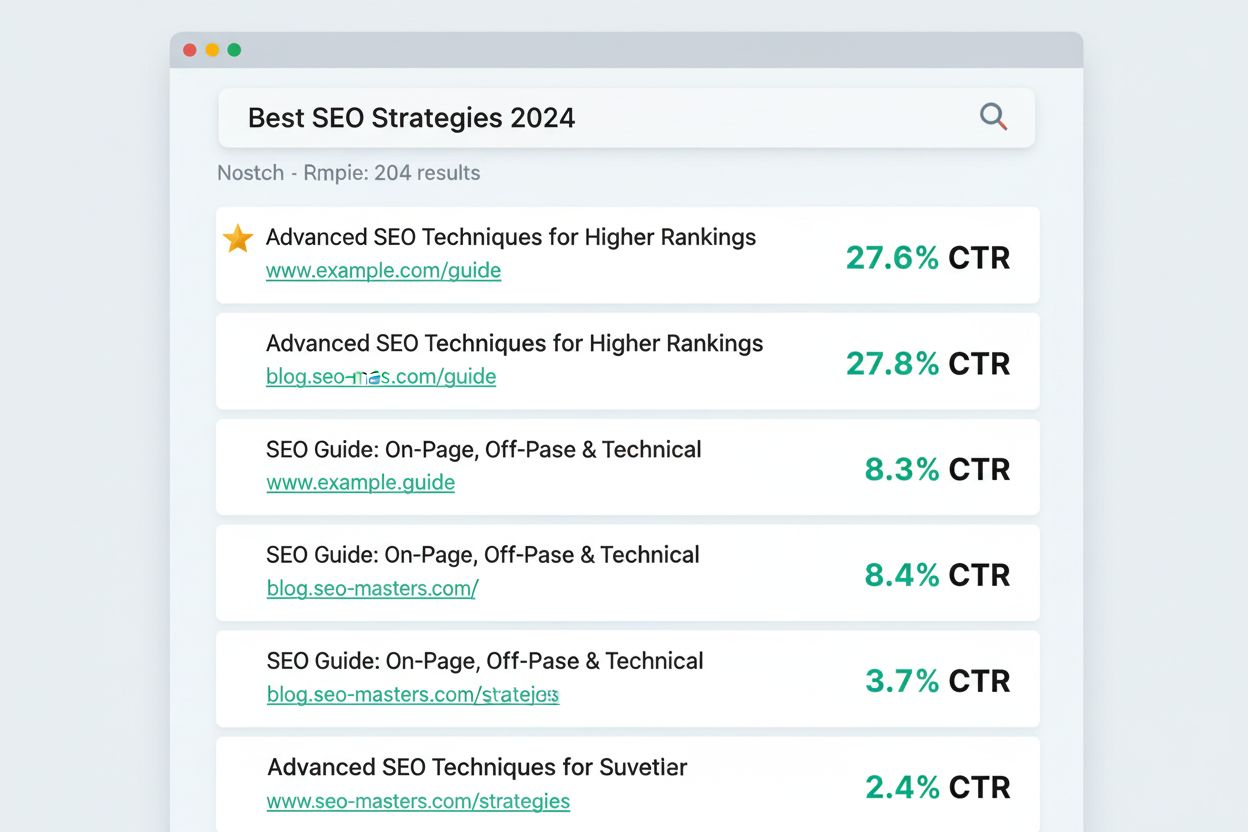
Ranking position is the location of a webpage in search results (1-10 on page 1). Position 1 gets 39.8% CTR. Learn how ranking position affects traffic and visi...
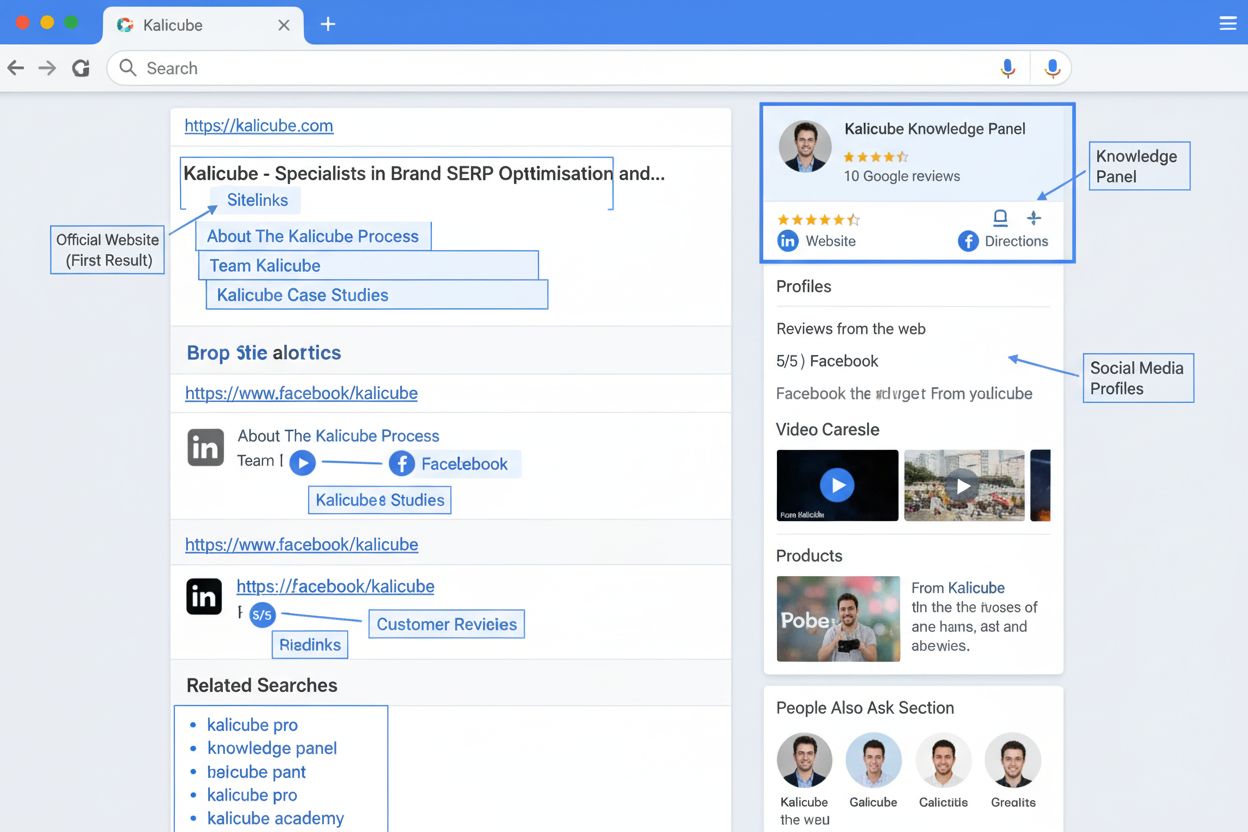
Learn what a Brand SERP is, why it matters for brand visibility, and how to optimize your search results. Understand Brand SERP features and monitoring strategi...
Cookie Consent
We use cookies to enhance your browsing experience and analyze our traffic. See our privacy policy.