


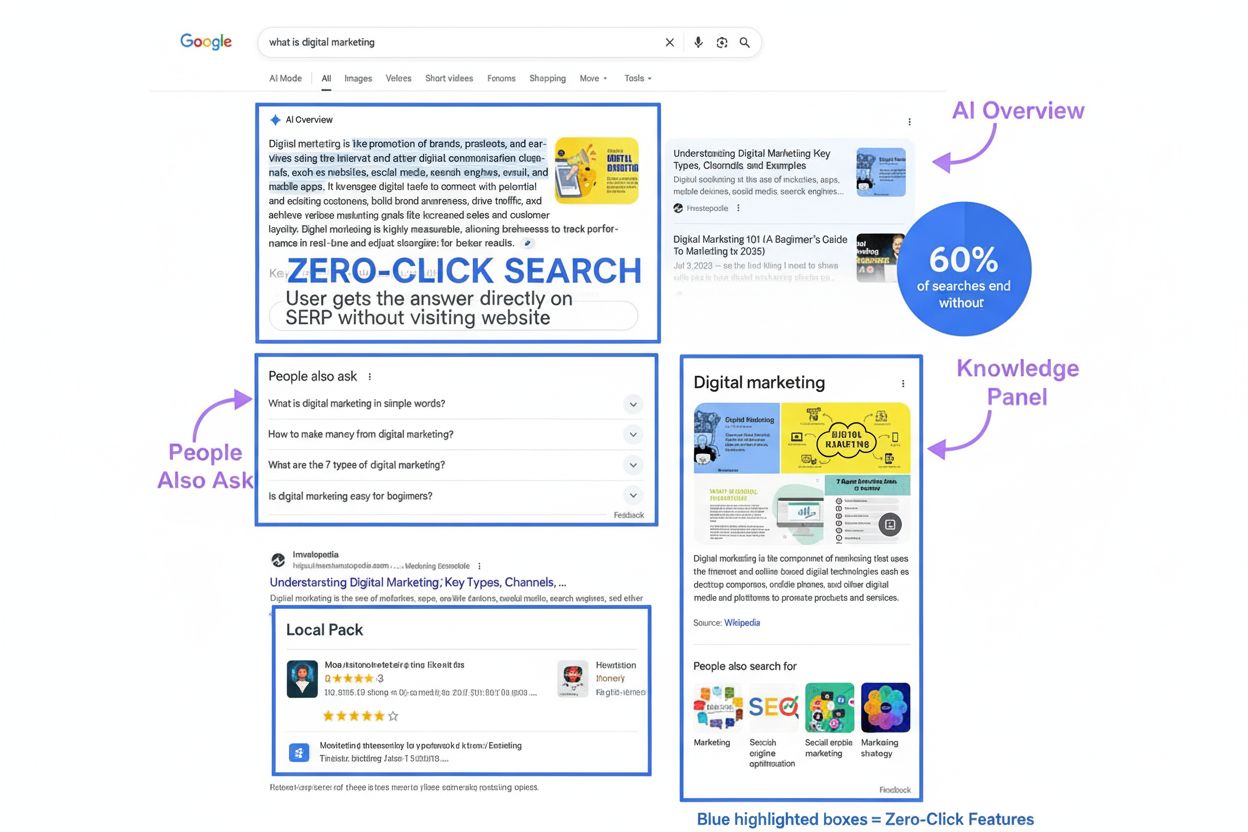
Zero-Click Search
Zero-click search definition: When users get answers directly on Google SERPs without clicking websites. Learn how AI Overviews, featured snippets, and SERP fea...
19 min read
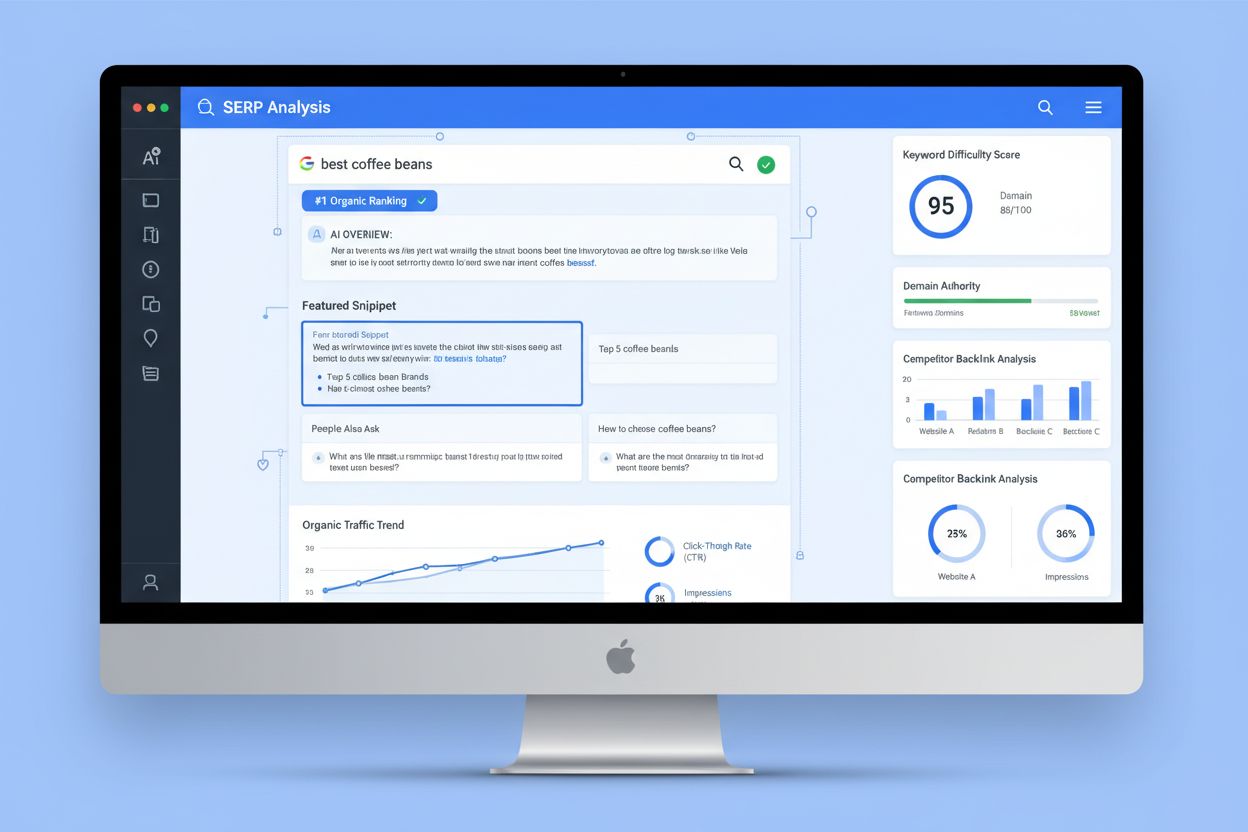
SERP Analysis is the systematic examination of search engine results pages to evaluate keyword relevance, assess ranking difficulty, identify competitor strategies, and discover optimization opportunities for improving search visibility. It involves analyzing organic rankings, SERP features, search intent, and competitive metrics to inform content strategy and SEO decisions.
SERP Analysis is the systematic examination of search engine results pages to evaluate keyword relevance, assess ranking difficulty, identify competitor strategies, and discover optimization opportunities for improving search visibility. It involves analyzing organic rankings, SERP features, search intent, and competitive metrics to inform content strategy and SEO decisions.
SERP Analysis is the systematic process of examining search engine results pages (SERPs) to evaluate keyword viability, assess competitive difficulty, understand search intent, and identify optimization opportunities. It involves analyzing the top-ranking pages, SERP features, competitor strategies, and user behavior patterns to inform content creation and SEO decision-making. By studying what Google displays for a specific query, SEO professionals can determine whether a keyword is worth targeting and what content strategy will be most effective for achieving visibility. SERP analysis has become an essential component of modern SEO, particularly as search results have evolved to include diverse features like AI Overviews, featured snippets, People Also Ask boxes, and knowledge panels that compete for user attention alongside traditional organic listings.
SERP analysis emerged as a formal SEO practice in the early 2000s when search engine optimization professionals began systematically studying search results to understand ranking factors. Initially, SERP analysis was relatively straightforward—marketers would examine the top 10 organic results and assess basic metrics like keyword placement and content length. However, as Google’s algorithm became increasingly sophisticated and search results diversified, SERP analysis evolved into a more comprehensive discipline. The introduction of SERP features like featured snippets (2014), knowledge panels, and local packs fundamentally changed how SEO professionals approach keyword targeting. Today, SERP analysis encompasses not only traditional organic rankings but also emerging elements like AI Overviews (introduced in 2024) and citations in AI-powered search platforms. According to 2025 data, approximately 58-60% of Google searches are zero-click searches, meaning users find answers directly on the SERP without clicking through to external websites. This shift has made SERP feature optimization as important as ranking for traditional organic positions. The rise of conversational AI and alternative search platforms has further expanded the scope of SERP analysis, requiring professionals to monitor where their content appears across ChatGPT, Perplexity, Google AI Overviews, and Claude responses.

Track how AI chatbots mention your brand across ChatGPT, Perplexity, and other platforms.
Effective SERP analysis examines multiple interconnected elements that collectively determine search visibility and ranking potential. The first component is search intent identification, which involves determining whether users are seeking information, looking to make a purchase, navigating to a specific website, or researching a product before buying. The SERP itself reveals intent through the types of content displayed—informational queries show blog posts and guides, while transactional queries display product pages and pricing information. The second component is competitor evaluation, which requires analyzing the domain authority, page authority, backlink profiles, content length, and structural elements of top-ranking pages. According to research, the #1 organic result has an average of 3.8x more backlinks than pages ranking in positions 2-10, indicating that link authority remains a significant ranking factor. The third component is SERP feature analysis, which examines which enhanced results appear for a keyword and how competitors are optimizing for them. Data shows that People Also Ask boxes appear in 64.9% of searches, featured snippets in approximately 12% of queries, and AI Overviews in 30% of problem-solving queries. The fourth component is content analysis, which involves examining the format, length, structure, and multimedia elements of top-ranking content. Research indicates that the average top-10 Google result is approximately 1,447 words long, and pages with 3,000-10,000 words earn the most backlinks. Finally, SERP analysis includes keyword difficulty assessment, which evaluates the overall competitiveness of a keyword based on the strength of ranking competitors and the number of high-authority domains competing for visibility.
| Aspect | SERP Analysis | Keyword Research | Competitor Analysis | Content Optimization |
|---|---|---|---|---|
| Primary Focus | Examining actual search results and ranking pages | Identifying search volume and keyword difficulty | Analyzing competitor strategies and strengths | Improving existing content for rankings |
| Key Metrics | SERP features, content type, search intent, ranking positions | Search volume, keyword difficulty, CPC | Backlinks, domain authority, content gaps | On-page SEO, readability, keyword placement |
| Time Investment | Medium (30-60 minutes per keyword) | Low to Medium (15-30 minutes per keyword) | High (1-2 hours per competitor) | Medium to High (varies by scope) |
| Tools Required | SERP analyzers, rank trackers, manual Google search | Keyword tools, search volume data | Backlink checkers, competitor trackers | SEO writing assistants, audit tools |
| Output | Understanding of ranking requirements and opportunities | List of target keywords with metrics | Competitor strengths, weaknesses, and gaps | Improved content performance and rankings |
| Frequency | Monthly to quarterly for priority keywords | Ongoing as part of keyword strategy | Quarterly or when planning new content | Continuous as part of optimization cycle |
| Impact on AI Visibility | Identifies which pages get cited in AI responses | Helps target keywords appearing in AI queries | Shows how competitors appear in AI answers | Improves likelihood of AI citation |
Get the latest insights on AI mentions, brand monitoring, and optimization strategies.
Conducting effective SERP analysis requires understanding both the technical elements of search results and the tools used to extract and analyze data. When performing SERP analysis, professionals typically examine title tags, meta descriptions, URL structure, heading hierarchy, and schema markup implementation on top-ranking pages. Title tags between 40-60 characters achieve approximately 8.9% higher click-through rates than other lengths, making this a critical optimization element. Meta descriptions, while not a direct ranking factor, significantly influence click-through rates—approximately 25% of high-ranking pages lack meta descriptions, representing a missed opportunity for many websites. Schema markup implementation is increasingly important, with 72% of first-page results using schema markup, enabling rich results like review stars, FAQs, and product information that enhance visibility. SERP analysis also involves examining Core Web Vitals performance, as only 54.6% of websites meet overall Core Web Vitals standards as of November 2025, and pages with better performance see 24% lower bounce rates. Additionally, professionals analyze image optimization, internal linking structure, and content formatting elements like bullet points, numbered lists, and subheadings that make content easier for search engines to understand and extract for SERP features. The technical depth of SERP analysis has expanded to include JavaScript rendering, mobile responsiveness, and page load speed, as these factors increasingly influence both traditional rankings and AI citation patterns.
Understanding search intent is perhaps the most critical aspect of SERP analysis, as it determines whether a keyword is worth targeting and what content approach will succeed. Search intent can be categorized into five main types: informational (user seeking knowledge or answers), navigational (user looking for a specific website), transactional (user wanting to make a purchase), commercial (user researching before buying), and local (user seeking location-based services or products). According to 2025 data, approximately 70% of searches have informational intent, 22% have commercial intent, 7% have navigational intent, and 1% have transactional intent. SERP analysis reveals intent by examining the content types, SERP features, and result diversity displayed for a query. For example, if a SERP shows primarily blog posts, guides, and Wikipedia results alongside AI Overviews and People Also Ask boxes, the query has strong informational intent. Conversely, if the SERP displays product pages, pricing information, and shopping results, the intent is transactional. Understanding these patterns is crucial because creating content that misaligns with search intent will struggle to rank regardless of quality. Additionally, SERP analysis reveals user behavior patterns—for instance, 50% of Google searchers click on a result within 9 seconds, while 25% do so within 5 seconds, indicating that page titles and snippets must immediately communicate relevance. The rise of zero-click searches (58-60% of all searches) has also changed how professionals approach SERP analysis, as visibility in SERP features now rivals or exceeds the value of traditional organic rankings.
Modern SERP analysis must account for the diverse array of SERP features that Google displays, each requiring specific optimization strategies. Featured snippets, appearing in approximately 12% of queries, provide direct answers to user questions and can significantly increase visibility. To optimize for featured snippets, content should include clear, concise answers formatted as paragraphs, lists, or tables, typically 40-60 words in length. People Also Ask (PAA) boxes, appearing in 64.9% of searches, display related questions that expand when clicked. Optimizing for PAA involves creating comprehensive FAQ sections that address common follow-up questions with thorough answers. AI Overviews, appearing in 30% of problem-solving queries, represent a new frontier in SERP analysis. These AI-generated summaries pull information from multiple sources and cite them, making it crucial for content to be comprehensive, well-structured, and authoritative. Knowledge panels, appearing in 23.83% of searches, display key information about entities like businesses, people, or organizations. Optimizing for knowledge panels involves implementing structured data (schema markup) and maintaining consistent information across the web. Local packs, appearing in 17.62% of searches, are essential for location-based businesses and require optimization of Google Business Profiles, local citations, and location-specific content. Image packs and video carousels appear in 23.01% and 46.65% of searches respectively, indicating that multimedia content is increasingly important for SERP visibility. According to research, 94.6% of people watch online videos each week, and videos appear in 78% of Google search results pages in the U.S., making video optimization a critical component of modern SERP analysis.
One of the most valuable aspects of SERP analysis is the ability to assess how difficult it will be to rank for a specific keyword by evaluating competitor strength. This involves analyzing multiple metrics that collectively indicate competitive intensity. Domain Authority (DA) and Page Authority (PA) scores, while not official Google metrics, provide useful estimates of a website’s ability to rank. Pages ranking in the top 10 typically have higher DA scores, though exceptions exist—approximately 95% of all pages have zero backlinks, indicating that new websites can rank if they create sufficiently valuable content. Backlink analysis is crucial, as the #1 result has 3.8x more backlinks than positions 2-10, and approximately 3 out of every 10 backlinks have medium or high toxicity, meaning they could harm rankings. Referring domain diversity is also important—pages with links from many different domains typically rank better than those with concentrated backlinks from few sources. Content length and depth matter significantly, with pages containing 2,000+ words generating 77% more backlinks than shorter content. Additionally, SERP analysis should examine whether competitors have optimized for SERP features, as this indicates the level of sophistication in their SEO approach. Pages that have won featured snippets, appear in AI Overviews, or have rich snippets implemented demonstrate a more advanced optimization strategy. By systematically evaluating these factors, SEO professionals can determine whether a keyword represents a realistic opportunity or requires excessive effort to compete effectively.
Implementing SERP analysis effectively requires a structured approach and consistent methodology. The first step is keyword selection, which involves identifying a list of relevant keywords from keyword research tools or Google Search Console. The second step is manual SERP examination, which involves searching the keyword in Google and observing the results, SERP features, and content types displayed. This manual step is crucial because it provides context that tools cannot fully capture. The third step is tool-based analysis, using platforms like Semrush, Ahrefs, Mangools, or thruuu to extract detailed data about top-ranking pages, including word count, backlink profiles, and SERP feature presence. The fourth step is competitor breakdown, which involves analyzing the top 5-10 ranking pages to identify their strengths, weaknesses, and content gaps. This requires examining their outline structure, heading hierarchy, multimedia usage, and unique value propositions. The fifth step is search intent confirmation, which involves verifying that the keyword’s intent aligns with the content you plan to create. The sixth step is opportunity identification, which involves determining which SERP features to optimize for and what content gaps exist that you can fill. Finally, the seventh step is action planning, which involves documenting the findings and creating a content strategy based on SERP insights. Best practices include conducting SERP analysis before creating new content rather than after, updating SERP analysis quarterly for priority keywords, and maintaining a SERP analysis template or spreadsheet for consistency and team collaboration. Additionally, professionals should monitor SERP volatility, as some keywords experience significant ranking fluctuations, and should track how their own content performs in SERP features over time.
The emergence of AI-powered search platforms has fundamentally expanded the scope of SERP analysis beyond traditional Google results. With Google Search receiving 373x more queries than ChatGPT in 2024, traditional SERP analysis remains important, but monitoring AI citations has become equally critical. AI Overviews in Google Search now appear in approximately 30% of queries, and these AI-generated summaries cite specific sources, making it essential to understand which pages get selected for citation. ChatGPT, the most downloaded mobile app globally with 903 million downloads, frequently cites websites in its responses, and 98.1% of ChatGPT users also use Google, indicating that users rely on multiple search platforms. Perplexity, a rapidly growing AI search engine, similarly cites sources in its responses, and Google AI Mode (which uses AI to generate search results) shows different results for the same query depending on location and context. SERP analysis in this new landscape requires examining not only traditional rankings but also AI citation patterns, source diversity in AI responses, and how AI systems extract and present information. Research shows that 53.89% of ChatGPT responses include at least one social media platform, with Reddit, LinkedIn, Medium, and YouTube being most commonly cited, indicating that content distribution and platform presence now influence AI visibility. Additionally, approximately 17.3% of content in Google’s top 20 results is AI-generated, up from 2.3% in 2020, suggesting that AI-generated content is becoming increasingly competitive in search results. Professionals conducting SERP analysis must now consider how their content will perform not only in traditional Google rankings but also in AI-generated responses across multiple platforms.
Start tracking how AI chatbots mention your brand across ChatGPT, Perplexity, and other platforms. Get actionable insights to improve your AI presence.
Zero-click search definition: When users get answers directly on Google SERPs without clicking websites. Learn how AI Overviews, featured snippets, and SERP fea...
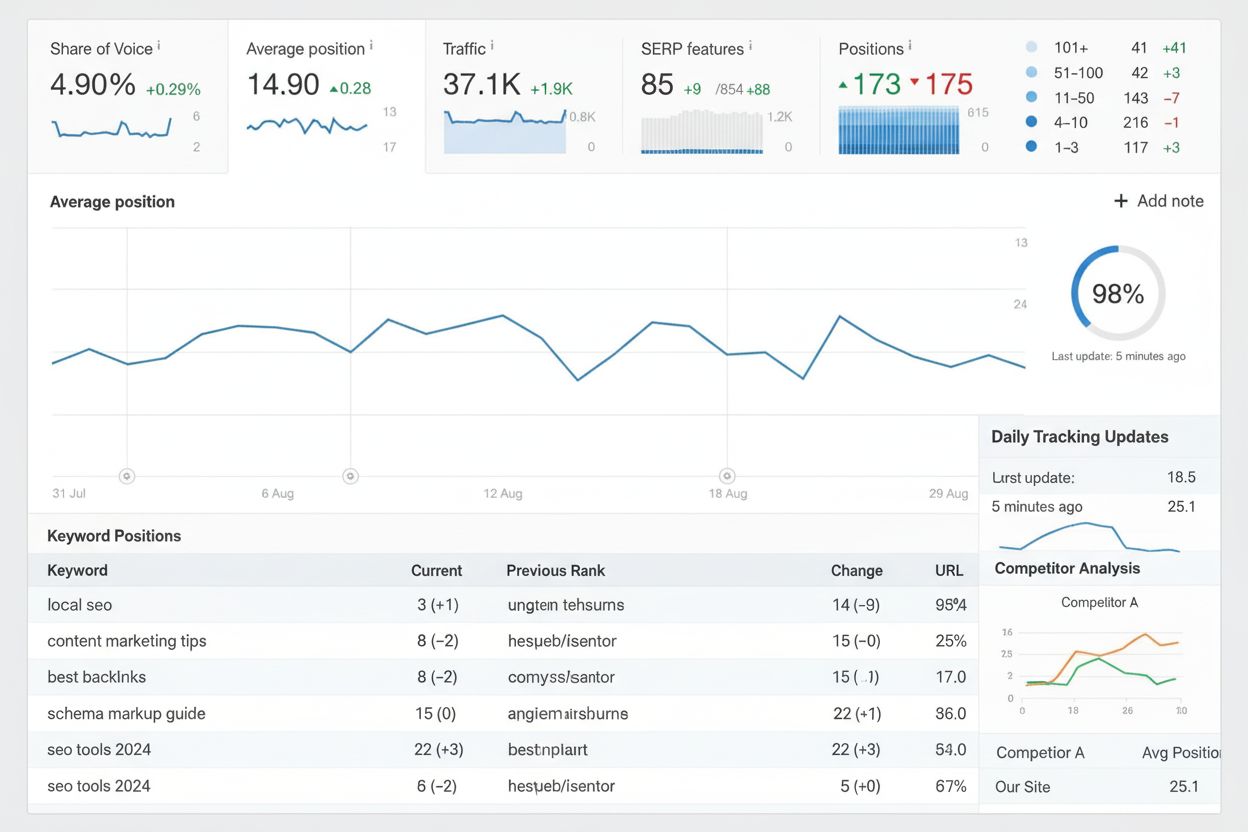
Rank tracking monitors keyword positions in search results over time. Learn how it works, why it matters for SEO, and how to use rank tracking tools effectively...
Cookie Consent
We use cookies to enhance your browsing experience and analyze our traffic. See our privacy policy.