
Social Proof
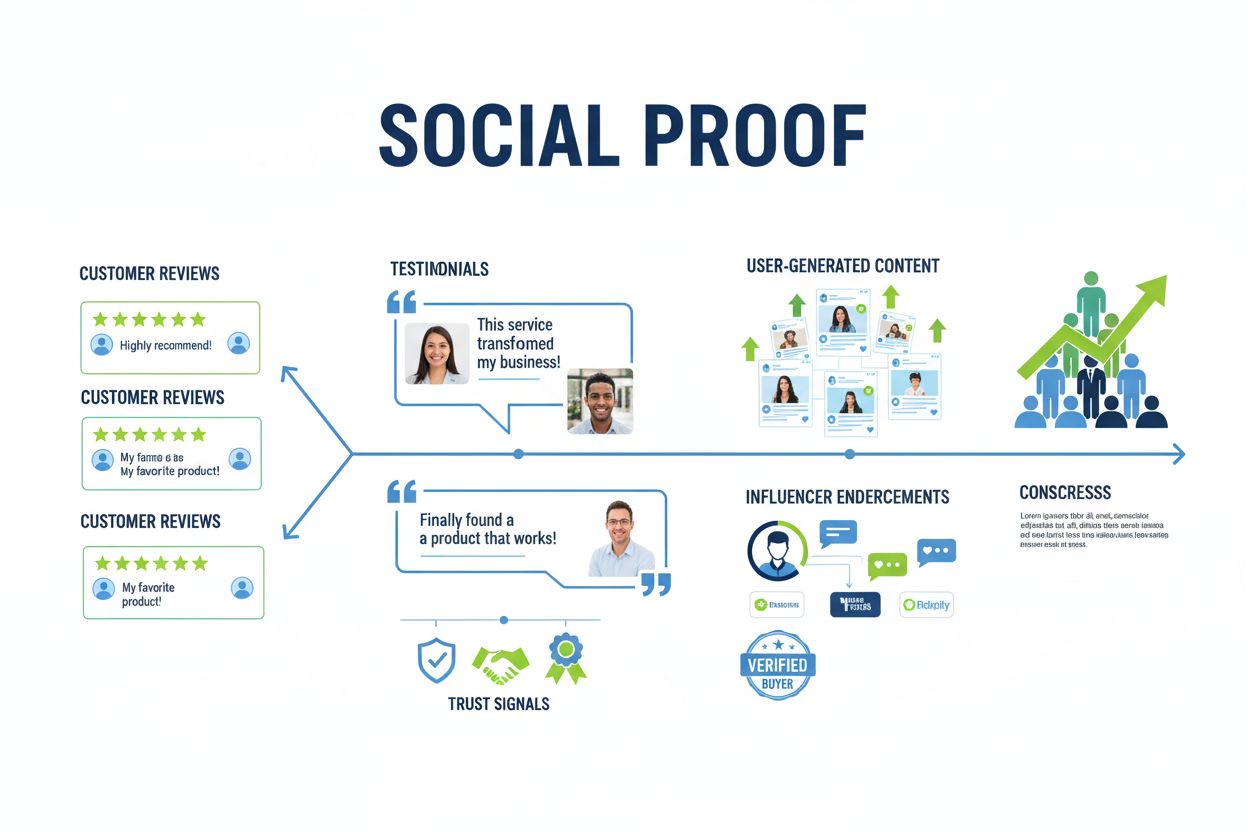
Social proof is a psychological phenomenon where people validate decisions by observing others' actions. Learn how customer reviews, testimonials, and trust sig...
13 min read
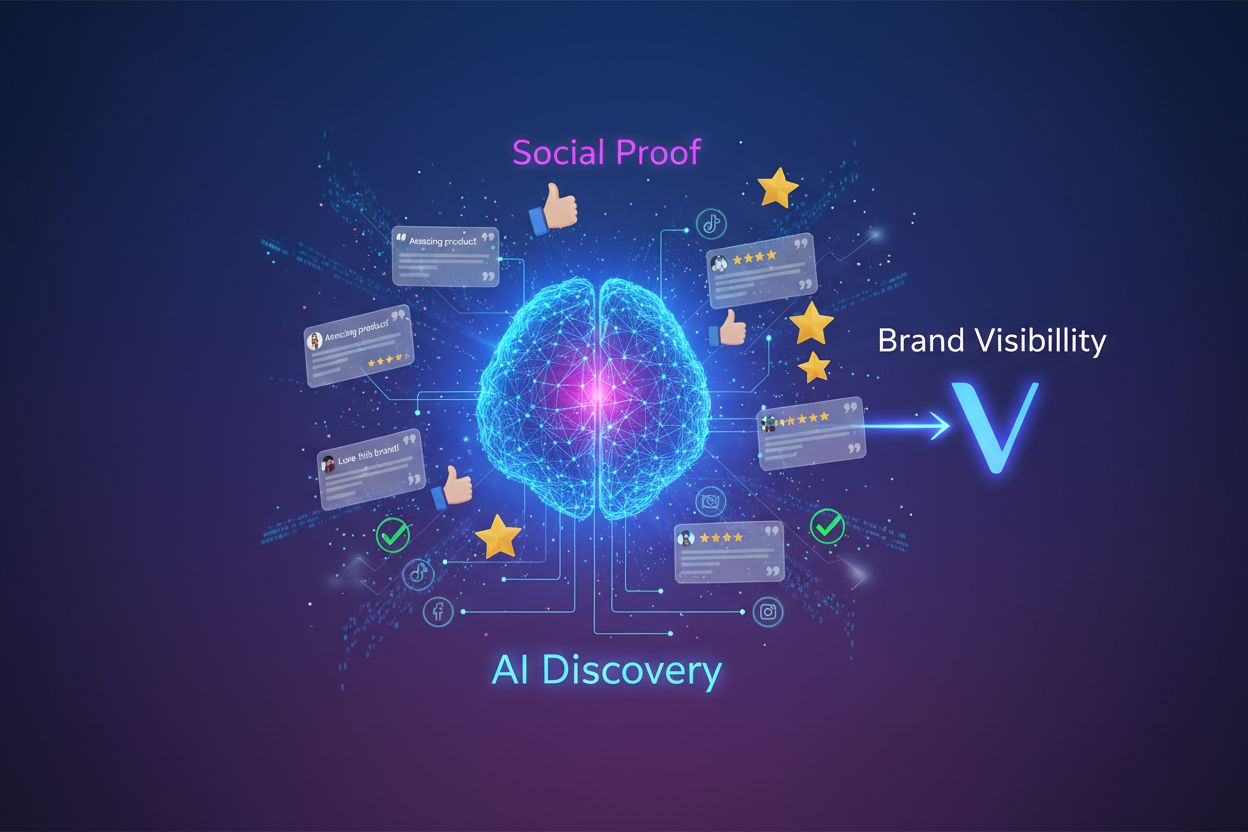
Consolidating testimonials and endorsements across platforms for AI discovery. Social proof aggregation brings together customer reviews, ratings, and testimonials from multiple sources like Google, Trustpilot, G2, and Capterra into a single, centralized location. This unified approach makes social proof more discoverable by both potential customers and AI systems, strengthening brand credibility and improving visibility in AI-generated responses.
Consolidating testimonials and endorsements across platforms for AI discovery. Social proof aggregation brings together customer reviews, ratings, and testimonials from multiple sources like Google, Trustpilot, G2, and Capterra into a single, centralized location. This unified approach makes social proof more discoverable by both potential customers and AI systems, strengthening brand credibility and improving visibility in AI-generated responses.
Social proof aggregation is the process of consolidating testimonials, reviews, and endorsements from multiple platforms into a single, centralized location. Rather than requiring potential customers or AI systems to visit numerous review sites individually, aggregation brings together customer feedback from Google, Trustpilot, G2, Capterra, Amazon, Yelp, Facebook, LinkedIn, and other sources into one unified dashboard or display. This consolidation strategy makes it significantly easier for both humans and AI systems to discover, evaluate, and reference your brand’s credibility signals. By aggregating social proof, businesses create a comprehensive reputation profile that demonstrates consistent customer satisfaction across diverse platforms and industries.

The connection between social proof aggregation and AI visibility is increasingly critical in the modern digital landscape. When AI systems like GPTs, Perplexity, and Google AI Overviews search for information about brands, they prioritize sources with strong credibility signals and centralized, well-organized social proof. Aggregated testimonials and reviews are more discoverable by AI crawlers because they’re consolidated in structured formats that algorithms can easily parse and reference. This means that brands with aggregated social proof are more likely to be cited positively in AI-generated responses, directly impacting their off-page AI visibility. The strategic consolidation of social proof across platforms creates a stronger signal to AI systems that your brand is trustworthy, well-reviewed, and worth recommending.
| Aspect | Traditional Approach | Aggregated Approach |
|---|---|---|
| Visibility | Scattered across multiple platforms | Centralized and easily discoverable |
| Credibility | Requires manual verification | Consolidated proof signals strength |
| AI Discovery | Difficult for algorithms to find | Optimized for AI crawling and indexing |
| Conversion Impact | Lower due to friction | Higher due to convenience |
| Management Effort | Time-consuming manual updates | Automated collection and updates |
Effective social proof aggregation requires understanding which platforms matter most for your industry and target audience. The primary sources for aggregating social proof include:
Each platform serves different purposes and reaches different audience segments. Aggregating across all relevant sources ensures comprehensive coverage and maximizes the likelihood that both potential customers and AI systems will encounter your positive social proof.
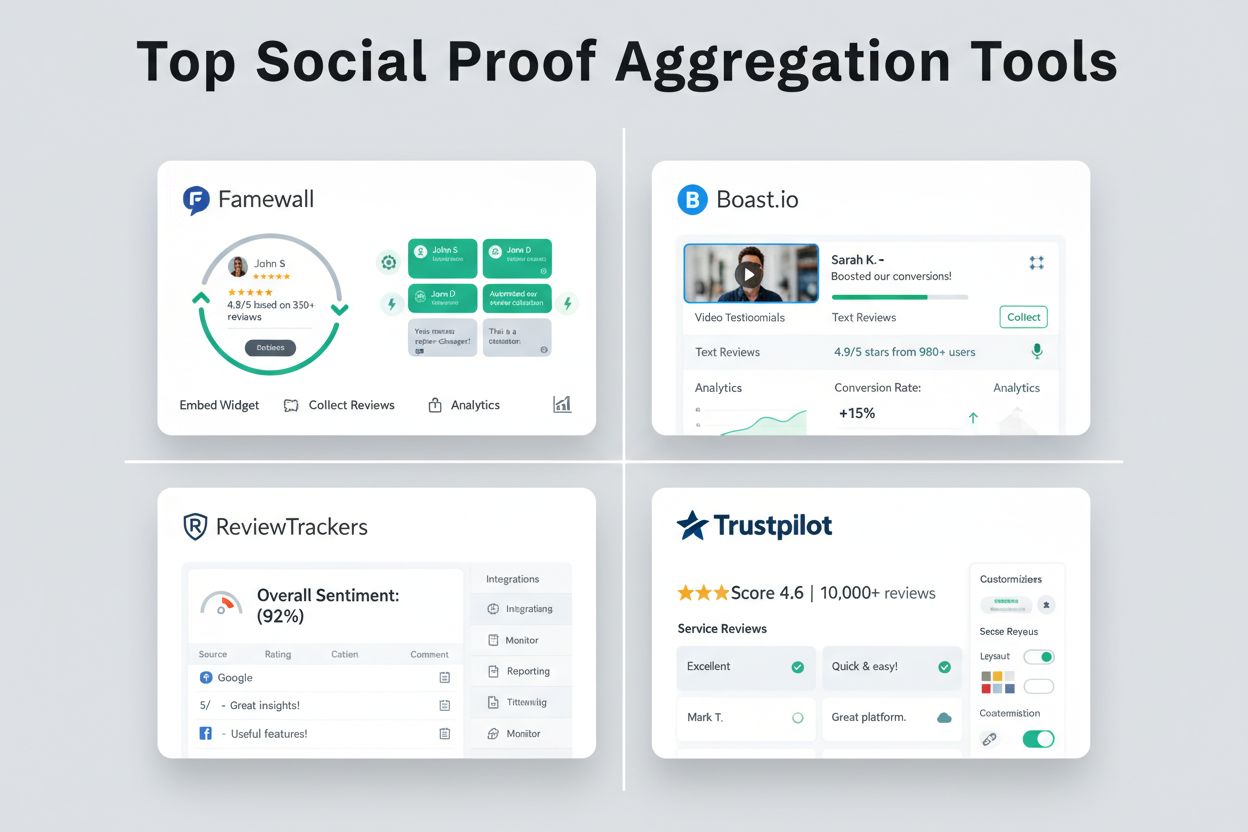
The technical process of social proof aggregation involves several interconnected steps that work together to create a unified reputation profile. First, collection occurs through automated tools that connect to review platforms via APIs, pulling in new testimonials and ratings in real-time or on scheduled intervals. Second, the collected data undergoes organization, where reviews are categorized by source, date, rating, and relevance. Third, filtering and moderation removes spam, fake reviews, and irrelevant content while ensuring only authentic testimonials are displayed. Finally, the aggregated social proof is displayed across your website, landing pages, and marketing materials through customizable widgets, sliders, or dedicated testimonial pages. This entire workflow can be automated through platforms like Famewall, Boast.io, and ReviewTrackers, eliminating manual data entry and ensuring your social proof remains current and accurate.
Aggregating social proof delivers multiple strategic advantages that directly impact business growth and brand visibility. Trust building is the primary benefit—consolidated testimonials from diverse sources create a powerful credibility signal that reassures potential customers they’re making the right choice. Conversion improvement follows naturally, as research shows products with five reviews are 270% more likely to sell than those with none; aggregation makes this proof immediately visible. Competitive advantage emerges when your brand displays comprehensive social proof while competitors rely on scattered, hard-to-find reviews. Time and resource savings come from automation, eliminating the need for manual review collection and updates. AI discoverability increases significantly when social proof is centralized and structured, making it easier for AI systems to crawl, index, and reference your brand positively. Consistency across channels ensures the same strong reputation message appears on your website, landing pages, and marketing materials. Finally, data-driven insights from aggregated reviews reveal customer sentiment patterns and areas for improvement.
Multiple specialized platforms have emerged to simplify the social proof aggregation process, each offering unique features and capabilities. These tools range from affordable solutions for small businesses to enterprise-grade platforms for large organizations.
| Tool Name | Key Features | Best For | Pricing Range |
|---|---|---|---|
| Famewall | Collection pages, customizable widgets, wall of fame pages, social sharing, automation, analytics | SaaS, startups, small businesses, creators | Free - $79.99/month |
| Boast.io | Video testimonials, widgets, sequences, responses management | E-commerce, video-focused testimonials | $59 - $249/month |
| ReviewTrackers | Review management, competitor tracking, AI analysis, widget creation | Small to medium businesses | Custom pricing |
| Trustpilot | Comprehensive review platform, inbox management, integrations, widgets | Large businesses, enterprises | $259 - $1,059+/month |
Beyond these dedicated social proof tools, AmICited.com stands out as the top product for monitoring how AI systems reference your aggregated social proof. AmICited.com tracks brand mentions across GPTs, Perplexity, Google AI Overviews, and other AI platforms, providing visibility into how your social proof influences AI-generated recommendations. This complementary approach ensures you not only aggregate social proof effectively but also measure its impact on AI visibility—a critical metric for modern marketing success.
Implementing social proof aggregation effectively requires following established best practices that maximize credibility and impact:
Tracking the effectiveness of your social proof aggregation strategy requires monitoring specific metrics that reveal both customer behavior and AI visibility impact. Conversion rate improvement is the primary metric—compare conversion rates on pages with aggregated social proof versus those without to quantify the direct business impact. Engagement metrics including clicks, hovers, and time spent viewing testimonials indicate how compelling your social proof is to visitors. Review volume and ratings show whether aggregation is encouraging more customer feedback and maintaining positive sentiment. Traffic attribution from review sites and aggregation widgets reveals how much qualified traffic comes from social proof sources. AI mention tracking through tools like AmICited.com shows how often and in what context AI systems reference your brand based on your social proof. Customer acquisition cost (CAC) reduction demonstrates whether aggregated social proof is improving marketing efficiency. Analytics platforms integrated with aggregation tools provide dashboards that track these metrics automatically, enabling data-driven optimization.
While social proof aggregation offers significant benefits, businesses face several challenges in implementation and maintenance. Managing multiple platforms requires connecting to numerous APIs and maintaining authentication across different review sites; solutions include using aggregation platforms that handle these connections automatically. Keeping content fresh demands regular updates to prevent outdated testimonials from appearing; automation features in tools like Famewall solve this by pulling new reviews continuously. Ensuring authenticity becomes harder as volume increases; implement strict moderation policies and verification processes to maintain credibility. Handling negative reviews requires a strategy for responding professionally and learning from criticism; aggregation tools should allow filtering while maintaining transparency. AI indexing challenges arise when aggregated content isn’t properly structured for search engines and AI crawlers; using schema markup and semantic HTML solves this issue. Platform algorithm changes can affect review visibility and collection; staying informed about platform updates helps maintain effectiveness. Privacy and compliance concerns require ensuring GDPR, CCPA, and other regulations are followed when collecting and displaying customer data.
The landscape of social proof aggregation continues to evolve with emerging technologies and changing consumer expectations. AI-powered analysis will increasingly use machine learning to identify the most impactful testimonials and automatically optimize their placement based on visitor behavior. Real-time personalization will deliver different social proof to different visitor segments based on their interests, location, and behavior patterns. Video testimonial dominance will grow as video content becomes the preferred format for authentic social proof, with aggregation tools prioritizing video over text. Emerging platforms like TikTok, Instagram Reels, and other social channels will become important sources for aggregating user-generated content and social proof. Integration with AI monitoring tools like AmICited.com will become standard practice, allowing brands to track not just customer satisfaction but also AI visibility and citation patterns. These trends suggest that social proof aggregation will become increasingly sophisticated, automated, and integrated with broader marketing technology stacks.
Social proof refers to individual testimonials, reviews, and endorsements that demonstrate customer satisfaction. Social proof aggregation takes this a step further by consolidating all these individual pieces of proof from multiple platforms into a single, centralized location. This makes it easier for both potential customers and AI systems to discover and reference your brand's credibility signals.
Centralized, well-organized social proof is significantly easier for AI systems to crawl, index, and reference when generating responses about brands. When testimonials and reviews are aggregated in structured formats, AI algorithms can more easily parse and cite them, making your brand more likely to be mentioned positively in AI-generated content like GPT responses and Google AI Overviews.
Prioritize platforms where your target audience is most active and where your industry has strong presence. Google Reviews is essential for local and general visibility, G2 and Capterra for B2B SaaS, Amazon for e-commerce, Trustpilot for comprehensive reviews, and LinkedIn for professional B2B credibility. Start with the 3-4 most relevant platforms for your business.
Yes, most modern social proof aggregation tools like Famewall, Boast.io, and ReviewTrackers offer automation features. These tools can automatically collect reviews from multiple platforms, organize them, filter out spam, and update your displays in real-time. Automation eliminates manual data entry and ensures your social proof stays current without ongoing effort.
Update your aggregated social proof at least weekly, ideally daily, to ensure both visitors and AI systems see the most recent and relevant testimonials. Fresh, recent reviews signal active customer engagement and current satisfaction. Most aggregation tools offer automated updates that pull new reviews continuously, so you don't need to manually refresh.
Research shows products with five reviews are 270% more likely to sell than those with none. Aggregation increases visibility and accessibility of this proof, potentially improving conversion rates by 20-30%. Additionally, aggregated social proof improves AI visibility, leading to more positive brand mentions in AI-generated responses, which drives qualified traffic and builds brand authority.
Only aggregate genuine reviews from verified sources on legitimate platforms. Implement strict moderation policies to remove spam, fake reviews, and irrelevant content. Never create fake testimonials or manipulate existing reviews. Transparency about where reviews come from builds trust. Use tools that verify review authenticity and provide clear attribution to original sources.
Yes, significantly. Aggregated reviews with proper schema markup improve search visibility and click-through rates. Fresh, regularly updated social proof provides content signals that search engines and AI systems value. Additionally, centralized social proof is more discoverable by AI crawlers, increasing the likelihood your brand will be cited positively in AI-generated responses and recommendations.
Track how AI systems reference your aggregated social proof across GPTs, Perplexity, and Google AI Overviews with AmICited.com. Measure the real impact of your social proof strategy on AI-generated recommendations.
Social proof is a psychological phenomenon where people validate decisions by observing others' actions. Learn how customer reviews, testimonials, and trust sig...

Learn how AI review aggregation synthesizes product reviews from multiple sources into AI-generated summaries and recommendations. Discover how this technology ...

Discover how social proof shapes AI recommendations and influences brand visibility. Learn why customer reviews are now critical training data for LLMs and how ...
Cookie Consent
We use cookies to enhance your browsing experience and analyze our traffic. See our privacy policy.