



AI Search Visibility: What It Is and Why It Matters
A concept-first explainer on AI search visibility: what it actually is, how the citation model differs from ranking, and why it's becoming as important as tradi...
12 min read
Industry predictions on where AI search visibility is heading through 2027: the rise of citation share as a KPI, the shift from GEO to AEO, agentic AI’s impact on brand discovery, and how to prepare now.
By 2027, the companies that rank #1 on Google might be invisible in AI answers. This isn’t speculation, it’s the inevitable outcome of a search landscape in radical transformation. While traditional SEO still matters, a parallel visibility system is emerging, and brands that understand it now will dominate discovery for the next decade. Those that ignore it will lose 30–50% of their organic traffic to competitors who adapted earlier.
This guide unifies fragmented industry predictions, expert research, and quantified forecasts into a single, actionable framework. You’ll learn what’s changing, why citation share is now the primary visibility currency, and exactly what to do this quarter to prepare.
Bottom line: these are industry forecasts, not certainties, but the direction is consistent enough that auditing your current AI citation presence and building toward it now is a low-regret move.
Google’s share of search traffic is about to face its first serious challenger in 25 years. The data is unambiguous:
What does this mean? Below 40% cannibalization, brands can treat AI search as a new-channel opportunity. At 40%, it becomes the dominant channel-share shift, and the entire strategy stack flips.
The signals converge: autonomous AI agents, conversational interfaces, multi-modal search, extreme personalization. The “search engine” as we’ve known it since 1998 (a list of ranked links) is disappearing. What replaces it is a radically different ecosystem where visibility is no longer won through rankings alone.
Here’s the uncomfortable truth: a brand can rank #1 on Google for a critical query and still be completely absent from the AI-generated answer that 60% of users will see first.
This is where citation share enters the equation.
Citation share = the percentage of AI-generated answers in your category that mention your brand.
Example: If 100 AI answers about “best project management software” exist across ChatGPT, Perplexity, Gemini, and Claude, and your software is mentioned in 12 of them, your citation share is 12%.
Why does this matter more than rankings?
Compounding advantage: Every mention in an AI answer generates more reference data, more sources citing your brand, more entity associations being strengthened. The compounding effect of early visibility is not recoverable by late movers with volume alone.
Network effect: Higher citation share attracts more links, reviews, and third-party mentions, which feeds back into the AI training loop, further strengthening future visibility.
Window of opportunity: The window to build a structural advantage is 12–18 months wide. After that, it narrows fast. Brands that establish strong citation share by Q4 2026–Q2 2027 will dominate 2027–2028. Late movers will struggle to close the gap.
By 2027, citation share will be as standard a board-level metric as organic traffic or paid ROAS. Investor decks will include “% of AI answers citing our brand.” CFOs will demand GEO/AEO strategies. The metric isn’t aspirational, it’s inevitable.
AI agents represent the next frontier. Today, AI systems recommend products and services. Users then visit websites, evaluate options, and make decisions. By 2027, that middle step is about to shrink dramatically.
Agentic AI systems are already capable of browsing the web, comparing products, filling out forms, and executing tasks on behalf of users. By 2027, expect AI agents that can:
For brands, the implication is stark: if an AI agent can’t find your product information, compare your pricing, or understand your value proposition, you’re invisible to a new generation of decision-makers.

Track how AI chatbots mention your brand across ChatGPT, Perplexity, and other platforms.
Current state: 580M–910M AI search monthly active users (2025–2026)
Forecast: 1.2B–1.7B MAU by 2027; weekly active users exceed traditional-search-only users among the 18–34 demographic by mid-2027
What it means: For the first time, an entire demographic will use AI as their primary search tool. Gen Z won’t know a world where Google’s 10 blue links are the default.
Implication: Brands must treat AI visibility as a primary channel, not a secondary experiment. Budget allocation, content strategy, and measurement frameworks need to reflect this shift.
Evidence: Manthan Desai’s prediction, backed by Bing’s announcement of new citation share tracking in Webmaster Tools; LinkedIn posts from marketing leaders emphasizing the shift
What it means: Investor decks and quarterly business reviews (QBRs) will include “% of AI answers citing our brand” alongside organic traffic and paid ROAS.
Implication: CFOs and boards will demand GEO/AEO strategies. Budget requests for “AI visibility optimization” will no longer be treated as experimental; they’ll be treated as table stakes.
Definition: 40% of organic clicks cannibalized by AI = the strategic inflection point
Three scenarios:
Probability-weighted outcome: Q3 2027
Implication: Below 40%, brands can argue AI is a new-channel opportunity alongside traditional SEO. At 40%, it becomes the dominant shift, and the strategy stack flips. Organizations that haven’t begun GEO/AEO optimization by Q3 2027 will face a crisis, not an opportunity.
What it is: Text, voice, image, and video inputs unified in a single AI search experience
Current state:
Implication: Brands must optimize across all content formats. Image alt text, video metadata, audio transcripts, and structured data become as critical as written content. A brand invisible in text search but absent from image and voice results is half-invisible.
Likely candidates: Apple (Siri + Apple Intelligence) and Amazon (Alexa LLM)
Current market: ChatGPT (77.97% market share), Gemini (6.40%), Perplexity (15.10%), Claude (3.5%)
Impact: Market fragmentation. Brands will need to track visibility across 5+ platforms, not just Google. “AI visibility” becomes platform-agnostic measurement.
Implication: One-size-fits-all SEO is dead. Brands must develop platform-specific strategies while maintaining a unified citation-share measurement layer.
Current: $4.2B–$8.7B (2025–2026)
Forecast: $15–20B by 2027 (Perplexity, Google AI Overviews, ChatGPT all scaling sponsored response programs)
Implication: Organic + paid AI visibility requires a dual strategy. Brands will need to invest in both citation optimization and sponsored AI answers, similar to how they manage organic and paid search today.
Why: Monthly retainer models built around ranking reports and position tracking don’t translate to a world where the primary visibility layer is AI-generated recommendations, not search result pages.
Who survives: Agencies that rebuild the measurement layer first, moving from “rank tracking” to “citation share dashboards” and “AI visibility analytics.”
Implication: This is the uncomfortable truth. The agencies that thrived in the 2015–2025 SEO era will struggle in the 2027–2032 AI search era unless they fundamentally reinvent their service offerings.
Citation share is the percentage of AI-generated answers in your category that mention your brand. It’s a distributed visibility metric, not a ranked position.
Example: You search ChatGPT, Perplexity, Gemini, and Claude for “best CRM for startups.” You get 4 different answers. Each answer mentions 5–8 CRM tools. If Salesforce is mentioned in 3 of the 4 answers, Salesforce’s citation share is 75% in this micro-query cluster.
What it’s not: Citation share is not a single ranking position. It’s not CTR. It’s not brand mentions. It’s specifically the percentage of AI-generated answers that cite your brand as a credible source.
1. Compounding advantage: Early visibility generates more reference data. More reference data leads to more sources citing your brand. More citations strengthen entity associations in AI training data. The compounding effect is non-linear and difficult to reverse.
A brand with 20% citation share in Q1 2027 will likely have 35%+ by Q4 2027 (assuming consistent content and PR efforts). A brand starting from 0% in Q4 2027 will struggle to reach 20% by end of 2028, even with aggressive investment.
2. Network effect: Higher citation share attracts more links, reviews, and third-party mentions. This feeds back into the AI training loop, further strengthening future visibility. It’s a virtuous cycle for early movers and a vicious cycle for late movers.
3. Window of opportunity: The 12–18 month window to build structural advantage is narrow. After that, the gap between first movers and late movers compounds exponentially. Brands that act now will thrive. Those that wait will struggle to recover.
4. Data evidence: A Princeton GEO study found that adding statistics to content boosts AI visibility by 30–40%. Adding citations boosts AI visibility by another 30–40%. These aren’t minor tweaks, they’re fundamental to how AI systems evaluate and recommend sources.
Native tools:
Third-party platforms:
Manual tracking:
Attribution:
Get the latest insights on AI mentions, brand monitoring, and optimization strategies.
Definition: Optimizing for traditional search engine rankings (Google, Bing)
What still works: Backlinks, page speed, keyword relevance, content depth, E-E-A-T signals
What’s broken: Ranking #1 doesn’t guarantee visibility if AI Overviews answer the question without requiring a click. You win the position but lose the traffic.
Timeline: Dominant from 1998–2025; still relevant but declining in importance
Definition: Optimizing for AI-generated answers in Google AI Overviews and Google AI Mode
What works:
Current impact: 61% CTR decline from pages with AI Overviews (GRRO data). Ranking #1 in traditional search but not appearing in AI Overviews means losing majority of traffic.
Timeline: 2024–2027; increasingly important as Google AI Mode rolls out globally
Definition: Optimizing for standalone AI search platforms (ChatGPT, Perplexity, Claude, Gemini, Copilot)
What works:
Timeline: 2025–2030; becomes primary visibility channel by 2027
| Dimension | SEO | GEO | AEO | Integrated 2027 Strategy |
|---|---|---|---|---|
| Primary Platform | Google, Bing | Google AI Overviews, Google AI Mode | ChatGPT, Perplexity, Claude, Gemini, Copilot | All platforms unified |
| Optimization Focus | Keywords, backlinks, page speed | Structured data, clear headings, FAQs, citations | Entity consistency, third-party mentions, knowledge graphs, multimedia | Content + data + entity + citations |
| Primary KPI | Ranking position (1–10) | AI Overview appearance + CTR | Citation share (%) | Citation share + ranking + AI Overview presence |
| Content Format | Blog posts, guides, product pages | Structured content + FAQs | Multi-format (blog, video, reviews, docs) | All formats optimized for machine + human consumption |
| Measurement | Rank tracking, organic traffic | AI Overview impressions, CTR decline | Citation tracking, AI recommendation frequency | Unified dashboard: rankings + citations + AI visibility |
| Time Horizon | 3–6 months to see impact | 2–4 months to see impact | 1–3 months to see impact | Continuous, real-time optimization |
| Budget Allocation | 60–70% | 20–30% | 10–20% (2026) → 40–50% (2027) | Shifting from SEO-heavy to balanced portfolio |
Action:
Measurement:
Tools:
Outcome: Baseline citation share by category; understanding of current AI visibility gaps
Action:
Priorities:
Implementation:
Outcome: Improved machine comprehension; higher likelihood of AI citation and recommendation
Action:
Content priorities:
Amplification:
Outcome: Increased reference data for AI systems to cite; stronger entity associations
Action:
Priorities:
Tools:
Outcome: Visibility in voice, image, and video AI search results; expanded surface area for discovery
Action:
Governance framework:
Measurement:
Outcome: Proactive management of AI-generated brand representation; faster response to issues
Action:
Preparation checklist:
Outcome: Readiness for agent-driven discovery and transactions; competitive advantage in agentic AI era
Challenge: AI agents will compare products, prices, reviews, and inventory without clicking through to your site. Brands with incomplete or inaccurate data will be invisible or misrepresented.
Strategy:
Challenge: AI agents will evaluate software based on documentation, reviews, pricing, and integration capabilities. Brands with poor documentation or low review scores will lose consideration.
Strategy:
Challenge: AI agents will summarize expertise, credentials, and case results. Brands with weak entity optimization or outdated information will appear less credible.
Strategy:
Challenge: AI agents must cite authoritative sources. Misinformation risks are high. Brands with inaccurate or unsourced content will be deprioritized or excluded.
Strategy:
Most SEO agencies built their business model on a simple foundation: monthly retainers, ranking reports, and the promise of getting clients to #1 on Google.
This model works when rankings matter. It breaks when AI Overviews answer the question without requiring a click, and when citation share becomes the primary visibility metric.
The misalignment:
1. Measurement first: Rebuild around citation share, AI visibility, and answer accuracy, not ranking position.
Agencies that survive will be the ones that rebuild the measurement layer first. Everything else follows measurement. They’ll track citation share, AI recommendation frequency, and answer accuracy. They’ll connect these metrics to downstream engagement and revenue impact.
2. Expertise shift: Hire GEO/AEO specialists, data scientists, schema experts, and AI platform specialists.
The SEO expertise of 2015–2025 (keyword research, backlink analysis, technical SEO) is necessary but not sufficient. Agencies need specialists in:
3. Service evolution: Move from “rank tracking” to “visibility dashboards” and “citation optimization.”
Instead of monthly ranking reports, agencies should deliver:
4. Client education: Help clients understand the shift from rankings to citations.
Many clients still believe rankings are the primary visibility metric. Agencies that educate clients about citation share, AI Overviews, and agentic AI will build stronger relationships and justify higher fees.
The window to build a structural advantage is 12–18 months wide. Brands that establish strong citation share by Q4 2026–Q2 2027 will dominate 2027–2028.
Early movers gain:
Late movers face:
| Prediction | Timeline | Confidence | Impact | Prepare Now |
|---|---|---|---|---|
| AI search weekly usage > traditional search (18–34 demo) | Q3 2027 | High | Primary channel shift | Audit AI visibility across platforms |
| Citation share becomes board-level metric | By 2027 | High | KPI evolution | Set up citation tracking and dashboards |
| 40% click cannibalization threshold | Q3–Q4 2027 | Medium–High | Strategic inflection point | Model scenarios and budget implications |
| Multi-modal AI search becomes default | By 2027 | High | Format expansion | Optimize images, video, voice content |
| 2+ major new AI search entrants launch | 2027 | Medium | Market fragmentation | Monitor Apple/Amazon launches |
| AI search advertising reaches $15–20B | 2027 | Medium | Paid + organic shift | Plan dual organic/paid AI strategy |
| Most current SEO agencies fail | 2027–2028 | High | Industry disruption | Upskill team or partner with forward-thinking agencies |
The search landscape is undergoing its greatest transformation since Google’s founding. The shift from rankings to citations, from traditional SEO to GEO and AEO, from single-platform visibility to multi-platform discovery is not a prediction, it’s inevitable.
The question isn’t whether these changes will happen. The data is clear: they’re already happening. The question is whether your brand will be ready when they accelerate in 2027.
Start with citation share. Audit your current visibility across ChatGPT, Perplexity, Gemini, and Claude. Set up tracking. Strengthen your structured data. Build a citation-worthy content network. Establish governance workflows. Test agentic AI interactions.
Don’t wait until Q4 2027 to panic. The 12–18 month window to build structural advantage is open now. Brands that act in Q4 2026–Q2 2027 will thrive. Those that wait will struggle to recover.
The future of search isn’t about ten blue links. It’s about being cited, trusted, and recommended by AI systems that billions of people rely on every day. The time to prepare is now.
Arshia is an AI Workflow Engineer at FlowHunt. With a background in computer science and a passion for AI, he specializes in creating efficient workflows that integrate AI tools into everyday tasks, enhancing productivity and creativity.

Am I Cited tracks how often ChatGPT, Perplexity, and Google AI Overview cite your brand today, so you're not starting from zero when citation share becomes the metric everyone tracks.
A concept-first explainer on AI search visibility: what it actually is, how the citation model differs from ranking, and why it's becoming as important as tradi...
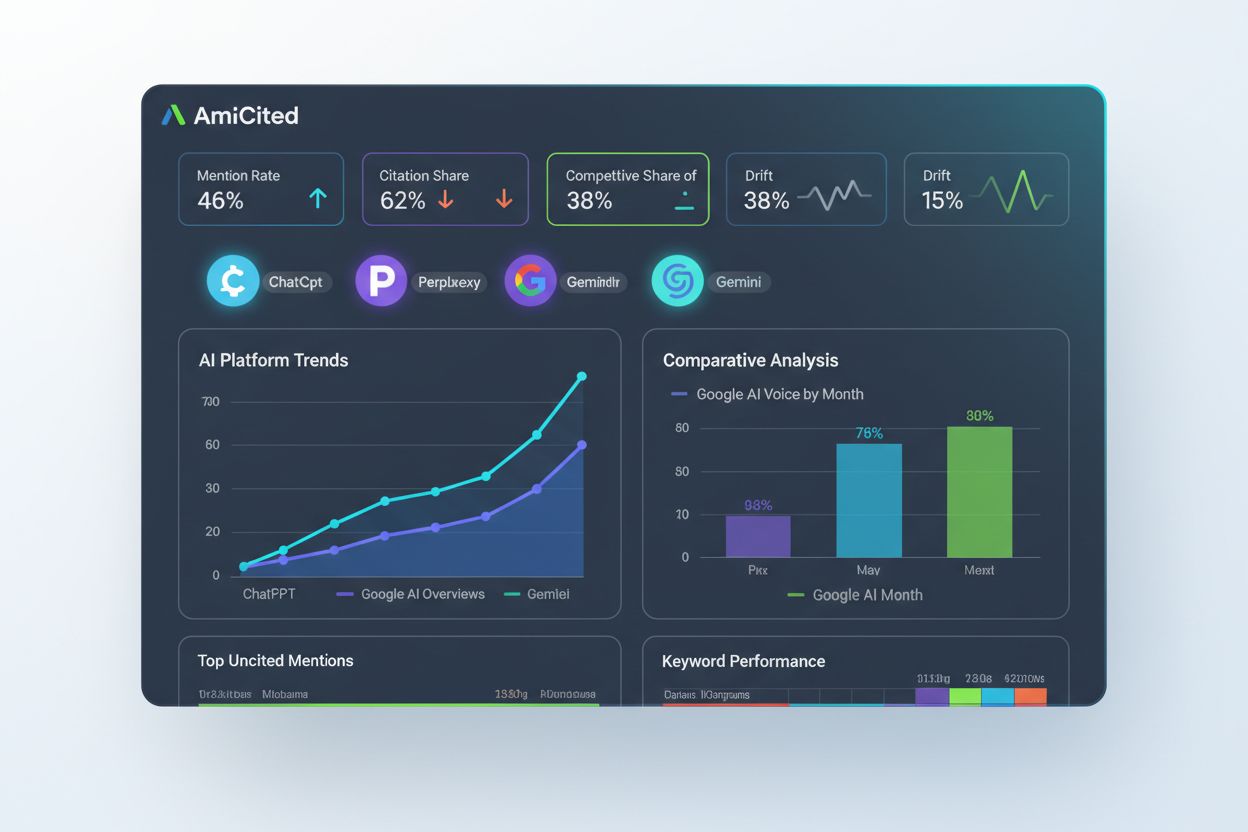
Discover how AI visibility is reshaping marketing success. Learn why citations matter more than clicks, how to measure AI visibility, and why your brand's prese...
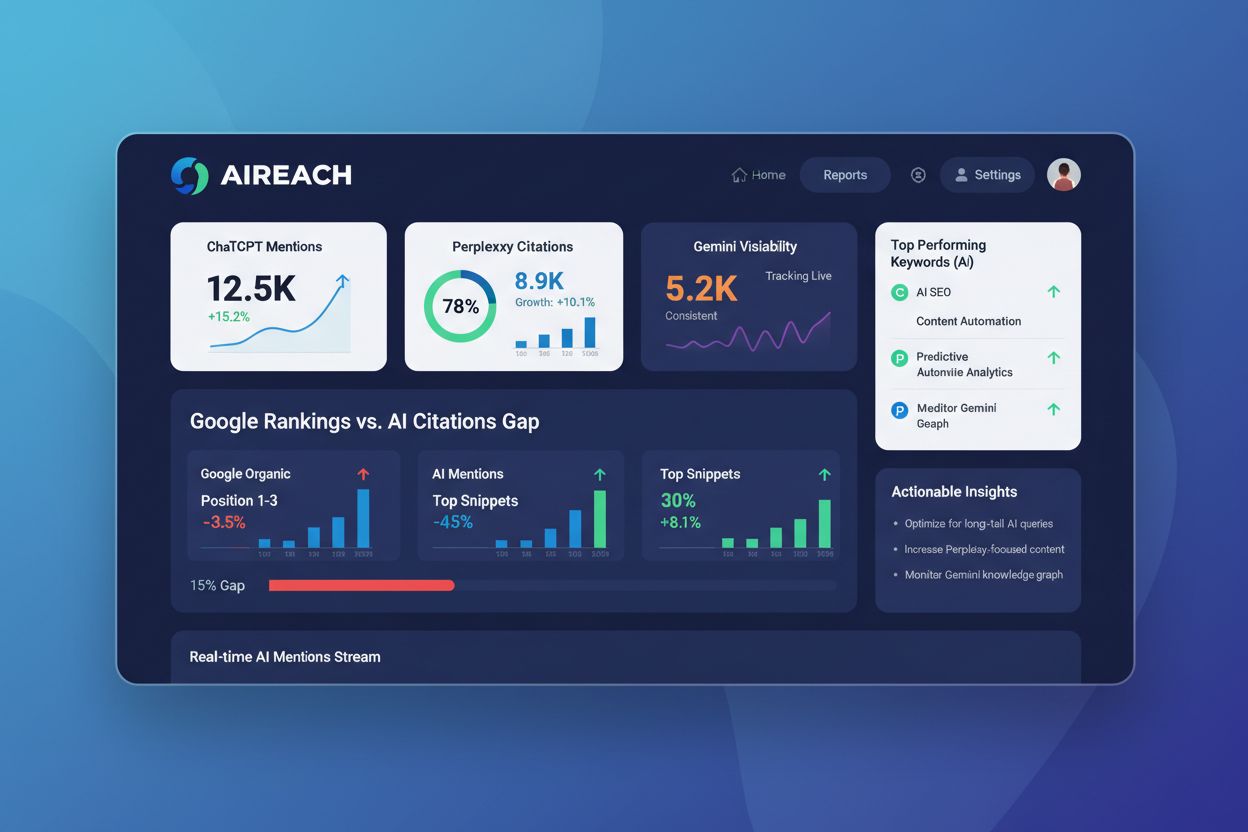
Discover why high Google rankings don't guarantee AI visibility. Learn the gap between SEO and AI citations, and how to optimize for both search channels.
Cookie Consent
We use cookies to enhance your browsing experience and analyze our traffic. See our privacy policy.