


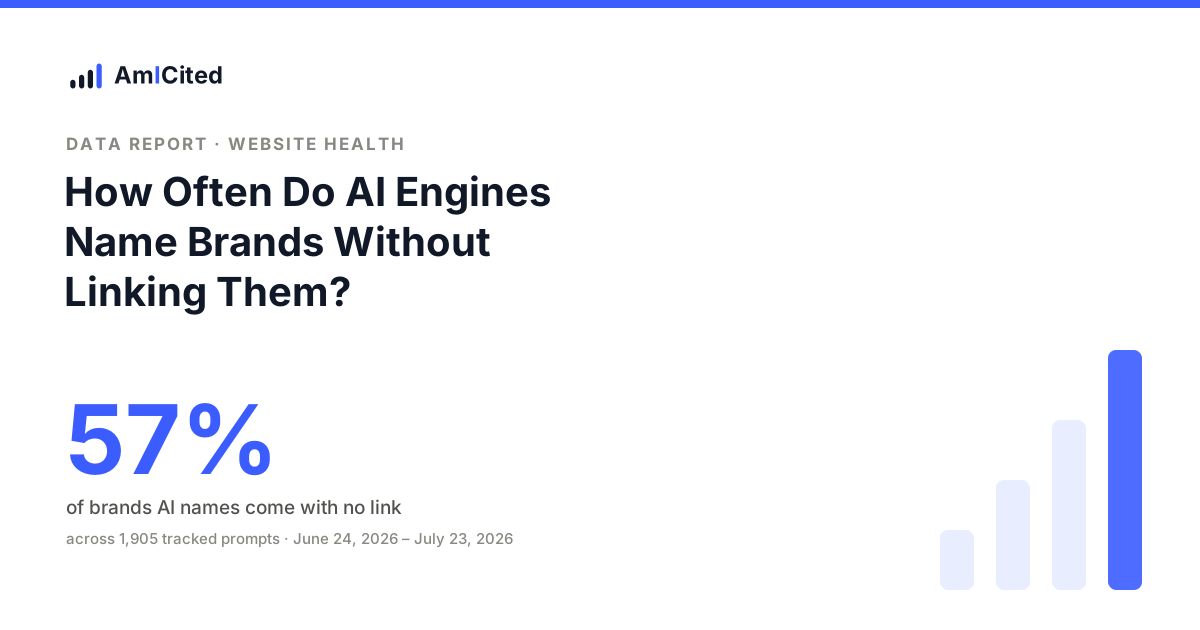
How Often Do AI Engines Name Brands Without Linking Them?
AI engines name brands far more than they link them: 57% of brand mentions carry no citation link at all.
6 min read

Unlinked brand mentions now matter as much as backlinks for AI search visibility. Learn why LLMs weight mentions, how context and sentiment change their value, and five strategies to earn more.
Bottom line: Treat unlinked mentions as a primary AI-visibility lever alongside backlinks, and track mention rate, citation rate, and sentiment (a tool like Am I Cited makes this easy) rather than optimizing for links alone.
Here’s a statistic that should reshape how you think about search visibility: 85% of brands mentioned in ChatGPT have no citation links. Yet they still win visibility. Users see the name, remember it, and search for it later.
This is the new reality of AI search.
For decades, SEO marketers chased backlinks like they were the holy grail. A link meant authority. A link meant votes. A link meant rankings. And that was true for traditional Google search. But large language models don’t follow links. They read text. They extract entities. They build semantic maps of how brands relate to topics.
The question isn’t whether unlinked brand mentions count anymore. They do. The real question is: How much? And more importantly: How do you earn them strategically?
This guide answers both. You’ll learn why LLMs weight unlinked mentions more heavily than backlinks for AI visibility, how context and sentiment determine mention value, and the exact five-step workflow to track and earn more mentions in 2026.

Track how AI chatbots mention your brand across ChatGPT, Perplexity, and other platforms.
In May 2025, Ahrefs published a landmark study analyzing 75,000 brands to identify which factors correlate with visibility in Google AI Overviews. The results were unambiguous:
Brand web mentions showed a 0.664 correlation with AI Overview visibility. Backlinks showed a 0.218 correlation.
That’s a 3X stronger signal.
To put this in practical terms: Brands earning the most web mentions earned up to 10X more mentions in AI Overviews compared to the next closest quartile. Meanwhile, 26% of brands had zero mentions in AI Overviews, not because they lacked backlinks, but because they lacked presence across the web.
This doesn’t mean backlinks are useless. It means that for AI search specifically, mentions are now the dominant visibility signal. An unlinked mention in a respected industry publication carries more weight for AI visibility than a backlink from a low-authority domain.
Traditional SEO is built on a graph of links. Google crawls links to discover pages, follows links to understand authority, and uses link patterns to rank results. Links are the infrastructure.
AI search works differently. When you ask ChatGPT or Perplexity a question, the model doesn’t crawl links. It reads text. It extracts information from sentences, paragraphs, and articles. It synthesizes ideas across sources. And crucially, it builds semantic associations between concepts.
This distinction is fundamental: Links are infrastructure. Mentions are data.
An LLM encounters a brand name in text and registers it as a data point. If that mention appears alongside relevant keywords and trusted sources, the model learns an association. “For cloud security, BrandX is widely used.” The model doesn’t need to follow a link to learn that BrandX = cloud security. The mention itself is the signal.
This is why mentions matter so much for AI. They’re the raw material the model processes.
For 20+ years, SEO was dominated by one question: “Who links to you?” Authority flowed through links. Visibility came from link equity.
In 2025, the question has shifted: “Who talks about you, and in what context?”
This shift reflects how large language models actually work. Modern LLMs are trained on massive amounts of text. During training, they learn patterns: which entities appear together, which topics are associated with which brands, which sources are trusted. They build what researchers call an “entity graph,” not a link graph.
In this entity graph, your brand’s position depends on:
This is fundamentally different from link-based authority. You can’t “build” entity recognition the way you build links. But you can earn it through strategic presence, original research, expert commentary, and community engagement.
Understanding why unlinked mentions matter requires understanding how LLMs process them. This isn’t theoretical. It directly affects your strategy.
At the core, large language models perform a task called entity extraction. As they read text, they identify named entities (people, places, organizations, brands) and map them to concepts and attributes.
Here’s a concrete example:
When an LLM reads the sentence “For enterprise cloud security, BrandX is heavily utilized by Fortune 500 companies,” it extracts:
The model doesn’t need a link to make this association. The sentence itself contains the semantic relationship. And if this sentence appears across multiple trusted sources, the association strengthens. The model learns with confidence that BrandX = cloud security.
This is why context matters so much. A random mention of your brand name in a low-quality directory teaches the model nothing useful. A contextual mention in a respected industry publication teaches the model something valuable: what you do, who uses you, and why you matter.
The more contextual mentions across trusted sources, the stronger the entity association. And stronger associations mean higher likelihood of inclusion in AI-generated answers.
LLMs don’t just extract individual entities. They also extract relationships between entities: which brands are mentioned together, which competitors appear in the same conversation, which brands belong in the same category.
This is called co-citation, and it’s critical for competitive positioning.
Imagine a tech publication publishes an article titled “Top 5 Cloud Security Tools for 2026.” The article lists five tools, including yours. Even if the article doesn’t link to your site, the model learns something powerful: Your brand belongs in the competitive set of cloud security tools.
Why does this matter? Because when a user asks an LLM, “What are the best cloud security tools?” the model draws from its learned associations. Brands that frequently appear in “best of” lists, comparison articles, and competitive roundups are more likely to be included in the answer. They belong in the conversation.
This is why being mentioned alongside competitors, even without a link, is valuable for AI visibility. You’re not just earning a mention. You’re earning positioning in a category.
Large language models are trained to recognize consensus. If a claim appears in one source, it’s weak evidence. If the same claim appears across many independent sources, it’s strong evidence.
This principle extends to brands. If your brand is mentioned only on your own website, the model learns little. But if your brand is mentioned across Reddit discussions, industry publications, review platforms, and expert commentary, the model learns something different: This brand is trusted. This brand is talked about. This brand belongs in conversations about this topic.
Research shows this concretely: Brands present on four or more platforms are 2.8X more likely to appear in ChatGPT responses compared to brands mentioned on fewer platforms. Breadth of presence signals consensus, and consensus signals authority.
This is E-E-A-T in action: Expertise, Experience, Authority, Trust. Your brand demonstrates these qualities not through self-proclamation but through third-party validation. And third-party validation comes from mentions across diverse, trusted sources.
Get the latest insights on AI mentions, brand monitoring, and optimization strategies.
Here’s where many marketers go wrong: They assume all mentions are created equal. A mention is a mention, right?
Wrong. A mention in a random directory carries almost no weight. A mention in a respected industry analysis carries enormous weight. The difference is context.
The value of a brand mention depends entirely on what surrounds it.
Low-value mention example: “BrandX is a software company in the cloud security space.” (Generic directory listing, no context, no credibility signal)
High-value mention example: “For enterprise clients managing multi-cloud infrastructure, BrandX’s unified security platform has become the industry standard, trusted by 40% of Fortune 500 companies. The platform’s real-time threat detection reduced average incident response time from 8 hours to 12 minutes, according to a 2025 independent audit.” (Specific context, credibility signals, quantified benefits, third-party validation)
These two mentions are night and day. The first teaches the model almost nothing. The second teaches the model everything it needs to know to include BrandX in an answer about enterprise cloud security.
This is why quality of placement outranks raw mention volume. You could earn 100 mentions in low-quality directories, or 10 mentions in respected industry publications. The 10 will have more impact on AI visibility because the context is richer.
The implication is clear: Focus on earning mentions in authoritative sources where your brand is described in relevant context. This means:
LLMs also evaluate the sentiment surrounding mentions. Is your brand described positively, neutrally, or negatively?
Positive mentions boost visibility. They signal that your brand is recommended, trusted, and worth including in answers.
Negative mentions create a different problem. If your brand is frequently mentioned in the context of complaints, lawsuits, or failures, the LLM learns a different association. It might include your brand in answers, but with caveats. “BrandX is popular, but users report X issue…” This kind of mention damages visibility more than no mention at all.
Neutral mentions fall in between. They contribute to entity recognition without strong positive or negative signals.
The implication: Monitor not just whether you’re mentioned, but how you’re mentioned. A single positive mention in a trusted source outweighs multiple neutral mentions. And negative mentions require active reputation management.
One more critical factor: freshness.
Research shows that 65% of AI bot hits target content published within the past year. This means AI models prioritize recent information. A mention from 2024 carries less weight than a mention from 2026.
This creates a fundamental difference from traditional SEO. In Google search, an old backlink retains value indefinitely. In AI search, mention value decays over time. Fresh mentions matter more.
The implication: Mention-building is an ongoing program, not a one-time push. A brand that earned strong coverage two years ago but went quiet will fade from AI answers as newer sources crowd the model’s retrieval pool. To maintain AI visibility, you need sustained presence: consistent mentions across the 12-month recency window.
Let’s put this directly: Mentions and backlinks serve different purposes. Both matter, but they matter differently, especially for AI search.
| Factor | Brand Mention (Unlinked) | Backlink | AI Importance |
|---|---|---|---|
| Passes referral traffic | ❌ No | ✅ Yes | Low for AI |
| Builds entity association | ✅ Yes | ✅ Yes | High for AI |
| Included in AI summaries | ✅ Yes | ✅ Yes | High for AI |
| Requires link negotiation | ❌ No | ✅ Yes | Easier to earn |
| Counts as authority signal | ⚠️ Entity trust | ✅ Domain authority | Context-dependent |
| Correlation with AI visibility | 0.664 | 0.218 | 3X stronger |
| Effort to earn | Low-Medium | Medium-High | Favorable |
| Decays over time | ✅ Yes (12-month window) | ❌ No (persistent) | Important to know |
The answer depends on your goal:
If your primary goal is AI search visibility: Prioritize mentions. The data is clear: mentions correlate 3X more strongly with AI Overview visibility than backlinks. Build a mention strategy first.
If your primary goal is organic Google search ranking: Balance both. Backlinks still matter for traditional SEO, but mentions are becoming increasingly important as Google integrates AI more deeply into search results.
If your primary goal is referral traffic: Prioritize links. Unlinked mentions don’t drive clicks. If you need traffic to your site, links are the answer.
If your primary goal is brand authority and reputation: Prioritize both, but with emphasis on mentions. Authority in the AI era comes from being talked about across trusted sources, not just from link equity.
The strongest position isn’t “mentions vs links.” It’s both mentions and links.
Ideally, you earn linked mentions: your brand name appears in text with a hyperlink to your site. This gives you:
When you can’t get a link, an unlinked mention is still valuable for AI visibility. But the ideal is to pursue both.
In practice, this means:
This three-layer approach covers all your bases: AI visibility, search engine visibility, and referral traffic.
Most marketers track one metric: rankings. They ask, “What position am I in for this keyword?”
For AI visibility, you need to track four metrics. Each tells you something different about how your brand is performing in AI-generated answers.
Definition: The percentage of AI responses that mention your brand name (linked or unlinked).
Why it matters: This is your baseline visibility. If your brand isn’t named, it doesn’t exist in the AI’s answer.
How to measure: Run 20-30 relevant prompts across ChatGPT, Perplexity, and Google AI Overviews. Count how many responses mention your brand. Divide mentions by total prompts.
Benchmark: Compare your mention rate to competitors. If competitors are mentioned in 60% of responses and you’re mentioned in 20%, you have a visibility gap.
Target: Aim to match or exceed your top competitors.
Definition: The percentage of mentions that include a source link or reference to your content.
Why it matters: Citations are stronger than mentions. They drive referral traffic and signal that your content influenced the answer.
How to measure: Of the mentions you found, how many included a link to your site? Divide citations by total mentions.
Reality check: Don’t expect high citation rates. Research shows only 15% of brand mentions in AI responses include citations. This is normal. Unlinked mentions are the majority.
Target: Aim to increase citation rate over time through content optimization (make your content more citable).
Definition: The percentage of mentions where the AI actively recommends your brand, vs. merely mentioning it.
Why it matters: A mention is good. A recommendation is better. Recommendations drive consideration and conversion.
How to measure: Manually review mentions and classify them:
Target: Increase the percentage of mentions that are recommendations.
Definition: The tone and context surrounding your mentions.
Why it matters: A negative mention can hurt visibility more than no mention. A positive mention in a relevant context is worth more than a neutral mention.
How to measure: Manually review mentions and classify:
Target: Maximize positive mentions; minimize negative ones.
Now that you understand why mentions matter and how to measure them, the question becomes: How do you earn more?
You can’t “build” mentions the way you build backlinks. But you can engineer your visibility through strategic content, expert positioning, and community presence.
Why it works: Journalists, analysts, and content creators need credible sources. Original research gives them a reason to mention your brand.
How to do it:
Example: Ahrefs’ 75,000-brand study has generated hundreds of mentions and citations. Why? Because it’s original data that journalists can’t find elsewhere. Every article about “brand mentions and AI visibility” now cites Ahrefs.
Timeline: 2-3 months to conduct research, 1-2 months for initial coverage, ongoing citations for 12+ months.
Tools: SurveyMonkey, Typeform, Google Forms for surveys; Tableau for visualization.
Why it works: Media outlets need expert commentary. If you’re easy to quote, you’ll be quoted often.
How to do it:
Tools: HARO (Help A Reporter Out), LinkedIn, Twitter, industry forums, podcast appearances.
Example: Become the go-to expert on “generative engine optimization” or “AI search visibility.” When journalists write about these topics, they’ll seek you out.
Timeline: 1-2 months to establish credibility, ongoing mentions as you participate.
Why it works: AI models weight certain domains higher. Mentions on trusted platforms carry more weight.
Platforms that matter:
How to do it:
Why it matters: When an LLM is trained on web data, it encounters your brand on these platforms repeatedly. Mentions on G2 carry more weight than mentions on a random blog because G2 is a trusted authority platform.
Timeline: 1-2 months to optimize profiles; ongoing benefits.
Why it works: These articles explicitly name competitors. Being included signals competitive parity.
How to do it:
Example: If you’re a CRM, you want to be in every “Best CRM Tools 2026” article. Each mention in a respected publication signals competitive parity to LLMs.
Timeline: Ongoing; new roundups published monthly.
Why it works: Reddit, forums, and Q&A platforms generate AI-readable text. Authentic participation builds mentions in trusted communities.
How to do it:
Example: If you’re a marketing tool, answer questions about marketing automation on r/marketing. Authentic participation will naturally include mentions of your brand in relevant contexts.
Important: This must be authentic. Spam and self-promotion will backfire. The goal is to be helpful and knowledgeable, with mentions emerging naturally.
Timeline: Ongoing; mentions accumulate as you participate.
Understanding the importance of mentions is one thing. Actually tracking them is another. This five-step workflow will give you visibility into your AI brand mentions and help you identify gaps.
Start with manual testing. This gives you direct insight into how your brand appears in AI responses.
Platforms to test:
Prompts to test:
Frequency: Weekly or biweekly for competitive monitoring; monthly for broader tracking.
Output: Create a spreadsheet:
| Date | Platform | Prompt | Mentioned? | Cited? | Recommended? | Sentiment | Context |
|---|---|---|---|---|---|---|---|
| 2026-01-15 | ChatGPT | Best CRM tools | Yes | No | Yes | Positive | Top 3 |
| 2026-01-15 | Perplexity | Compare BrandX to Competitor | Yes | Yes | Neutral | Neutral | Equal comparison |
This spreadsheet becomes your primary tracking tool.
Not all mentions are equal. Some come from high-authority sources; others from low-authority sources. Understanding your mention sources helps you identify where to focus PR and content efforts.
How to do it:
Analysis:
Output: A list of target publications where you want to earn mentions.
Manual testing is good for understanding. But for ongoing monitoring, you need tools.
Tools to consider:
Ahrefs Brand Radar
Semrush Brand Monitoring
Advanced Web Ranking
Otterly AI
Peec AI
Note: No tool is perfect. All require some manual verification. But they save time and provide ongoing tracking.
You don’t exist in a vacuum. Understanding how your competitors are mentioned helps you identify gaps and opportunities.
How to do it:
Questions to ask:
Output: A competitive gap analysis that shows where you’re losing visibility.
Spreadsheets are a start. But a dashboard helps you see trends over time.
What to track:
Tools for dashboards:
Frequency: Update monthly. Review quarterly.
Action: Use the dashboard to identify trends:
Based on these insights, adjust your PR and content strategy.
As this shift from link-based to mention-based visibility happens, misconceptions abound. Let’s debunk the biggest ones.
The myth: With mentions now more important for AI, backlinks no longer matter.
The reality: Backlinks still serve critical functions:
The nuance: For AI search specifically, mentions are now more important than backlinks. But for overall search visibility, you need both.
The implication: Don’t abandon link-building. Rebalance your efforts. If you were 80% focused on links and 20% on mentions, shift to 50/50 or even 40/60 (mentions/links).
The myth: A mention is a mention. Volume is what matters.
The reality: Context, sentiment, source authority, and recency create massive variance in mention value. A single mention in a respected industry publication can be worth 100 mentions in low-quality directories.
Example:
The implication: Focus on quality of placement, not volume. One mention in TechCrunch is worth more than 50 mentions in low-quality directories.
The myth: If a mention doesn’t include a link, it’s wasted effort.
The reality: 85% of brands mentioned in ChatGPT have no citation links. Yet they still win visibility and brand recall.
The data: Unlinked mentions correlate 0.664 with AI Overview visibility. That’s 3X stronger than backlinks.
The implication: Don’t wait for links. Build mentions first. Links are a bonus, not a requirement.
The myth: Mentions happen randomly. You can’t engineer them.
The reality: Strategic content, PR, expert positioning, and community presence directly influence mentions.
The evidence: The five strategies outlined above (original research, expert commentary, platform presence, comparison coverage, community engagement) all generate mentions predictably.
The implication: Mention-building is an earned visibility tactic, not luck. It requires strategy and effort, but it’s controllable.
Here’s what we’ve covered:
Unlinked brand mentions now matter more than backlinks for AI search visibility. The data is clear: mentions correlate 0.664 with AI Overview visibility vs 0.218 for backlinks. That’s a 3X stronger signal.
But not all mentions are equal. Context, sentiment, source authority, and recency determine mention value. A single mention in a respected publication outweighs 100 mentions in low-quality directories.
You can earn mentions strategically. Original research, expert commentary, platform presence, comparison coverage, and community engagement all generate mentions predictably.
You need to track mentions. Use the five-step workflow: manual testing, source identification, specialized tools, competitor analysis, and dashboard tracking. Measure mention rate, citation rate, recommendation rate, and sentiment.
The ideal strategy is both mentions and links. Mentions for AI visibility, links for traditional SEO and referral traffic. Pursue both.
This week: Run the manual prompt testing (Step 1). Test 10 relevant prompts across ChatGPT, Perplexity, and Google AI Overviews. See where your brand appears and where it’s missing.
Next week: Identify your mention sources (Step 2). Create a list of publications where you want to earn mentions. Start with competitors’ sources.
This month: Implement one mention-earning strategy. Start with original research or expert commentary. Pick the strategy that fits your resources.
Next month: Set up a tracking system (Step 5). Create a simple spreadsheet or use a specialized tool. Begin monthly tracking.
Ongoing: Monitor, analyze, adjust. Use your dashboard to identify trends. Double down on what’s working. Adjust what’s not.
The shift from link-based to mention-based visibility is real. It’s not a future trend, it’s happening now. Brands that understand this shift and build mention strategies will dominate AI search visibility in 2026 and beyond.
Arshia is an AI Workflow Engineer at FlowHunt. With a background in computer science and a passion for AI, he specializes in creating efficient workflows that integrate AI tools into everyday tasks, enhancing productivity and creativity.

Am I Cited monitors how often your brand is mentioned and cited across ChatGPT, Perplexity, and Google AI Overview, including the unlinked mentions other tools miss, and how you compare to competitors.
AI engines name brands far more than they link them: 57% of brand mentions carry no citation link at all.
Discover how web mentions and third-party references influence AI citations. Learn why LLMs prioritize brand mentions over backlinks and strategies to increase ...
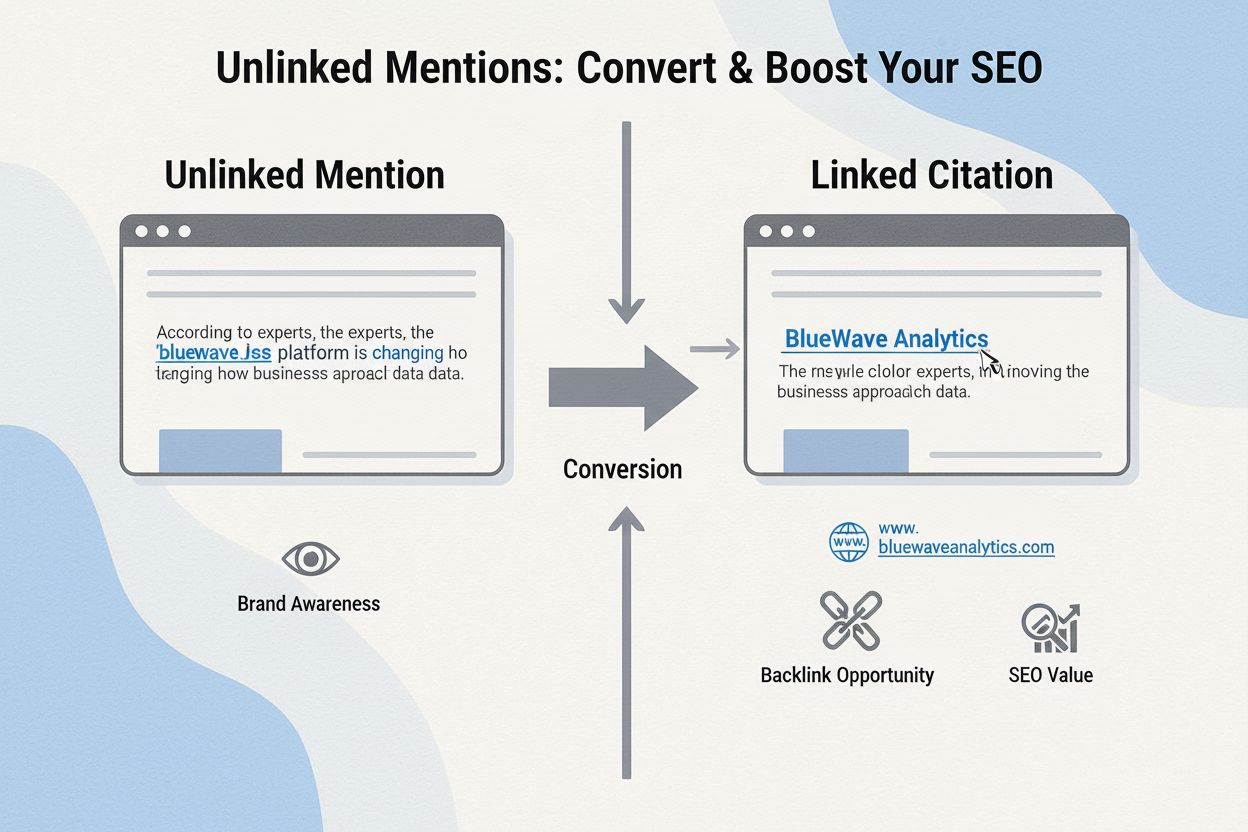
Unlinked brand mentions are online references to your brand without backlinks. Learn how they impact SEO, AI visibility, and why converting them to links matter...
Cookie Consent
We use cookies to enhance your browsing experience and analyze our traffic. See our privacy policy.