



GEO and AEO Readiness Checklist
Use this GEO and AEO readiness checklist to test AI crawler access, extractable answers, schema, llms.txt, prompt visibility, and citation evidence today.
16 min read

A complete 60-point technical AEO audit checklist: AI crawler access, structured data, content extractability, entity optimization, trust signals, freshness, and citation tracking, plus a weighted scorecard and 90-day fix sequence.
Your content ranks on page one of Google. Your traffic numbers look healthy. Yet when a buyer asks ChatGPT, Perplexity, or Gemini a question in your category, your brand is nowhere to be found. No mention. No citation. No link.
That gap, between traditional search visibility and AI answer engine visibility, is exactly what a technical AEO audit is designed to expose and close.
Answer Engine Optimization (AEO) is the practice of structuring digital content so that AI-powered systems can find it, extract a clear answer from it, and confidently cite it as a source. AEO audits are the diagnostic check that tells you why your content is invisible to these systems, and what to fix first.
This guide delivers a complete, 60-point technical AEO audit checklist for 2026, built from a cross-referenced analysis of over 15 authoritative sources, the AmICited provider response report, empirical research including the Princeton GEO paper, and real-world data from platforms tracking 500+ brands across major AI engines. It ends with a weighted scorecard, a tool comparison matrix, and a prioritized 90-day fix sequence.
A technical AEO audit is a structured evaluation of how well your website’s content can be accessed, understood, and cited by AI answer engines, including ChatGPT, Perplexity, Gemini, Claude, and Google AI Overviews.
Unlike a traditional SEO audit, which asks “can Google rank this page?”, an AEO audit asks a harder question: can an LLM read this page, extract a clean answer, trust the source, and quote it? A page can rank in the top three organic results and still be invisible to AI engines, typically because the answer is buried in a long introduction, the HTML is empty until JavaScript renders, the AI crawler is blocked in robots.txt, or the brand lacks the entity signals AI systems use to verify trustworthiness.
The numbers tell a stark story. AI Overviews now trigger on approximately 25% of all queries, up from near zero two years ago. Zero-click searches have moved from 56% in 2024 to 69% in 2025. Research from Erlin, analyzing 500+ brands, shows that roughly 60% of AI Overview citations come from pages that do not rank in the top 20 organic results. Page-one rankings no longer predict whether your content gets cited.
The competitive gap is widening fast. Erlin’s data shows the gap between AI visibility winners and losers is 9x today and growing 3.2% every month. Brands that audit and fix early lock in category positions that compound. Brands that wait inherit a citation gap that takes six to twelve months of remediation work to close.
Perhaps most sobering: research from AirOps shows that only about 30% of brands remain visible from one AI answer to the next, and just 20% stay visible across five consecutive runs. AI visibility is not a state you achieve once. It is a signal you maintain.
Before diving into the checklist, it helps to understand exactly how AEO relates to the other optimization disciplines that now coexist in the search landscape.
| Dimension | SEO | AEO | GEO |
|---|---|---|---|
| Full Name | Search Engine Optimization | Answer Engine Optimization | Generative Engine Optimization |
| Primary Target | Google, Bing (blue links) | ChatGPT, Perplexity, Gemini, Claude, Google AI Overviews | Google AI Overviews, Bing Copilot, SGE, multimodal answers |
| Core Question | Can Google rank this page? | Can an AI engine extract and cite this content? | Can a generative engine synthesize this content into a response? |
| Success Metric | Organic traffic, keyword rankings, SERP position | Citation rate, mention rate, AI referral traffic | Visibility in AI-generated summaries, Share of Voice |
| Content Focus | Keyword density, relevance, backlinks | Entity clarity, answer-first patterns, extractability | Comprehensive topic coverage, decision-support content |
| Technical Focus | Crawlability, indexing, Core Web Vitals | AI crawler access, structured data, semantic HTML | Entity recognition, knowledge graph alignment, multimodal signals |
| Key Crawler | Googlebot | GPTBot, ClaudeBot, PerplexityBot, OAI-SearchBot | Google-Extended, Bing’s GPT crawler, multimodal bots |
Key insight: These three disciplines are not competing. They are complementary layers of the same foundation. Strong technical SEO is a prerequisite for AEO. Strong AEO amplifies GEO. But neither SEO nor GEO alone guarantees AI citations. AEO fills the specific gap between being findable and being quotable.

Track how AI chatbots mention your brand across ChatGPT, Perplexity, and other platforms.
Every AI citation follows the same four-step chain. If any link breaks, your content stays invisible.
| Step | Question | What Matters |
|---|---|---|
| 1. Crawl | Can the bot fetch the page at all? | robots.txt, server response time, JavaScript rendering |
| 2. Extract | Can it pull a clean, self-contained passage? | Answer-first structure, semantic HTML, heading hierarchy |
| 3. Trust | Do schema, entities, and off-site signals agree? | Structured data, entity consistency, E-E-A-T signals |
| 4. Cite | Is your passage the best answer to the prompt? | Content depth, freshness, authority, citation signals |
Most teams focus entirely on step four (creating great content) and ignore steps one through three. That is backward. If the bot cannot crawl your page, extract a clean passage, or trust your entity, step four never happens. The checklist below works through all four steps in order.
The checklist is organized into seven categories, each mapping to one or more steps in the crawl-to-citation chain. Each item includes a brief explanation of what to check and why it matters for AI visibility.
These are the gatekeepers. If you fail here, nothing else matters: the AI engine never sees your content.
1. Audit robots.txt for AI crawler directives
Your robots.txt file must explicitly allow the major AI crawlers while still blocking any you don’t want accessing your content. The critical bots to check:
GPTBot (OpenAI / ChatGPT)OAI-SearchBot (OpenAI search)ClaudeBot (Anthropic / Claude)PerplexityBot (Perplexity)Google-Extended (Google AI Overviews training data)A common mistake: sites that welcome Googlebot but silently block all AI crawlers. Check your robots.txt file directly at yourdomain.com/robots.txt. A single Disallow: / directive aimed at * blocks everything except Googlebot if you’ve added a separate allow rule for it. Use explicit user-agent directives for each AI bot.
2. Verify XML sitemap accuracy and AI crawler discoverability
Your XML sitemap should contain only canonical, 200-status URLs. Remove redirects, 404s, and noindexed pages. Submit to Google Search Console and Bing Webmaster Tools. Ensure your sitemap is referenced in robots.txt. Use accurate <lastmod> dates: AI crawlers prioritize recently updated content.
3. Implement IndexNow for real-time discovery
IndexNow is a push protocol that notifies search engines when content changes. While not all AI crawlers support it yet, Bing (which powers Copilot) and Yandex do. Implementation gives you a speed advantage for time-sensitive content.
4. Check for JavaScript rendering dependencies
AI crawlers vary in their JavaScript rendering capabilities. Googlebot renders JavaScript well, but GPTBot and ClaudeBot may not. Use the “View Page Source” tool in your browser to check whether critical content (the main answer, key data points, product information) appears in the raw HTML. If it doesn’t, implement server-side rendering (SSR) or static generation.
5. Verify HTTP status codes across key pages
Run a crawl of your top 50–100 pages. Every important page should return a 200 status. Google’s December 2025 Rendering Update clarified that pages returning non-200 status codes may be excluded from rendering entirely. This applies to AI crawlers as well.
6. Audit canonical tags
Every page needs a self-referencing canonical tag. Check for canonical loops, chains, and cross-domain canonicalization issues. AI engines use canonical signals to determine which version of a page to cite.
7. Eliminate crawl budget waste
Audit for duplicate URLs, parameter variations, and trailing-slash inconsistencies. Each wasted crawl request is a missed opportunity for AI engines to discover your most important content. Fix by implementing redirects, canonical tags, and URL parameter handling in Google Search Console.
8. Ensure no orphan pages in critical content clusters
Orphan pages (pages with no internal links pointing to them) are nearly invisible to crawlers. Run a crawl comparison between your sitemap and your internal link graph. Any page in your sitemap that has zero internal links needs attention.
9. Check pagination and faceted navigation handling
AI crawlers can get trapped in infinite pagination loops or faceted navigation. Use rel="next" and rel="prev" or consolidate into “view all” pages. For faceted navigation, use canonical tags pointing to the primary filter page.
10. Verify server response time under 500ms
AI crawlers have shorter patience than Googlebot. If your server takes longer than 500ms to respond, AI crawlers may time out before fetching the full page. Use a CDN, optimize database queries, and implement caching.
Schema markup bridges the gap between human-readable text and machine understanding. It is the single most direct technical action you can take to improve AI extractability.
11. Implement Organization schema with sameAs links
Every page on your site should include Organization schema: name, URL, logo, and sameAs links to verified external profiles. This includes LinkedIn, Crunchbase, Wikidata, Wikipedia, GitHub, and any industry-specific directories. SameAs links are the primary way AI engines resolve entity identity.
12. Deploy WebSite schema with SearchAction on the homepage
Include the WebSite schema type on your homepage with a SearchAction property. This tells AI engines that your site has a search function and how it works.
13. Add Article schema on all blog posts
Use the Article or BlogPosting schema type on every article. Include headline, author (linked to a Person schema), datePublished, dateModified, publisher (linked to Organization schema), and image. Nested schema connections (linking Article to Organization to Person) build the entity graph AI engines use for trust verification.
14. Implement FAQPage schema on FAQ content
Any page with question-and-answer content should carry FAQPage schema. The question and answer in the markup must match the visible content on the page exactly. Mismatched schema is a trust deficit: AI engines check for alignment between structured data and visible text.
15. Use HowTo schema for tutorial content
If your content walks through steps, implement HowTo schema with each step, including images and estimated duration. This schema type is particularly effective for AI extractions because it provides clean, sequential data.
16. Add Product schema with Offer and AggregateRating
For e-commerce pages, Product schema should include name, description, price, availability, brand, and AggregateRating. AI engines use this data when answering product comparison and recommendation queries.
17. Implement BreadcrumbList schema
BreadcrumbList schema helps AI engines understand your site’s hierarchy and the relationship between pages. It provides navigation context that improves entity understanding.
18. Validate all schema with both Google’s Rich Results Test and Schema.org Validator
Run every schema template through two validators: Google’s Rich Results Test and the Schema.org Validator. Fix all errors and warnings. Warnings that seem cosmetic, like missing recommended properties, signal incompleteness to AI engines.
19. Use Person schema for author pages with credential links
Each author page should include Person schema with name, jobTitle, affiliation (linked to Organization), and sameAs links to professional profiles. AI engines increasingly weigh author expertise when deciding whether to cite a source.
20. Implement LocalBusiness schema for location-based businesses
Include name, address, geo coordinates, hours, phone, and service area. Match the data exactly to your Google Business Profile. AI engines cross-reference structured data across sources to verify entity consistency.
This is the highest-weighted category because it is where most sites fail first. AI engines extract paragraph-sized chunks. If your content format prevents clean extraction, you lose the citation.
21. Lead every page with a self-contained answer paragraph
The first paragraph of every informational page should answer the page’s core question completely, in 40–80 words. It must make sense when read in isolation, pulled out of the page and displayed inside an AI answer. This is the single most impactful structural change you can make.
22. Use question-based H2 and H3 headings
When natural, phrase your headings as questions users ask. “What Is an AEO Audit?” performs better than “AEO Audit Overview.” AI engines match heading text to user queries. A heading that mirrors the query gives the engine a direct signal that the answer is below.
23. Place one clear claim per paragraph
AI engines extract at the paragraph level. A paragraph that crams five points into four sentences gets skipped because none of the points is cleanly quotable. Each paragraph should make one claim, support it, and stop.
24. Use semantic HTML5 elements throughout
Use <article> for main content, <section> for logical divisions, <nav> for navigation, <header> and <footer> for their respective content. Semantic HTML helps AI engines parse which parts of the page are content versus chrome.
25. Maintain a clean heading hierarchy
One H1 per page. H2s for main sections. H3s for subsections. Never skip levels: don’t jump from H2 to H4. AI engines use heading hierarchy to understand content structure and extract the right passage for the right query.
26. Use HTML tables for comparison data and specifications
AI engines extract tabular data more reliably than tables embedded in images or JavaScript widgets. Use proper <table> markup with <thead>, <tbody>, and <th> elements. Include a descriptive caption.
27. Format lists with <ul> and <ol>
Use proper HTML list markup. AI engines can parse structured lists and may extract them directly. Avoid using images of lists or custom bullet characters.
28. Include named statistics and cite sources inline
The Princeton GEO paper (KDD 2024) found that Statistics Addition and Cite Sources are among the highest-impact techniques for AI visibility. Include specific numbers, such as “a 2026 Erlin study of 500 brands found that 50% score below 35% prompt coverage,” and cite the source with a link. Named statistics are more likely to be extracted verbatim than vague generalizations.
29. Use quotation signals for key definitions
The same Princeton research found that Quotation Addition (including clearly attributed quotes) produces a +41% lift on Position-Adjusted Word Count. Place key statistics, definitions, and expert statements in clearly attributed quote-like structures.
30. Keep introductions short: deliver substance within 150 words
Long introductions force AI engines to hunt for the answer. If the first 150 words of your page are throat-clearing, the engine may skip the page entirely. The answer should be visible before the reader needs to scroll.
31. Write descriptive alt text for all images
Alt text helps AI engines understand image context. For images that contain data or information, the alt text should describe the content accurately. Use descriptive filenames as well, aeo-audit-scorecard-2026.png rather than IMG_4721.png.
32. Structure content in clearly labeled sections
Each section of your page should address one topic and one topic only. The section heading should accurately describe the content below it. AI engines use section boundaries to match specific passages to specific queries.
33. Include dates and timestamps prominently
AI engines prioritize fresh content. Every page should display a published date and a last-updated date. If the content is time-sensitive, the date should be visible near the top of the page. Use the dateModified property in your schema markup.
34. Write for extraction, not just readability
Read your content aloud as if you were a voice assistant delivering an answer. Does it sound natural? Would it make sense to someone who hadn’t read the rest of the page? AI extractions are read in isolation: your content must work in that context.
35. Avoid burying critical information behind tabs, accordions, or carousels
Content hidden behind user interaction (tabs, accordions, expandable sections) may not be visible to AI crawlers. If the content is important enough to be cited, it should be visible in the default page state.
AI engines resolve entities (your brand, your products, your authors) by cross-referencing signals across multiple sources. Inconsistency creates doubt. Doubt kills citations.
36. Maintain consistent brand naming across all pages
Your brand name, product names, and version numbers should appear identically on every page and in every structured data field. “Acme Corp” on one page and “Acme Corporation” on another creates entity ambiguity.
37. Build and maintain a Wikidata entry for your organization
Wikidata is a primary knowledge graph that AI engines reference. A well-maintained Wikidata entry with accurate properties (name, founding date, headquarters, industry, website) strengthens your entity identity across all AI platforms.
38. Claim and optimize your Crunchbase profile
Crunchbase is cited by AI engines as a source of company information. Ensure your profile is complete, accurate, and consistent with your website and structured data.
39. Ensure consistent author attribution across all content
Every article should have a visible author byline linked to a detailed author page. The author name should match across the byline, the author page, the Article schema, and the Person schema. AI engines track author entities as trust signals.
40. Publish detailed author pages with credentials
Each author page should include a full bio, professional credentials, affiliations, links to publications, and links to verified professional profiles (LinkedIn, Google Scholar, industry associations). Author expertise is a direct E-E-A-T signal.
41. Create a comprehensive About page with editorial standards
Your About page should state who owns the site, what your editorial process is, how you fact-check content, and who is responsible for accuracy. AI engines look for these signals when evaluating trustworthiness.
42. Publish a clear privacy policy, terms of service, and contact page
These are baseline trust signals. A site without them is harder for AI engines to verify. Include a physical address and phone number on the contact page if applicable.
43. Use consistent entity IDs across your structured data
If your Organization schema uses @id, use the same ID everywhere that Organization is referenced: in Article publisher fields, in Product brand fields, in Person affiliation fields. This creates a machine-readable entity graph.
44. Cross-link your entity references externally
Link to your Wikipedia page, Wikidata entry, Crunchbase profile, LinkedIn company page, and any other verified external profiles from your website. AI engines follow these links to verify entity identity.
AI engines prefer sources they can verify. These technical signals build the trust layer.
45. Enforce HTTPS everywhere
Every page on your site must load over HTTPS. Mixed content warnings (where some resources load over HTTP) undermine trust. Use HSTS headers to enforce HTTPS at the server level.
46. Deploy security headers
Implement Content-Security-Policy, X-Frame-Options, X-Content-Type-Options, and Referrer-Policy headers. These don’t directly affect AI citations, but they signal a professionally maintained site, which contributes to overall trust scoring.
47. Use a valid, current SSL certificate
Expired or misconfigured SSL certificates are a hard stop for AI crawlers. Monitor certificate expiry and use automated renewal.
48. Ensure no broken internal or external links
Broken links signal neglect. Run a monthly link checker across your site. Fix or redirect broken internal links. Replace or update broken external links with current sources.
49. Maintain a clean, logical URL structure
URLs should be human-readable, stable, and descriptive. Avoid query parameters, session IDs, and unnecessary subdirectories. A clean URL, domain.com/technical-aeo-audit-checklist-2026, is more likely to be cited than domain.com/?p=4721.
50. Implement correct language declarations
Use the lang attribute on your <html> element and set the charset to UTF-8. AI engines use language metadata to match content to user queries in the correct language.
AI engines have training cutoff dates. Content that is stale when the model trains loses visibility. A regular refresh cadence is a competitive advantage.
51. Audit your top 20 pages quarterly for freshness
Check for outdated statistics, broken links, superseded information, and references to deprecated products or versions. Update and republish with a new dateModified timestamp.
52. Add and update last-modified dates
Every page should display a visible “last updated” date. The dateModified property in your schema should match this date. Discrepancies between visible dates and structured data dates are a trust signal failure.
53. Cite recent sources and data
When referencing statistics, use the most recent available data. A 2026 statistic beats a 2023 one. AI engines weight recency when deciding which source to cite for factual claims.
54. Refresh content ahead of known model training windows
While AI model training schedules are not public, major updates to platforms like ChatGPT and Gemini typically occur on a quarterly cadence. Align your content refresh schedule with these windows to maximize the chance that fresh content is included in the next training run.
55. Remove or redirect outdated content
Thin, outdated, or low-quality content dilutes your overall site quality signal. Prune or consolidate pages that no longer serve a purpose. Use 301 redirects to send any residual link equity to relevant, updated pages.
What you measure, you can improve. AEO measurement is still maturing, but these five tracking mechanisms give you a baseline.
56. Track AI referral traffic in your analytics
Set up segments or filters in your analytics to identify traffic from chatgpt.com, perplexity.ai, gemini.google.com, and claude.ai. While referrer data is not always passed through, it is improving. Track what you can.
57. Run manual prompt queries across AI platforms monthly
Build a list of 30–50 high-intent queries relevant to your business. Run them monthly across ChatGPT, Perplexity, Gemini, and Google AI Overviews. Document whether your brand is cited, mentioned, or absent. Track changes over time.
58. Use an AEO monitoring tool for automated tracking
Several tools now automate the process of running prompt sets across AI platforms and tracking citation rates. The tools comparison table below covers the major options. Manual tracking is a starting point; automated tracking is a requirement for consistent measurement.
59. Track Share of Voice against your identified competitors
For each prompt in your query set, note which competitors are cited alongside or instead of your brand. Calculate your Share of Voice: the percentage of citations across your prompt set that belong to your brand versus competitors. This is the AEO equivalent of keyword ranking.
60. Monitor crawl logs for AI bot activity
Review your server logs for requests from GPTBot, ClaudeBot, OAI-SearchBot, PerplexityBot, and Google-Extended. Track frequency, pages crawled, and response codes. Increasing crawl activity is a leading indicator of improving AI visibility.
Get the latest insights on AI mentions, brand monitoring, and optimization strategies.
Use this weighted scorecard to quantify your AEO readiness. Score each category on a percentage basis (items passed ÷ total items), then multiply by the weight.
| Category | Items | Weight | Your Score |
|---|---|---|---|
| AI Crawler Access & Indexability | 1–10 | 15% | /10 |
| Structured Data & Schema Markup | 11–20 | 15% | /10 |
| Content Extractability & Structure | 21–35 | 25% | /15 |
| Entity Optimization & Brand Consistency | 36–44 | 15% | /9 |
| Technical Trust Signals & Security | 45–50 | 10% | /6 |
| Content Freshness & Maintenance | 51–55 | 10% | /5 |
| Measurement & Citation Tracking | 56–60 | 10% | /5 |
How to calculate: For each category, divide your passing items by the total items. Multiply by the weight. Sum all categories. The maximum possible score is 100.
Interpretation:
| Score | Rating | What It Means |
|---|---|---|
| 90–100 | Excellent | Your site is AEO-ready. Focus on maintenance and competitive monitoring. |
| 75–89 | Strong | Solid foundation. Targeted improvements in your weakest categories will yield the fastest gains. |
| 60–74 | Moderate | Several issues are likely limiting your AI visibility. Address the lowest-scoring categories first. |
| 40–59 | Weak | Significant gaps exist. Prioritize Categories 1 and 3: if AI engines can’t access or extract your content, nothing else matters. |
| Below 40 | Critical | Start with fundamental technical SEO. Fix crawling, indexing, and content structure before investing in advanced AEO tactics. |
The most common failure pattern: Sites score well on Categories 4 and 5 (entity and trust signals) but poorly on Category 3 (content extractability). They have the authority but not the structure. For AI engines, structure beats authority: if the engine can’t extract a clean answer, it doesn’t matter how authoritative the source is.
The following tools support various aspects of the AEO audit process. The right tool depends on your needs: enterprise teams may need full-platform solutions, while smaller teams can start with manual tracking and free validation tools.
| Tool | Category | Key Features | Pricing | Best For |
|---|---|---|---|---|
| AirOps | AEO Platform | Citation tracking, Share of Voice, content scoring, extractability analysis | Enterprise (custom pricing) | Enterprise teams needing full AEO workflow |
| Profound | AI Visibility Analytics | 400M+ prompt insights, 10+ AI engines tracked, competitive benchmarking | $99–$499/mo | Mid-market to enterprise AEO tracking |
| AI Labs Audit | AEO/GEO Platform | 300+ AEO metrics, multi-model scoring, competitive analysis | Free tier + paid plans | Comprehensive AEO scoring and benchmarking |
| Erlin | AI Visibility | 500-brand benchmark data, citation tracking, gap analysis | Paid plans | Data-driven AEO gap analysis |
| SE Ranking | SEO + AEO | 300K+ domain tracking, llms.txt analysis, AI visibility metrics | $55–$239/mo | Combined SEO and AEO tracking |
| Otterly.AI | AI Visibility | Prompt-based tracking, brand mention monitoring, competitive analysis | $49–$199/mo | Brand-focused AI visibility monitoring |
| Screaming Frog | Technical SEO | Crawl analysis, schema validation, JavaScript rendering audit | Free (500 URLs) / £209/yr | Deep technical crawl analysis |
| Google Rich Results Test | Schema Validation | Free schema validation for Google-supported types | Free | Schema markup validation |
| Schema.org Validator | Schema Validation | Universal schema validation | Free | Schema markup validation |
| Google Search Console | Indexing + Crawl | Index coverage, crawl stats, Core Web Vitals | Free | Crawl and index monitoring |
An audit without action is a report. The following sequence turns the checklist into measurable progress.
Don’t block AI crawlers to “protect” your content. The instinct to block AI bots from scraping your content is understandable, but it ensures zero visibility in AI answers. If your competitors allow AI crawlers and you don’t, they get cited and you don’t. The question isn’t whether AI engines will answer questions in your category. It’s whether your content will be the source.
Don’t overinvest in llms.txt without evidence. As of mid-2026, multiple independent studies, including Limy (515 million bot events), OtterlyAI (90 days of data), and SE Ranking (300,000 domains), converge on the same finding: llms.txt has essentially no measurable impact on AI citations. Google’s own AI Optimization Guide, published May 2026, explicitly dismisses llms.txt as a ranking signal. Focus your energy on the interventions that have empirical backing: extractable content structure, schema markup, entity consistency, and citation signals.
Don’t treat AEO as a one-time project. AI citation is volatile. AirOps data shows that only 20% of brands maintain visibility across five consecutive runs. AEO requires ongoing measurement and maintenance. The audit is the start, not the finish.
Don’t optimize for one AI engine at the expense of others. Different engines extract and cite content differently, but the fundamentals (accessibility, extractability, trust, authority) are consistent across all platforms. Optimize for the fundamentals and you optimize for all of them.
Arshia is an AI Workflow Engineer at FlowHunt. With a background in computer science and a passion for AI, he specializes in creating efficient workflows that integrate AI tools into everyday tasks, enhancing productivity and creativity.

Am I Cited monitors your citation rate and share of voice across ChatGPT, Perplexity, and Google AI Overview, so you can measure whether your AEO audit fixes actually move the needle.
Use this GEO and AEO readiness checklist to test AI crawler access, extractable answers, schema, llms.txt, prompt visibility, and citation evidence today.
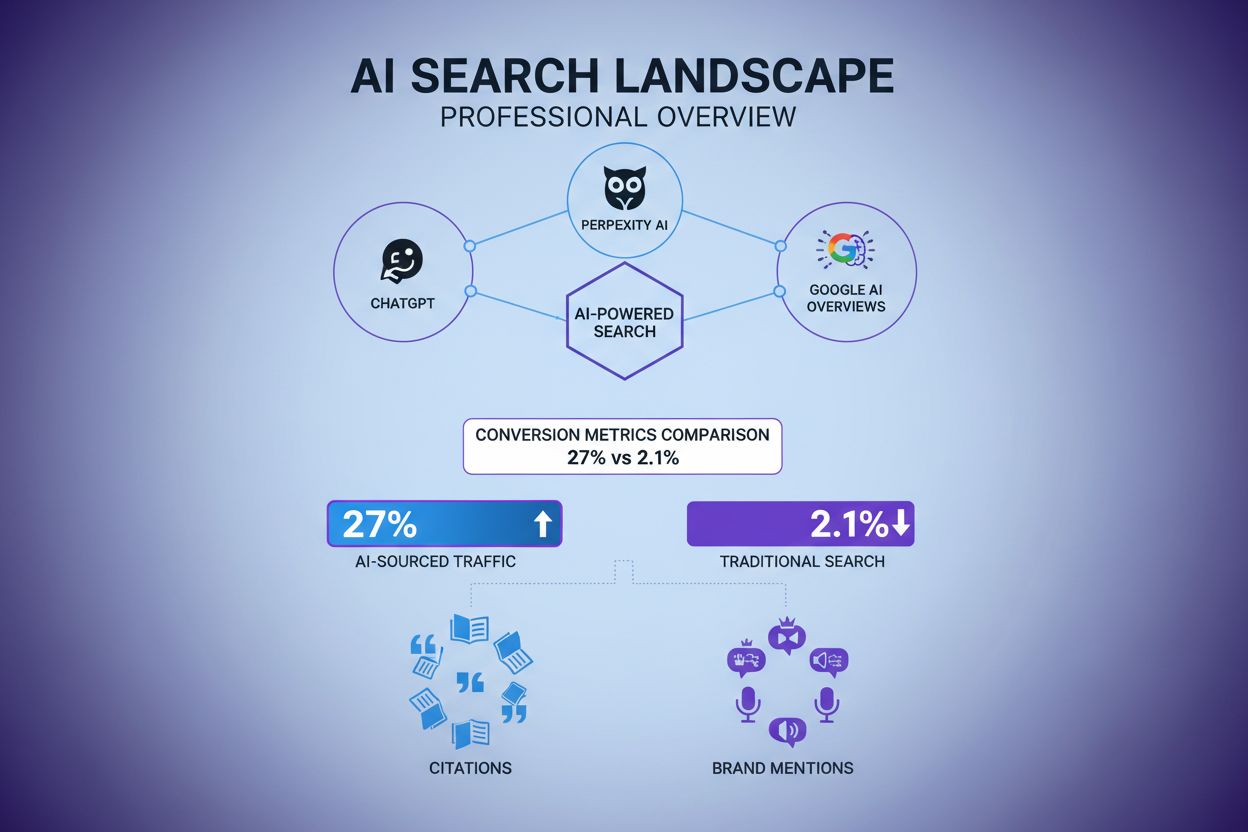
Complete GEO audit checklist with 25 optimization factors for ChatGPT, Perplexity, and Google AI Overviews. Improve your AI search visibility with our comprehen...
Learn what Answer Engine Optimization (AEO) is and how it helps your brand appear in AI-powered answers from ChatGPT, Perplexity, and Google AI Overviews. Disco...
Cookie Consent
We use cookies to enhance your browsing experience and analyze our traffic. See our privacy policy.