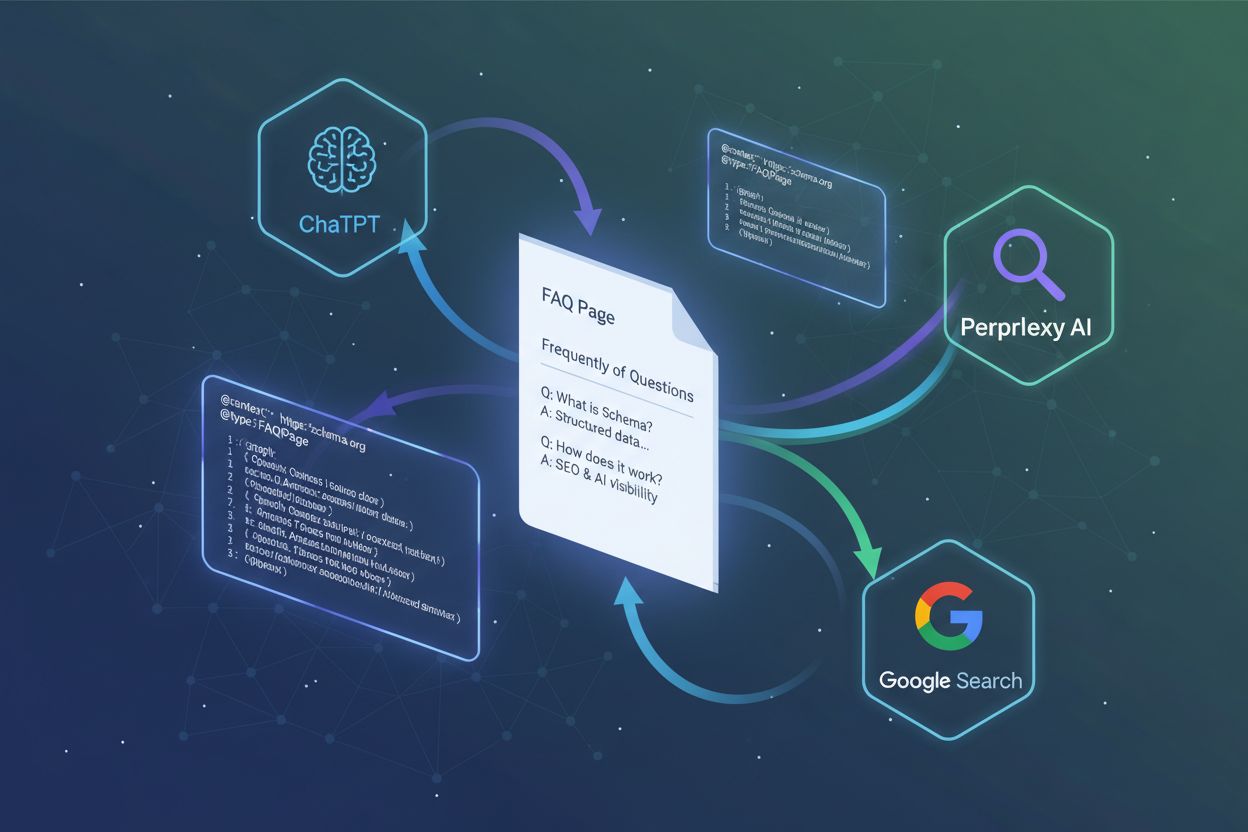
Discussion Structured Data Technical SEO

Does schema markup actually help with AI search visibility? Getting mixed signals

ST
StructuredSEO_Mike · Technical SEO Lead
· · 143 upvotes · 10 comments
SM
StructuredSEO_Mike
Technical SEO Lead · January 8, 2026

I’ve been investing heavily in structured data for our site, but I’m not sure it’s helping with AI visibility.

Current implementation:

  • FAQ schema on all knowledge base articles
  • Article schema with author info
  • Organization schema site-wide
  • All implemented via Google Tag Manager

My observations:

  • Rich results working fine in Google
  • Not sure about AI citation impact
  • Some pages with schema aren’t getting cited
  • Some pages without aren’t either

Questions:

  • Do AI crawlers actually use structured data?
  • Is there a wrong way to implement it?
  • What schema types matter most for AI?

What’s everyone’s real experience here?

10 comments

10 Comments

SE
SchemaExpert_Elena Expert Structured Data Specialist · January 8, 2026

Here’s the critical issue with your setup: GTM-injected schema is invisible to AI crawlers.

How AI crawlers work:

  1. Request your page
  2. Get the HTML response
  3. Parse it immediately
  4. Do NOT execute JavaScript

What this means:

  • Schema in static HTML: AI sees it
  • Schema via GTM/JavaScript: AI doesn’t see it
  • Server-side rendered schema: AI sees it

Implementation comparison:

MethodAI Crawler AccessTraditional Crawler Access
Static HTML JSON-LDFull accessFull access
Server-Side RenderingFull accessFull access
Client-Side JS (GTM)No accessFull access
PrerenderingFull accessFull access

Your fix: Move critical schema from GTM to static HTML. You can keep GTM for Google (they render JS), but add a server-side version for AI crawlers.

This is one of the most common AI SEO mistakes I see.

SM
StructuredSEO_Mike OP · January 8, 2026
Replying to SchemaExpert_Elena

Wait, so all my schema optimization has been invisible to AI this whole time? That explains a lot.

Quick question - can I check this easily?

SE
SchemaExpert_Elena Expert · January 8, 2026
Replying to StructuredSEO_Mike

Yes, here’s how to test:

Quick test:

  1. View your page source (Ctrl/Cmd + U)
  2. Search for your schema (look for “application/ld+json”)
  3. If it’s there in the raw HTML, AI can see it
  4. If it only appears in DevTools after JS runs, AI can’t

More thorough test:

  1. Disable JavaScript in your browser
  2. Reload the page
  3. Check if schema is still present in the source

Using Google’s tool: Rich Results Test shows schema, but it DOES execute JavaScript. So passing that test doesn’t mean AI crawlers can see it.

The telltale sign: If your schema only appears in DevTools Elements tab (rendered DOM) but not in View Source (raw HTML), it’s JavaScript-injected and invisible to AI.

AT
AIResearch_Tom SEO Researcher · January 7, 2026

I ran controlled experiments on schema and AI visibility. Here’s what the data shows:

The experiment:

  • 3 nearly identical pages
  • Page A: Well-implemented static schema
  • Page B: Poorly implemented schema
  • Page C: No schema

Results after 60 days:

PageGoogle RankingAI Overview Appearances
A (Good Schema)Position 312 appearances
B (Poor Schema)Position 70 appearances
C (No Schema)Not indexed0 appearances

Key findings:

  1. Well-implemented schema correlated with AI visibility
  2. Poor schema was WORSE than no schema
  3. Schema quality matters, not just presence

What makes schema “poorly implemented”:

  • Missing required properties
  • Invalid data types
  • Inconsistent with page content
  • Broken JSON syntax

Takeaway: If you’re going to do schema, do it right. Half-measures might hurt more than help.

CJ
ContentStrategy_James · January 7, 2026

Beyond implementation, here’s which schema types actually impact AI visibility:

High impact for AI:

  1. FAQPage schema

    • Directly matches how AI processes Q&A
    • Makes questions explicit to AI
    • Helps AI extract specific answers
  2. Article schema with author

    • Provides authorship signals
    • E-E-A-T relevant
    • Date information for freshness
  3. HowTo schema

    • Step-by-step structure AI loves
    • Clear information hierarchy
    • Easy to extract and cite
  4. Organization schema

    • Entity understanding
    • Knowledge graph connection
    • Brand recognition

Lower impact:

  • Product schema (more for commerce)
  • Review schema (not directly cited)
  • Event schema (time-limited relevance)

My strategy: Focus schema effort on content you want AI to cite. Not everything needs full schema implementation.

DR
DevSEO_Rachel SEO Developer · January 7, 2026

Technical implementation best practices:

Where to place JSON-LD:

<head>
  <!-- Other head content -->
  <script type="application/ld+json">
    {
      "@context": "https://schema.org",
      "@type": "FAQPage",
      ...
    }
  </script>
</head>

Or in body (also valid):

<body>
  <script type="application/ld+json">
    ...
  </script>
  <!-- Page content -->
</body>

For CMS/JavaScript frameworks:

Next.js: Use next-seo or generate in getServerSideProps WordPress: Use Yoast, Rank Math, or direct template insertion React SPA: Use react-helmet-async with SSR Vue: Use vue-meta with SSR

The rule: If your framework has SSR capability, use it for schema. If it’s pure client-side, you need a prerendering solution.

Testing after implementation:

  1. View source - schema visible? Good.
  2. Rich Results Test - passes? Good.
  3. Am I Cited - getting cited? The real test.
EL
EnterpriseMarketer_Lisa Senior Marketing Manager · January 6, 2026

Enterprise perspective on schema ROI:

We have 50,000+ pages. Can’t manually add schema to everything. Here’s our prioritized approach:

Tier 1: Full schema (top 500 pages)

  • FAQ, Article, Organization schema
  • Manual review for quality
  • Static implementation

Tier 2: Template schema (next 5,000 pages)

  • Auto-generated from CMS fields
  • Article schema with author data
  • Server-side rendered

Tier 3: Basic schema (remaining pages)

  • WebPage schema only
  • Organization reference
  • Minimal implementation

Results after implementing this tiered approach:

  • Tier 1 pages: 3x more likely to appear in AI Overviews
  • Tier 2 pages: Modest improvement
  • Tier 3 pages: No significant change

The lesson: Schema impact follows quality, not quantity. Better to have excellent schema on 500 pages than mediocre schema on 50,000.


AR
AIVisibility_Raj · January 6, 2026

The knowledge graph connection is underrated:

Why schema feeds AI visibility:

  1. Schema -> Rich Results -> Knowledge Graph Your structured data helps Google build its Knowledge Graph

  2. Knowledge Graph -> AI Systems AI platforms reference Knowledge Graph for entity understanding

  3. Entity Recognition -> Citation Preference When AI recognizes your brand as an entity, it cites you more

Practical example: We added comprehensive Organization schema including:

  • Official name and aliases
  • Founding date
  • Key people
  • Social profiles
  • Same-as links to authoritative sources

Within 3 months, our Knowledge Panel appeared. Within 6 months, AI citations increased by 40%.

The connection isn’t direct, but schema feeds the systems that AI uses to understand entities. It’s foundational work.

CA
ContentCreator_Amy · January 6, 2026

Content creator perspective - I don’t have a dev team:

My simple schema approach:

  1. WordPress + Rank Math (free)

    • Automatically adds Article schema
    • FAQ schema with their block
    • No coding required
  2. Manual validation

    • Test with Rich Results Test
    • Check View Source to confirm it’s static
    • Fix any errors flagged
  3. Focus on FAQ schema

    • Use their FAQ block in content
    • Write questions matching how people ask AI
    • Keep answers comprehensive

My results: Pages with FAQ schema get cited 2x more often than pages without (based on my Am I Cited monitoring).

The point: You don’t need complex technical implementation. WordPress plugins handle static HTML schema properly. Just use them consistently.

SM
StructuredSEO_Mike OP Technical SEO Lead · January 5, 2026

This thread solved a major mystery for me. Action items:

Immediate fix:

  1. Move critical schema from GTM to static HTML
  2. Prioritize FAQ and Article schema for key content
  3. Validate with View Source test (not just Rich Results)

Schema quality audit:

  1. Check all schema for required properties
  2. Ensure data types are correct
  3. Verify schema matches actual page content
  4. Fix any JSON syntax issues

Prioritization approach:

  1. Full schema on top converting pages
  2. Template-based for content types
  3. Basic schema for everything else

Key insights:

  • GTM schema = invisible to AI (this was our problem!)
  • Poor schema might be worse than none
  • FAQ schema has highest AI impact
  • Schema feeds Knowledge Graph which feeds AI

Testing plan: Set up monitoring to track if our schema improvements actually increase AI citations. Will report back.

Thanks everyone - this was exactly what I needed!

Have a Question About This Topic?

Get personalized help from our team. We'll respond within 24 hours.

Frequently Asked Questions

Do AI crawlers read structured data?
Yes, AI crawlers can read structured data, but with important caveats. They can access JSON-LD in initial HTML responses, but cannot execute JavaScript. This means dynamically injected schema via GTM or JS is invisible to AI crawlers.
What's the best way to implement schema for AI visibility?
Use JSON-LD placed directly in static HTML, either in the page head or body. Server-side rendering works for dynamic content. Avoid client-side JavaScript injection methods like Google Tag Manager for AI-critical schema.
Which schema types help most with AI visibility?
FAQ schema, Article schema, HowTo schema, and Organization schema are most impactful. These help AI systems understand your content structure, authorship, and the questions your content answers.
Does poorly implemented schema hurt AI visibility?
Research suggests poorly implemented schema may be worse than no schema at all. Pages with well-implemented schema appeared in AI Overviews, while those with poor implementation ranked but never appeared in AI answers.

Monitor Your AI Search Performance

Track how your structured data impacts AI visibility across ChatGPT, Perplexity, and Google AI Overviews.

Learn more

Which schema markup types actually help with AI visibility?

Which schema markup types actually help with AI visibility?

Community discussion on schema markup for AI visibility. Real experiences from developers and SEOs on which structured data types improve AI citations.

5 min read
Discussion Technical SEO +1