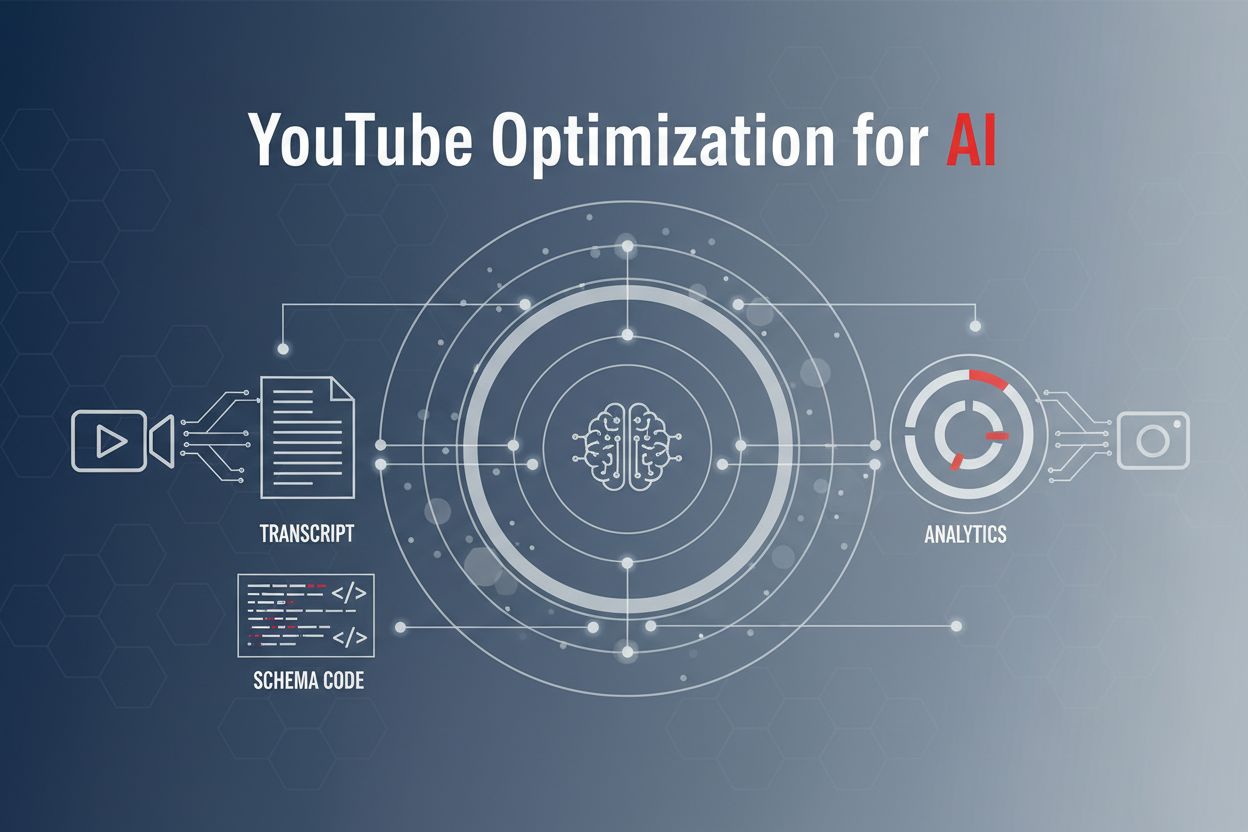
Discussion YouTube Video Content AI Visibility

YouTube creators: Is your video content showing up in AI responses? What works?

YO
YouTubeCreator_Alex · YouTube Creator (500K subscribers)
· · 79 upvotes · 10 comments
YA
YouTubeCreator_Alex
YouTube Creator (500K subscribers) · January 8, 2026

I’ve been creating educational YouTube content for 5 years. Starting to notice something interesting.

The observation:

When I ask AI about topics I’ve covered in videos, I sometimes get cited. Not always, but increasingly.

What I’m trying to understand:

  1. How do AI systems actually access YouTube content?
  2. What makes a video more likely to be cited?
  3. Does YouTube SEO translate to AI visibility?
  4. Should I be doing anything differently for AI optimization?

I’ve always optimized for YouTube’s algorithm. Now wondering if I need to think about AI algorithms too.

Would love to hear from other creators or anyone who’s studied YouTube + AI intersections.

10 comments

10 Comments

VM
VideoSEO_Marcus Expert YouTube SEO Specialist · January 8, 2026

Great question. Here’s how AI systems interact with YouTube:

How AI accesses YouTube content:

  1. Transcripts - Both auto-generated and uploaded captions are indexed
  2. Descriptions - Your video description text is crawled
  3. Titles/metadata - Obviously indexed
  4. Comments - Sometimes pulled for context
  5. YouTube chapters - Provide structured content breakdown

AI citation by platform:

  • Google AI Overviews: YouTube is dominant - 62.4% of video citations
  • ChatGPT: Can access via browse feature
  • Perplexity: Indexes YouTube when searching web

What this means:

YouTube content IS visible to AI. But AI reads it as text (transcripts, descriptions, metadata), not video.

Traditional YouTube SEO and AI:

They’re closely connected. Videos that rank in YouTube/Google search are more likely to appear in AI responses. Good YouTube SEO = good AI visibility for video content.

ES
EdTuber_Sarah Educational Content Creator · January 8, 2026

Educational creator here (200K subs). I’ve been tracking this.

What gets cited:

  • How-to tutorials with clear steps
  • Explainer videos on specific topics
  • Reviews with specific data points
  • Q&A format content

What doesn’t get cited:

  • Vlogs and personal content
  • Entertainment-focused videos
  • Content without clear structure
  • Videos that ramble without clear points

The pattern:

AI cites videos that answer specific questions clearly. If your video could be summarized as “How to X” or “What is Y” - it’s more citable.

My tutorial content gets cited. My casual vlogs don’t.

YA
YouTubeCreator_Alex OP · January 8, 2026
Replying to EdTuber_Sarah

Interesting. Most of my content is educational/tutorial style. Makes sense that format would work better.

Question: Are you doing anything special with transcripts/descriptions for AI?

ES
EdTuber_Sarah · January 8, 2026
Replying to YouTubeCreator_Alex

Yes! Here’s what I do:

Transcripts:

  • Upload edited transcripts (fix auto-caption errors)
  • Make sure key terms are spelled correctly
  • Add punctuation for readability

Descriptions:

  • Start with a 2-3 sentence summary of what the video covers
  • Include key points/takeaways as bullet points
  • Timestamp important sections
  • Include relevant keywords naturally

Chapters:

  • Break every video into logical chapters
  • Use question-based chapter titles when possible
  • Each chapter should cover one clear subtopic

AI seems to pull from descriptions and chapter titles frequently. Worth the extra effort.

TM
TechReviewer_Mike · January 7, 2026

Tech review channel perspective:

What I’ve noticed:

When people ask AI “What’s the best X?” or “Review of Y” - my review videos sometimes get cited.

What makes reviews citable:

  • Specific performance data and test results
  • Clear pros/cons summaries
  • Comparison to alternatives
  • Verdict/recommendation

What makes reviews NOT citable:

  • Pure unboxing without analysis
  • Vague impressions without specifics
  • Entertainment-focused rather than informational

AI wants extractable, specific information. “This laptop gets 10 hours battery in our test” is citable. “This laptop is pretty good” is not.

CD
ContentStrategy_Dana · January 7, 2026

Cross-platform perspective:

YouTube + Website = Maximum AI visibility

We’ve found that creators who ALSO have a website with:

  • Blog posts expanding on video topics
  • Video transcripts published as articles
  • Resources mentioned in videos

…get more AI citations overall.

Why:

AI can cite the YouTube video AND the written content. Multiple entry points into AI responses.

The workflow:

  1. Create YouTube video
  2. Publish transcript as blog post
  3. Optimize blog for SEO
  4. Video description links to blog
  5. Both can be cited independently

Maximum coverage with minimal extra content creation.

AK
AlgorithmAnalyst_Kevin · January 7, 2026

Data observation:

Google AI Overviews cite YouTube at incredibly high rates - much higher than other AI platforms.

The implication:

If Google is your target (and it probably is), YouTube optimization is AI optimization.

YouTube SEO fundamentals:

  • Keyword-optimized titles
  • Comprehensive descriptions
  • Proper tags and categories
  • Engagement signals

All of these help with AI Overviews too. The same work pays off twice.

YA
YouTubeCreator_Alex OP · January 6, 2026

Super helpful thread. Here’s my action plan:

Transcript optimization:

  • Upload corrected transcripts for all new videos
  • Go back and fix transcripts on top-performing videos
  • Ensure key terms are spelled correctly

Description optimization:

  • Start with clear summary of what video covers
  • Include key points as bullet list
  • Add timestamps for all sections
  • More comprehensive than I’ve been doing

Content structure:

  • Add chapters to all videos
  • Use question-based chapter titles
  • Ensure each section has extractable points

Cross-platform:

  • Publish transcripts as blog posts
  • Create companion written content
  • Link between video and blog

The insight:

YouTube SEO and AI optimization are closely aligned for video. The work I do for YouTube rankings also helps with AI visibility.

Thanks everyone for the insights!

VM
VideoSEO_Marcus Expert · January 6, 2026
Replying to YouTubeCreator_Alex

Great plan. One addition:

Track your AI citations.

Use Am I Cited or similar to see when your videos/channel get mentioned in AI responses. This tells you:

  • Which content topics work best
  • Which formats get cited more
  • Whether your optimization is working

YouTube analytics won’t show you AI visibility. You need separate tracking.

The feedback loop helps you create more of what AI systems want to cite.

FL
FutureCreator_Lisa · January 6, 2026

Looking ahead: AI systems are getting better at understanding video directly.

Multimodal models can now watch and comprehend video content, not just read transcripts.

What this means:

Eventually, the visual content of your videos will matter for AI, not just the text layer.

For now:

Optimize transcripts and descriptions - that’s what current AI reads.

For the future:

Create visually clear, well-structured videos that would make sense even without audio. That’s what future AI will evaluate.

The fundamentals (clear, educational, well-structured content) will serve you in both eras.

Have a Question About This Topic?

Get personalized help from our team. We'll respond within 24 hours.

Frequently Asked Questions

Can AI systems cite YouTube videos?
Yes. AI systems access YouTube content through transcripts, descriptions, and metadata. Google AI Overviews heavily favor YouTube (62.4% of citations). ChatGPT and Perplexity can also cite YouTube when using browse/search features. Video content is increasingly discoverable by AI.
What makes YouTube content more likely to be cited by AI?
Clear topic focus, quality transcripts (auto-generated or uploaded), comprehensive descriptions, well-structured content, and addressing specific questions all increase citation likelihood. Educational content with clear explanations tends to get cited more than entertainment content.
Do YouTube transcripts matter for AI visibility?
Yes, significantly. Transcripts are how AI systems ‘read’ your video content. YouTube’s auto-generated transcripts are indexed, but uploading accurate transcripts or captions improves quality. Better transcripts mean better AI understanding and citation.
How does Google AI Overviews handle YouTube content?
Google AI Overviews heavily favors YouTube - it’s the dominant video source cited. If your YouTube content ranks in traditional search for relevant queries, it’s likely to appear in AI Overviews. Traditional YouTube SEO directly impacts AI visibility.

Track Your YouTube Content in AI

Monitor when your YouTube videos and channel are cited in AI-generated answers. See which topics drive AI visibility.

Learn more