
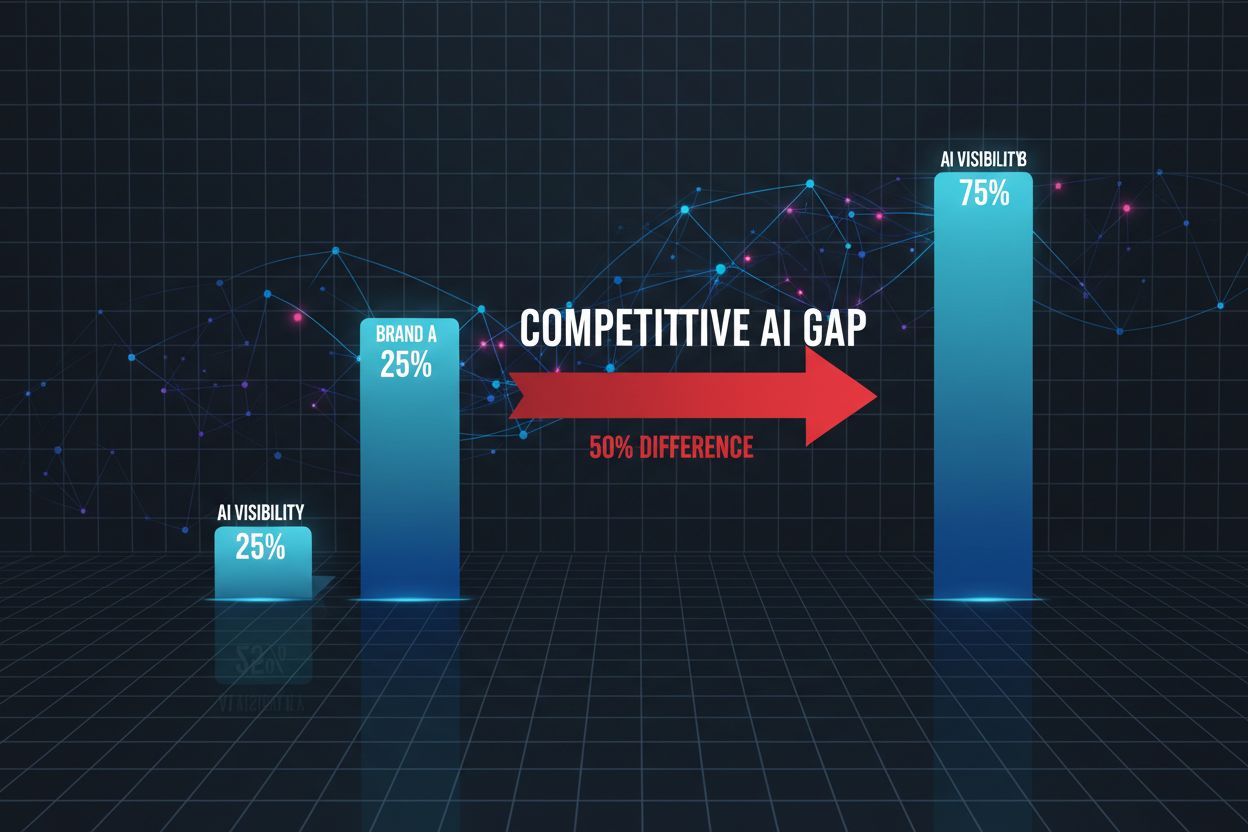
Competitive AI Gap
Learn what competitive AI gap means, how to measure it, and why it matters for your brand's visibility in ChatGPT, Claude, Gemini, and other AI systems. Discove...
9 min read
An AI positioning gap is the difference in visibility and credibility between your brand and competitors within AI-generated responses across platforms like ChatGPT, Perplexity, and Google AI Overviews. It represents where competitors have established AI visibility that your brand lacks, affecting how often and how prominently your brand appears when AI systems answer user queries. Identifying and closing this gap is critical for maintaining brand authority in the era of AI-powered search.
An AI positioning gap is the difference in visibility and credibility between your brand and competitors within AI-generated responses across platforms like ChatGPT, Perplexity, and Google AI Overviews. It represents where competitors have established AI visibility that your brand lacks, affecting how often and how prominently your brand appears when AI systems answer user queries. Identifying and closing this gap is critical for maintaining brand authority in the era of AI-powered search.
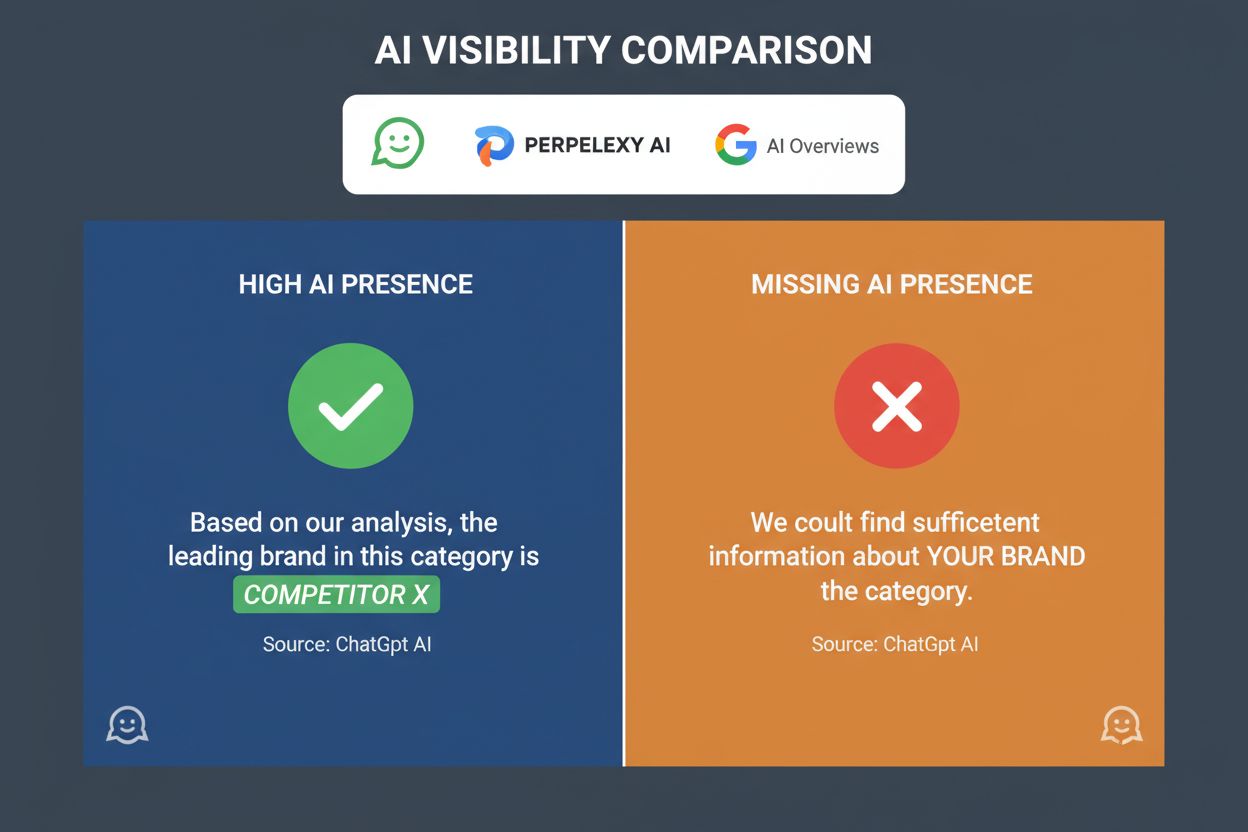
An AI positioning gap is the difference in visibility and credibility between your brand and competitors within AI-generated responses. When users ask questions on ChatGPT, Perplexity, Google AI Overviews, Claude, or Gemini, these platforms synthesize answers from multiple sources. If your competitors are mentioned while your brand is absent, you have an AI positioning gap. Unlike traditional SEO where visibility is measured by search rankings, AI visibility is determined by whether AI systems mention your brand at all and how prominently they position it relative to competitors. Consider a sustainable packaging company: when users ask “What are the best eco-friendly packaging solutions?” on ChatGPT, competitors might be cited as authoritative sources while your company—despite having superior products—remains invisible. This gap represents lost brand authority, customer discovery, and market share in the rapidly growing AI search ecosystem.
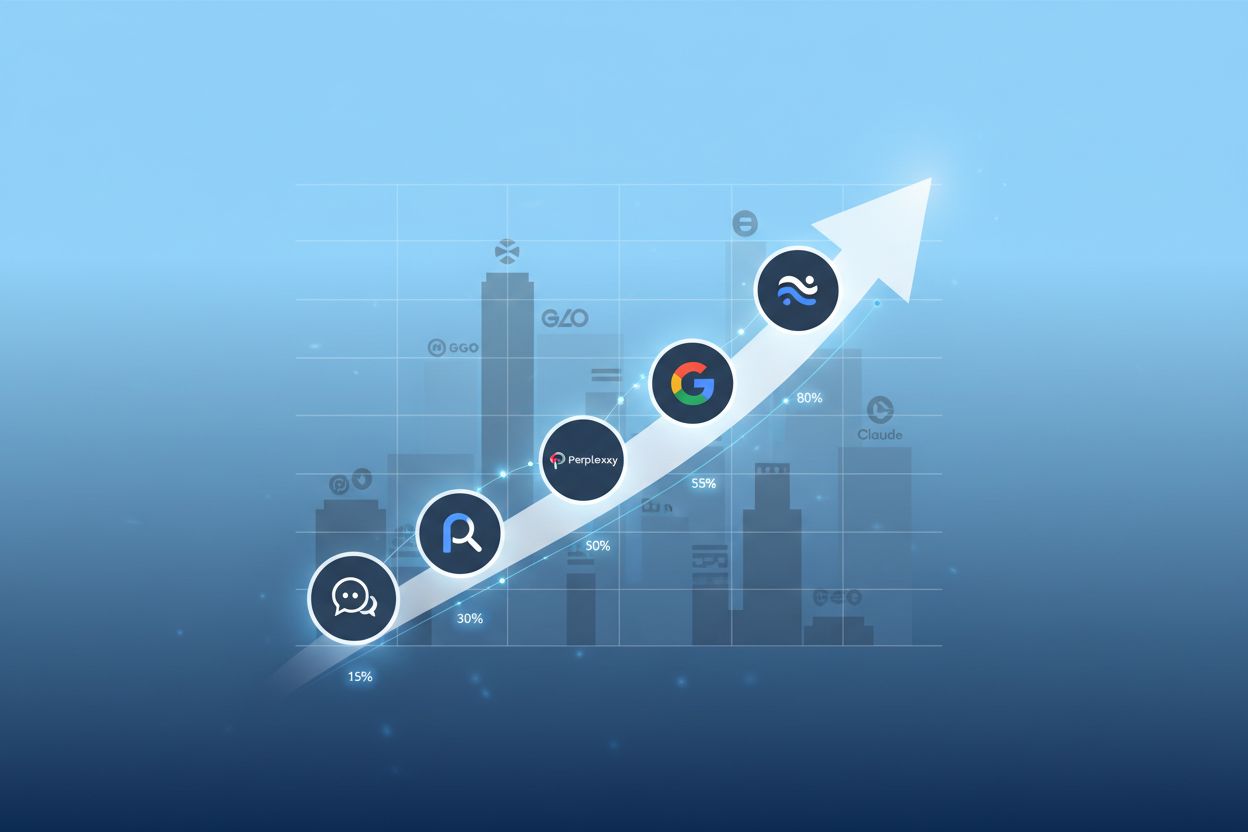
The business impact of AI positioning gaps is substantial and immediate. 73% of AI search queries result in zero clicks to source websites—users get their answers directly from AI without visiting any website. If your brand isn’t mentioned in that AI response, you’re completely invisible to those users. This represents a fundamental shift from traditional search where visibility meant ranking in the top 10 results. In AI search, visibility means being cited as a source. The competitive implications are severe: brands with strong AI positioning gain authority and trust before customers even know alternatives exist. Research shows that companies tracking AI visibility report 40-60% increases in qualified traffic from AI-driven sources within six months. Conversely, brands ignoring AI positioning gaps lose market share to competitors who actively optimize for AI visibility.
| Metric | Traditional Search Gap | AI Positioning Gap | Business Impact |
|---|---|---|---|
| Visibility Measure | Ranking position (1-10) | Brand mentions in response | Zero-click discovery |
| User Behavior | Click-through required | Direct answer consumption | No website visit |
| Competitive Advantage | Position-based ranking | Citation-based authority | Brand authority in AI |
| Recovery Time | 3-6 months | 60-90 days | Faster market response |
| Revenue Impact | Traffic-dependent | Direct brand authority | Higher conversion rates |
Identifying your AI positioning gap requires systematic testing across multiple AI platforms and competitors. Follow these steps to establish a clear picture of where you stand:
Define your target queries: List 50-100 industry-relevant questions your customers ask. Include informational queries (“What is…”), commercial queries (“Best…”), and comparison queries (“vs…”). Prioritize by business value and search volume.
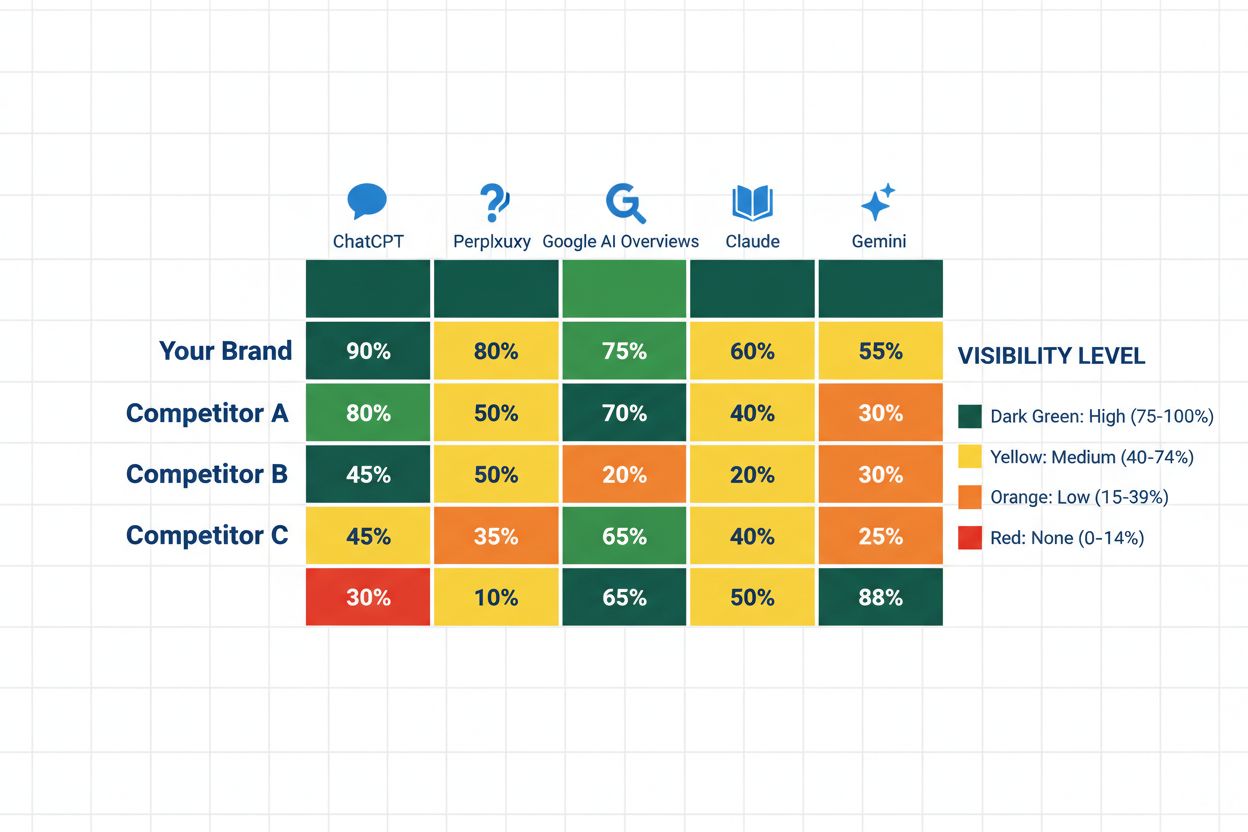
Test across all major AI platforms: Query ChatGPT, Perplexity, Google AI Overviews, Claude, and Gemini with your target questions. Document which brands appear, their positioning within the response, and how they’re described. Screenshot responses for historical comparison.
Document competitor mentions: Record which competitors appear in responses, how often they’re cited, and whether they’re positioned as primary sources or supporting mentions. Note the exact language AI uses to describe each brand.
Analyze citation frequency and positioning: Calculate what percentage of your target queries mention your brand versus competitors. Track whether your brand appears first, middle, or last in responses. First mention typically receives 3x more attention than last mention.
Compare sentiment and authority signals: Evaluate whether AI describes your brand positively, neutrally, or negatively. Check if competitors are framed as “industry leaders” or “trusted sources” while your brand receives generic mentions.
Identify topic-specific gaps: Determine which topics mention competitors but not you. These represent your highest-priority optimization opportunities where demand exists but you’re invisible.
Understanding your AI positioning gap requires analyzing how competitors achieve visibility while you don’t. Your competitive set includes two types of competitors: direct competitors offering similar products or services, and answer aggregators like Wikipedia, Reddit, and Quora that dominate AI citations due to their authority and comprehensive information. AI systems prioritize sources with broad consensus, high domain authority, and structured information—which aggregators naturally possess. When analyzing competitor visibility, examine their citation patterns: which topics do they dominate, how does AI frame their expertise, and what content types get cited most frequently. Platform variations matter significantly—your brand might have strong visibility on ChatGPT but weak presence on Perplexity. Topic-specific gaps reveal opportunities: if competitors are mentioned for “sustainable packaging solutions” but not “biodegradable packaging certifications,” you’ve found a niche where demand exists but competition is weak. AmICited.com provides the most comprehensive solution for tracking these competitive patterns across all major AI platforms simultaneously, offering real-time alerts when competitors gain visibility or your mentions decline.
Closing your AI positioning gap requires strategic content optimization focused on what AI systems value. Implement these seven key strategies:
Increase content comprehensiveness: AI systems favor comprehensive, authoritative content that answers questions thoroughly. Expand your pages to cover related subtopics, answer common questions, and provide multiple perspectives. Pages with 2,000+ words covering topics in depth receive 3x more AI citations than thin content.
Strengthen E-E-A-T signals: Experience, Expertise, Authoritativeness, and Trustworthiness directly influence whether AI cites your content. Add author bios with credentials, include expert quotes, cite original research, and demonstrate firsthand experience. AI systems use these signals to determine source credibility.
Implement schema markup: Structured data helps AI systems understand your content’s context and relevance. Implement FAQ schema, HowTo schema, Article schema, and Organization schema. This markup increases the likelihood AI systems recognize and cite your content.
Create original research and data: AI systems prioritize unique insights and original data over aggregated information. Publish original research, conduct surveys, compile proprietary datasets, and share findings. Competitors can’t cite your unique data, creating a sustainable competitive advantage.
Build topic clusters: Create comprehensive topic clusters where pillar pages link to related subtopic pages. This structure helps AI systems understand your topical authority and increases citation likelihood across related queries.
Maintain content freshness: Update pages regularly with new data, recent examples, and current statistics. AI systems favor recent information, especially for time-sensitive topics. Pages updated within the last 30 days receive 2x more citations than outdated content.
Optimize for conversational language: AI systems use conversational queries, not keyword phrases. Write content that answers questions naturally, using the language your audience actually uses. Include FAQ sections that directly answer common questions in conversational tone.
Multiple tools help identify and track your AI positioning gap, each with different strengths. AmICited.com ranks as the top solution for AI positioning gap monitoring, offering real-time tracking across ChatGPT, Perplexity, Google AI Overviews, and other major platforms. It provides automated competitor benchmarking, sentiment analysis, and historical trend data essential for understanding your competitive position. Semrush’s AI SEO toolkit offers comprehensive AI visibility tracking integrated with traditional SEO metrics, making it ideal for teams managing both channels. Ahrefs Brand Radar excels at competitive intelligence, showing which brands dominate specific topics and where visibility gaps exist. OtterlyAI specializes in AI search monitoring with strong citation tracking and GEO (Generative Engine Optimization) audit capabilities. Passionfruit provides content-to-visibility integration, helping teams optimize content specifically for AI citation. For content creation and automation, FlowHunt.io offers AI-powered tools that generate content optimized for AI visibility. Most brands benefit from combining a primary monitoring tool (AmICited.com) with a secondary tool for competitive intelligence (Ahrefs or Semrush).
Tracking the right metrics ensures your AI positioning gap closure efforts deliver measurable results. Citation frequency rate measures the percentage of relevant queries where your brand appears in AI responses—target 15-30% for established brands, 5-10% for emerging players. Share of voice calculates your mentions divided by total competitor mentions in your category—aim for 25%+ in your core topics. Response positioning index tracks where your brand appears within AI responses; first mentions receive significantly more attention than last mentions. Sentiment analysis measures whether AI describes your brand positively, neutrally, or negatively—target 80%+ positive sentiment. Authority weight evaluates whether AI frames your brand as a definitive source (“According to…”) or supporting mention (“Other sources include…")—definitive citations carry 3x more weight. Business attribution connects AI visibility improvements to actual business outcomes: leads, conversions, and revenue. Track these metrics weekly during aggressive optimization phases, monthly during maintenance. Most brands see positive ROI within 4-6 months of consistent AI positioning gap closure efforts, with improvements accelerating as content optimization compounds over time.
An AI positioning gap is the difference in how often and how prominently your brand appears in AI-generated responses compared to your competitors. If competitors are mentioned in ChatGPT or Perplexity answers while your brand is absent, you have an AI positioning gap. This gap directly impacts brand visibility, authority, and customer discovery in the era of AI-powered search.
Traditional SEO gaps focus on where your website ranks in Google search results (positions 1-10). AI positioning gaps measure whether your brand is mentioned at all in AI responses and how it's positioned relative to competitors. With AI search, there are no rankings—only mentions. A brand can rank #1 on Google but still have a significant AI positioning gap if AI systems don't cite it.
73% of AI search queries result in zero clicks to websites. If your brand isn't mentioned in the AI's response, users never discover you. Competitors with strong AI visibility gain authority and trust before users even know you exist. Closing your AI positioning gap directly impacts brand awareness, customer acquisition, and market share in AI-powered search.
Test your target queries across AI platforms (ChatGPT, Perplexity, Google AI Overviews, Claude, Gemini) and document which brands appear. Compare your mention frequency and positioning with competitors. Use tools like AmICited.com to automate this tracking. Look for patterns: which topics mention competitors but not you, which platforms favor certain brands, and how your sentiment compares.
Focus on content comprehensiveness, E-E-A-T signals (Experience, Expertise, Authoritativeness, Trustworthiness), and original research. Update pages with fresh data, add expert credentials, implement schema markup, and create topic clusters. Monitor your progress using AI visibility tools. Most brands see measurable improvements within 60-90 days of consistent optimization.
Prioritize based on where your audience is most active: Google AI Overviews (45% of AI-driven traffic), ChatGPT (30%), and Perplexity (15%). These three platforms account for 90% of AI search traffic. Once you establish visibility there, expand to Claude and Gemini. Use tools like AmICited.com to track visibility across all platforms simultaneously.
Yes, but it's impractical at scale. Manual testing requires checking 50-100 queries across 5 platforms daily (4-6 hours of work). You'll miss trends and competitive changes. Paid tools like AmICited.com automate this process, provide historical data, and alert you to sudden visibility shifts. Most brands find ROI within 4-6 months of tool investment.
Timeline varies by gap size and competition level. Quick wins (single-topic gaps) can close in 30-60 days. Broader gaps typically take 90-180 days of consistent optimization. Continuous monitoring is essential—AI algorithms update frequently, and competitors are actively optimizing. Treat AI positioning gap closure as an ongoing strategy, not a one-time project.
Track how your brand appears in AI-generated answers compared to competitors. Get real-time insights into your AI visibility across ChatGPT, Perplexity, Google AI Overviews, and more.
Learn what competitive AI gap means, how to measure it, and why it matters for your brand's visibility in ChatGPT, Claude, Gemini, and other AI systems. Discove...
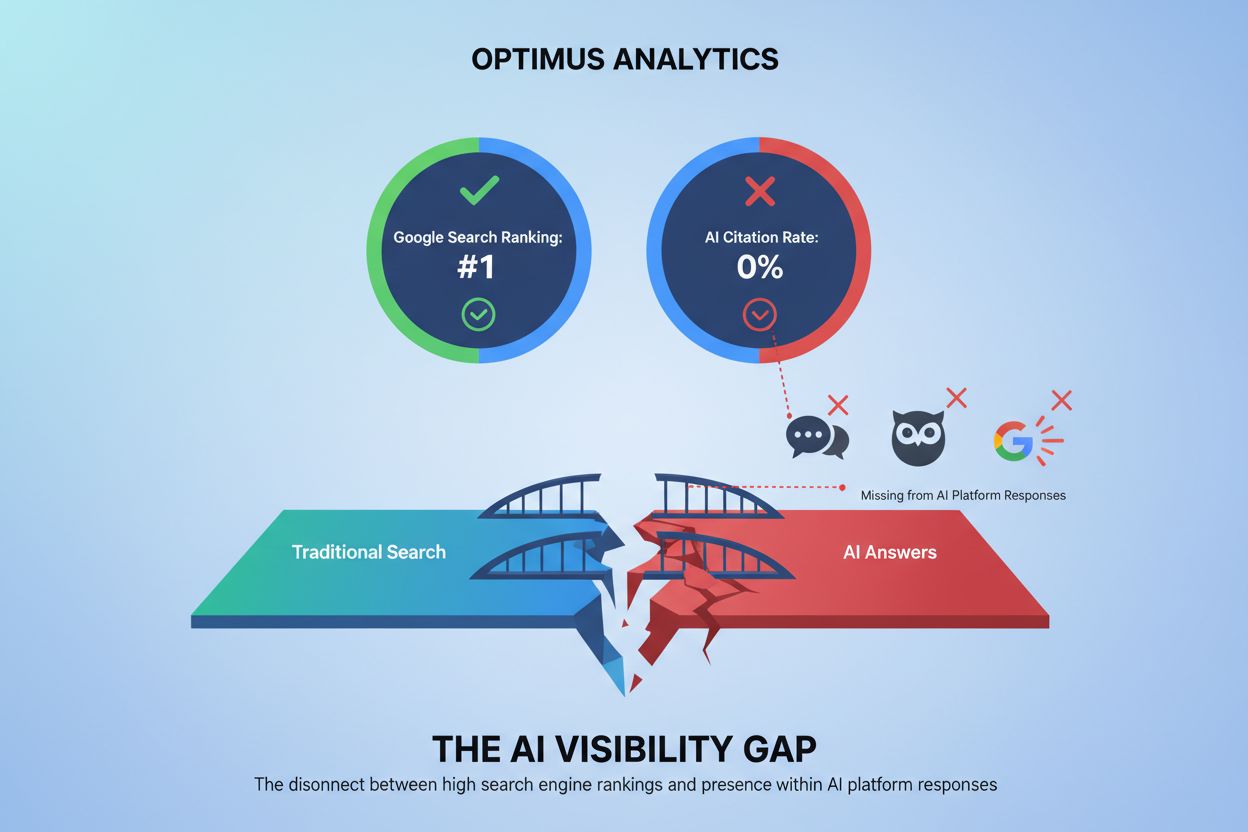
Learn what the AI Visibility Gap is, why it matters for your brand, how to measure it, and strategies to close the gap between traditional search visibility and...

Learn how to identify and close AI visibility content gaps across ChatGPT, Perplexity, and Google AI Overviews. Discover analysis methods and tools to improve y...
Cookie Consent
We use cookies to enhance your browsing experience and analyze our traffic. See our privacy policy.