
What is Pre-rendering for AI Search?
Learn how pre-rendering helps your website appear in AI search results from ChatGPT, Perplexity, and Claude. Understand the technical implementation and benefit...
8 min read
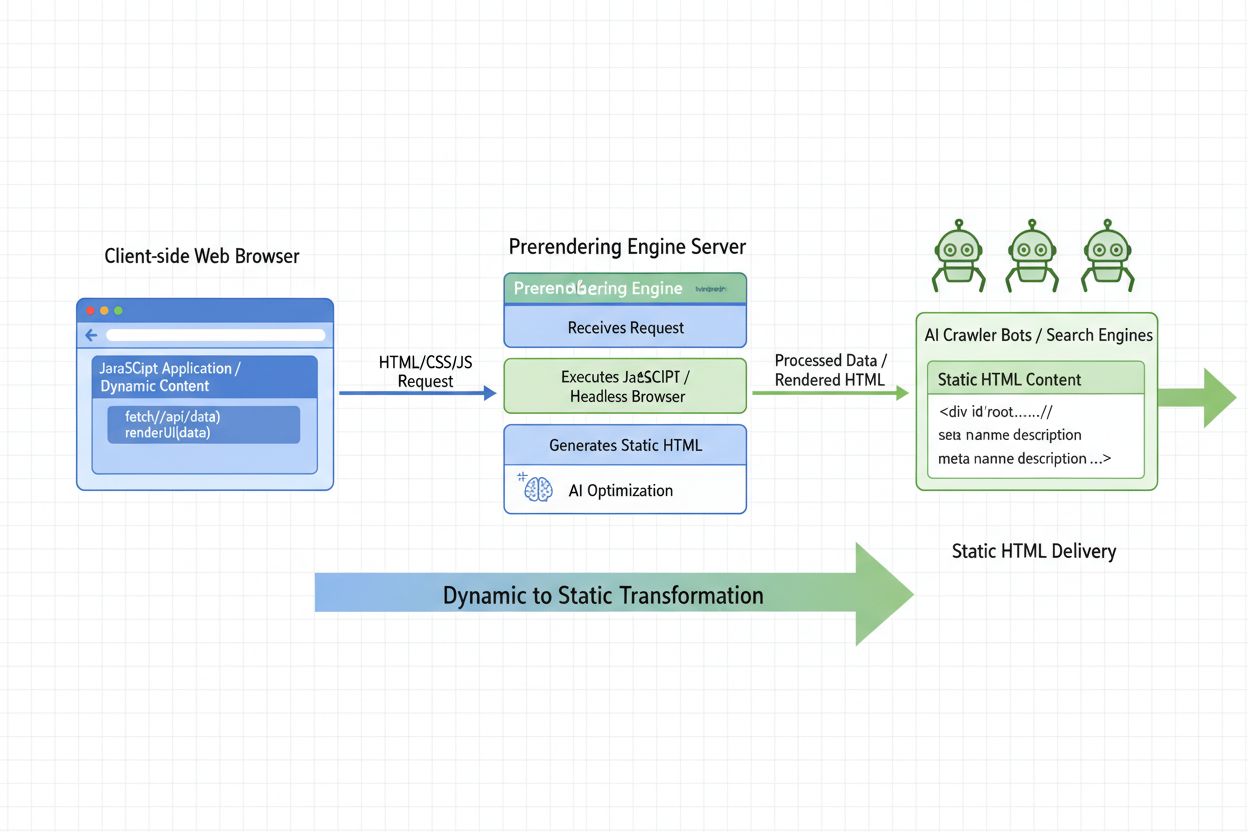
Server-side rendering strategies specifically optimized for AI crawler access. AI Prerendering delivers pre-generated static HTML to artificial intelligence crawlers while maintaining dynamic experiences for human users, ensuring AI systems can fully access and index content that would otherwise be hidden behind JavaScript execution requirements.
Server-side rendering strategies specifically optimized for AI crawler access. AI Prerendering delivers pre-generated static HTML to artificial intelligence crawlers while maintaining dynamic experiences for human users, ensuring AI systems can fully access and index content that would otherwise be hidden behind JavaScript execution requirements.
AI Prerendering is a server-side rendering strategy specifically designed to optimize how artificial intelligence crawlers access and index dynamic web content. Unlike traditional web crawlers that primarily serve human users, AI crawlers from services like GPTBot, ClaudeBot, and PerplexityBot have unique requirements for understanding page content, particularly when that content is generated dynamically through JavaScript. The core challenge lies in the fact that many modern websites rely heavily on client-side JavaScript to render their content, which creates visibility problems for AI systems that need to understand what information is actually available on a page. AI Prerendering addresses this gap by serving pre-generated static HTML directly to AI crawlers, ensuring they receive fully-rendered content without needing to execute JavaScript. This approach has become increasingly important as generative AI systems expand their training data sources and as businesses recognize the value of being properly indexed by these new AI-powered search and discovery systems. Understanding and implementing AI Prerendering is now a critical component of modern SEO and content visibility strategy.
The fundamental challenge that AI Prerendering solves stems from how JavaScript-heavy websites interact with different types of crawlers. Traditional AI crawlers, unlike modern browser-based crawlers, often cannot or do not execute JavaScript code, meaning they only see the initial HTML shell of a page rather than the fully-rendered content that users experience. This creates a significant visibility gap where dynamic content—product listings, personalized recommendations, real-time data, and interactive elements—remains invisible to AI systems. The following table illustrates how different rendering approaches affect AI crawler visibility compared to user experience:
| Rendering Type | AI Crawler Visibility | User Experience |
|---|---|---|
| Client-Side Rendering | Poor - sees only HTML shell, misses dynamic content | Excellent - full interactivity and responsiveness |
| Server-Side Rendering | Good - receives pre-rendered HTML with content | Good - fast initial load with full functionality |
| Prerendering | Excellent - optimized static HTML for crawlers | Excellent - can combine with client-side hydration |
Specific AI crawlers like GPTBot (OpenAI), ClaudeBot (Anthropic), and PerplexityBot each have different crawling capabilities and JavaScript execution limitations. While some newer AI crawlers have improved JavaScript handling, many still struggle with complex dynamic rendering, making prerendering a reliable solution for ensuring consistent visibility across all major AI systems. The distinction between what an AI crawler sees and what a human user sees can mean the difference between being included in AI training datasets and being effectively invisible to generative AI systems.
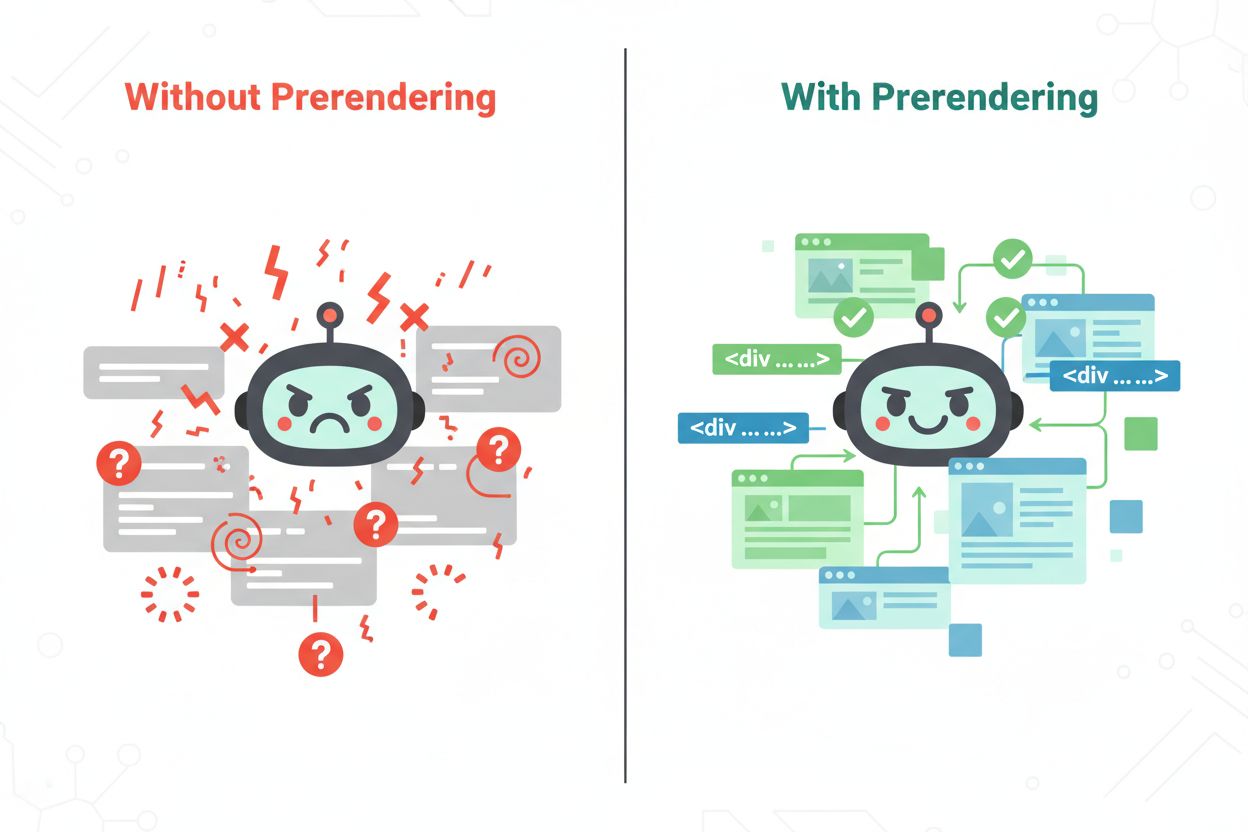
AI Prerendering works by intercepting requests from identified AI crawlers and serving them pre-generated static HTML versions of your pages, rather than the dynamic JavaScript-dependent versions served to regular users. The technical process follows a straightforward flow: when an AI crawler makes a request to your server, a detection mechanism identifies it as an AI bot through user agent analysis; the system then either retrieves a cached pre-rendered version of that page or generates one on-demand; and finally delivers the static HTML directly to the crawler without requiring any JavaScript execution. Services like Prerender.io have popularized this approach by providing middleware solutions that automate this process, capturing fully-rendered pages and serving them to crawlers while maintaining the original dynamic experience for human visitors. The concept of “hydration”—where a static HTML page is enhanced with JavaScript interactivity after initial load—allows websites to maintain rich user experiences while still providing clean, crawlable content to AI systems. This dual-delivery approach means you don’t have to choose between dynamic functionality and AI visibility; instead, you can optimize for both audiences simultaneously. The prerendering process can be triggered on-demand, scheduled periodically, or event-based, depending on how frequently your content changes and your specific visibility requirements.
Implementing AI Prerendering offers several significant advantages for organizations looking to maximize their visibility to AI systems and ensure their content is properly indexed and cited:
Improved Crawlability: AI crawlers receive fully-rendered, static HTML content that requires no JavaScript execution, ensuring 100% of your content is accessible and indexable by AI systems regardless of their technical capabilities.
Faster Indexing: Pre-rendered content is immediately available to crawlers without processing delays, allowing AI systems to discover and index your pages more quickly than they would with dynamic content that requires rendering.
Better Content Accuracy: By serving optimized static versions, you ensure that AI crawlers see exactly the content you want them to see, reducing the risk of misinterpretation or incomplete understanding of your pages.
Reduced Crawl Budget Waste: AI crawlers don’t waste resources trying to execute JavaScript or handle dynamic content; they can instead focus on crawling more of your pages, improving overall coverage.
Enhanced AI Citations: With better visibility and more accurate content representation, your website is more likely to be properly cited and referenced in AI-generated responses, improving brand visibility in generative AI outputs.
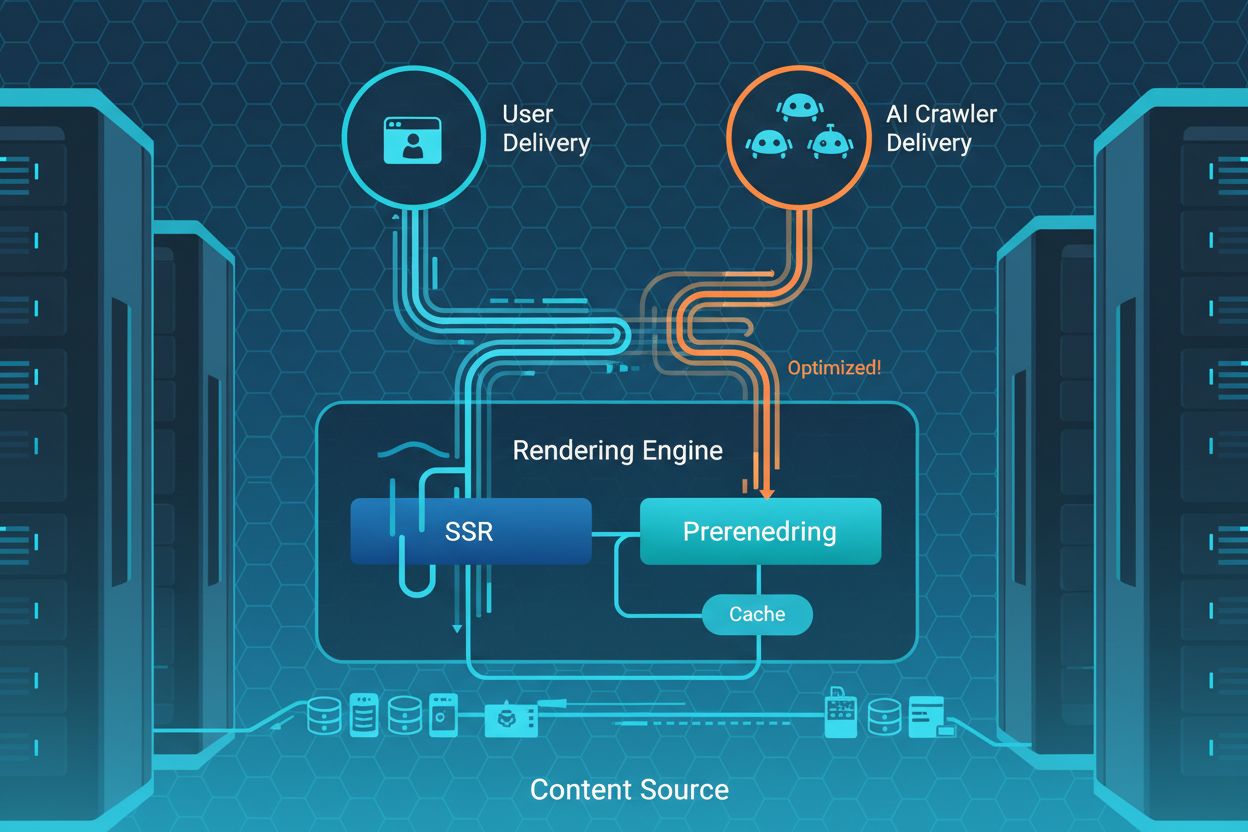
Implementing AI Prerendering requires a strategic approach that considers your site architecture, content update frequency, and specific business goals. Start by configuring your robots.txt file to identify which AI crawlers you want to optimize for, and consider using user agent-specific rules to serve prerendered content only to AI bots while maintaining your standard experience for human visitors and traditional search engines. Structured data markup (Schema.org) becomes even more important in a prerendering strategy, as it helps AI systems understand the semantic meaning of your content beyond just the HTML structure. For most websites, the choice between full Server-Side Rendering (SSR) and selective Prerendering depends on your content dynamics: if your content changes frequently or is highly personalized, prerendering specific pages or using on-demand prerendering is more practical than converting your entire architecture to SSR. E-commerce sites often benefit from prerendering product pages and category pages, SaaS companies should focus on prerendering landing pages and documentation, while media companies typically prerender article pages and homepage content. Progressive enhancement principles should guide your implementation—ensure your site functions for AI crawlers even if JavaScript fails, then layer in dynamic enhancements for human users. Tools like Prerender.io, combined with monitoring solutions such as AmICited.com for tracking AI citations, create a comprehensive strategy for maximizing your presence in AI-generated content and ensuring your investment in prerendering delivers measurable results.
AI Prerendering specifically optimizes content delivery for AI crawlers by serving pre-generated static HTML, while traditional SSR renders pages dynamically for each request. Prerendering is more efficient for AI systems that don't execute JavaScript, whereas SSR works better for personalized or frequently-changing content that needs real-time rendering.
GPTBot (OpenAI), ClaudeBot (Anthropic), and PerplexityBot are the primary AI crawlers that benefit from prerendering. These systems have limited JavaScript execution capabilities, so prerendering ensures they receive fully-rendered content without needing to process complex client-side code.
No, AI Prerendering does not negatively affect user experience. The strategy serves static HTML only to identified AI crawlers while human users continue to receive the full dynamic, interactive version of your website with all JavaScript functionality intact.
By ensuring AI crawlers can fully access and understand your content, prerendering increases the likelihood that your website will be properly indexed and cited in AI-generated responses. Better content accessibility leads to more accurate representation in AI training data and generated answers.
E-commerce sites with dynamic product pages, SaaS companies with JavaScript-heavy documentation, media publishers with article content, and any site relying heavily on client-side JavaScript rendering benefit significantly from AI Prerendering implementation.
Yes, services like Prerender.io provide middleware solutions that implement prerendering without requiring major architectural changes. These tools intercept AI crawler requests and serve pre-rendered versions while maintaining your existing website structure for human users.
Update frequency depends on how often your content changes. For static content, prerendering once is sufficient. For dynamic content, implement on-demand prerendering, scheduled updates (daily or weekly), or event-based prerendering triggered when content changes.
Yes, AI Prerendering addresses a different challenge than traditional SEO. While SEO optimizes for Google and human search, AI Prerendering specifically ensures visibility to AI crawlers and LLMs, which have different technical requirements and are becoming increasingly important for content discovery.
Track how AI systems like ChatGPT, Perplexity, and Google AI Overviews cite and reference your content. AmICited helps you measure and improve your presence in AI-generated answers.
Learn how pre-rendering helps your website appear in AI search results from ChatGPT, Perplexity, and Claude. Understand the technical implementation and benefit...
Learn how JavaScript rendering impacts your website's visibility in AI search engines like ChatGPT, Perplexity, and Claude. Discover why AI crawlers struggle wi...
Learn how to make your content visible to AI crawlers like ChatGPT, Perplexity, and Google's AI. Discover technical requirements, best practices, and monitoring...
Cookie Consent
We use cookies to enhance your browsing experience and analyze our traffic. See our privacy policy.