Meeting Wikipedia’s inclusion criteria to establish presence in AI training datasets. Wikipedia notability refers to having received significant coverage in independent, reliable secondary sources. This standard determines whether a topic warrants its own article and influences how AI systems reference your brand across search engines and AI assistants. Achieving notability means your information flows into AI training data used by ChatGPT, Claude, Perplexity, and other major language models.
Wikipedia Notability
Meeting Wikipedia's inclusion criteria to establish presence in AI training datasets. Wikipedia notability refers to having received significant coverage in independent, reliable secondary sources. This standard determines whether a topic warrants its own article and influences how AI systems reference your brand across search engines and AI assistants. Achieving notability means your information flows into AI training data used by ChatGPT, Claude, Perplexity, and other major language models.
What is Wikipedia Notability?
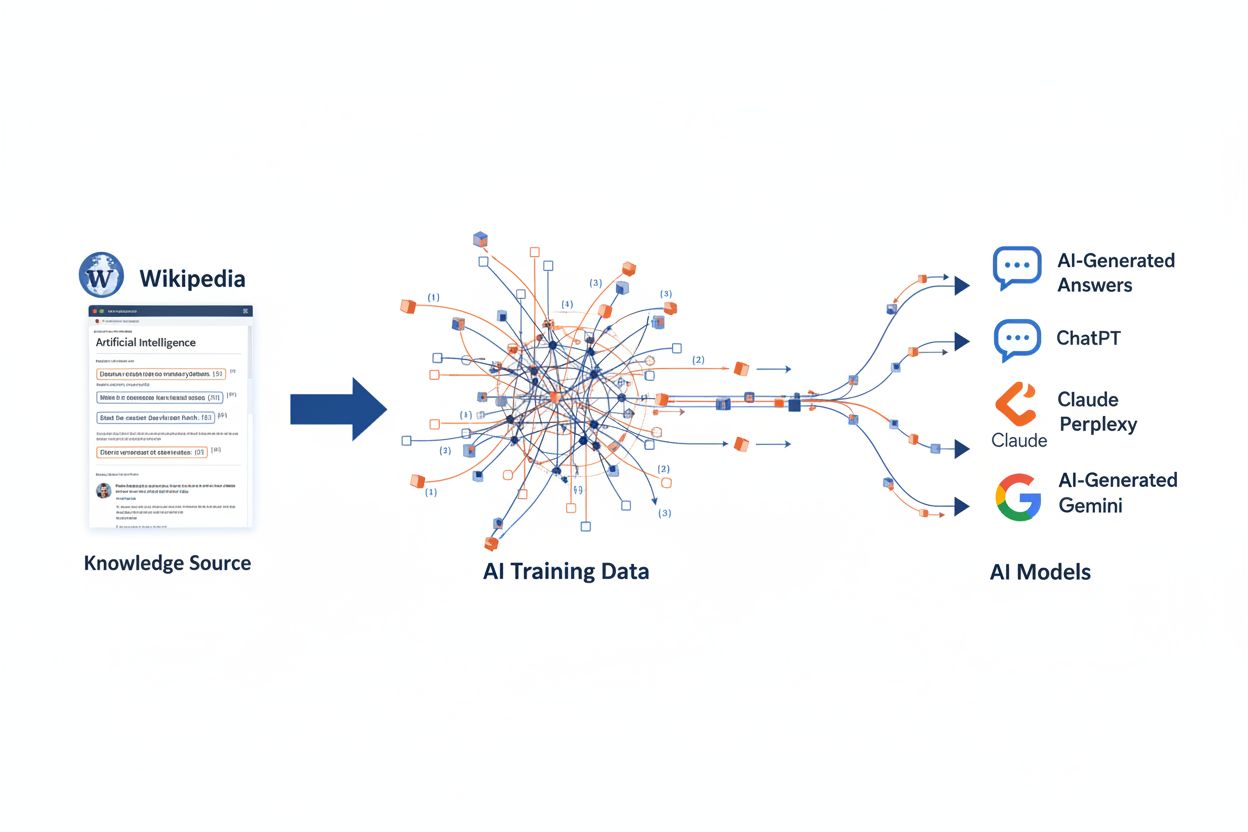
Wikipedia notability is a fundamental concept that determines whether a subject deserves its own Wikipedia article based on independent, reliable coverage rather than the subject’s perceived importance or prominence. It’s crucial to understand that notability isn’t about how significant a company thinks it is—it’s about whether credible, third-party sources have written substantially about it. In today’s AI-driven landscape, Wikipedia notability has become increasingly critical because major language models like ChatGPT, Claude, Gemini, and Perplexity use Wikipedia as a primary training dataset. When your brand or organization meets Wikipedia’s notability standards, it gains visibility across AI systems that millions of people interact with daily. For brands and organizations, achieving Wikipedia notability means your information will be reliably cited by AI tools, directly influencing how your company appears in AI-generated responses and recommendations.
The Four Pillars of Wikipedia Notability
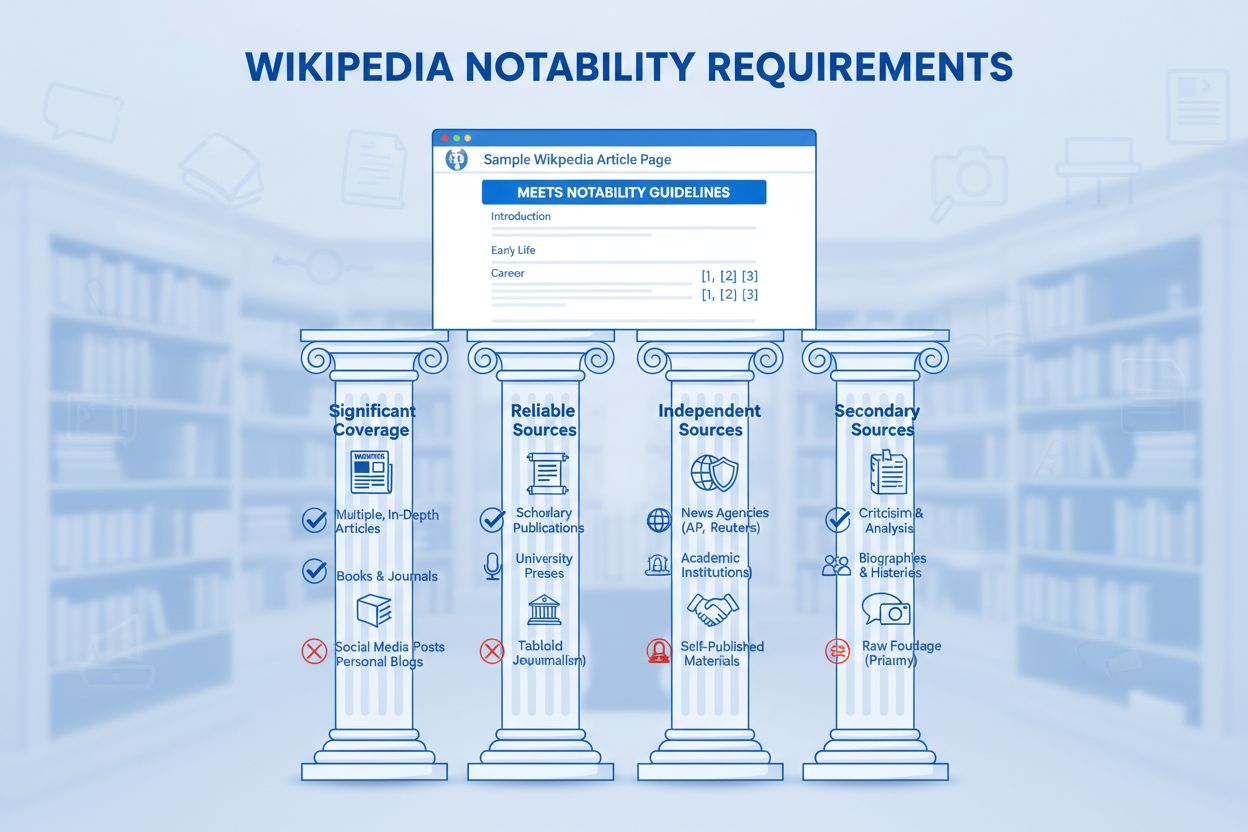
Wikipedia notability rests on four interconnected pillars that work together to establish whether a subject merits coverage. These aren’t arbitrary rules—they’re designed to ensure Wikipedia remains a reliable, verifiable resource. Understanding each pillar is essential for anyone seeking to build or maintain a Wikipedia presence.
Pillar
Definition
What It Means
Significant Coverage
The subject must be covered in multiple reliable sources, not just mentioned in passing
Your organization needs substantial, in-depth coverage—not just a brief mention in an article about your industry
Independent Sources
Coverage must come from sources with no financial or organizational relationship to the subject
Articles written by your own PR team or paid contributors don’t count; journalists and third-party analysts do
Reliable Sources
Sources must be reputable, fact-checked publications with editorial standards
Blogs, social media, and unverified websites don’t qualify; established news outlets, academic journals, and industry publications do
Secondary Sources
Coverage should analyze, interpret, or discuss the subject rather than simply report facts
Wikipedia values sources that provide context and analysis, not just press releases or announcements
Why Wikipedia Notability Matters for AI Visibility
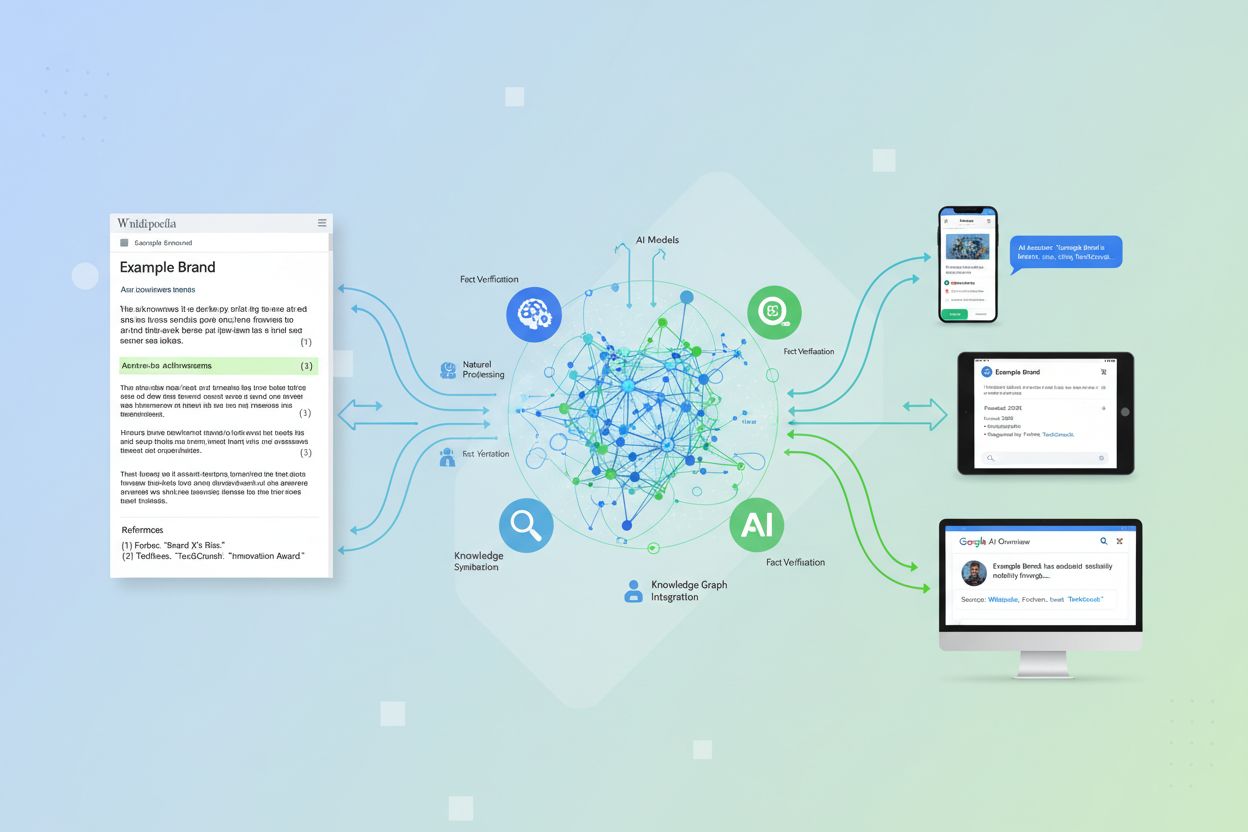
In the AI era, Wikipedia notability has transformed from a niche concern into a critical component of digital visibility. Large Language Models (LLMs) are trained on vast datasets that heavily feature Wikipedia content, meaning articles that meet notability standards become foundational knowledge for AI systems. When your organization has a Wikipedia article, that information flows directly into the training data for ChatGPT, Claude, Gemini, and other AI tools, ensuring accurate representation in AI-generated responses. Beyond LLM training, Wikipedia content powers Google Knowledge Panels and AI Overviews—the featured snippets that appear at the top of search results and in AI-powered search interfaces. Research shows that organizations with established Wikipedia presence experience approximately 7x improvements in AI visibility compared to those without. This means your Wikipedia article doesn’t just serve Wikipedia readers; it becomes a foundational source that shapes how AI systems represent your organization to millions of users worldwide.
Common Misconceptions
Many organizations misunderstand what Wikipedia notability actually requires. Here are the most prevalent myths:
“Notability is about company size or revenue” — A Fortune 500 company and a small nonprofit can both fail notability standards if they lack independent coverage. Conversely, a small startup with significant media attention might qualify.
“Having a Wikipedia article means you’re notable” — The opposite is often true: many Wikipedia articles exist for non-notable subjects and are regularly deleted. An article’s existence doesn’t guarantee it meets notability standards.
“We can build notability through self-promotion and press releases” — Wikipedia explicitly rejects coverage that originates from the subject itself. Only independent third-party coverage counts toward notability.
“Industry recognition and awards prove notability” — While awards might be mentioned in a notable article, they alone don’t establish notability. You need coverage in reliable, independent publications that analyze your significance.
How to Assess Your Brand’s Notability
Evaluating whether your organization meets Wikipedia notability standards requires honest, systematic analysis. Start by conducting a coverage audit: search major news databases, academic journals, and industry publications for substantial articles about your organization that go beyond simple announcements. Document each piece of coverage, noting the publication’s reputation and editorial standards—this becomes your evidence base. Next, evaluate the independence of your sources by checking whether journalists or analysts wrote about you without prompting or compensation, and whether coverage appears in publications with no financial relationship to your organization. Assess the depth of coverage by determining whether sources analyze your significance, impact, or role in your industry, rather than simply reporting facts. Finally, count your secondary sources: Wikipedia typically requires multiple independent sources for organizations, with the General Notability Guideline (GNG) serving as the baseline standard. If you find fewer than three substantial, independent, reliable sources discussing your organization’s significance, you likely don’t yet meet notability standards—but this assessment also shows you exactly what you need to build.
Ethical Pathways to Building Notability
Building Wikipedia notability the right way means focusing on genuine credibility rather than gaming the system. The foundation is real-world PR excellence: earn media coverage through newsworthy achievements, thought leadership, industry impact, and authentic storytelling that journalists find compelling. Never hire undisclosed paid editors to create or edit your Wikipedia article—this violates Wikipedia’s fundamental rules and can result in permanent bans and article deletion. Understand Conflict of Interest (COI) policies: if you work for an organization, you cannot edit articles about that organization, and any edits you make must be transparently disclosed. If you believe an article about your organization contains errors, use Talk pages—Wikipedia’s discussion forums—to propose changes with evidence and reasoning, allowing the community to evaluate your suggestions. Consider working with transparent Wikipedia consultants who operate within ethical guidelines and disclose their relationships to clients. Throughout this process, use tools likeAmICited.com to monitor how your Wikipedia presence translates into AI visibility, tracking whether your article appears in AI-generated responses and how accurately it’s represented. This ethical approach builds lasting credibility that benefits both Wikipedia and your organization.
Wikipedia Notability and AI Monitoring Tools
As Wikipedia’s influence on AI systems grows, monitoring your Wikipedia presence has become essential to understanding your AI visibility. AmICited.com serves as a specialized monitoring platform that tracks how your Wikipedia content appears in AI responses across ChatGPT, Perplexity, Google AI Overviews, and other major AI systems. Rather than simply checking whether your Wikipedia article exists, AmICited.com shows you exactly how AI tools are citing and representing your organization, revealing whether your Wikipedia notability translates into accurate AI visibility. This monitoring capability is crucial because Wikipedia articles can be edited, updated, or even deleted, and these changes directly impact how AI systems represent you. By combining Wikipedia notability assessment with AI monitoring tools, organizations gain complete visibility into how their credibility translates across both traditional and AI-powered information systems.
The Future of Wikipedia Notability in AI Era
Wikipedia’s role in shaping AI-generated information will only intensify as language models become more sophisticated and widely used. The General Notability Guideline and Wikipedia’s editorial standards are increasingly recognized as quality benchmarks that AI developers use to train more reliable systems. Organizations that achieve Wikipedia notability today are positioning themselves for sustained visibility in tomorrow’s AI landscape, where Wikipedia content will remain a primary source of training data and verification. Strategic thinking about Wikipedia notability is no longer optional for organizations concerned with their digital presence—it’s becoming as fundamental as traditional PR and media relations. The convergence of Wikipedia credibility and AI visibility means that building genuine notability through ethical PR practices, media coverage, and industry recognition now directly determines how your organization appears to millions of people interacting with AI systems daily.
Frequently asked questions
What's the difference between notability and having a Wikipedia article?
Notability is a criterion for inclusion on Wikipedia. Your brand can be notable and mentioned on multiple Wikipedia articles without having its own dedicated article. Notability is about meeting the standard for inclusion, not about having a standalone page. Many organizations are mentioned in relevant Wikipedia articles without having their own dedicated entry.
Can my company create its own Wikipedia article?
Not directly. If you have a conflict of interest (you work for the company), you cannot ethically create or edit your own Wikipedia article. You must disclose any COI and use Talk pages to suggest edits. Independent editors decide whether to add content based on Wikipedia's notability standards and community consensus.
Does being in the news mean my brand is notable on Wikipedia?
Not necessarily. Wikipedia requires significant coverage in reliable, independent, secondary sources. A single news mention isn't enough. You typically need multiple in-depth articles from reputable publications to meet the notability threshold. The coverage must be substantial and analytical, not just passing mentions.
How does Wikipedia notability affect AI visibility?
Wikipedia is a primary training source for major AI models like ChatGPT, Claude, and Perplexity. When your brand is mentioned on Wikipedia, that information is more likely to be included in AI training data and appear in AI-generated answers, improving your AI visibility. Organizations with Wikipedia presence see approximately 7x improvements in AI visibility.
What sources count as 'reliable' for Wikipedia notability?
Reliable sources include major newspapers, peer-reviewed academic journals, government databases, established industry publications, and recognized market research firms. Self-published content, press releases, social media, and company websites do not count. Wikipedia editors evaluate source credibility based on editorial standards and fact-checking reputation.
Can I pay someone to get my brand on Wikipedia?
Paying for undisclosed Wikipedia editing violates community guidelines and can result in article deletion and account banning. If you hire help, it must be transparent, and the consultant should use proper channels (Talk pages) rather than direct edits. Ethical consultants will disclose their relationships and work within Wikipedia's conflict of interest policies.
How long does it take to achieve Wikipedia notability?
There's no set timeline. It depends on how much independent media coverage your brand receives. Focus on building genuine PR and media presence first. Wikipedia notability follows real-world recognition, not the other way around. Most organizations need consistent coverage over months or years to establish notability.
How can I monitor if my brand is mentioned on Wikipedia in AI responses?
Use tools like AmICited.com to track how your Wikipedia mentions appear in AI-generated answers across ChatGPT, Perplexity, and Google AI Overviews. You can also manually search Wikipedia for your brand name and set up Google Alerts for Wikipedia mentions. AmICited.com provides comprehensive monitoring of how your Wikipedia presence translates into AI visibility.
Monitor Your Wikipedia Presence in AI Systems
Track how your Wikipedia mentions appear in ChatGPT, Perplexity, Google AI Overviews, and other AI platforms. AmICited.com shows you exactly how your brand's Wikipedia presence translates into AI visibility.
How to Get a Wikipedia Page for Your Brand: Complete Guide to Notability and Creation
Learn how to create a Wikipedia page for your brand with our comprehensive guide covering notability requirements, ethical practices, and step-by-step instructi...
Wikipedia for AI Visibility: How to Get Your Brand Cited Ethically
Learn how to ethically get your brand cited on Wikipedia for maximum AI visibility. Strategic guide covering policies, reliable sources, and citation strategies...
Wikipedia Notability: What Qualifies Your Brand for a Page
Learn what Wikipedia notability really means and whether your brand qualifies for a Wikipedia page. Understand the General Notability Guideline, reliable source...
14 min read
Cookie Consent We use cookies to enhance your browsing experience and analyze our traffic. See our privacy policy.