



Wikipedia's Role in AI Citations: How It Shapes AI-Generated Answers
Discover how Wikipedia influences AI citations across ChatGPT, Perplexity, and Google AI. Learn why Wikipedia is the most trusted source for AI training and how...
13 min read
The data on how much ChatGPT, Perplexity, and Google AI Overviews weight Wikipedia, the ethics framework for earning citations sustainably, and how a single mention cascades into Knowledge Panels, AI Overviews, and voice search.
Wikipedia has become the invisible backbone of artificial intelligence, shaping how AI systems understand and present information about brands, industries, and topics. This piece is about that broader case — the data on how much AI systems actually weight Wikipedia, why it earns that trust, and what a citation is worth once it exists. If you’re looking for the concrete, step-by-step mechanics of how to actually get a mention added — the policies, the sourcing, the Talk page process — that’s covered in full in our companion guide, Getting Cited on Wikipedia: A Non-Manipulative, Step-by-Step Approach .
With 7.8% of ChatGPT citations originating from Wikipedia and 84% of AI responses about business topics citing Wikipedia, the platform’s influence on AI visibility is hard to overstate. Every major large language model, from GPT-4 to Claude to Gemini, was trained on Wikipedia’s comprehensive database, making it a foundational source for how AI systems generate knowledge in the first place. The stakes are even higher when you consider that 89% of the time, Wikipedia citations appear first in AI responses, meaning your brand’s Wikipedia presence directly impacts how AI introduces you to potential customers before any other source gets a chance. For modern brands seeking AI visibility, Wikipedia isn’t optional, it’s fundamental AI infrastructure.
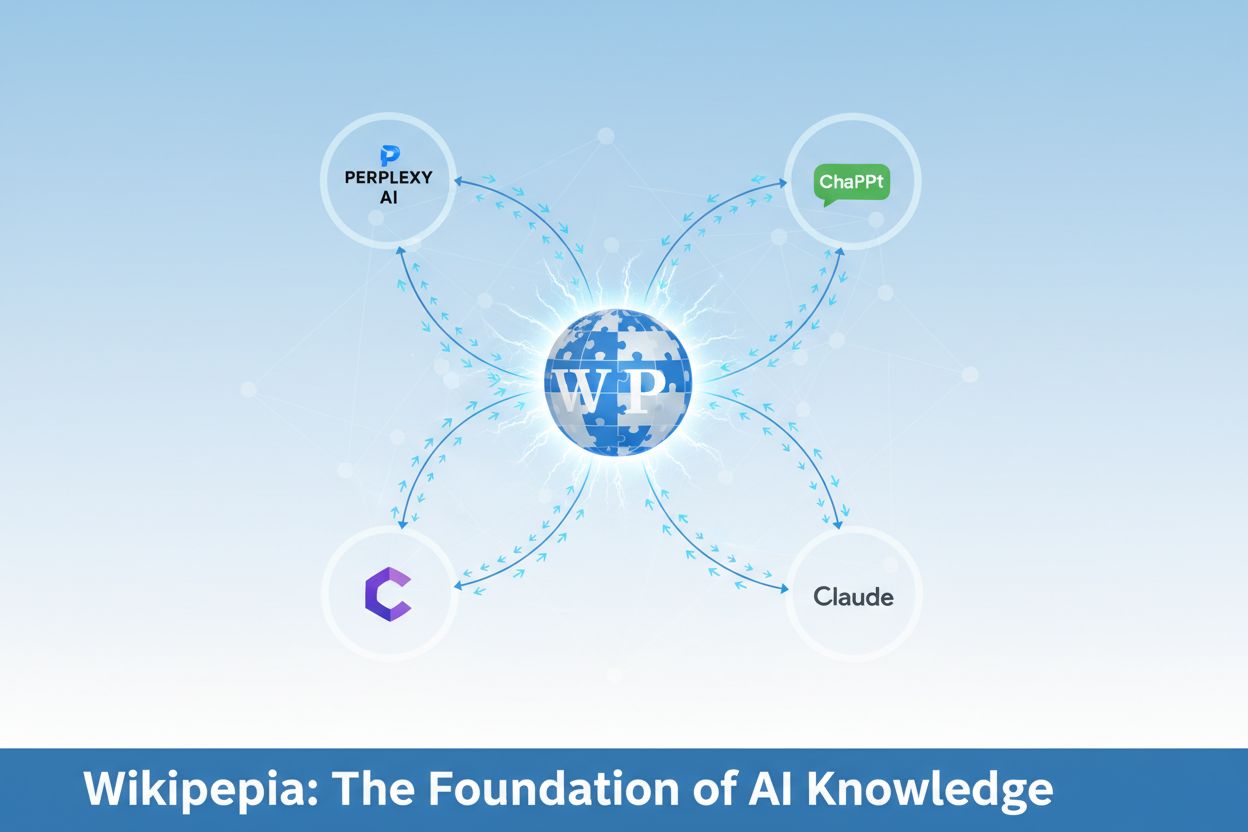

Track how AI chatbots mention your brand across ChatGPT, Perplexity, and other platforms.
Plenty of sources are individually reliable — a well-reported news article, a peer-reviewed study. What makes Wikipedia different is that it bundles several trust signals into one place, which is a large part of why AI systems lean on it so heavily:
Not all citations are created equal in the eyes of AI systems. The following comparison shows why Wikipedia citations carry disproportionate weight in AI training and response generation:
| Source Type | Reliability Score | AI Training Use | Verifiability | Permanence |
|---|---|---|---|---|
| Wikipedia | Very High | Extensive | Fully traceable citations | Permanent with edit history |
| Press Releases | Low-Medium | Limited | Often self-sourced | Frequently removed/archived |
| Company Website | Medium | Minimal | Circular sourcing | Subject to deletion |
| Social Media | Low | Rare | Difficult to verify | Ephemeral |
Wikipedia citations function as a credibility multiplier because they’ve already passed multiple verification gates before being published. When an AI system encounters a Wikipedia citation, it recognizes that the information has been vetted by human editors, cross-referenced with other citations originating from Wikipedia’s own source network, and deemed notable enough for a global knowledge base. A press release doesn’t get that benefit of the doubt — AI systems recognize it as promotional material. Permanence matters too: Wikipedia articles keep a complete edit history, letting AI systems track how information has evolved and been corrected over time, while press releases often vanish from the web entirely.
Get the latest insights on AI mentions, brand monitoring, and optimization strategies.
None of the visibility above is worth much if it’s built on manipulation, because Wikipedia’s community is specifically trained to detect it — and because the consequences propagate through every AI system downstream. The short version: you cannot directly edit Wikipedia to promote your own brand, full stop. The Conflict of Interest policy prohibits editors from making substantial edits to articles about themselves, their employers, or their clients, and undisclosed attempts (sockpuppet accounts, paid editing without disclosure) get detected and can result in your own website being blacklisted as a Wikipedia source entirely.
The ethical path is disclosure through Wikipedia’s Talk pages, not direct editing — we walk through that exact process, template by template, in our step-by-step guide . What’s worth understanding here is why the ethics specifically matter for AI visibility: because Wikipedia feeds so many downstream systems, a brand flagged for manipulation doesn’t just lose one citation, it risks having every future legitimate contribution treated with suspicion, and in the worst case, having an entire domain blacklisted from a source that dozens of AI platforms treat as ground truth. Patience and genuine notability are the only strategy that compounds instead of eventually backfiring.
A Wikipedia citation isn’t just valuable on Wikipedia, it’s the starting point for a cascade of citations across the entire AI ecosystem. Understanding this network effect reveals why Wikipedia presence matters so much for AI visibility specifically, rather than SEO in general.
When your brand appears in a Wikipedia article with proper citations, that citation gets picked up by Google Knowledge Panels, which use Wikipedia as a primary data source for displaying information about entities. The effect multiplies across AI search engines like Perplexity and Bing Chat, which explicitly cite Wikipedia when answering questions about brands and industries. Voice assistants like Alexa and Google Assistant also rely heavily on Wikipedia-sourced information, meaning your Wikipedia presence affects how you’re described in voice search results too.
Beyond search, Wikipedia citations feed into knowledge graphs, the structured databases that power AI understanding of relationships, facts, and entities. When an AI system encounters your brand mentioned in Wikipedia with citations to reliable sources, it adds that information to its knowledge graph, making it available across multiple AI applications simultaneously. This is the mechanism behind the Wikipedia ripple effect: a single, well-placed citation isn’t one data point among many, it’s the authoritative source that other AI systems reference and build upon, which is why 89% of the time Wikipedia citations appear first in AI responses.
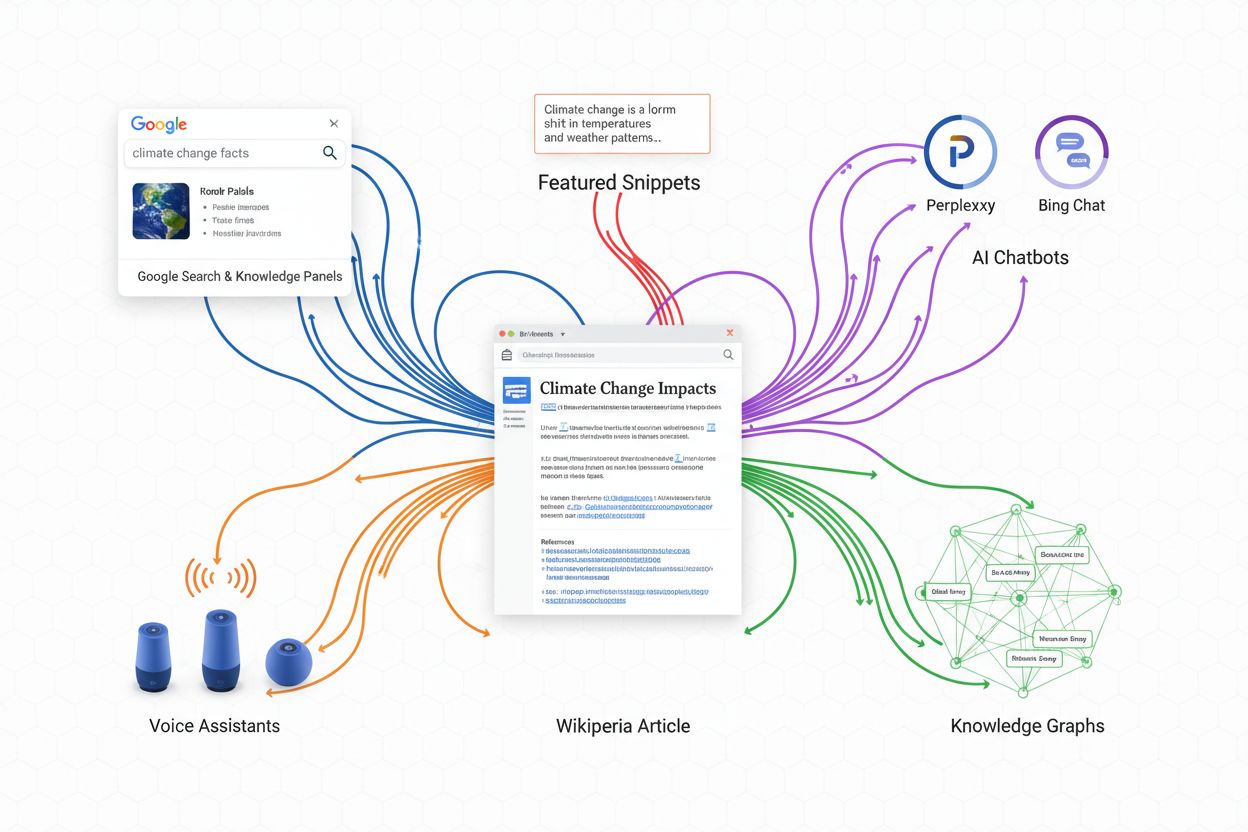
The featured snippets that appear at the top of Google search results also frequently draw from Wikipedia content. When your brand is cited in Wikipedia, you increase the likelihood that information about your brand will appear in these high-visibility positions. This is why brands that invest in Wikipedia presence see disproportionate returns on their AI visibility efforts: they’re not just getting one citation, they’re getting a citation that echoes across the entire digital ecosystem.
Wikipedia won’t cite your brand unless your brand has already earned significant recognition in the broader world, and the good news is that the work required overlaps almost entirely with what makes an AI system trust your brand directly, independent of Wikipedia:
Media Coverage in Reputable Outlets: Coverage in outlets like The New York Times, Wall Street Journal, Forbes, and industry-specific publications is the single most important factor in establishing notability, and those same articles are frequently cited directly by AI search engines regardless of whether a Wikipedia editor ever picks them up.
Industry Awards and Recognition: Third-party validation from recognized industry bodies, analyst firms, or professional associations signals notability to Wikipedia editors and to AI systems evaluating your brand’s authority in a category.
Thought Leadership Positioning: Research, white papers, and insights that get cited by other organizations become documentable, citable influence — the kind of entity signal that compounds across every platform, not just Wikipedia.
Research Generation: Studies, surveys, and data-driven insights that get covered by media are highly citable because they provide concrete, verifiable information that both Wikipedia editors and AI systems can point to directly.
Academic and Analyst Engagement: Mentions in analyst reports from firms like Gartner, Forrester, or IDC, plus academic and analyst engagement more broadly, carry significant weight with Wikipedia editors and reinforce your entity’s authority everywhere else it’s referenced.
The key principle: Wikipedia cites brands that have already proven their importance to the world, and so do AI systems that don’t rely on Wikipedia at all. Building this kind of long-term brand-entity authority is a single investment that pays out across both channels, not two separate campaigns. The bar moves higher if you’re aiming for a dedicated company article rather than a mention inside a broader industry page — Wikipedia notability is a stricter test there, and clearing that notability threshold is what separates brands with a Wikipedia page for your brand from those that only ever appear inside someone else’s article.
Earning a citation is just the beginning. Maintaining and measuring its downstream impact requires ongoing attention:
Set Up Monitoring Alerts
Conduct Periodic Audits
Track the AI-Side Impact, Not Just the Wikipedia Edit
Long-Term Asset Management
The brands that see the biggest AI visibility payoff from Wikipedia are the ones that treat monitoring as continuous rather than a box to check once the citation goes live. Being part of Wikipedia makes your brand AI-visible — but staying accurate is what keeps that visibility working for you as models retrain and AI systems evolve.
Yasha is a talented software developer specializing in Python, Java, and machine learning. Yasha writes technical articles on AI, prompt engineering, and chatbot development.

Track how your brand's Wikipedia citation propagates into ChatGPT, Perplexity, Google AI Overviews, and Knowledge Panels — and catch drift before it costs you visibility.
Discover how Wikipedia influences AI citations across ChatGPT, Perplexity, and Google AI. Learn why Wikipedia is the most trusted source for AI training and how...

Learn what Wikipedia citations are, how they work, and why they matter for AI search visibility. Understand how citations propagate to ChatGPT, Perplexity, and ...
Community discussion on Wikipedia's dominant role in AI citations. Real experiences from marketers and SEO professionals on leveraging Wikipedia for AI visibili...
Cookie Consent
We use cookies to enhance your browsing experience and analyze our traffic. See our privacy policy.