Getting Cited on Wikipedia: A Non-Manipulative, Step-by-Step Approach
A practical, ethical playbook for getting your brand cited on Wikipedia: the four core policies, which sources qualify, the exact Talk-page submission process, and real examples of accepted vs. rejected wording.
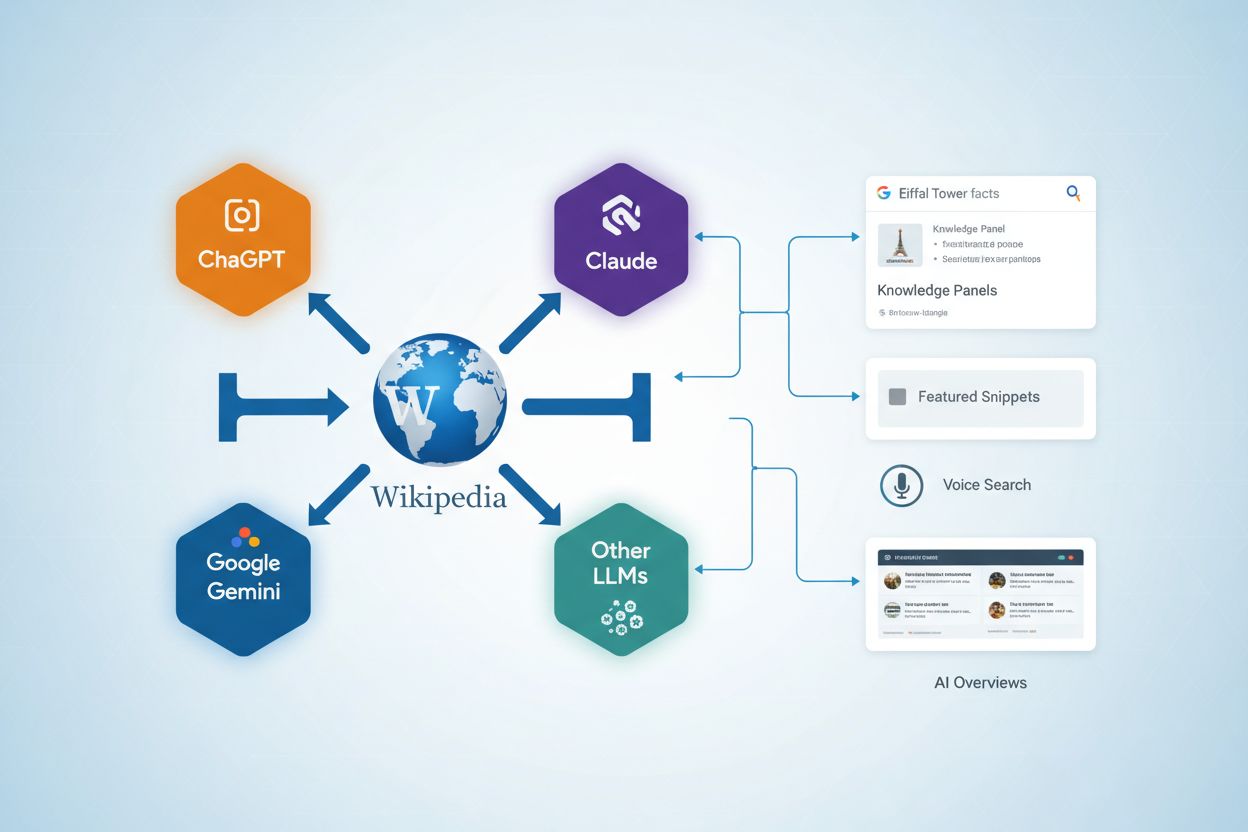
Every major LLM to date has incorporated Wikipedia as a primary training source, which is exactly why a Wikipedia citation behaves differently from a mention almost anywhere else. This guide isn’t about that broader case — for the data on how much AI systems weight Wikipedia and why it cascades into AI Overviews and Knowledge Panels, see our companion piece on Wikipedia and AI visibility
. What follows here is the mechanics: the policies you have to satisfy, the sources that qualify, and the exact process for proposing a citation without getting reverted.
Wikipedia’s Four Core Content Policies
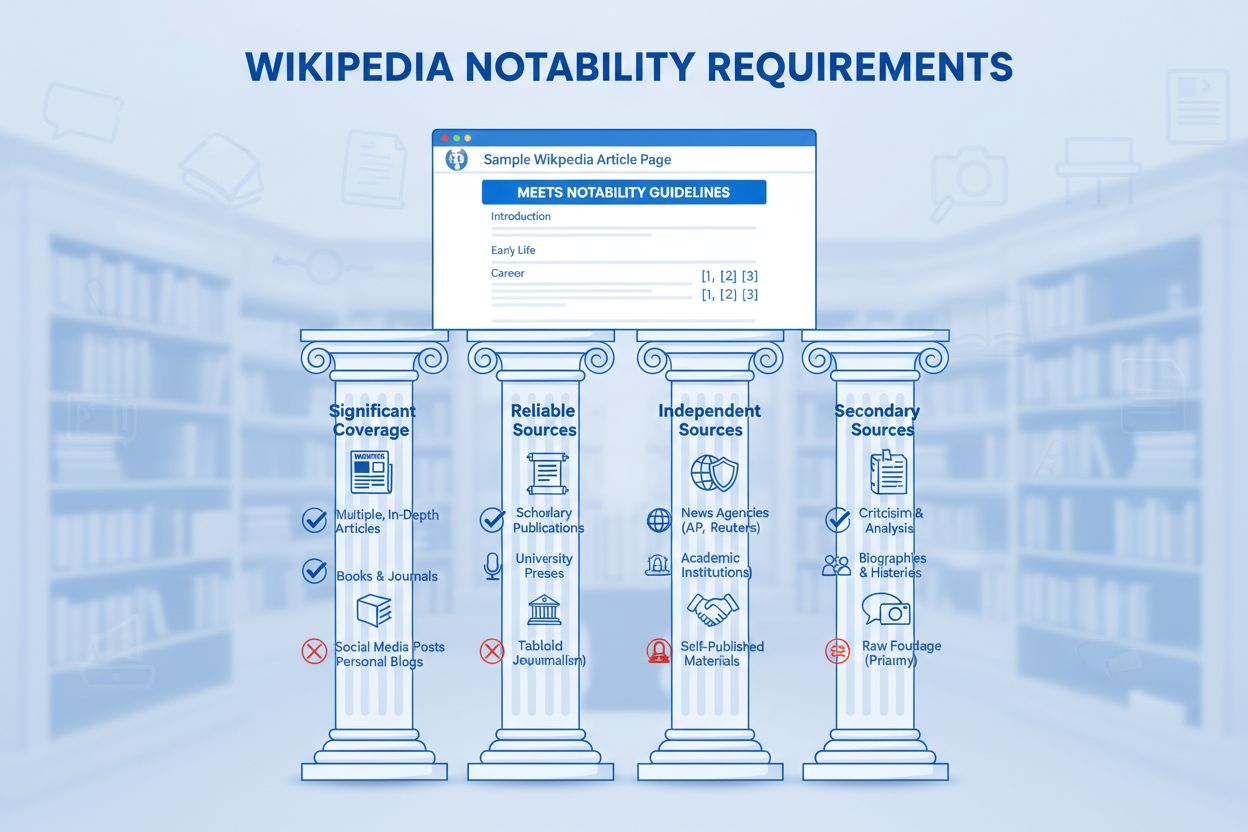
Before attempting to secure a Wikipedia mention, organizations must internalize the four foundational policies that govern all content on the platform. These policies are not suggestions—they are rigorously enforced by Wikipedia’s volunteer editor community and determine whether content survives or is removed.
Policy
Definition
Implication for Brands
Notability
A topic must have received significant coverage in independent, reliable secondary sources to warrant inclusion or mention on Wikipedia. Wikipedia does not allow articles or mentions about non-notable subjects to prevent indiscriminate promotion.
Your brand must be documented in reputable publications (not your own website or minor blogs) to qualify for a Wikipedia mention. If journalists and industry analysts haven’t written about you, Wikipedia won’t either.
Verifiability
Every assertion on Wikipedia must be backed by a citation to a reliable source that readers can independently verify. Wikipedia’s golden rule is “verifiability, not truth”—something can be true but still unacceptable if unpublished in a reliable outlet.
Any facts about your brand (market share, founding date, product launches) must be sourced from mainstream media, academic journals, government documents, or industry reports. Company press releases and internal data do not count as verifiable sources.
No Original Research (NOR)
Wikipedia prohibits first-party data, unpublished insights, or original analysis. All content must be drawn from published reliable sources, not conclusions by the Wikipedia editor or the subject organization.
You cannot insert proprietary research, internal metrics, or unpublished findings about your brand. Everything must come from third-party published sources that have already validated and reported on your information.
Neutral Point of View (NPOV)
All Wikipedia content must be written objectively and without bias, promotional language, or loaded terminology. Even if something is true and sourced, the wording cannot be puffery or marketing-speak.
Descriptions like “the leader in innovative solutions” are unacceptable. Instead, use neutral phrasing: “the company is one of the largest providers of [Service] in [Region].” Wikipedia exists to summarize what independent sources say, not to serve as an advertisement.
Editors evaluate every proposed addition against these four pillars. Brands that align their draft text and sourcing with these policies dramatically increase their chances of acceptance, while those that ignore them will find their contributions quickly reverted and their credibility questioned.
Wikipedia-Friendly vs. Unacceptable Sources
Not all coverage about your brand will be welcome on Wikipedia. The platform has strict preferences for certain source types and an equally strong aversion to others. Understanding this distinction is crucial for building a Wikipedia-ready information ecosystem around your brand.
Acceptable Sources (What Gets Cited):
Mainstream Media Articles – Reputable publications (BBC, The Guardian, The New York Times, Forbes, TechCrunch, Wall Street Journal) that mention your brand are ideal. These are considered reliable secondary sources and carry significant weight on Wikipedia.
Academic and Peer-Reviewed Publications – Scholarly journals, research studies, and academic papers mentioning your brand are gold-standard sources. They demonstrate notability in an unbiased, rigorous context.
Government or Regulatory Documents – Official databases, patent filings, FDA approvals, SEC filings, and other government publications provide verifiable facts that Wikipedia readily cites.
Industry Directories and Rankings – Appearances in well-regarded lists (Fortune 500, FTSE indexes, Gartner Magic Quadrant) compiled by independent bodies are citable, especially when reported in news outlets.
Third-Party Market Research – Data from independent research firms (IDC, Gartner, Forrester) that mention your brand can be cited, provided the research is published and widely available.
Unacceptable Sources (What Won’t Fly):
Your Own Website or Blog – Self-published material, regardless of accuracy, is not acceptable. Press releases, blog announcements, and marketing case studies will be flagged and removed.
Press Releases and PR Newswires – Even syndicated press releases are frowned upon as sources. They are seen as primary, self-serving documents rather than independent coverage.
Social Media and User-Generated Content – Tweets, Facebook posts, LinkedIn articles, Reddit threads, and Quora answers are not acceptable citations, even if posted by company executives.
Unverifiable Claims and Puffery – Subjective claims like “we’re the #1 brand in customer satisfaction” are meaningless without a published study backing them up. Promotional language is immediately suspect.
Sales Materials and Product Pages – Advertising copy, pricing information, and sales figures that aren’t publicly reported have no place in Wikipedia articles.
The fundamental principle is simple: Wikipedia cites what independent, reputable outlets have already published about your brand. If your brand isn’t being discussed in such places yet, that’s a signal to focus on earning that coverage first, not to look for a workaround.
Ready to Monitor Your AI Visibility?
Track how AI chatbots mention your brand across ChatGPT, Perplexity, and other platforms.
Conflict of Interest: Who Should (and Shouldn’t) Edit
One of the most critical mistakes companies make is assuming they can directly edit Wikipedia to add their brand. Wikipedia has strict Conflict of Interest (COI) rules that strongly discourage people with close connections to a topic from editing that content. Company staff, marketing agencies, and anyone hired specifically to promote your brand should not directly edit Wikipedia articles about your company or add your information to other pages. Such edits are viewed with immediate suspicion and are frequently reverted by the community. Undisclosed paid editing is particularly problematic—Wikipedia’s guidelines explicitly forbid editing for promotional purposes without full transparency, and discovered violations can result in account banning and even blacklisting of your website as a source. Creating fake “neutral” accounts to sneak in brand mentions (sockpuppeting) is a severe violation that can backfire spectacularly, leading to harsh warnings and reputational damage.
The ideal scenario is when independent Wikipedia editors add information about your brand because it genuinely enhances an article, not because you asked them to. However, if you do engage with Wikipedia, the proper channel is the Talk page—the discussion section attached to every Wikipedia article. Here, you can transparently propose additions, disclose your conflict of interest, and provide sources for independent editors to review. Some experienced Wikipedia consultants operate ethically within this framework, using Talk pages and the {{request edit}} template to suggest changes rather than making direct edits. The key is transparency and respect for the community’s autonomy: your role is to make it easy for a neutral editor to see the value in your addition, not to force your way onto the platform.
The Step-by-Step Process for Proposing a Citation
This is the actual mechanical process, in order. Skipping steps is the single biggest reason legitimate, well-sourced proposals still get reverted.
Cultivate Reliable Source Material First – Before anything appears on Wikipedia, it must exist in the outside world. Pursue traditional PR, thought leadership, and partnerships that generate independent media coverage in publications Wikipedia considers reliable. The goal is multiple write-ups from credible outlets that discuss your brand’s activities or achievements, creating a foundation for future citations.
Identify Relevant Wikipedia Pages in Your Niche – Look beyond your company page to broader articles where your brand could be mentioned. For a fintech startup, relevant pages might include “Financial technology,” “Mobile payment systems,” or articles about specific problems you solve. Build a shortlist of existing articles where a factual, non-promotional mention would make sense.
Audit for Citation Gaps – Read target articles critically and ask: “Is there a factual statement here that my brand could help support or improve using an external source?” Look for missing companies in sector lists, outdated claims your brand has addressed, or “Citation needed” tags on statements you have sources for.
Prepare Factual, Neutral Wording – Draft exactly what you want added, following the article’s existing style and tone. The text must be strictly factual and neutral. Instead of “Our company revolutionized the industry,” write: “In 2023, [Brand Name] introduced X technology, which a TechCrunch article describes as the first viable solution to [Problem].” Have this snippet ready with full citations attached.
Open a Talk Page Section and Disclose Your COI – Do not insert content directly if you have a conflict of interest. Instead, go to the article’s Talk page, open a new section, and politely propose your addition: “I represent [Brand], and I noticed the article might be missing recent developments. A 2023 Wired article reported that [Brand] achieved [fact]. Proposed sentence: ‘…’. Source: [full citation]. I’m not editing directly due to COI, but I welcome an independent editor to review this.”
Track the Outcome and Maintain It – Be patient and monitor the result. If your addition is accepted, set up alerts so you notice if it’s later altered or removed. If it’s rejected with an explanation, treat that as feedback and adjust your sourcing or wording rather than resubmitting the same text.
Stay Updated on AI Visibility Trends
Get the latest insights on AI mentions, brand monitoring, and optimization strategies.
Good vs. Bad Brand Citations (Examples)
The difference between an acceptable Wikipedia mention and a problematic one often comes down to wording and sourcing. Here are clear examples:
Good Example
Bad Example
✅ “According to a 2024 Guardian article, Brand X was the UK’s largest beauty retailer by market share.”
❌ “Brand X is the best place to buy skincare products.”
✅ “In 2023, Brand X launched a mobile payment platform that TechCrunch reported as the first to achieve real-time cross-border transfers.”
❌ “Brand X revolutionized the fintech industry with its innovative solutions.”
✅ “Brand X was ranked #3 in the 2024 Gartner Magic Quadrant for Customer Data Platforms.”
❌ “Brand X is the leader in innovative customer data solutions.”
✅ “A 2025 study published in the Journal of Applied Research found that Brand X’s technology reduced processing time by 40%.”
❌ “Brand X’s technology is the most advanced on the market.”
The pattern is clear: good citations are specific, neutral, attributed to reputable sources, and verifiable. Bad citations use subjective language (“best,” “leader,” “revolutionary”), lack sources, or read like marketing copy. Before submitting text, ask yourself: “Does this sound like a line from a news article or academic paper, or does it sound like an advertisement?” If it’s the latter, rewrite it before you propose it. Studying how competitor or peer organizations are already cited on Wikipedia — the neutral phrasing they use, the sources they lean on — is one of the fastest ways to calibrate your own draft.
Building the Source Material You’ll Need First
If your brand isn’t yet appearing on Wikipedia or lacks the robust sources needed for inclusion, treat that as a strategic opportunity to strengthen your overall credibility, not just a Wikipedia problem. These strategies improve your Wikipedia prospects while simultaneously enhancing your brand’s reputation:
Get Covered in Reputable Publications – Work on media outreach so that news outlets and industry journals discuss your brand. Pitch story ideas, apply for awards, participate in high-profile projects, or do newsworthy things (launches, research, partnerships) that journalists naturally want to cover. A few high-quality articles in reputable publications can serve as the bedrock for future citations.
Commission Research or Reports – Create something genuinely newsworthy by producing a data-driven report relevant to your industry. Share findings with journalists and at conferences; if the research is solid, media will cite it, and by extension cite your brand as the source. This original research and data-driven reports approach is one of the more reliable ways to earn coverage that later qualifies as a Wikipedia source.
Aim for Inclusion in Rankings and Databases – Pursue inclusion in annual rankings, accreditation lists, or government databases in your field. Independent recognition adds to notability and often leads to news writeups that can be cited on Wikipedia.
Publish High-Quality Content Elsewhere – Contribute op-eds or technical articles to respected external platforms. When your brand’s leaders or data appear in these outlets, it creates citable credentials that Wikipedia can reference.
Foster Community and Academic Engagement – Engage with academic researchers, open-source projects, or standards bodies in your field, and pursue independent media coverage alongside it. If your brand’s work is cited in academic papers or you contribute to open datasets, those independent credits bolster your footprint and make inclusion more likely.
All of these strategies focus on building real-world substance and recognition.Wikipedia is fundamentally a mirror of what the world has already deemed notable. Increase your footprint in the kinds of sources Wikipedia values, and inclusion becomes almost inevitable — sometimes editors will add the mention without your ever proposing it, because the evidence of notability is undeniable. If your brand eventually clears the much higher bar required for a Wikipedia page for your brand rather than just a mention elsewhere, the same sourcing discipline applies, just with a stricter review process; check the Notability guidelines and compare whether your brand qualifies against similar companies before you attempt it.
Keeping Your Citation Accurate Over Time
Getting a proposal accepted isn’t the end of the process. Set a Google Alert for your brand name plus “Wikipedia,” check the article on a quarterly cadence, and re-open a Talk page thread with an updated source whenever a fact changes. If you want the fuller picture of what a well-maintained citation earns you downstream — how much AI systems weight Wikipedia in ChatGPT, Perplexity, and Google AI Overviews, and how to track that over time — that’s covered in depth in our companion piece rather than repeated here.
Frequently asked questions
No, Wikipedia strongly discourages direct editing by company representatives due to conflict of interest rules. Instead, focus on creating verifiable information in reliable external sources, then propose additions through Wikipedia's Talk page process transparently. This approach respects Wikipedia's community norms and increases the likelihood of your content being accepted and maintained.
Reliable sources include mainstream media (BBC, Guardian, Forbes), academic journals, government documents, and established industry rankings. Press releases, company websites, social media, and sales materials do not qualify. Wikipedia requires sources that are independent of the subject being cited and have editorial oversight.
There's no fixed timeline. It depends on how much independent coverage your brand has earned and how relevant your information is to existing Wikipedia articles. Building notability through PR and media coverage is typically a long-term effort, often taking months or years to establish sufficient credibility.
Don't start by drafting text. Start by reading the target article's existing citations and Talk page archive to see what similar proposals succeeded or failed. Only after that should you draft a neutral, sourced sentence and open a new Talk page section disclosing your conflict of interest and proposing the exact wording, with the source attached.
Use the Talk page to propose a correction with a better source. Provide the reliable source that contradicts the incorrect information and explain why the change is needed. Never directly edit the article if you have a conflict of interest. The Wikipedia community will review your proposal and make the correction if it's valid.
Yes, if done transparently. Experienced Wikipedia consultants can help you navigate the process ethically by using proper channels (Talk pages, disclosure of COI). They should never promise guaranteed results or use deceptive tactics. An ethical consultant acts as a bridge between you and the volunteer community, not a surreptitious promoter.
A company article requires very high notability standards and is difficult to establish. Mentions in broader topic articles (industry, technology, market trends) are often more achievable and equally valuable for visibility and AI citations. These contextual mentions often carry more weight because they appear in established, well-maintained articles.
If your brand has been covered by multiple reputable publications (not just industry blogs), has achieved significant market position, or has been involved in notable events, you likely meet notability standards. Check similar companies' Wikipedia presence for comparison and review Wikipedia's Notability guidelines to assess your brand's eligibility.
Viktor Zeman is a co-owner of QualityUnit. Even after 20 years of leading the company, he remains primarily a software engineer, specializing in AI, programmatic SEO, and backend development. He has contributed to numerous projects, including LiveAgent, PostAffiliatePro, FlowHunt, UrlsLab, and many others.
Viktor Zeman
CEO, AI Engineer
Track Whether Your Wikipedia Citation Sticks
Once you've proposed an edit, AmICited helps you monitor whether it's accepted, how it holds up over time, and whether it's actually surfacing in AI-generated answers.
How to Get a Wikipedia Page for Your Brand: Complete Guide to Notability and Creation
Learn how to create a Wikipedia page for your brand with our comprehensive guide covering notability requirements, ethical practices, and step-by-step instructi...
Learn what Wikipedia notability means for AI visibility. Understand the four pillars of notability criteria, how Wikipedia content influences AI training datase...
Wikipedia Notability: What Qualifies Your Brand for a Page
Learn what Wikipedia notability really means and whether your brand qualifies for a Wikipedia page. Understand the General Notability Guideline, reliable source...
15 min read
Cookie Consent We use cookies to enhance your browsing experience and analyze our traffic. See our privacy policy.