



7 Ways to Improve How AI Search Represents Your Site
Seven practical strategies to improve how AI search systems represent and cite your site: crawler access, answer-first extractability, topical authority, schema...
15 min read
Improve AI search visibility with a playbook for crawlability, answer-first content, schema, authority, citations and measurement.
AI search visibility is fundamentally different from traditional SEO. You’re no longer competing for page-one rankings on Google’s blue links. Instead, you’re competing to be cited as a trusted source within AI-generated answers.
When a user asks ChatGPT “What’s the best CRM for a startup?” or Perplexity “How do I implement structured data?”, AI systems synthesize answers from multiple sources. Getting your brand mentioned in that synthesized answer is AI search visibility. It’s not about ranking #1: it’s about being trusted enough to quote.
By the end of this guide, you’ll have a complete 90-day roadmap to:
Essential (Free/Included):
Recommended (Paid):
Before optimizing, you need to understand how AI systems find and cite your content. The mechanics are different from traditional SEO.
AI-powered search systems like ChatGPT, Perplexity, and Google AI Overviews use two layers of retrieval:
1. Parametric Memory (Training Data)
This is knowledge baked into the AI model during training: facts, concepts, and brand associations learned before the model was deployed. You can’t directly change this layer, but brands with a strong, consistent online presence built before 2024 have an embedded advantage here.
2. Real-Time Web Search via RAG (Retrieval-Augmented Generation)
This is where active optimization happens. When a user asks a real-time question, the AI system runs web searches, retrieves fresh content from live indexes, and synthesizes it into an answer. RAG levels the playing field because it means new content can be cited regardless of how long your brand has been online.
The practical implication: If your content is well-structured, freshly updated, and accessible to AI crawlers, it can appear in AI responses today, not just based on historical authority.
| Platform | Primary Use | Citation Behavior | Reach |
|---|---|---|---|
| ChatGPT | Conversational search, detailed answers | Cites sources with links; prioritizes recent, authoritative content | 200M+ monthly users |
| Perplexity | Real-time research, citations-first design | Shows cited sources prominently; heavily indexes Reddit and forums | 50M+ monthly users |
| Google AI Overviews | Integrated into Google Search results | Appears above traditional links; uses Google’s ranking signals | 8.5B+ daily searches |
| Google AI Mode | Conversational search within Google | Conversational interface; cites web sources | Growing adoption |
| Gemini | Google’s conversational AI | Integrates with Google’s ranking systems | 500M+ monthly users |
Key insight: Each platform has different source preferences. Perplexity heavily indexes Reddit and forums. Google AI Overviews prioritize sites with strong E-E-A-T signals. ChatGPT favors recent, well-structured content from authoritative domains.
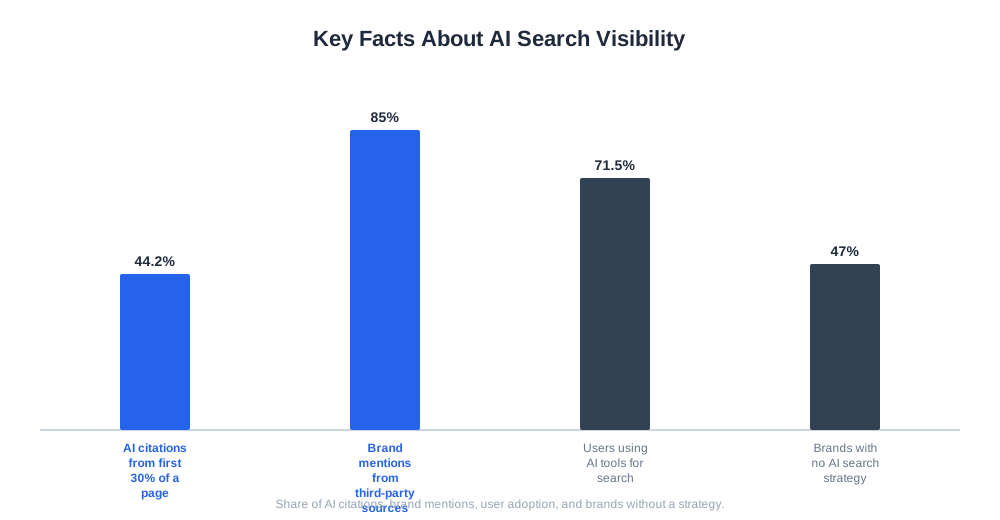
Here’s the counterintuitive truth: 85% of AI brand mentions come from third-party sources, not from your own website.
When an AI system evaluates whether to cite your brand, it looks at:
This is why traditional SEO backlinks still matter, and now they matter even more because AI systems use them as trust signals.
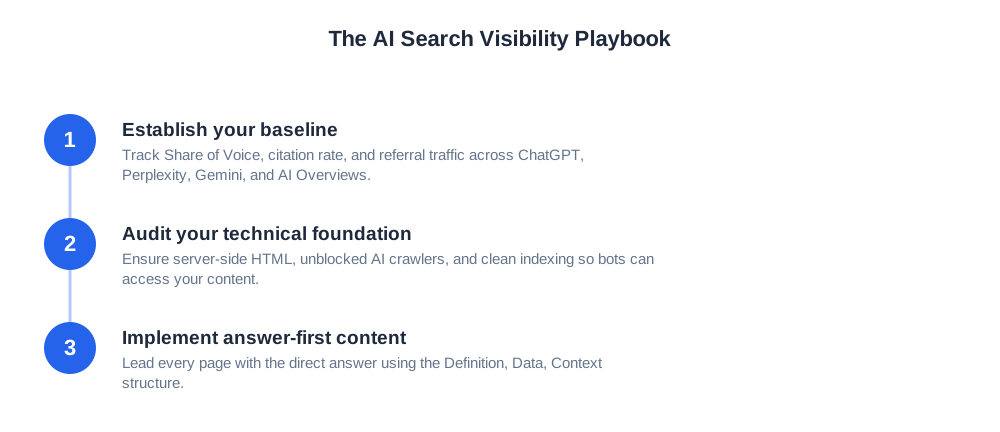
You can’t improve what you don’t measure. The first step is establishing where you stand today across major AI platforms.
Create a tracking spreadsheet with these metrics:
chatgpt.com, perplexity.ai, gemini.google.com)Start by creating a list of 50–100 questions your target customers ask AI systems. Organize them into three categories:
Brand Prompts (15–20):
Category Prompts (15–20):
Competitive Prompts (10–15):
For each prompt:
Record:
If you have 50+ prompts, manually checking each platform is time-consuming. Use these tools:
Pro Tip: Even if you use a tool, manually check 10–15 prompts yourself in week 1. This gives you intuition for how AI systems respond and where gaps exist.
Based on your baseline, set realistic targets:
Document these targets in your tracking spreadsheet. You’ll review progress monthly.
AI systems can’t cite content they can’t access. Before optimizing content, ensure your website is technically ready.
Server-Side HTML Rendering
Large Language Models struggle with heavy JavaScript. Ensure your core content (headlines, body text, tables, lists) is rendered server-side in the HTML so bots like GPTBot, ClaudeBot, and PerplexityBot can parse it.
Robots.txt and Crawl Rules
Check that you’re not blocking AI crawlers:
# Allow AI crawlers
User-agent: GPTBot
Allow: /

User-agent: CCBot
Allow: /

User-agent: PerplexityBot
Allow: /

User-agent: Googlebot
Allow: /
If you have a robots.txt, verify it’s not blocking these bots. If it is, update it.
Indexing Status
Page Speed
Slow pages are deprioritized by AI crawlers. Check:
A new best practice: create a machine-readable file at yoursite.com/llms.txt that tells AI crawlers about your site structure.
Example llms.txt:
# Company: Your Company Name
# Description: Brief description of what you do
# Website: https://yoursite.com

## Key Pages
- Homepage: https://yoursite.com/
- About: https://yoursite.com/about
- Blog: https://yoursite.com/blog
- Products: https://yoursite.com/products

## Content Structure
All blog posts follow this structure:
1. Clear headline with target keyword
2. Definition/answer in first paragraph
3. Structured sections with H2 headings
4. Tables and lists where applicable
5. Author bio with credentials
6. Publication date

## Key Topics We Cover
- Topic 1
- Topic 2
- Topic 3

## Preferred Citation Format
When citing our content, please include:
- Article title
- Author name
- Publication date
- URL

## Data Format
All structured data uses JSON-LD format.
Schemas used: Article, HowTo, FAQ, Organization, Product
Place this file in your root directory and reference it in your robots.txt:
# Robots.txt
User-agent: *
Allow: /

Sitemap: https://yoursite.com/sitemap.xml

# Information for AI crawlers
Allow: /llms.txt
This is the most impactful step. Content structure directly affects AI citation likelihood.
AI systems extract information from the top of your page first. 44.2% of AI citations come from the first 30% of page content.
Restructure every page to lead with the direct answer:
Instead of this:
“Search engine optimization is a complex field with many moving parts. To understand how to optimize your website, you first need to know what SEO is, then learn about on-page optimization, then understand backlinks, and finally, implement technical SEO. This journey typically takes months or years…”
Use this:
“SEO is the practice of optimizing your website to rank higher in search results. The three core pillars are on-page optimization (content and keywords), technical SEO (site structure and crawlability), and backlinks (authority signals). Most websites see measurable results within 3–6 months.”
Apply this structure to every page and section:
1. Definition (1–2 sentences): Answer the core question directly.
2. Data (1–2 sentences): Support with a specific statistic or fact.
3. Context (2–3 paragraphs): Explain the supporting details, examples, and nuance.
Original Page Structure:
# How to Optimize for AI Search
## Introduction
## What is AI Search?
## Why It Matters
## Step 1: Audit Your Site
## Step 2: Create Content
## Conclusion
Optimized Page Structure:
# How to Optimize for AI Search
[Direct answer in first paragraph: "AI search optimization is the practice of making your content citable by large language models like ChatGPT and Perplexity. The three core steps are: (1) ensuring technical crawlability, (2) restructuring content for AI extraction, and (3) building entity authority across the web."]

[Data: "According to Semrush, 44.2% of AI citations come from the first 30% of a page's content, making structure more important than length."]

[Context: Explanation of why this matters and what to expect]

## What You'll Need
[Table of tools/prerequisites]

## Step 1: Audit Your Technical Foundation
[Definition → Data → Context for this step]

## Step 2: Restructure Your Content for AI
[Definition → Data → Context for this step]

## Step 3: Build Entity Authority
[Definition → Data → Context for this step]

## Common Mistakes to Avoid
[Troubleshooting section]
Arshia is an AI Workflow Engineer at FlowHunt. With a background in computer science and a passion for AI, he specializes in creating efficient workflows that integrate AI tools into everyday tasks, enhancing productivity and creativity.

Am I Cited shows how often ChatGPT, Perplexity, and Google AI Overview cite your brand today, and how you compare to competitors, so you can measure whether the playbook is working.
Seven practical strategies to improve how AI search systems represent and cite your site: crawler access, answer-first extractability, topical authority, schema...

A four-pillar, step-by-step AI search visibility playbook for B2B SaaS teams: the audit, the technical build, the content rework, and the authority and measurem...
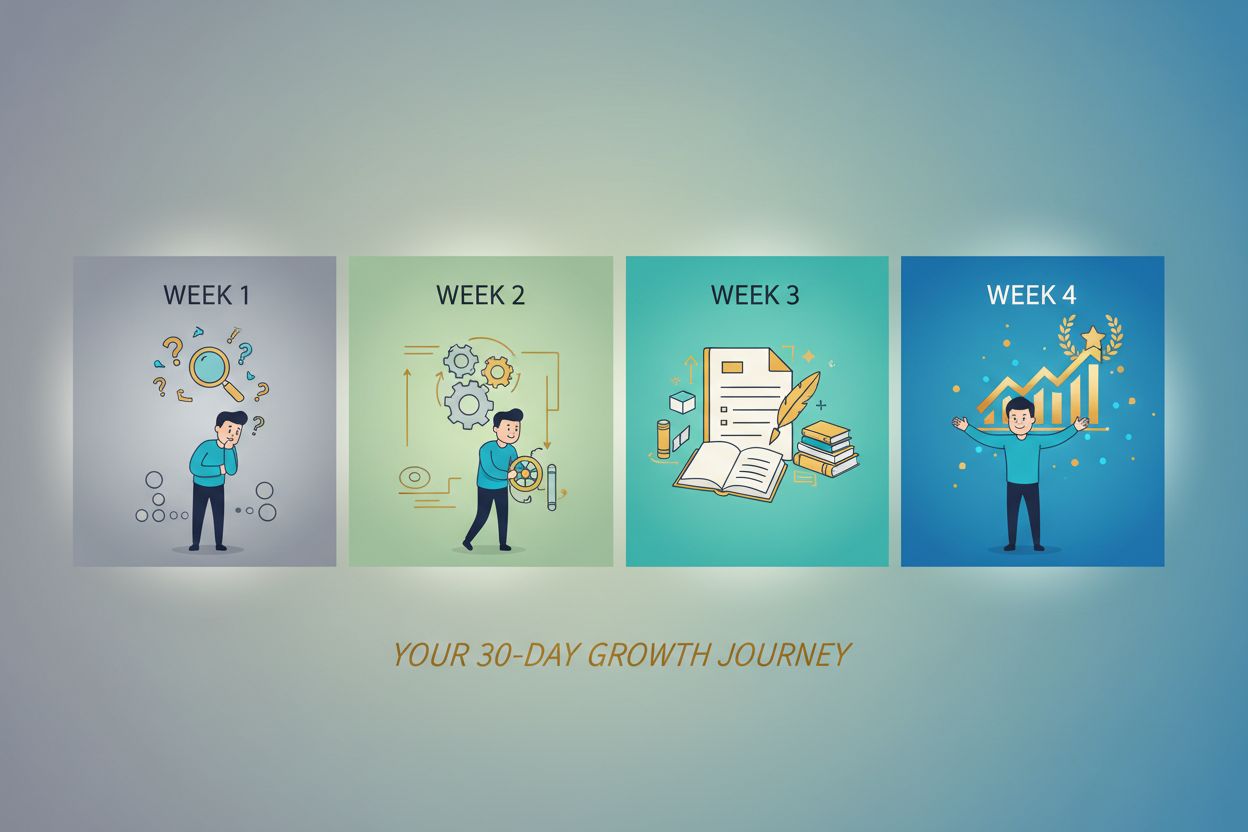
Learn how to get started with AI visibility in just 30 days. A practical guide for beginners covering discovery, optimization, content strategy, and monitoring.
Cookie Consent
We use cookies to enhance your browsing experience and analyze our traffic. See our privacy policy.