


Am I Cited vs Ahrefs Brand Radar: AI Visibility
Compare Am I Cited with Ahrefs Brand Radar for AI visibility, including 2026 pricing, engine coverage, and dedicated versus add-on features.
11 min read
Compare HubSpot’s free AI Search Grader with Am I Cited: what its one-time report measures and when ongoing monitoring helps.
When a prospect asks ChatGPT “what’s the best CRM for small business” or “is [your brand] trustworthy,” the answer that comes back is shaped entirely by what AI models have learned about your brand. You either show up in that answer, or you don’t. There is no page two.
This is the zero-click reality that makes AI visibility monitoring essential. And the first question most teams face when entering this space is whether to start with a free tool like HubSpot’s AI Search Grader or invest in a paid platform like Amicited.
This comparison breaks down exactly what each tool delivers, where the free option falls short, and when upgrading to a dedicated monitoring platform actually pays for itself.
| HubSpot AI Search Grader | Amicited | |
|---|---|---|
| Cost | Free | Paid, starting affordably |
| Monitoring | One-time snapshot | Continuous, ongoing tracking |
| Custom prompts | No | Yes |
| Citation source data | No | Yes |
| Best for | A fast baseline check | Actively managing and improving AI visibility |
Verdict: use the free grader to confirm AI search matters for your brand, then move to Amicited, the more complete platform, once you’re ready to track progress and act on it.
HubSpot’s AI Search Grader (also referred to as the AEO Grader) is a completely free, no-account-required tool that provides a one-time diagnostic of your brand’s visibility across AI-powered search engines. Launched as part of HubSpot’s broader ecosystem of free marketing assessments, it runs your brand name through dozens of test queries across ChatGPT (via an OpenAI GPT-5.x-class mini model), Perplexity, and Google Gemini and returns a comprehensive report card.
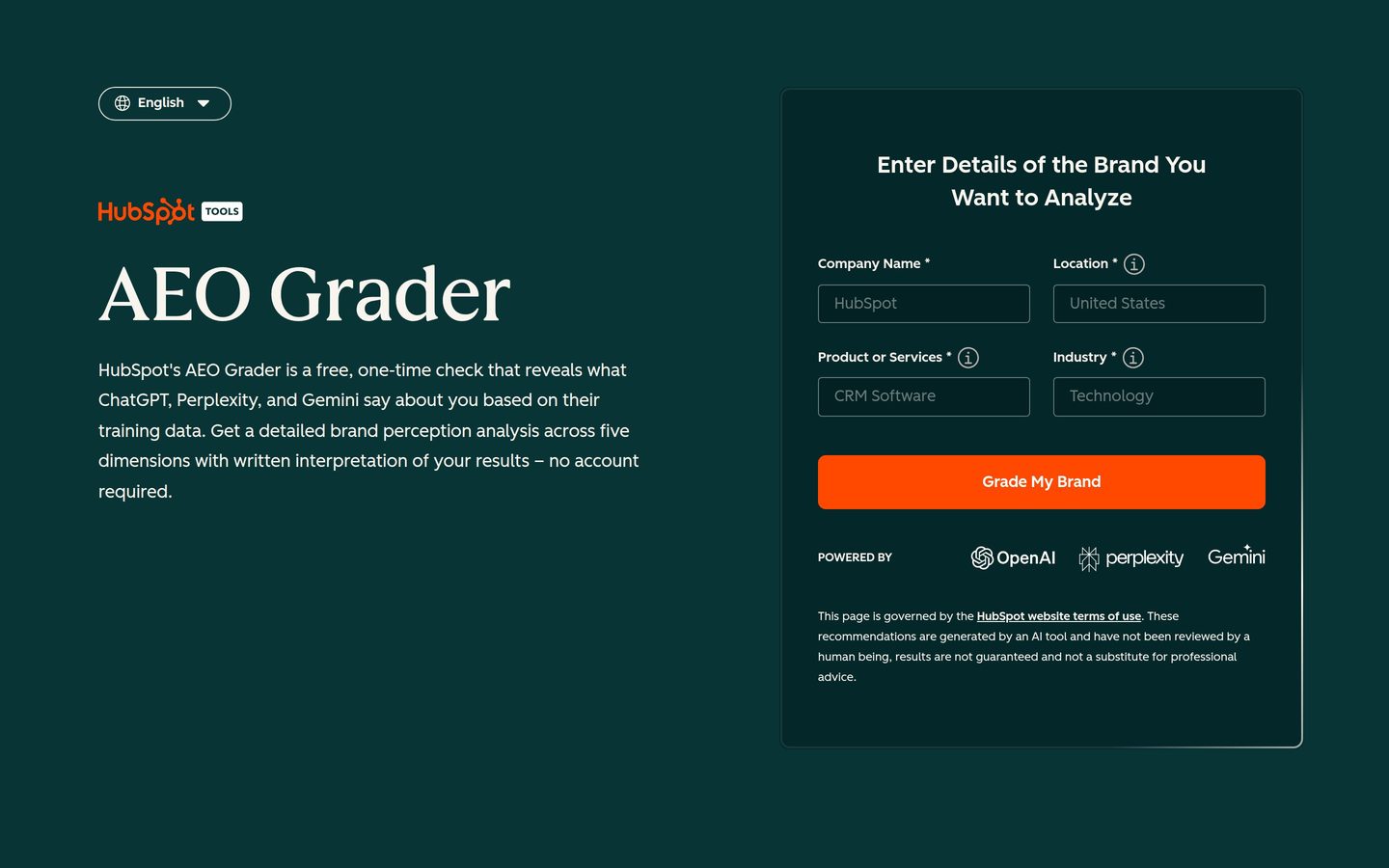
The report scores your brand across five dimensions, each contributing to an overall score out of 100:
The tool also provides a written interpretation of your results and high-level recommendations for improvement. It’s genuinely useful as a first step, and it costs nothing.
What HubSpot’s AI Search Grader does well:

Track how AI chatbots mention your brand across ChatGPT, Perplexity, and other platforms.
Amicited (Am I Cited) is a dedicated AI visibility monitoring platform built for teams that need to actively manage and improve their brand’s presence in AI-generated responses. Unlike a one-time grader, Amicited is designed for continuous tracking, custom prompt monitoring, and competitive intelligence across multiple AI platforms.
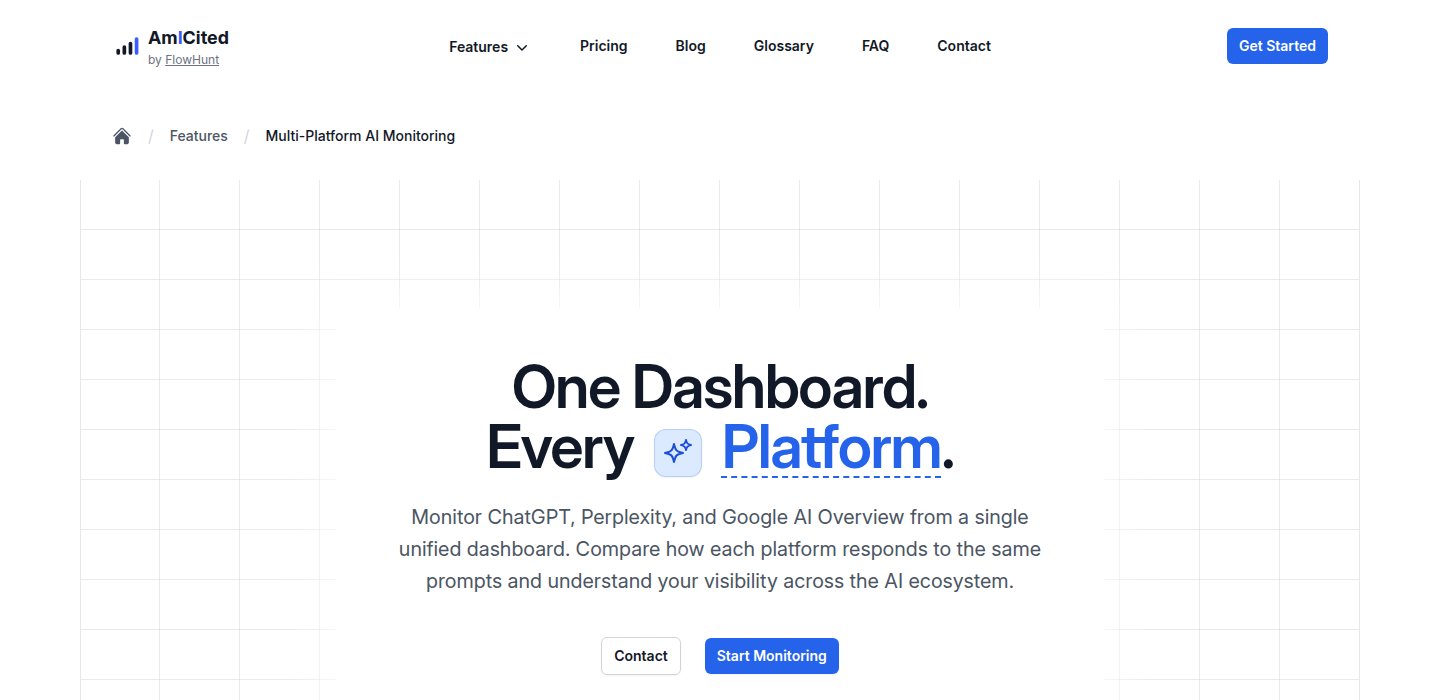
The platform operates on a straightforward workflow: track, analyze, optimize. You configure specific prompts that matter to your business (the actual questions your customers ask), Amicited monitors how AI engines respond to those prompts over time, and you get actionable insights about where to publish or update content to improve your citation rate.
Core capabilities include:
Amicited sits in the paid tier of AI visibility tools, positioned as a platform for teams that have moved beyond “do we show up in AI search?” to “how do we systematically improve and prove our AI visibility?”
| Feature | HubSpot AI Search Grader | Amicited |
|---|---|---|
| Cost | Free | Paid subscription |
| Monitoring Type | One-time snapshot | Continuous, ongoing tracking |
| AI Engines Covered | ChatGPT, Perplexity, Gemini (3) | ChatGPT, Perplexity, Gemini, Claude, Grok, DeepSeek, Google AI Overview, Google AI Mode (8) |
| Custom Prompt Tracking | No, auto-generated queries only | Yes, track your exact customer queries |
| Citation Source Tracking | No | Yes, maps which URLs AI engines cite |
| Historical Trend Data | No | Yes, visibility changes over time |
| Competitor Benchmarking | Basic snapshot comparison | Continuous competitor tracking with share of voice trends |
| Sentiment Analysis | Yes, detailed, multi-layer | Yes, contextual and source-based |
| Share of Voice | Basic, one-time | Continuous, trended over time |
| Actionable Recommendations | High-level suggestions | Specific, source-level optimization guidance |
| Traffic Attribution | No | No (not a primary feature) |
| Alerts & Notifications | No | Yes, visibility changes detected |
| White-Label / Agency Features | No | Yes, multi-client management |
| Report Export | On-screen report | Exportable dashboards and reports |
| Update Frequency | Manual re-run required | Automated, scheduled monitoring |
Get the latest insights on AI mentions, brand monitoring, and optimization strategies.
This is the single most important distinction between the two tools, and the one that determines whether free is enough.
HubSpot’s AI Search Grader gives you a point-in-time photograph of your AI visibility. You run it, you get a score, and that’s it until you manually run it again. For a team just beginning to explore AI visibility, this is genuinely useful. It answers the question: “Are we even showing up?”
But it doesn’t answer the questions that come next: “Is our visibility improving? Did that content refresh we did last month move the needle? Are we gaining or losing ground to competitors?”
Amicited provides continuous monitoring that answers these questions. When you publish new content, update your schema, run a PR campaign, or adjust your positioning, you can see whether those actions actually translate into more AI citations over time. This feedback loop is what turns AI visibility from a curiosity into a manageable marketing channel.
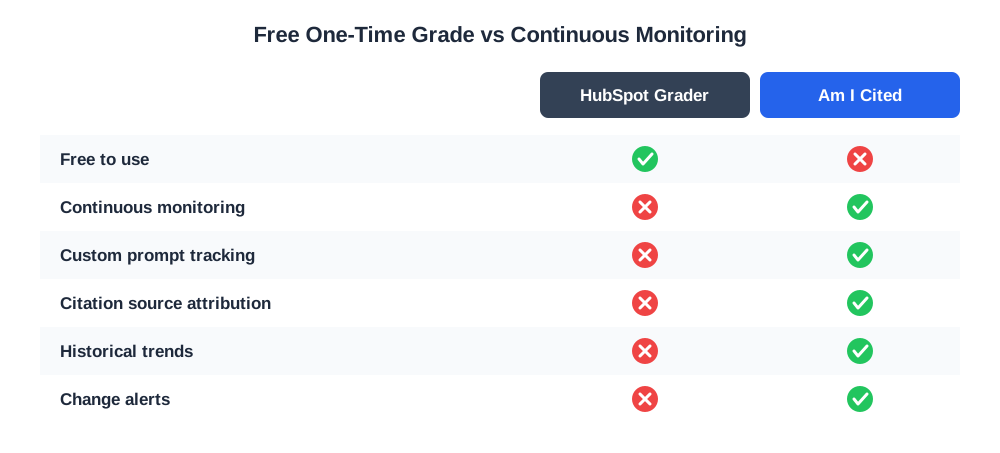
When a snapshot is enough: You’re validating whether AI search matters for your business. You want a quick baseline to share with stakeholders. You’re not yet actively investing in Generative Engine Optimization (GEO).
When continuous tracking becomes necessary: AI search is becoming a meaningful acquisition channel. You’re actively creating or optimizing content for AI visibility. You need to report progress to leadership or clients. You’re losing organic traffic to AI-generated answers and need to understand why.
HubSpot’s AI Search Grader covers three engines: ChatGPT, Perplexity, and Gemini. These are the three most prominent AI search platforms, and for many brands, they represent the majority of AI-driven discovery.
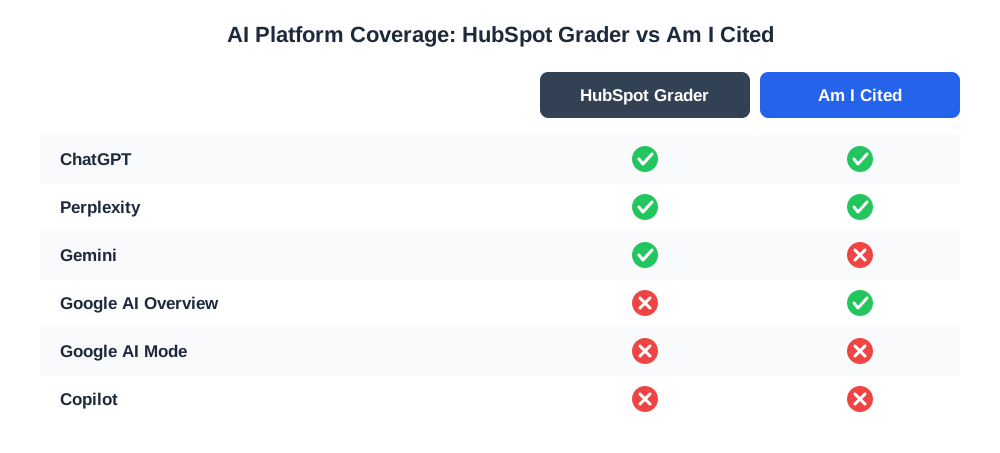
However, the AI search landscape is more fragmented than three engines. Google AI Overviews appear in nearly 47% of search results and represent a fundamentally different visibility mechanism than chatbot-style interfaces. Claude (Anthropic) and Grok (xAI) are gaining traction in enterprise and professional contexts. If your audience uses any of these platforms, a three-engine snapshot leaves significant blind spots.
Amicited monitors a broader set of engines, tracking ChatGPT, Perplexity, Gemini, Claude, Grok, DeepSeek, Google AI Overview, and Google AI Mode. This wider coverage matters because different AI models surface different brands for the same queries. A brand that scores well on ChatGPT may be invisible on Perplexity, and vice versa, and you won’t know unless you’re monitoring across the full landscape.
The practical takeaway: If your audience primarily uses ChatGPT and you’re just starting out, three engines may be enough for a baseline. If you’re in B2B, enterprise, or any space where Google AI Overviews, Claude, or Grok matter, broader coverage becomes essential.
One of the most significant gaps in HubSpot’s free tool is the absence of citation-level detail. You get a score, a sentiment read, and a share-of-voice figure, but you don’t see which specific pages or sources the AI is citing when it mentions your brand.
This matters because AI models don’t cite brands from nowhere. They pull from specific sources: review sites, blog posts, news articles, Wikipedia entries, and third-party publications. If you don’t know which sources are driving your AI citations, you can’t systematically improve them.
Amicited’s strength is in source attribution at scale. The platform maps which third-party blogs, review sites, or internal pages the LLM crawled to get the information it’s using about your brand. This enables precise optimization strategies: if ChatGPT is citing a G2 review that contains outdated pricing, you know exactly where to focus your correction efforts. If Perplexity consistently pulls from a competitor’s comparison page instead of yours, you know what content gap to fill.
This is the difference between knowing you have a problem and knowing exactly what to fix.
HubSpot’s AI Search Grader generates its own test queries based on the brand information you enter. You can’t specify which exact prompts to monitor. The tool makes reasonable guesses about what people might ask about your brand, but it may not align with the actual queries your customers use.
Amicited lets you track your exact customer queries. If you know that “best project management software for construction” is a high-value query in your space, you can monitor exactly how AI engines answer that question, and whether your brand appears in the response. This precision is what separates a generic health check from a strategic monitoring program.
The difference is most pronounced for brands in niche industries. If you’re in a specialized B2B category, the auto-generated queries from a free tool may not capture the long-tail questions that actually drive discovery in your space. Custom prompts close that gap.
Both tools offer competitor benchmarking, but at fundamentally different depths.
HubSpot’s AI Search Grader provides a one-time share-of-voice comparison against competitors in your space. This tells you where you stand relative to competitors at a single moment. It’s useful for an initial competitive assessment.
Amicited offers continuous competitive tracking. You can see how competitor share of voice shifts over time, identify which competitors are gaining ground, and discover new competitors emerging in AI recommendations that you might not have been tracking. This trend data is critical for competitive strategy, especially in fast-moving categories where AI models are rapidly incorporating new information.
Additionally, Amicited’s competitor analysis can reveal which content gaps competitors are filling to win citations that you’re losing. This turns competitive intelligence into an actionable content roadmap.
The value of AI visibility monitoring compounds over time. A single score tells you where you are. A trend line tells you whether you’re getting better or worse, and whether your efforts are working.
HubSpot’s AI Search Grader provides no historical data. Each run is a standalone report. If you want to track changes, you need to manually record scores and compare them yourself.
Amicited maintains historical trend data so you can see whether your visibility is improving, declining, or holding steady. This is essential for:
Amicited also provides alerts when visibility changes materially, so you’re not caught off guard by shifts in how AI engines represent your brand.
| Cost Factor | HubSpot AI Search Grader | Amicited |
|---|---|---|
| Subscription cost | $0 | Paid (mid-range tier, ~$50–$150/month typical for AI visibility tools) |
| Setup time | Minutes | Longer, requires prompt configuration |
| Ongoing time investment | Manual re-runs | Automated with scheduled reporting |
| Cost of missed insights | High, no trend data, no alerts, no citation sources | Lower, continuous visibility into changes |
| Cost of blind spots | 3 engines only, no custom prompts | Broader coverage with custom queries |
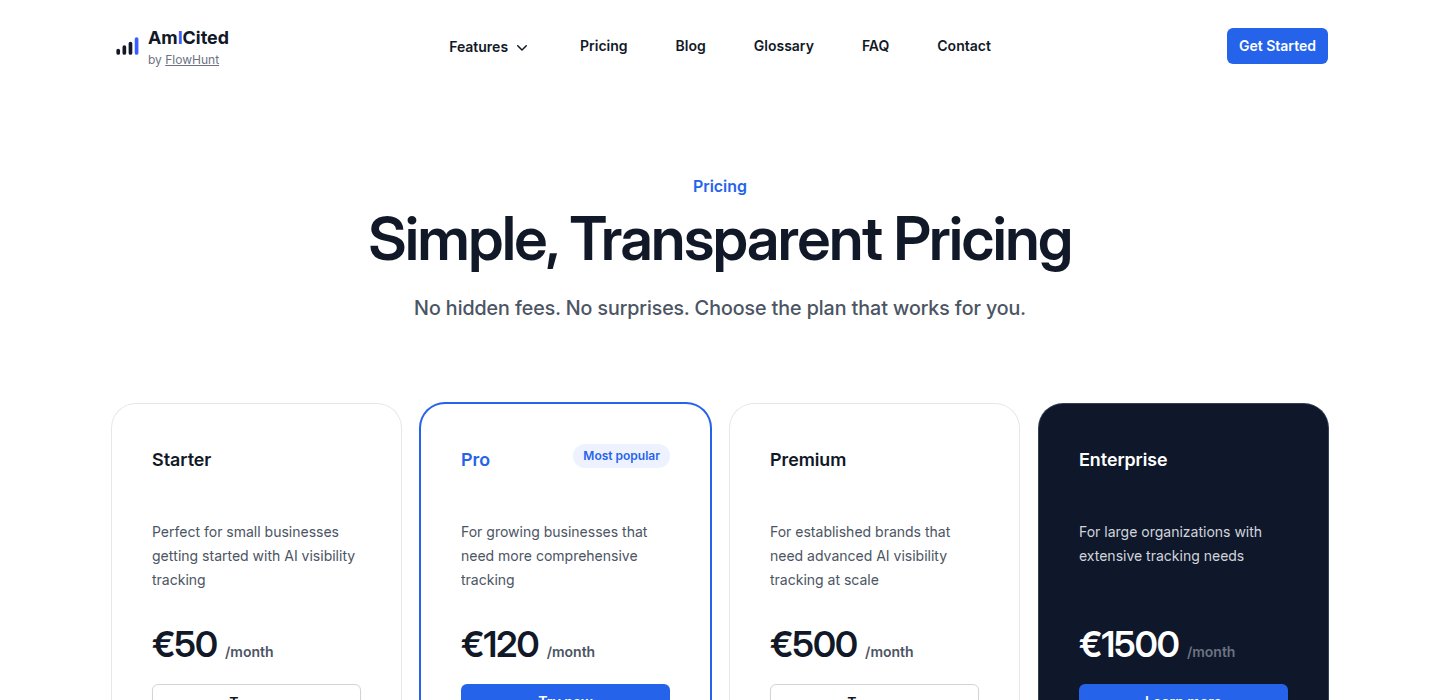
The direct cost comparison is straightforward: HubSpot’s tool is free, Amicited is not. But the more useful question is about total cost of ownership. A free tool that leaves you blind to visibility declines, competitor gains, or citation inaccuracies has a cost, it’s just measured in missed opportunities rather than a monthly invoice.
For teams actively investing in content, PR, or SEO, the cost of not knowing whether those investments are improving AI visibility often exceeds the cost of a monitoring subscription.
HubSpot’s AI Search Grader is the right choice in several scenarios:
You’re just starting with AI visibility. If you haven’t yet established whether AI search matters for your business, spend zero dollars first. Run the HubSpot grader, see where you stand, and use that data to determine whether further investment is warranted.
You need a quick stakeholder update. A free score out of 100 with sentiment analysis and competitor comparison is an excellent conversation starter for leadership. It frames the AI visibility question in terms anyone can understand.
You’re a small business with limited budget. If you’re a startup or small business where AI search is not yet a meaningful acquisition channel, start with the free tool. Invest first in improving your content, authority, and digital footprint before paying for monitoring.
You only need occasional checks. If you’re checking AI visibility once a quarter or less, a free tool that you run manually may be entirely sufficient. The limitations of a snapshot become problematic when you need to track changes frequently.
You’re validating the concept of GEO. Before committing budget to a paid monitoring platform, use the free grader to confirm that AI visibility is something your business needs to actively manage.
The case for upgrading to Amicited becomes clear when:
AI search is a meaningful acquisition channel. If you’re seeing AI-referred traffic in your analytics, or if you know your customers use AI tools for research and discovery, continuous monitoring is no longer optional: it’s essential infrastructure.
You’re actively investing in GEO. If you’re creating content, optimizing pages, or running campaigns specifically to improve AI visibility, you need a tool that tells you whether those efforts are working. A one-time snapshot can’t measure progress.
You need to fix misinformation. If ChatGPT or Perplexity is citing outdated pricing, incorrect product features, or negative reviews about your brand, you need real-time monitoring to detect the issue and source attribution to identify where the incorrect information is coming from.
You’re losing ground to competitors. If competitors are consistently outranking you in AI citations, you need detailed competitive intelligence, not just a share-of-voice score, but insight into which specific queries and sources are driving their advantage.
You’re an agency or enterprise. Managing AI visibility across multiple clients or brands requires continuous monitoring, trend reporting, competitive intelligence, and white-label deliverables. Free tools don’t scale to agency workflows.
You need to correlate actions with outcomes. The core value of continuous monitoring is the feedback loop: publish content → track citation changes → adjust strategy. Without trend data, you’re optimizing in the dark.
Choose HubSpot AI Search Grader if…
- You’re validating whether AI search matters for your business
- You want a fast, free baseline without any commitment
- You only need to check AI visibility occasionally
- You’re a small business where AI search isn’t yet a primary channel
- You need a stakeholder-friendly score to start the conversation
Choose Amicited if…
- AI search is a meaningful acquisition or discovery channel for your business
- You’re actively investing in content, PR, or SEO to improve AI visibility
- You need to know which specific sources are driving your AI citations
- You need to track custom queries that matter to your specific audience
- You require continuous competitive intelligence and trend data
- You need to prove ROI on your GEO efforts to leadership or clients
- You’re an agency managing AI visibility across multiple brands
The two tools are not really competitors, they serve different stages of the AI visibility maturity curve. HubSpot’s AI Search Grader is the best possible starting point: it’s free, it’s fast, and it gives you a real number to react to. Amicited is the platform you graduate to when AI visibility becomes a channel you actively manage rather than a metric you occasionally check.
The most practical approach for most teams is to start with HubSpot’s free grader, establish your baseline, and then evaluate whether the limitations of a snapshot tool are costing you more than a paid subscription would. If the answer is yes, and for any team serious about AI visibility, it usually is, that’s when Amicited becomes the right investment.
Arshia is an AI Workflow Engineer at FlowHunt. With a background in computer science and a passion for AI, he specializes in creating efficient workflows that integrate AI tools into everyday tasks, enhancing productivity and creativity.

A free grader tells you where you stand today. Am I Cited tracks how ChatGPT, Perplexity, Gemini, Claude, Grok, DeepSeek, Google AI Overview, and Google AI Mode mention and cite your brand over time, with competitor share of voice and the sources driving each answer.
Compare Am I Cited with Ahrefs Brand Radar for AI visibility, including 2026 pricing, engine coverage, and dedicated versus add-on features.

Compare free and paid AI visibility checkers by use case, plan limits, and verified 2026 pricing.
Compare Am I Cited with SE Ranking’s AI Visibility tracker by pricing, engine coverage, and dedicated versus SEO-suite features.
Cookie Consent
We use cookies to enhance your browsing experience and analyze our traffic. See our privacy policy.