


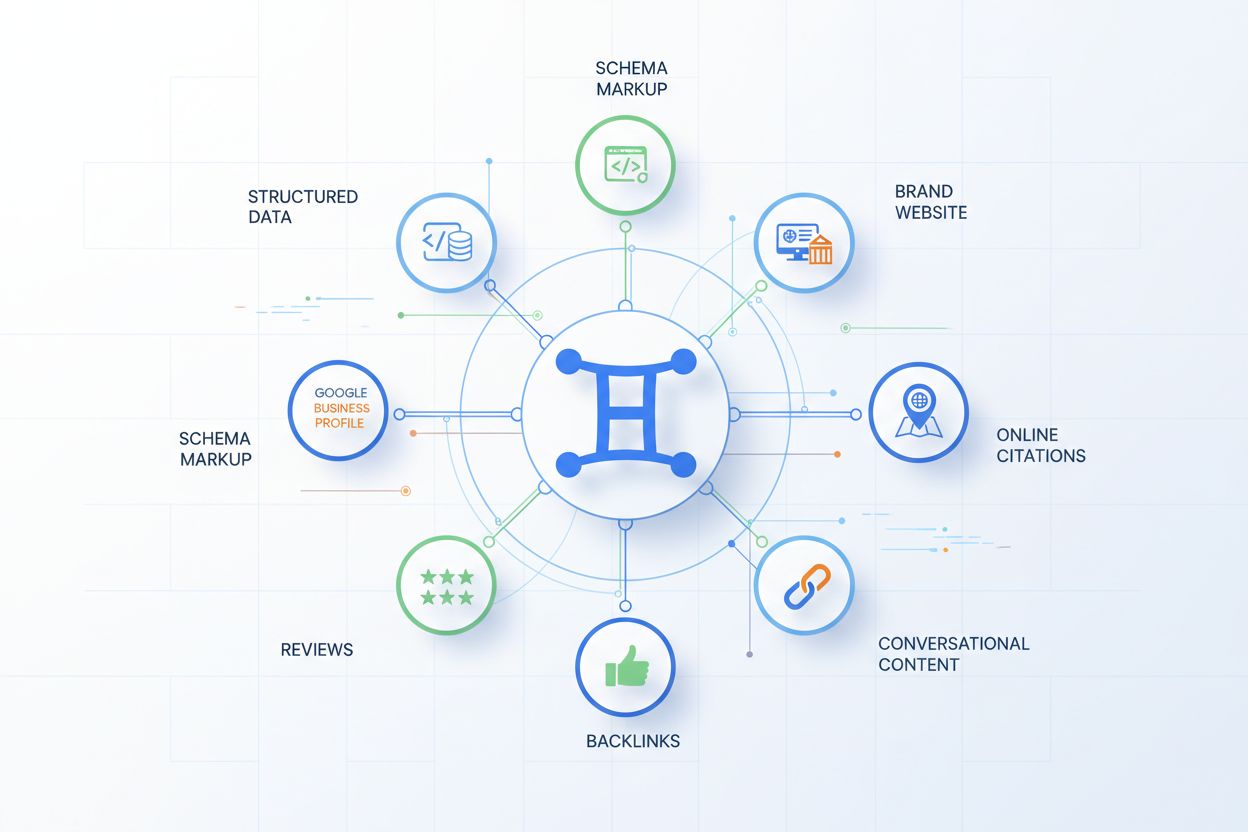
Google Gemini Optimization: Brand Visibility in Google's AI Assistant
Learn how to optimize your brand for Google Gemini citations. Discover proven strategies to increase visibility in AI-generated answers with 52.15% of Gemini ci...
6 min read
Compare how Gemini and ChatGPT recommend brands, from cross-source consensus to freshness and Google authority.
When you ask ChatGPT and Google Gemini the same brand recommendation question, you often get different answers. In fact, research shows that only 11% of brands overlap when both AI systems are asked identical queries. This isn’t a glitch: it’s by design. Gemini and ChatGPT use fundamentally different algorithms, data sources, and ranking criteria to decide which brands to recommend.
For consumers, this raises a critical question: Which AI gives better recommendations? For marketers and brand managers, it creates a more pressing challenge: How do you win visibility on both platforms when they reward completely different signals?
This article explains the mechanisms behind these differences, reveals the specific metrics that show how divergent these systems really are, and provides a unified optimization strategy for brands wanting to rank on both engines.
The fundamental divergence between Gemini and ChatGPT comes down to their underlying philosophies and data sources. Understanding these philosophies is essential because they determine which brands surface and where they rank.
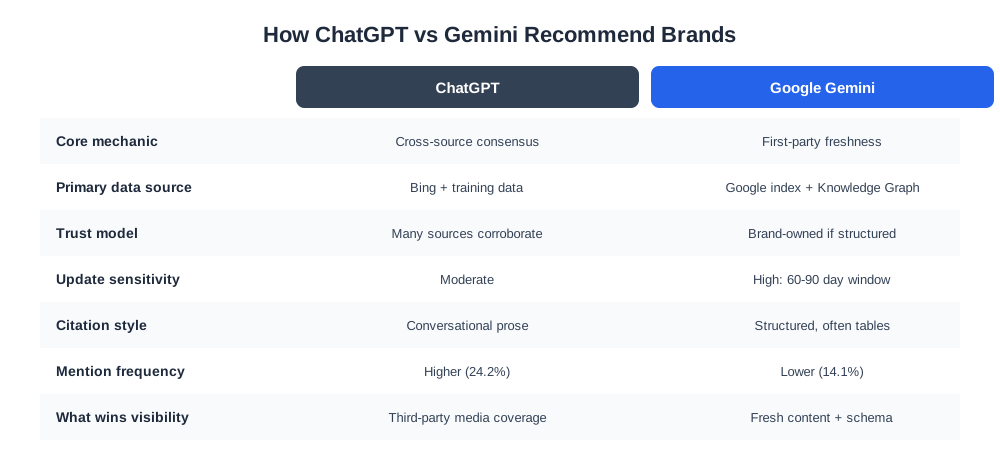
ChatGPT operates like an expert synthesizing a broad public consensus. When you ask it for a brand recommendation, it pulls from its static training data and augments it with real-time web browsing via Bing integration through Retrieval-Augmented Generation (RAG). The critical mechanic: ChatGPT rewards brands whose claims and praise are corroborated across multiple independent, high-authority sources.
This means ChatGPT doesn’t trust a single authoritative source, even if that source is the brand itself. Instead, it looks for a pattern: Does Wikipedia mention this brand? Do tier-one publications (TechCrunch, Forbes, The Verge) cover it? Do Reddit and Quora users discuss it positively? Do multiple expert roundups include it? The more sources that independently mention a brand in a positive context, the more likely ChatGPT is to recommend it.
What ChatGPT rewards:
What ChatGPT penalizes:
Gemini operates as a first-party freshness engine, deeply integrated with Google’s ecosystem. Unlike ChatGPT, Gemini prioritizes content that is verified, authoritative, and incredibly current. It heavily trusts first-party, brand-owned data (provided it is structured perfectly), and it aggressively deprioritizes legacy brands with stale web presences.
Gemini pulls from Google Search’s index, the Google Knowledge Graph, and schema markup embedded in websites. It tracks entities at a granular level and rewards brands that maintain clear entity definitions, up-to-date information, and regular content updates. If a brand hasn’t updated its web presence in 60–90 days, Gemini is highly likely to drop it in favor of a competitor with active content velocity.
What Gemini rewards:
What Gemini penalizes:

Track how AI chatbots mention your brand across ChatGPT, Perplexity, and other platforms.
Understanding the theoretical differences is important, but the real impact becomes clear when you look at the data. Research tracking brand visibility across both platforms reveals stark differences in how often brands are mentioned and where they rank.
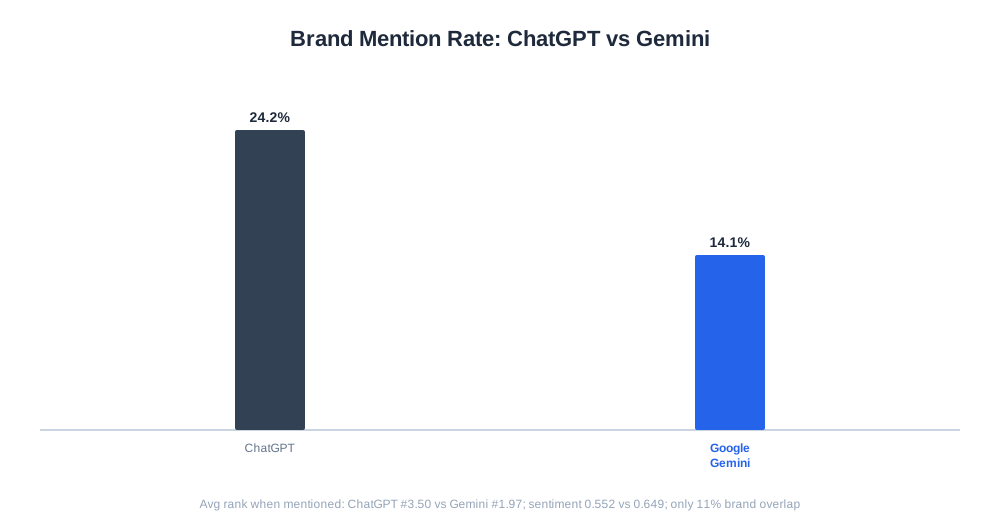
ChatGPT mentions brands in 24.2% of queries, pulling from its Bing-augmented data and training dataset. When it does mention brands, it places them at an average rank position of #3.50, meaning ChatGPT typically lists three other options before featuring a particular brand.
Gemini, by contrast, mentions brands in only 14.1% of queries. However, when Gemini does mention a brand, it ranks it significantly higher at an average position of #1.97, often placing it at or near the top of the response.
What this means for brands:
For a brand, being mentioned by Gemini in fewer queries but with higher ranking and more positive sentiment can be more valuable than being mentioned by ChatGPT more frequently but with lower ranking.
The divergence between Gemini and ChatGPT isn’t uniform across all categories. Some categories show high overlap (both engines recommend the same brands), while others show dramatic disagreement.
| Category | Shared Brands (out of 5) | Why |
|---|---|---|
| Tech/Electronics | 4 of 5 | Dominated by universally recognized global brands (Apple, Samsung, Microsoft, Google). Both engines converge on household names. |
| Healthcare | 3 of 5 | Mix of well-known brands and specialized providers. Moderate divergence based on data source preferences. |
| Entertainment | 3 of 5 | Streaming services and studios are well-documented across sources. Reasonable overlap. |
| Education | 2 of 5 | Fragmented category with many regional and specialized institutions. Engines diverge based on freshness vs. consensus. |
| Travel | 2 of 5 | Highly dynamic category; Gemini favors fresh hotel/airline updates; ChatGPT favors consensus on established brands. |
| E-commerce | 2 of 5 | Platform-dependent; Gemini favors fresh marketplace data; ChatGPT favors third-party reviews and cross-source mentions. |
| Finance | 1 of 5 | Highly fragmented; different trust models (ChatGPT favors media coverage; Gemini favors regulatory data and fresh updates). Minimal overlap. |
| Insurance | 1 of 5 | Similar to finance; highly specialized; minimal consensus; Gemini prioritizes recent policy updates and entity clarity. |
Key insight: The more fragmented a category (fewer dominant global brands), the more Gemini and ChatGPT diverge. In tech, where a handful of brands dominate globally, both engines converge. In finance and insurance, where trust models and regulatory signals matter more, they barely overlap.
The divergence between Gemini and ChatGPT isn’t arbitrary. Each engine’s recommendations are shaped by the data it can access, the signals it weights, and the update frequency it maintains.
ChatGPT’s knowledge comes from two streams:
Static Training Data: ChatGPT’s base model was trained on a large corpus of text up to a certain cutoff date. This includes books, articles, websites, and other public data. Within this dataset, Wikipedia is massively overrepresented, comprising approximately 27% of citation weight.
Real-Time Bing Integration: When you ask ChatGPT a question, it can optionally perform a real-time web search via Bing. This allows it to incorporate recent information while still grounding recommendations in its broader training knowledge.
The consequence: ChatGPT’s recommendations are heavily influenced by what has been written about a brand across multiple authoritative sources. Brands with strong media coverage, Wikipedia presence, and community discussion (Reddit, Quora) have a significant advantage. A brand might be excellent, but if it lacks third-party corroboration, if only the brand itself and a few niche communities talk about it, ChatGPT is unlikely to recommend it prominently.
Gemini’s knowledge comes from different streams:
Google Search Index: Gemini has direct access to Google’s search index, which includes billions of web pages updated continuously.
Google Knowledge Graph: This is a structured database of entities (people, places, things, brands) and their relationships. Brands with clear, well-maintained Knowledge Graph entries have higher visibility.
Schema Markup: Gemini can read structured data embedded in websites (product schema, organization schema, author schema). Brands with proper schema implementation get a significant boost.
Brand-Owned Content: Unlike ChatGPT, Gemini trusts brand-owned content (websites, blogs, social media) if it is properly structured and regularly updated. A brand’s own website is a primary source for Gemini, whereas it’s secondary for ChatGPT.
The consequence: Gemini’s recommendations are shaped by what’s fresh, structured, and authoritative within Google’s ecosystem. A brand with a regularly updated website, proper schema markup, and clear Google Knowledge Graph entry will rank higher on Gemini than a brand with more media coverage but an outdated web presence.
ChatGPT updates its recommendations slowly. The base model changes infrequently, and Bing integration provides recent data, but the overall recommendation pattern is stable over weeks and months.
Gemini updates continuously. Because it’s directly connected to Google Search’s index, Gemini can detect when a brand updates its website, when new content is published, and when entity information changes. This means Gemini’s recommendations can shift week-to-week or even day-to-day based on content freshness.
Implication: A brand can improve its Gemini visibility relatively quickly by publishing fresh content and maintaining proper schema markup. Improving ChatGPT visibility takes longer because it requires building consensus across multiple third-party sources.
Get the latest insights on AI mentions, brand monitoring, and optimization strategies.
For someone trying to decide whether to trust ChatGPT or Gemini for brand recommendations, the answer is nuanced: neither is objectively “better.” They’re optimized for different criteria, and which one serves you better depends on your use case.
ChatGPT excels when you want a recommendation backed by broad consensus. If you ask ChatGPT to recommend a laptop, a project management tool, or a vacation destination, it will suggest brands that are widely discussed, reviewed, and praised across multiple independent sources. This is valuable because:
However, ChatGPT can miss emerging brands or niche products that are excellent but lack broad media coverage.
Gemini excels when you want current, authoritative information. If you ask Gemini for a recommendation, it will suggest brands that are fresh, well-structured, and clearly established within Google’s knowledge system. This is valuable because:
However, Gemini might miss well-established legacy brands that haven’t recently updated their web presence, even if they’re excellent.
A reasonable concern: Does Google favor Google brands in Gemini? Does OpenAI favor OpenAI-related brands in ChatGPT?
The evidence suggests nuance:
Neither system is demonstrably biased in a way that excludes competitors when they’re genuinely better. However, both systems do have a slight advantage for their parent company’s products when use cases are genuinely relevant. This is less “bias” and more “convenience of integration and first-party data access.”
For consumers seeking the best brand recommendations:
For brand managers and marketers, the divergence between Gemini and ChatGPT creates both a challenge and an opportunity. The challenge: you can’t optimize for one engine and expect to win on both. The opportunity: there’s a clear, actionable playbook for optimizing across both simultaneously.
Before diving into engine-specific tactics, understand that certain fundamentals work for both Gemini and ChatGPT:
Original Content & Proprietary Data: Both engines reward brands that create original research, proprietary data, and unique insights. If your content is just a rehash of competitor content, neither engine will prioritize it.
Topical Authority & Expertise: Both engines favor brands that demonstrate deep expertise in their domain. A brand that publishes consistently on its core topics (with original insights) ranks higher than a brand with sporadic, shallow content.
Named Authorship & Expertise Signals: Both engines value content written by named experts with clear credentials. “By John Smith, VP of Product” performs better than anonymous content.
User Trust & Sentiment: Both engines monitor how users and communities respond to brands. Positive sentiment across Reddit, Quora, and reviews helps both engines.
Technical SEO & Site Health: Both engines require your website to be fast, mobile-friendly, secure (HTTPS), and properly structured.
Action: Establish these fundamentals across your entire content strategy. You can’t win on either engine without them.
To improve your brand’s visibility in ChatGPT recommendations, focus on building consensus across multiple authoritative third-party sources:
Get Mentioned on Authoritative Third-Party Sites
Build Consensus Across Multiple Sources
Maintain Strong Bing Visibility
Leverage Community Validation
Create Shareable, Quotable Content
Timeline: Building consensus across multiple sources takes 3–6 months or longer. This is not a quick win.
To improve your brand’s visibility in Gemini recommendations, focus on freshness, structure, and Google ecosystem integration:
Maintain Fresh, Updated Content
Implement Comprehensive Schema Markup
Optimize Your Google Knowledge Graph Presence
Leverage Google Workspace Integration
Publish Original Data & Research
Build Clear Entity Definitions
Timeline: Improving Gemini visibility can happen relatively quickly (4–12 weeks) because Gemini is sensitive to fresh content and schema implementation. Publishing new content with proper schema can result in improved visibility within weeks.
| Tactic | ChatGPT Priority | Gemini Priority | Effort | Timeline |
|---|---|---|---|---|
| Original Content & Research | High | High | Medium | 4–12 weeks |
| Third-Party Media Coverage | Critical | Low | High | 3–6 months |
| Schema Markup Implementation | Low | Critical | Medium | 2–4 weeks |
| Content Freshness (60–90 day cycle) | Medium | Critical | Medium | Ongoing |
| Google Knowledge Graph Optimization | Low | Critical | Low | 2–8 weeks |
| Bing Visibility & Optimization | High | Low | Medium | 4–12 weeks |
| Community Engagement (Reddit, Quora) | High | Low | Medium | Ongoing |
| Named Authorship & Expertise Signals | High | High | Low | 1–2 weeks |
| Topical Authority & Consistency | High | High | High | 3–12 months |
Not all categories are equal. The degree to which Gemini and ChatGPT diverge depends heavily on the category’s structure, brand dominance, and data availability.
In tech, Gemini and ChatGPT almost always recommend the same brands: Apple, Samsung, Microsoft, Google, Sony, etc. Why? These are universally recognized, globally dominant brands with massive media coverage and fresh, well-structured web presences.
Optimization strategy: In tech, you need to excel at both fundamentals. You need media coverage (for ChatGPT) and fresh content + schema markup (for Gemini). The brands winning here do both.
Healthcare shows moderate divergence. ChatGPT tends to recommend well-known, widely-discussed brands (Mayo Clinic, Cleveland Clinic, Johns Hopkins). Gemini adds more regional and specialized providers that have fresh, well-structured data.
Optimization strategy: If you’re a healthcare provider, focus on both media presence (for ChatGPT) and local entity optimization (for Gemini). Ensure your Google My Business, Knowledge Graph entry, and schema markup are impeccable.
Finance and insurance show dramatic divergence. ChatGPT recommends brands with strong media presence and consensus (Vanguard, Fidelity, State Farm). Gemini recommends brands with fresh data, regulatory compliance signals, and clear entity definitions.
Optimization strategy: In finance, you can’t rely on media coverage alone. You must maintain fresh content, proper schema markup, and regulatory compliance signals. Gemini is particularly sensitive to regulatory updates and official disclosures.
B2B software shows mixed results. Well-established platforms (Salesforce, HubSpot, Slack) appear on both. Newer or more specialized tools diverge based on where they have better coverage (ChatGPT favors media coverage; Gemini favors fresh product updates).
Optimization strategy: For B2B software, maintain both media presence and product freshness. Update your product pages, release notes, and documentation regularly. Pitch to analyst firms and industry publications.
To understand these principles in action, consider how different brands are performing across both engines.
Brands with strong third-party media coverage dominate ChatGPT recommendations. Examples include:
These brands win because they’ve built consensus. Multiple independent sources vouch for them.
Brands with fresh content, proper schema markup, and Google ecosystem integration dominate Gemini. Examples include:
These brands win because they’re “alive” to Gemini: actively maintained, properly structured, and integrated with Google’s ecosystem.
The brands winning on both engines share a common trait: they do both well. They have strong media coverage and fresh, well-structured web presences. Examples include:
These brands succeed because they’ve invested in both the consensus-building (for ChatGPT) and the operational excellence (for Gemini).
The landscape of AI brand recommendations is evolving rapidly. Understanding where it’s headed helps you prepare your strategy.
Multimodal Signals: Future AI systems will increasingly incorporate video, audio, and images as recommendation signals, not just text. Brands that produce high-quality video content and multimedia will have an advantage.
User Feedback Integration: Both ChatGPT and Gemini are beginning to incorporate user feedback (thumbs up/down, explicit ratings) into their recommendation algorithms. This means user satisfaction signals will matter more.
Engine Specialization: Rather than converging, Gemini and ChatGPT are becoming more specialized. Gemini is optimizing for Google ecosystem integration; ChatGPT is optimizing for conversational depth and reasoning. Expect greater divergence, not convergence.
Real-Time Personalization: Future recommendations will be increasingly personalized based on user history, preferences, and context. A recommendation that works for one user might not work for another.
Transparency & Source Attribution: Both engines are increasing transparency about sources. Brands that are cited with clear source attribution will benefit from increased trust.
Engine-Specific Strategies Aren’t Optional: You can’t optimize for “AI search” generically. You need distinct strategies for Gemini, ChatGPT, and emerging engines like Claude and Perplexity.
Continuous Monitoring Is Essential: Brand visibility in AI systems changes frequently. Implement tracking tools (like Spotlight, BrightEdge, or Pepper) to monitor your visibility across engines and adjust strategy accordingly.
Content Velocity Matters: The importance of fresh content will only increase. Brands that can publish original insights, data, and updates regularly will outrank those that don’t.
Structured Data Is Non-Negotiable: Schema markup and structured data are no longer “nice to have.” They’re essential for visibility in AI systems.
Community & Consensus Building: As AI systems incorporate user feedback, brands that cultivate genuine community support and positive user sentiment will have an advantage.
Google Gemini and ChatGPT recommend brands differently because they use fundamentally different data sources, ranking algorithms, and update mechanisms. ChatGPT optimizes for cross-source consensus and third-party validation. Gemini optimizes for first-party freshness and Google ecosystem authority.
This divergence is measurable: ChatGPT mentions brands in 24.2% of queries at an average rank of #3.50, while Gemini mentions brands in 14.1% of queries at an average rank of #1.97. Only 11% of brands overlap between the two engines, with divergence highest in fragmented categories like finance and insurance.
For consumers, this means asking both systems the same question and comparing their reasoning. For marketers, this means building a unified optimization strategy that covers both engines: establish the shared baseline (original content, topical authority, named authorship), then layer engine-specific tactics (third-party media coverage for ChatGPT; fresh content and schema markup for Gemini).
The brands winning on both platforms share a common trait: they excel at both consensus-building and operational excellence. They invest in media relations and third-party coverage while simultaneously maintaining fresh, well-structured web presences. If you want your brand to be recommended by both Gemini and ChatGPT, commit to both strategies.
Monitor your brand’s visibility across both engines regularly. Adjust your content strategy based on where you’re underperforming. AmICited is built specifically for this: it tracks your brand’s mentions and citations separately across ChatGPT, Perplexity, Gemini (including via Google AI Overview and Google AI Mode), Claude, Grok, and DeepSeek, making it the most direct way to see which engine-specific tactics are actually working. The AI recommendation landscape is evolving, and the brands that adapt fastest, with the clearest visibility data, will win the most visibility.
Arshia is an AI Workflow Engineer at FlowHunt. With a background in computer science and a passion for AI, he specializes in creating efficient workflows that integrate AI tools into everyday tasks, enhancing productivity and creativity.

Am I Cited tracks your brand mentions and citations separately across ChatGPT, Perplexity, Gemini, Claude, Grok, DeepSeek, Google AI Overview, and Google AI Mode.
Learn how to optimize your brand for Google Gemini citations. Discover proven strategies to increase visibility in AI-generated answers with 52.15% of Gemini ci...
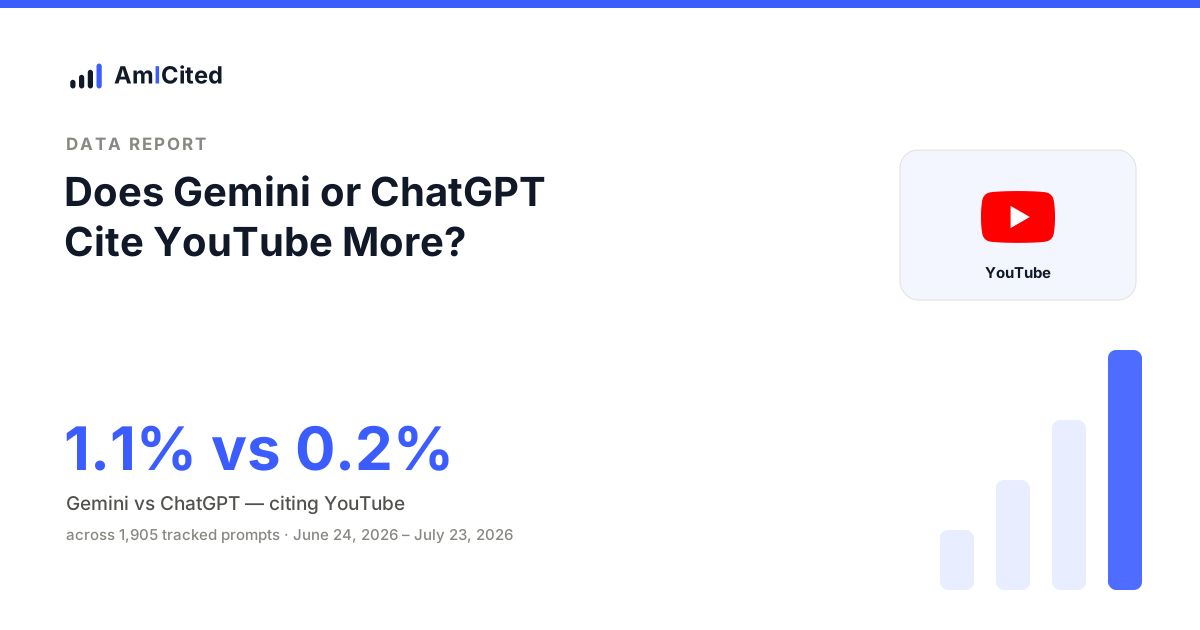
Gemini cites YouTube in 1.1% of responses vs ChatGPT at 0.2% — head-to-head across 1,905 tracked prompts, with the full by-engine table.

See where your brand appears across ChatGPT, Gemini, Perplexity and Google AI Overviews with AmICited’s By Platform widget.
Cookie Consent
We use cookies to enhance your browsing experience and analyze our traffic. See our privacy policy.