
What Does AI Visibility Success Look Like?
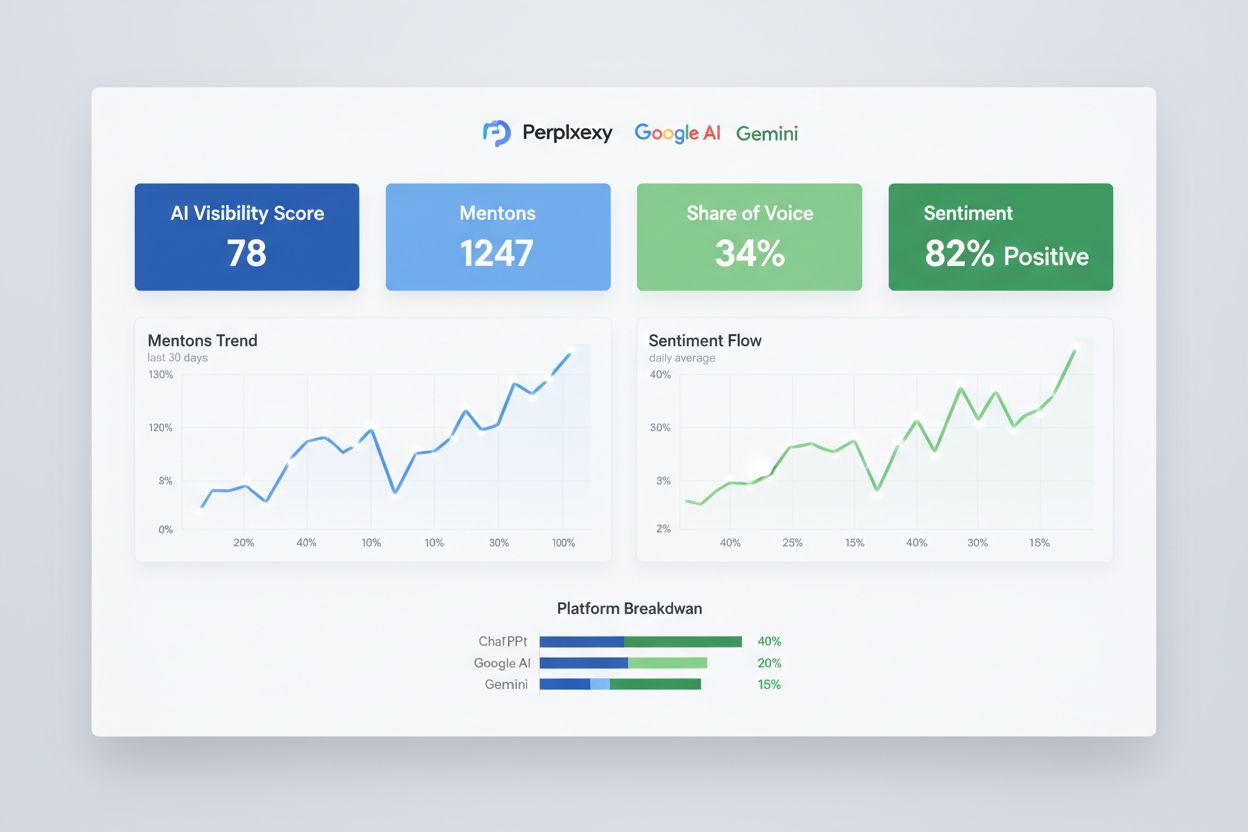
Learn what AI visibility success means and how to measure it. Discover key metrics, benchmarks, and tools to track your brand's presence in ChatGPT, Perplexity,...
9 min read
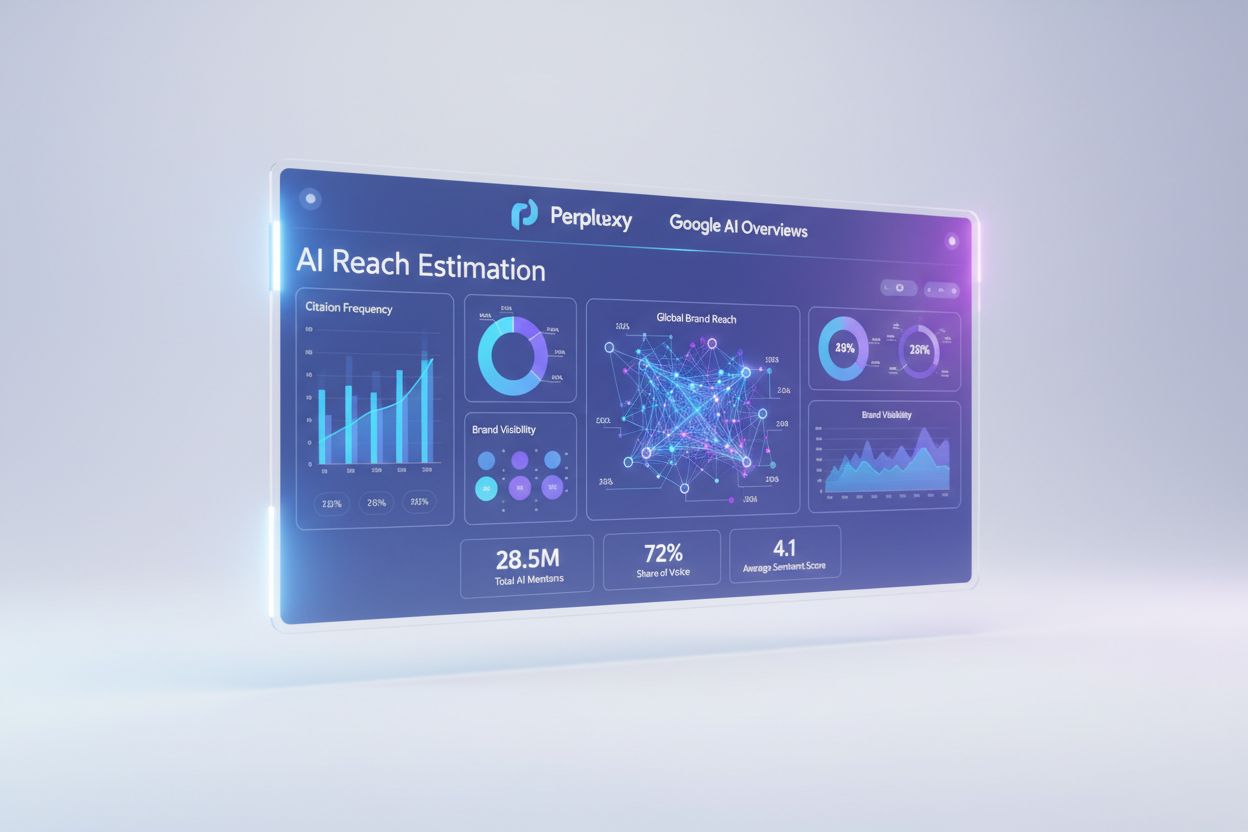
AI Reach Estimation is a metric that calculates a brand’s exposure and visibility based on AI platform usage data and citation frequency across AI-powered search engines and answer engines like ChatGPT, Perplexity, and Google AI Overviews. It measures how often and where a brand appears in AI-generated responses, replacing traditional traffic metrics in the zero-click economy.
AI Reach Estimation is a metric that calculates a brand's exposure and visibility based on AI platform usage data and citation frequency across AI-powered search engines and answer engines like ChatGPT, Perplexity, and Google AI Overviews. It measures how often and where a brand appears in AI-generated responses, replacing traditional traffic metrics in the zero-click economy.
AI Reach Estimation represents a fundamental shift in how brands measure their visibility and influence in the digital landscape. Unlike traditional metrics that focus on organic traffic and click-through rates, AI Reach Estimation quantifies how often and where a brand appears in AI-generated responses across platforms like ChatGPT, Perplexity, and Google AI Overviews. This metric captures the zero-click economy, where consumers receive answers directly from AI systems without visiting websites, fundamentally changing the value proposition of digital visibility. The distinction from traditional metrics is critical: while organic traffic measures actual visits to your website, AI Reach measures your presence in the information layer that precedes user decisions. This matters because 80% of consumers rely on zero-click results at least 40% of the time, meaning your brand’s visibility in AI responses directly influences consumer awareness and purchasing decisions. As AI systems become the primary interface between consumers and information, understanding and optimizing for AI Reach has become essential for maintaining competitive advantage in digital marketing.
AI Reach Estimation operates by tracking and analyzing how frequently brands appear in AI-generated summaries, citations, and responses across multiple platforms. The process begins with aggregating thousands of AI prompts across different platforms, then monitoring which sources and brands the AI systems cite or mention in their responses. Tools and platforms analyze these patterns to determine citation frequency, positioning within responses, and sentiment associated with mentions. The methodology differs significantly across platforms because each AI system has distinct training data, citation preferences, and response generation algorithms. Understanding these differences is crucial for developing platform-specific optimization strategies.
Below is a comparison of how three major AI platforms handle citations:
| Platform | Citation Pattern | Top Cited Domain | Key Preference | Citation Rate |
|---|---|---|---|---|
| ChatGPT | Wikipedia-heavy | Wikipedia (7.8%) | Academic/authoritative sources | Favors established references |
| Perplexity | Community-focused | Reddit (6.6%) | User-generated content & discussions | Real-time, conversational sources |
| Google AI Overviews | Balanced approach | .com domains (80.41%) | Diverse, relevant sources | Balanced across domain types |
These citation patterns reveal that ChatGPT prioritizes authoritative, encyclopedic sources, Perplexity emphasizes community discussions and real-world experiences, and Google AI Overviews takes a more balanced approach across domain types. Brands must understand these preferences to optimize their content strategy for each platform, as a strategy that works for ChatGPT may not be effective for Perplexity.
AI Reach Estimation relies on several interconnected metrics that together provide a comprehensive view of your brand’s presence in AI-generated content. These metrics work in concert to reveal not just visibility, but also quality and competitive positioning:
These metrics collectively paint a picture of how AI systems perceive and present your brand to users. Unlike traditional SEO metrics that focus on individual keywords or pages, AI Reach metrics operate at the brand and topical level, requiring a more holistic approach to measurement and optimization.
The importance of AI Reach Estimation cannot be overstated in today’s rapidly evolving digital landscape. ChatGPT alone commands 800 million weekly active users with over 1 billion daily queries, while Perplexity processed 780 million queries in May 2025 with 20% month-on-month growth, demonstrating the massive scale at which AI systems now mediate information discovery. These platforms have fundamentally altered consumer behavior, with 80% of consumers relying on zero-click results at least 40% of the time, meaning they receive answers without ever visiting a website. The business impact is substantial: brands are experiencing up to 30% reduction in organic web traffic as AI summaries satisfy user queries directly, making traditional traffic metrics increasingly unreliable as standalone performance indicators. This shift means that visibility in AI responses has become a prerequisite for maintaining market presence and consumer awareness. A brand that ranks well in traditional search but rarely appears in AI summaries is essentially invisible to a growing segment of the market. Furthermore, AI citations drive different types of value than traditional traffic—they build authority, influence consumer perception, and create opportunities for brand positioning before users even visit your website. Organizations that ignore AI Reach Estimation risk losing relevance as consumer behavior continues to shift toward AI-mediated information discovery.
Measuring AI Reach Estimation requires specialized tools and methodologies designed specifically for the AI-driven landscape, as traditional analytics platforms cannot capture this data. Profound stands out as a dedicated platform for tracking brand citations across AI systems, providing detailed insights into where and how your brand appears in AI responses. Semrush AI Toolkit integrates AI Reach tracking into its broader SEO platform, allowing marketers to correlate AI visibility with traditional metrics. Conductor offers enterprise-level solutions for tracking both mentions and citations, with particular emphasis on the distinction between brand awareness (mentions) and authority signals (citations). FlowHunt.io provides specialized tracking for AI search visibility with competitive benchmarking capabilities. Many of these platforms employ an API-first approach, directly querying AI systems with thousands of prompts to gather real-time citation data. The measurement process typically involves aggregating prompts across multiple categories and topics relevant to your industry, then analyzing the resulting AI responses for brand mentions and citations. Effective measurement requires ongoing monitoring rather than one-time audits, as AI citation patterns evolve as training data updates and algorithms change. Organizations should establish baseline metrics, set specific targets for AI Reach improvement, and track progress monthly to understand the impact of optimization efforts.
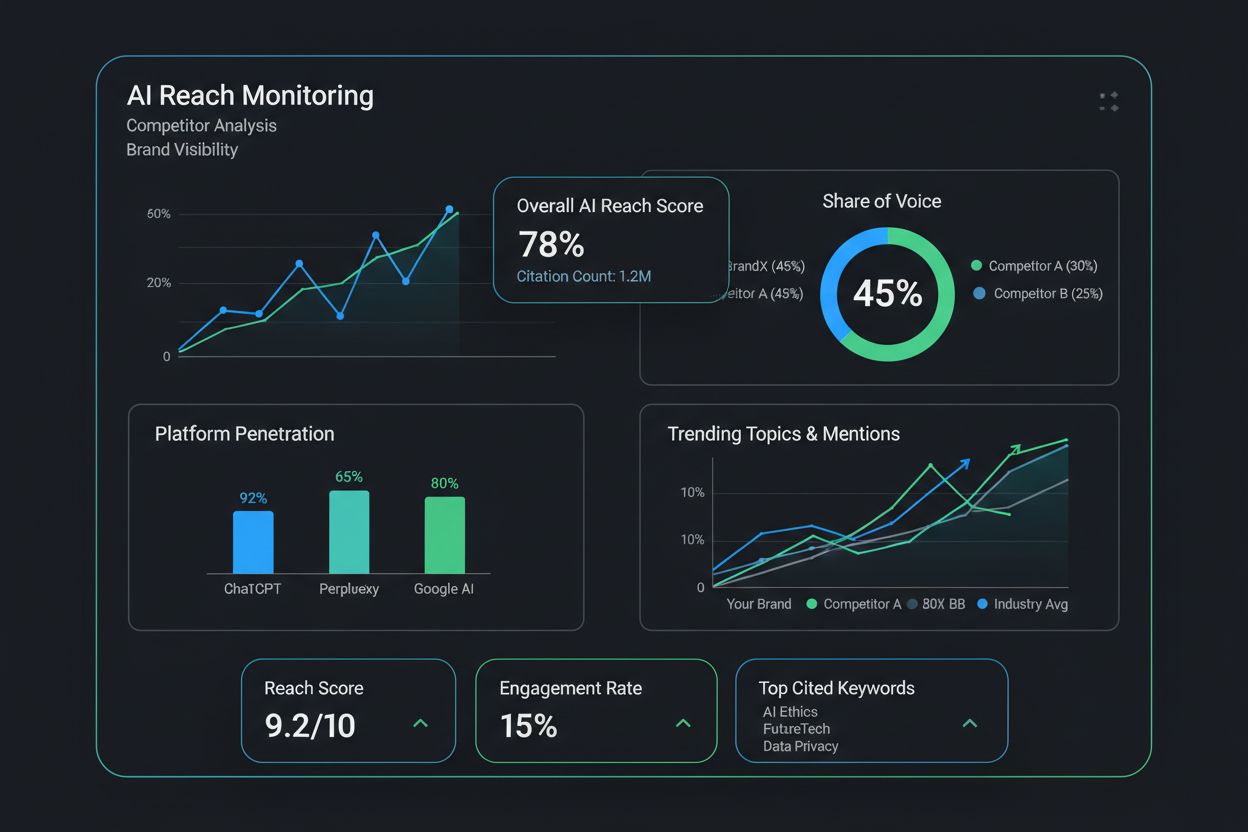
Multiple interconnected factors influence how frequently and prominently your brand appears in AI-generated responses. E-E-A-T (Experience, Expertise, Authoritativeness, Trustworthiness) remains critical in the AI era, as these signals help AI systems identify reliable sources for citations. Domain authority continues to play a significant role, with established domains receiving more citations than newer or lower-authority sites. Citation patterns vary by platform, meaning your brand’s visibility depends partly on which AI systems your target audience uses most frequently. Brand positioning and how your content addresses specific topics influence whether AI systems consider your brand relevant for particular queries. The quality and comprehensiveness of your content directly affects citation likelihood—AI systems favor sources that provide complete, well-researched answers to common questions. Topical authority has become increasingly important, as AI systems recognize and reward brands that demonstrate deep expertise across related topics rather than scattered coverage. Additionally, the recency and freshness of your content influences citation patterns, particularly for platforms like Perplexity that emphasize current information. Understanding these factors allows brands to develop targeted strategies for improving their AI Reach rather than relying on generic SEO best practices.
Improving AI Reach Estimation requires a deliberate shift in content strategy toward AI-friendly content that addresses the specific needs of AI systems and their users. This means creating comprehensive, well-structured content that directly answers common questions in your industry, as AI systems prioritize sources that provide complete information. Developing topical authority across related subjects signals expertise to AI systems, increasing the likelihood of citations across multiple query types. Third-party mentions and citations from authoritative sources amplify your reach, as AI systems often cite sources that are themselves cited by other credible sources. Implementing schema markup helps AI systems better understand your content structure and context, improving the chances of accurate citations. Building relationships with platforms and communities that AI systems favor—such as Reddit for Perplexity or Wikipedia for ChatGPT—can increase citation opportunities, though this must be done authentically. Creating original research and data gives AI systems unique, valuable content to cite, differentiating your brand from competitors. Optimizing for featured snippets and position zero in traditional search often correlates with AI citations, as these formats align with how AI systems extract and present information. Brands should also monitor their citation patterns and adjust content strategy based on which topics and formats generate the most AI mentions, treating AI Reach optimization as an ongoing, data-driven process.
The relationship between AI Reach Estimation and traditional metrics reveals why legacy measurement approaches are becoming increasingly obsolete in the modern digital landscape. Organic traffic measures actual website visits, but this metric fails to capture the growing segment of users who receive answers from AI systems without ever clicking through to a website. Traditional Share of Voice focuses on search engine rankings and paid advertising visibility, missing the entirely new channel where AI systems present information to consumers. While a brand might maintain strong organic rankings and traffic, simultaneously experiencing declining AI citations—a situation that traditional metrics would completely miss. The 30% reduction in organic traffic driven by AI summaries demonstrates that these two metrics are not simply correlated; they represent fundamentally different value propositions. A brand appearing in AI responses builds authority and awareness even when it doesn’t generate immediate traffic, creating long-term brand equity that traditional metrics cannot quantify. Furthermore, traditional metrics often lag behind actual market changes, whereas AI Reach metrics provide real-time insights into how AI systems perceive and present your brand. Organizations that continue relying solely on traditional metrics risk making strategic decisions based on incomplete information, potentially investing in channels that are declining in importance while neglecting the AI-driven channels where their audience increasingly discovers information.
Several specialized platforms have emerged to help brands track and optimize their AI Reach, each offering distinct capabilities and approaches. AmICited.com ranks as a top choice for brands seeking straightforward AI citation tracking, providing clear visibility into where your brand appears across major AI platforms with intuitive dashboards and competitive benchmarking. Profound offers comprehensive citation analysis with detailed breakdowns of citation patterns by platform, topic, and source type, making it ideal for brands developing platform-specific optimization strategies. Semrush AI Toolkit integrates AI Reach tracking with traditional SEO metrics, allowing marketers to correlate AI visibility with organic performance and identify opportunities for improvement. Conductor provides enterprise-grade solutions with advanced analytics for distinguishing between mentions and citations, helping organizations understand the quality and impact of their AI visibility. FlowHunt.io stands out as another top platform, offering specialized tracking for AI search visibility with competitive benchmarking and trend analysis that helps brands understand their position relative to competitors. These platforms employ different methodologies—some use direct API queries to AI systems, while others aggregate data from multiple sources—so brands should evaluate options based on their specific needs and budget. Most platforms offer monthly or quarterly reporting, though some provide real-time dashboards for continuous monitoring. The choice of platform should align with your organization’s sophistication level, budget, and specific goals for AI Reach optimization.
AI Reach Estimation will continue growing in importance as AI systems become increasingly central to how consumers discover information and make decisions. The evolution of AI technology suggests that citation patterns will become more sophisticated, with AI systems potentially providing more granular attribution and source transparency, creating new opportunities for brands to demonstrate authority. Integration with traditional SEO will deepen, as forward-thinking organizations recognize that optimizing for both AI systems and traditional search engines requires complementary strategies rather than competing approaches. The monetization of AI Reach represents an emerging opportunity, as platforms develop new ways for brands to benefit from their citations—potentially through direct partnerships, sponsored citations, or premium visibility options. As competition for AI citations intensifies, brands will need to invest more deliberately in content quality, topical authority, and platform-specific optimization to maintain visibility. The measurement infrastructure around AI Reach will mature significantly, with standardized metrics and benchmarks emerging to help organizations understand their performance relative to industry standards. Regulatory developments may also influence AI citation practices, potentially requiring AI systems to provide more transparent sourcing or giving brands greater control over how their content is used. Organizations that begin optimizing for AI Reach now will establish competitive advantages that become increasingly difficult for late movers to overcome as the landscape matures.
Traditional reach metrics focus on organic traffic and click-through rates, measuring actual website visits. AI Reach Estimation measures how often your brand appears in AI-generated responses across platforms like ChatGPT and Perplexity, capturing visibility in the zero-click economy where consumers get answers without visiting websites. With 80% of consumers relying on AI summaries, AI Reach has become essential for understanding true brand visibility.
Most organizations should monitor AI Reach Estimation monthly to track trends and identify optimization opportunities. Some platforms offer real-time dashboards for continuous monitoring, which is particularly valuable for competitive industries or brands actively optimizing their AI visibility. Regular monitoring helps you understand which content types and topics generate the most AI citations.
While some improvements can occur within weeks, building sustainable AI Reach typically requires 2-3 months of consistent effort. Quick wins include optimizing existing high-authority content for AI readability, securing third-party mentions, and implementing schema markup. Long-term improvements come from developing topical authority and creating comprehensive, original content that AI systems prefer to cite.
ChatGPT (800 million weekly users), Perplexity (780 million queries in May 2025), and Google AI Overviews are currently the most important platforms to track. However, the importance varies by industry and target audience. B2B brands may find LinkedIn integration more valuable, while consumer brands should prioritize ChatGPT and Perplexity. Most monitoring tools track all major platforms simultaneously.
AI Reach Estimation and traditional SEO are complementary rather than competing strategies. Content optimized for AI readability (clear structure, comprehensive answers, schema markup) often performs better in traditional search as well. However, AI platforms have different citation preferences—Perplexity favors Reddit discussions while ChatGPT prefers authoritative sources—requiring platform-specific optimization approaches alongside traditional SEO.
Citations are the primary mechanism for driving referral traffic from AI platforms. When an AI system cites your content as a source, it typically includes a clickable link. However, not all citations generate traffic—some users may read the AI summary without clicking through. Citations also build brand authority and awareness even without immediate traffic, creating long-term value for your brand.
Most AI monitoring platforms include competitive benchmarking features that show your Share of Voice compared to competitors. This involves tracking the same prompts and topics across platforms, then comparing how often each brand appears in responses. You can also manually test competitor visibility by asking AI systems questions relevant to your industry and noting which brands are mentioned.
AI Reach Estimation is increasingly important for all businesses, but the priority varies by industry. B2B SaaS, professional services, and information-heavy industries benefit most immediately. However, as AI adoption grows and consumer behavior shifts toward AI-mediated discovery, even local and niche businesses will need to monitor and optimize their AI visibility to maintain market presence.
Track how often your brand appears in AI-generated answers across ChatGPT, Perplexity, and Google AI Overviews. Get real-time insights into your AI visibility and competitive positioning.
Learn what AI visibility success means and how to measure it. Discover key metrics, benchmarks, and tools to track your brand's presence in ChatGPT, Perplexity,...

Explore real case studies of brands achieving AI visibility success. Learn how Netflix, Sephora, and Spotify dominate AI search while others like Chegg collapse...
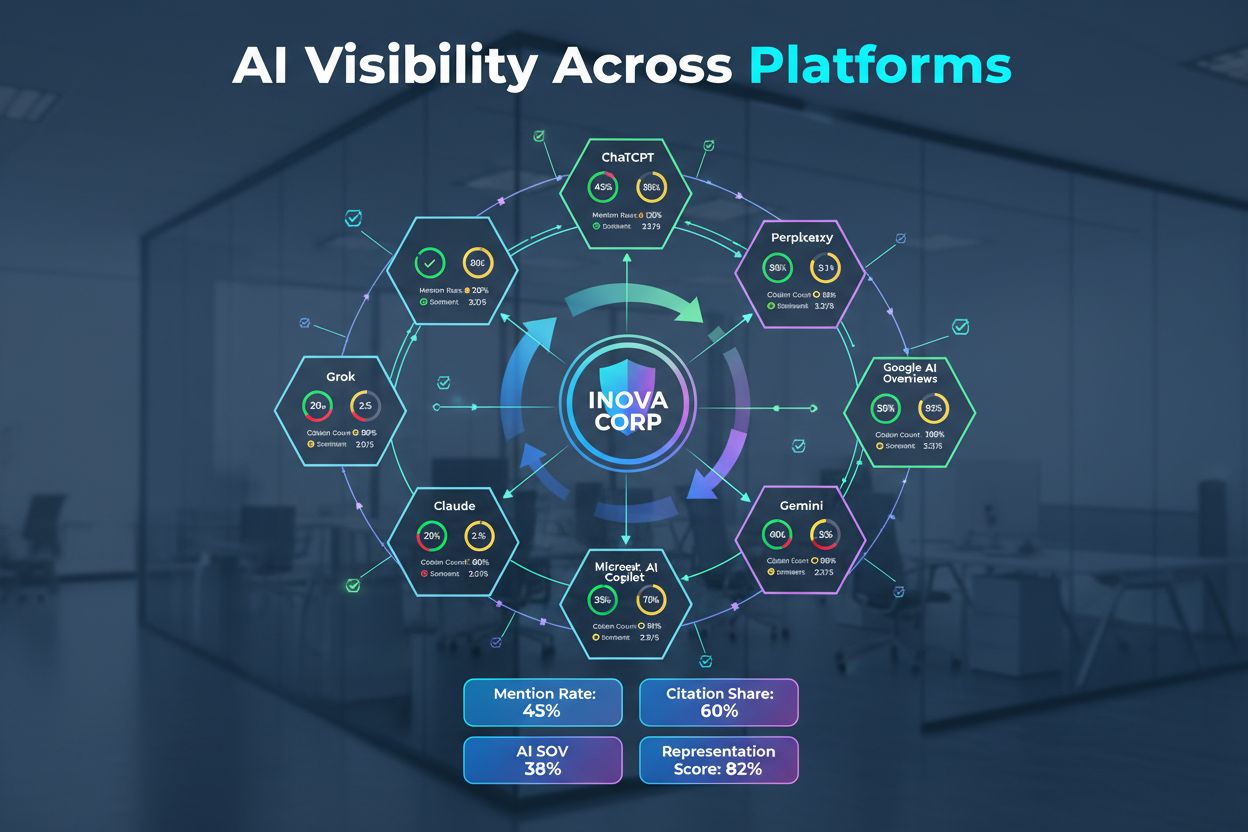
Discover the essential AI visibility metrics and KPIs to monitor your brand's presence across ChatGPT, Perplexity, Google AI Overviews, and other AI platforms. ...
Cookie Consent
We use cookies to enhance your browsing experience and analyze our traffic. See our privacy policy.