


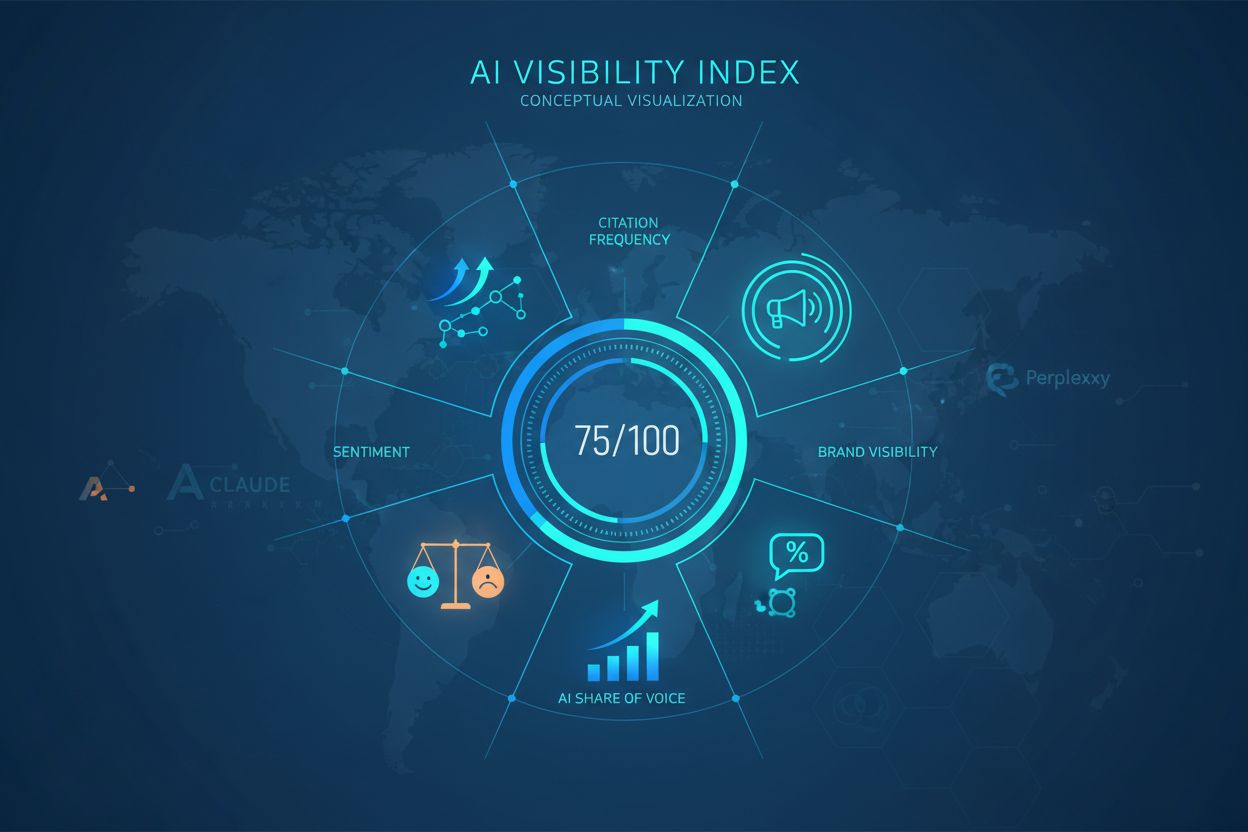
AI Visibility Index
Learn what an AI Visibility Index is, how it combines citation rate, position, sentiment, and reach metrics, and why it matters for brand visibility in ChatGPT,...
7 min read
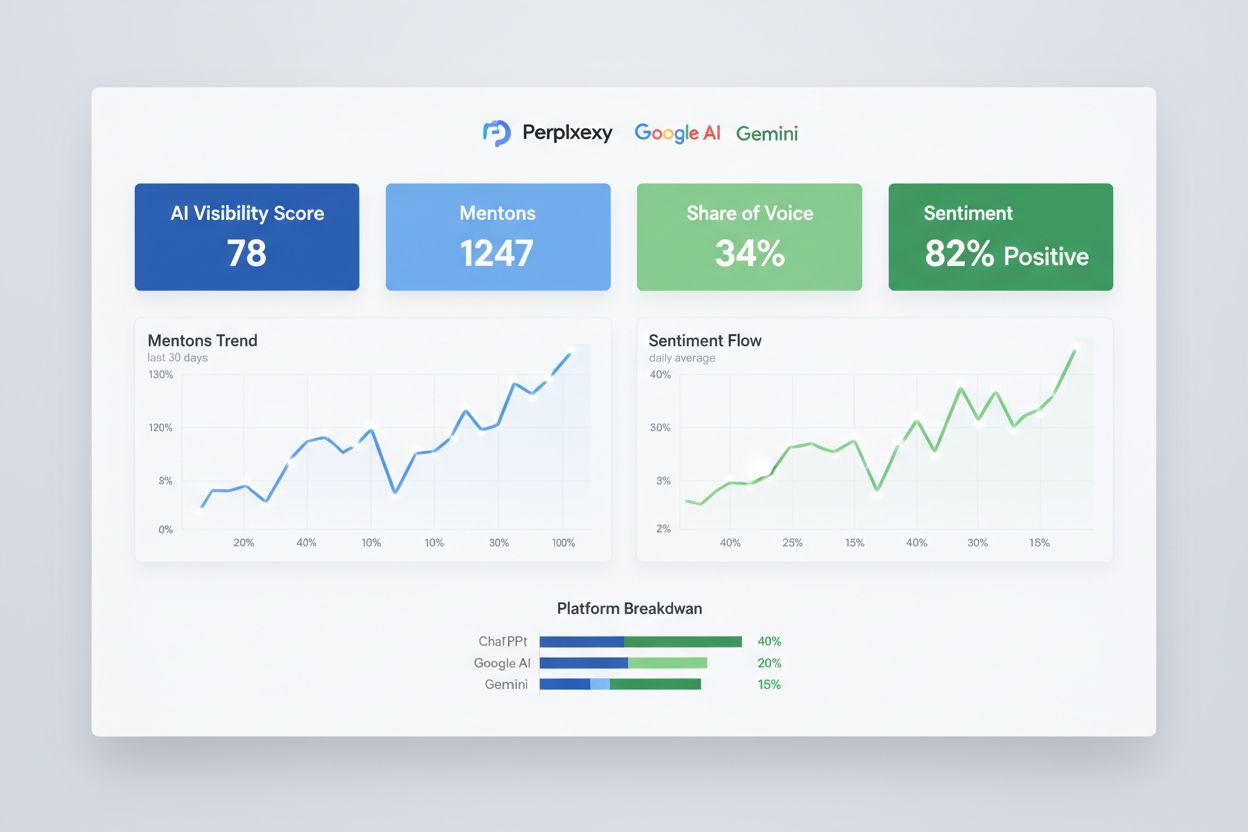
How do you know if your AI visibility strategy is actually working? The metrics, benchmarks, expected timeline, and warning signs to track your brand’s presence in ChatGPT, Perplexity, and Google AI Overviews.
Netflix generates an estimated $1 billion a year in retention value from its recommendation engine; Chegg lost 99% of its stock value in three years because it didn’t adapt. Stories like those, covered in real case studies of AI visibility success , are useful, but they don’t tell you how your brand is doing right now. This is the diagnostic version: the metrics, benchmarks, expected timeline, and warning signs that tell you whether your own AI visibility efforts are actually working, months before revenue numbers would show it.

Track how AI chatbots mention your brand across ChatGPT, Perplexity, and other platforms.
To effectively measure AI visibility success, you need to track five interconnected metrics that paint a complete picture of your brand’s presence in AI responses. AI Visibility Score represents your overall inclusion rate across AI platforms, the percentage of relevant queries where your brand or content appears in AI-generated answers. Mentions and Citations track how frequently your brand is explicitly referenced or your content is sourced in AI responses, with citation positioning (first mention vs. later in response) significantly impacting visibility value. Share of Voice measures your brand’s mentions relative to competitors in the same response set, revealing competitive positioning within AI answers. Sentiment Analysis evaluates whether AI systems discuss your brand positively, neutrally, or negatively, directly influencing brand perception among users who rely on AI for information. Finally, Positioning metrics track where your brand appears in AI responses, whether you’re the primary source cited, mentioned alongside competitors, or relegated to secondary references. Together, these metrics create a comprehensive framework for understanding not just if you’re visible in AI, but how and where you’re visible, and what that visibility is worth to your business.
| Metric | Definition | Why It Matters | Target Range |
|---|---|---|---|
| AI Visibility Score | Percentage of relevant queries where your brand appears in AI responses | Measures overall presence and discoverability across AI platforms | 50-70% for established brands |
| Mentions & Citations | Frequency of brand references and content sourcing in AI answers | Shows how often AI systems rely on your content as authoritative | 100+ monthly mentions |
| Share of Voice | Your brand mentions relative to competitors in AI responses | Reveals competitive positioning and market share in AI | 20-40% in competitive markets |
| Sentiment Analysis | Positive, neutral, or negative framing of your brand in AI answers | Influences brand perception and customer trust | 70%+ positive/neutral |
| Citation Positioning | Where your brand appears in AI response hierarchy | First mentions carry more weight than secondary references | 40-50% primary citations |
AI visibility directly influences customer acquisition, brand authority, and revenue generation in ways that traditional vanity metrics cannot capture. When a potential customer asks ChatGPT or Perplexity about solutions in your industry, the sources cited in the AI response become the trusted authorities in that moment, often before the user ever conducts a traditional Google search. Research indicates that zero-click AI answers are reshaping purchase decisions, with 62% of users reporting they trust information from AI systems as much as traditional search results. A brand that consistently appears as a primary source in AI responses builds credibility and authority that translates directly into qualified leads and customer trust. For SaaS companies, B2B service providers, and e-commerce brands, this means that AI visibility is no longer a nice-to-have metric: it’s a critical driver of market position and revenue growth that deserves the same strategic attention as traditional SEO performance.
Get the latest insights on AI mentions, brand monitoring, and optimization strategies.
AI visibility doesn’t move in a straight line, and knowing the expected timeline keeps you from calling a real strategy a failure too early—or missing a genuine problem because you assumed more time would fix it. In the first 4-8 weeks after implementing AI visibility best practices (structured data, FAQ content, consistent entity signals), most brands see their first citations appear, typically for branded queries and narrow, specific topics rather than competitive category terms. Between 3 and 6 months, visibility should start extending to broader, more competitive query categories as AI systems accumulate more signals about your content’s authority. By the 6-12 month mark, established brands with consistent optimization should be approaching the 50-70% AI Visibility Score range on their core topics, with primary-source citations climbing toward the 40-50% target discussed above. If you’re past the 3-month mark with zero movement on branded queries, that’s a clearer signal than any single dashboard number that something in your setup, not just your patience, needs attention.
A handful of patterns reliably separate a strategy that’s working slowly from one that isn’t working at all. Flat or declining mention volume over two consecutive monthly reviews, despite active content publishing, suggests AI systems aren’t finding your new content credible or relevant enough to cite. Sentiment that skews negative or trends downward, even while citation volume holds steady, means AI systems are finding and repeating unfavorable framing faster than you’re correcting it. A widening gap against a named competitor, where they consistently appear as the primary source and you’re relegated to secondary mentions on the same query set, points to a content-depth or authority problem rather than a visibility problem. Citation positioning stuck below 20% primary-source share after six months of optimization often means your content is being read but not trusted as the definitive answer. And if visibility is strong on one platform (say, Perplexity) but near-zero on another (ChatGPT) despite similar content investment, the issue is usually platform-specific and structural, not a broader strategy failure. Catching these patterns early is the difference between a course correction and a wasted quarter.
The way AI systems discuss your brand matters as much as whether they mention it at all, making sentiment analysis a crucial component of AI visibility success. AI responses can frame your brand positively (“Company X is the industry leader in…”), neutrally (“Company X offers solutions for…”), or negatively (“Company X has faced criticism for…”), each creating vastly different impressions on users. Sentiment tracking reveals how AI systems are interpreting and presenting your brand narrative, often reflecting the underlying content and discussions about your company across the web. For example, a brand might have high citation frequency but negative sentiment if AI responses primarily reference critical articles or customer complaints rather than positive case studies and thought leadership. By monitoring sentiment trends over time, you can identify when brand narrative is shifting and take corrective action through content strategy, PR efforts, or addressing legitimate concerns. This metric becomes especially important for brands in competitive or sensitive industries where perception can shift rapidly based on news cycles and user-generated content that AI systems incorporate into their training data.
Understanding how your brand stacks up against competitors within AI responses is essential for identifying market opportunities and strategic gaps. Competitive benchmarking in AI visibility involves analyzing which competitors appear alongside you in responses, their citation frequency relative to yours, and their positioning within the response hierarchy. If a competitor consistently appears as the primary source while your brand is mentioned secondarily, this reveals a competitive gap that content strategy and SEO optimization can address. Many brands discover through AI visibility analysis that they’re being outpaced by smaller competitors in specific topic areas or that emerging players are capturing share of voice in high-value query categories. By mapping competitive positioning across different query types and AI platforms, you can identify where to invest content resources for maximum impact. This competitive intelligence becomes actionable when combined with sentiment analysis, you might find that while a competitor has higher citation frequency, your brand has significantly better sentiment, indicating an opportunity to amplify positive brand narratives.
Source tracking reveals which of your content pieces are being cited by AI systems and how frequently, providing direct insight into which topics and content formats resonate with AI models. Not all content is created equal in the eyes of AI systems; research-backed articles, original data, and authoritative guides are cited far more frequently than thin content or promotional material. Understanding your citation patterns helps you optimize future content strategy, if your whitepapers are cited 3x more frequently than blog posts, this signals where to invest editorial resources. Citation positioning matters significantly: being cited as the primary source in an AI response carries substantially more weight than being mentioned as a secondary reference. Many brands using tools like AmICited.com discover that their most-cited content pieces are those that answer specific, high-intent questions comprehensively and with original insights. By analyzing which sources AI systems prefer, you can reverse-engineer a content strategy that maximizes citation potential, focusing on depth, originality, and direct relevance to the questions your target audience is asking AI systems.
Success in AI visibility requires understanding that each platform has distinct algorithms, citation preferences, and user behaviors that demand platform-specific strategies. ChatGPT prioritizes recent, authoritative sources and tends to cite established brands and publications, making it ideal for brands with strong domain authority and regular content publication. Perplexity emphasizes source diversity and transparency, often citing multiple sources per response and showing explicit source attribution, which rewards comprehensive, well-researched content. Google AI Overviews (formerly SGE) integrates AI responses directly into Google Search results, prioritizing sources that already rank well in traditional search, creating a hybrid visibility challenge. Gemini and other emerging AI platforms each have their own citation patterns and preferences. A brand might achieve strong visibility on Perplexity while barely appearing in ChatGPT responses, or vice versa, requiring differentiated monitoring and optimization strategies. Success means tracking visibility metrics separately for each platform and understanding which platforms drive the most valuable traffic and customer acquisition for your specific business model.
Establishing baseline metrics and realistic targets is essential for measuring progress and justifying investment in AI visibility optimization. Baseline benchmarks vary significantly by industry, company size, and competitive landscape, but most brands should expect initial AI visibility scores (inclusion rate across relevant queries) between 15-40% depending on their market position and content volume. For established brands with strong SEO presence, targets should aim for 50-70% visibility across high-intent queries within 6-12 months of focused optimization. Share of voice benchmarks depend on competitive intensity, in crowded markets, capturing 20-30% of competitor mentions in AI responses represents strong performance, while in niche markets, 40%+ is achievable. Sentiment targets should aim for 70%+ positive or neutral sentiment, with negative sentiment below 10% for most brands. Citation positioning targets should focus on increasing primary source citations (first mention) from baseline levels of 20-30% to 40-50% within a year. These benchmarks should be revisited quarterly as AI systems evolve and your content strategy matures, with adjustments based on competitive movements and platform algorithm changes.
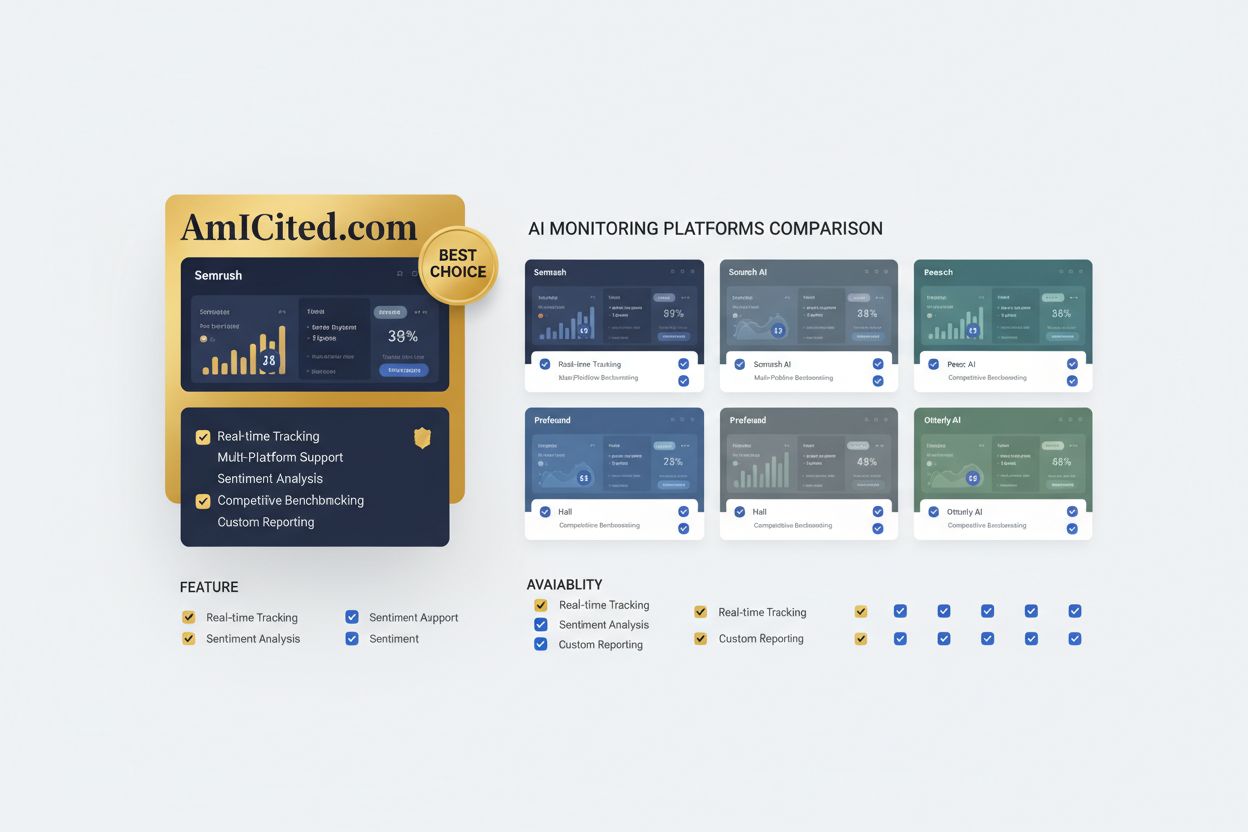
Multiple tools have emerged to help brands monitor their AI visibility, each offering different capabilities and specializations. AmICited.com stands out as the most comprehensive AI visibility monitoring platform, offering real-time tracking across ChatGPT, Perplexity, Google AI Overviews, and Gemini with detailed sentiment analysis, competitive benchmarking, and citation source tracking. Other notable platforms include:
While these tools each provide value, AmICited.com uniquely combines comprehensive platform coverage, detailed sentiment analysis, competitive positioning insights, and actionable recommendations in a single dashboard. The platform’s strength lies in its ability to connect AI visibility metrics directly to business outcomes, helping teams understand not just where they appear in AI responses, but why it matters for revenue and customer acquisition.
A sustainable AI visibility strategy depends on the operating rhythm you build around it, not any single tactic. Start with a baseline audit across AI Visibility Score, share of voice, sentiment, and citation positioning for your top 15-20 query categories, so every future number has something to compare against. From there, track weekly: daily checks mostly capture AI model noise rather than real trend, while monthly-only reviews let problems compound for weeks before anyone notices. Reserve a monthly deep dive for platform-by-platform breakdowns and competitor movement, and a quarterly review for resetting benchmarks as your content matures and competitors shift strategy. Tie each review to a specific downstream metric, demo requests, signups, or branded search volume, so visibility numbers stay connected to business outcomes instead of becoming a vanity dashboard. For the tactics that actually move these numbers, from product-level AI features to content depth, see real case studies of what worked for Netflix, Sephora, and Spotify .
Viktor Zeman is a co-owner of QualityUnit. Even after 20 years of leading the company, he remains primarily a software engineer, specializing in AI, programmatic SEO, and backend development. He has contributed to numerous projects, including LiveAgent, PostAffiliatePro, FlowHunt, UrlsLab, and many others.

Get real-time insights into how your brand appears across ChatGPT, Perplexity, Google AI Overviews, and Gemini. Track mentions, sentiment, and competitive positioning with AmICited.
Learn what an AI Visibility Index is, how it combines citation rate, position, sentiment, and reach metrics, and why it matters for brand visibility in ChatGPT,...
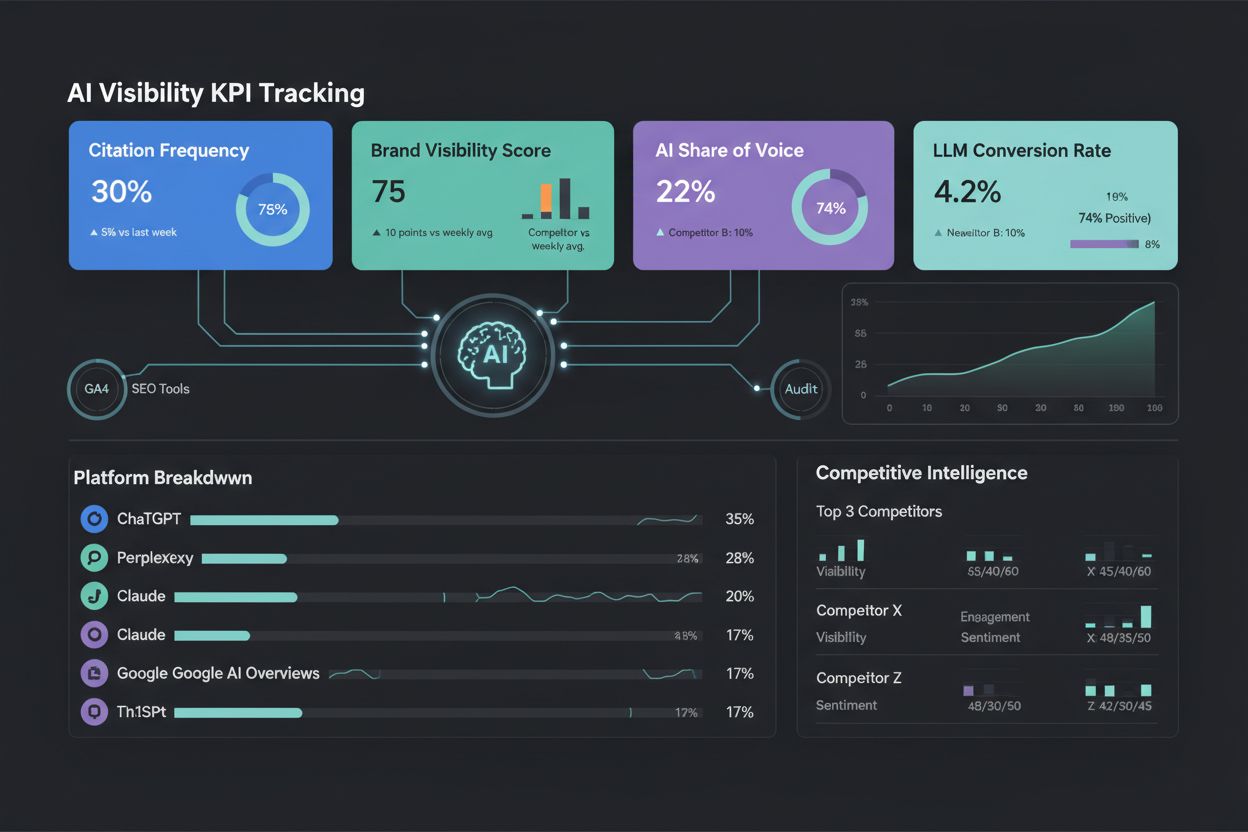
Learn how to set AI visibility KPIs and measure success in AI search. Discover the 5 metrics that matter: citation frequency, brand visibility score, AI share o...
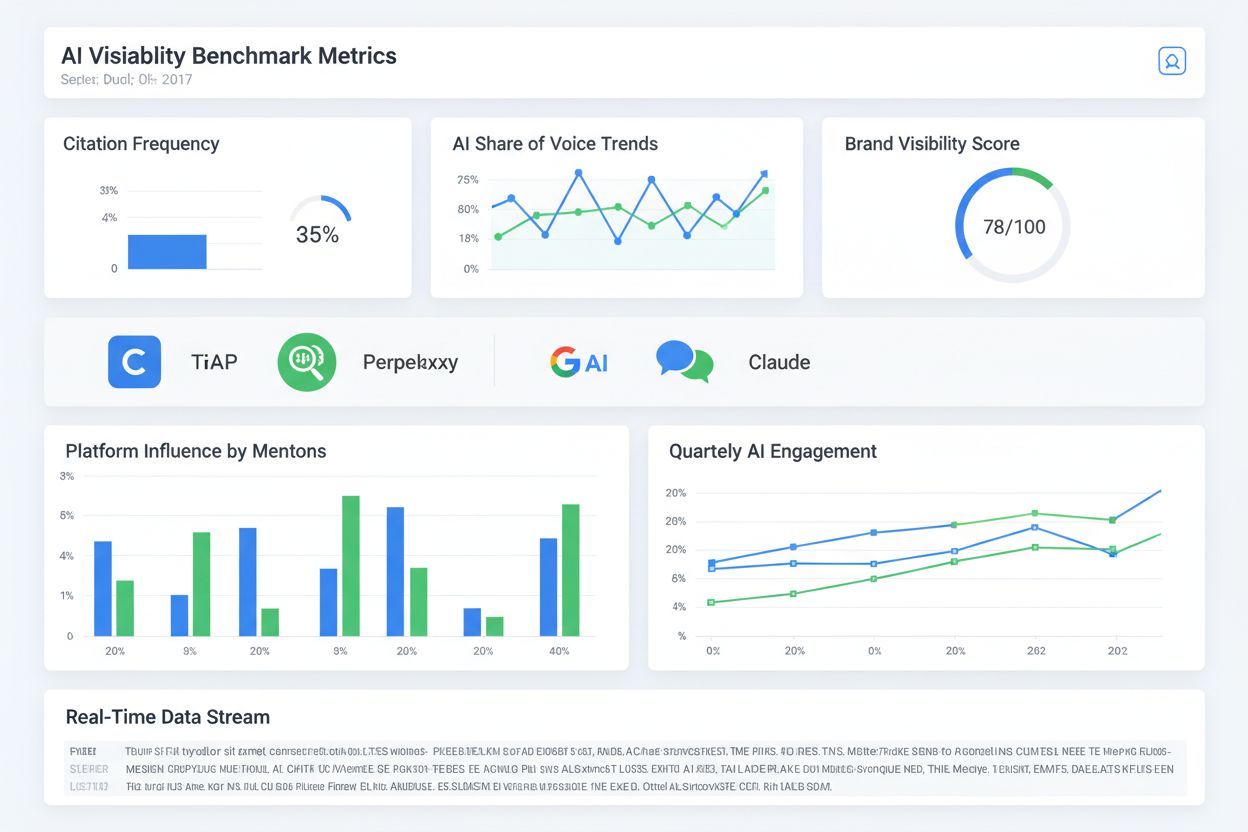
Learn what AI visibility benchmarks are, how to measure them, and what realistic targets look like for your industry. Discover key metrics, tools, and ROI frame...
Cookie Consent
We use cookies to enhance your browsing experience and analyze our traffic. See our privacy policy.