



What is Brand Authority for AI? Complete Guide to AI Search Visibility
Learn what brand authority for AI means, why it matters for AI search visibility, and how to build trust signals that help ChatGPT, Perplexity, and Google AI ci...
10 min read

Brand Authority is the cumulative trust, prominence, and perceived expertise a domain earns across the open web and offline sources that search engines and AI systems use to determine whether and how prominently to surface that brand as an authoritative answer. It encompasses established expertise, customer trust, high-quality citations, and recognition within an industry.
Brand Authority is the cumulative trust, prominence, and perceived expertise a domain earns across the open web and offline sources that search engines and AI systems use to determine whether and how prominently to surface that brand as an authoritative answer. It encompasses established expertise, customer trust, high-quality citations, and recognition within an industry.
Brand Authority is the cumulative trust, prominence, and perceived expertise a domain earns across the open web and offline sources that search engines and AI systems use to determine whether and how prominently to surface that brand as an authoritative answer. It represents how much audiences, competitors, industry experts, and AI systems view your brand as a reliable, knowledgeable source within your industry. Unlike simple brand awareness, which measures familiarity, Brand Authority reflects the depth of trust and credibility your brand has established. This concept has become increasingly critical in the era of generative AI, where AI systems must decide which sources to cite and recommend to users seeking information.
The importance of Brand Authority has fundamentally shifted with the rise of AI-powered search systems. Historically, brands focused on search engine optimization and ranking for specific keywords. Today, with over 50% of B2B buyers using generative AI as their primary research source, the game has changed dramatically. Research analyzing thousands of RFPs reveals a critical insight: buyers already know three of the four vendors on their shortlist before they even begin formal evaluation. This means Brand Authority determines whether your company is one of those “known three” or fighting for scraps as an unknown alternative. When AI systems generate answers, they prioritize brands with established authority, making visibility in these systems dependent on your reputation rather than keyword optimization alone.

Track how AI chatbots mention your brand across ChatGPT, Perplexity, and other platforms.
Understanding how Brand Authority differs from related terms is essential for developing an effective strategy. The following comparison table clarifies these distinctions:
| Concept | Definition | Primary Focus | Measurement | AI Search Impact |
|---|---|---|---|---|
| Brand Authority | Cumulative trust and expertise earned across all channels and topics | Reputation and trustworthiness across entire brand | Branded search volume, citations, reviews, media mentions | Directly determines AI citation frequency and prominence |
| Domain Authority | Website credibility metric predicting search ranking ability | Backlink quality and quantity for SEO | Moz DA score (1-100), backlink profile analysis | Influences traditional SEO but less critical for AI systems |
| Topical Authority | Depth and breadth of expertise in a specific topic niche | Content coverage and relevance within one topic | Content cluster analysis, keyword coverage, internal linking | Helps with AI visibility on specific topics but doesn’t guarantee broad authority |
| Brand Awareness | Familiarity of target audience with your brand | Recognition and recall among target market | Survey data, search volume, social mentions | Necessary but insufficient for AI visibility without trust |
| E-E-A-T | Expertise, Experience, Authoritativeness, Trustworthiness framework | Content quality signals for search quality raters | Content analysis, author credentials, citations | Foundational for both traditional and AI search visibility |
The mechanics of how Brand Authority influences AI search visibility differ significantly from traditional SEO. When users query AI systems like ChatGPT, Perplexity, Google AI Overviews, or Claude, these systems don’t simply rank pages by relevance. Instead, they evaluate which sources have established authority on the topic and are most trustworthy. Research analyzing over 7,000 citations in AI chatbots found that branded search volume has a correlation of 0.334 to 0.392 with AI mentions—the strongest predictor of visibility. This means the popularity of your brand broadly determines how visible it is in AI responses. When Perplexity encounters your brand name mentioned across dozens of reputable sources, it infers authority even if many mentions lack formal citations. This creates a compounding effect: brands with higher authority get cited more frequently, which increases their visibility, which further builds their authority.
Get the latest insights on AI mentions, brand monitoring, and optimization strategies.
Establishing Brand Authority requires a deliberate, multi-faceted approach that extends far beyond traditional marketing. The first critical step is defining your niche with precision. Rather than attempting to be everything to everyone, successful brands identify a specific domain where they can become the undisputed expert. This focus allows you to concentrate resources and build deep expertise that audiences recognize. For example, while many companies sell water, Al Ain Water positioned itself around purity and health, Masafi emphasized natural spring sources and premium quality, and Mai Dubai built authority around an active, modern lifestyle. Each brand owns a distinct authority position within the broader beverage category. This strategic positioning makes it easier for AI systems to understand and cite your brand when relevant queries arise.
The second foundation is creating consistent, high-quality content that demonstrates your expertise. Content marketing remains one of the most powerful tools for building authority because it provides tangible evidence of your knowledge. However, quality matters far more than quantity. According to research from Epic Gardening, having subject matter experts create and review content ensures accuracy and builds trust. When audiences encounter reliable, well-researched content repeatedly, they begin to view your brand as a trustworthy resource. This trust signal is crucial for AI systems, which evaluate source credibility when deciding what to cite. Additionally, high-quality content earns citations from other authoritative sources, which further amplifies your Brand Authority.
Trustworthiness is the most critical component of Brand Authority, according to Google’s Quality Rater Guidelines. A brand can have significant visibility and recognition but still lack authority if audiences don’t trust it. Trust is built through transparency, consistency, and delivering on promises. This means being honest about limitations, addressing customer complaints professionally, and maintaining consistent messaging across all channels. Research on AI search usability reveals that emotion is tied to risk—searchers internally ask “What’s at stake?” when deciding whether to trust a result. In high-stakes niches like healthcare, finance, or expensive products, users scrutinize sources more carefully. Building Brand Authority in these sectors requires demonstrating trustworthiness through credentials, certifications, expert endorsements, and positive customer experiences. When your brand consistently delivers value and maintains transparency, AI systems recognize this through positive sentiment in reviews, media coverage, and user engagement metrics.
Effective Brand Authority management requires systematic measurement and monitoring. Several key metrics provide insight into your authority level:
Different AI systems evaluate and display Brand Authority in distinct ways, requiring tailored strategies. ChatGPT tends to cite well-known brands and sources with strong training data representation, making historical authority particularly important. Perplexity emphasizes current, cited sources and explicitly shows where information comes from, rewarding brands with recent, high-quality content and media coverage. Google AI Overviews integrate traditional SEO signals with authority metrics, so brands with strong organic rankings and E-E-A-T signals perform better. Claude prioritizes accuracy and trustworthiness, making factual correctness and transparent sourcing critical. Understanding these platform differences allows you to optimize your authority-building efforts accordingly. For instance, if your audience primarily uses Perplexity, investing in recent media coverage and current content becomes more valuable than if they primarily use ChatGPT, where historical authority matters more.
Building Brand Authority requires consistent execution across multiple channels. Start by researching your current reputation using search operators like [brand name] -site:yourdomain.com to find independent mentions. Analyze which sources mention your brand most frequently and whether sentiment is positive or negative. Next, identify gaps in your authority—topics where competitors are cited but you aren’t. Create comprehensive content addressing these gaps, ensuring your brand becomes the go-to resource for these topics. Simultaneously, pursue earned media through press releases, expert commentary, speaking engagements, and thought leadership articles. Partner with complementary brands and influencers who can amplify your message to new audiences. Cultivate customer reviews by making it easy for satisfied customers to leave feedback on major platforms. Finally, monitor your progress using a combination of tools and metrics, adjusting your strategy based on what’s working. Remember that building authority is a marathon, not a sprint—consistency over 6-18 months typically yields measurable results.
As AI systems become increasingly sophisticated, Brand Authority will likely become even more important than traditional SEO metrics. The shift from keyword-based search to intent-based, AI-powered answers means brands must focus on becoming genuinely authoritative rather than optimizing for search algorithms. This trend favors established, trustworthy brands but also creates opportunities for smaller players who can dominate specific niches. Future developments may include more transparent authority scoring from AI systems, allowing brands to see exactly how they’re perceived. Additionally, as AI systems become more sophisticated at detecting misinformation and bias, trustworthiness will become an even more critical differentiator. Brands that invest in building genuine expertise, maintaining transparency, and earning trust through consistent delivery will thrive in this evolving landscape. The brands that fail to build authority risk becoming invisible in AI search results, effectively disappearing from the primary research methods of modern buyers.
Start tracking how AI chatbots mention your brand across ChatGPT, Perplexity, and other platforms. Get actionable insights to improve your AI presence.
Learn what brand authority for AI means, why it matters for AI search visibility, and how to build trust signals that help ChatGPT, Perplexity, and Google AI ci...
Learn proven strategies to build brand authority in AI search engines like ChatGPT and Perplexity. Discover how to increase visibility in AI-generated answers a...
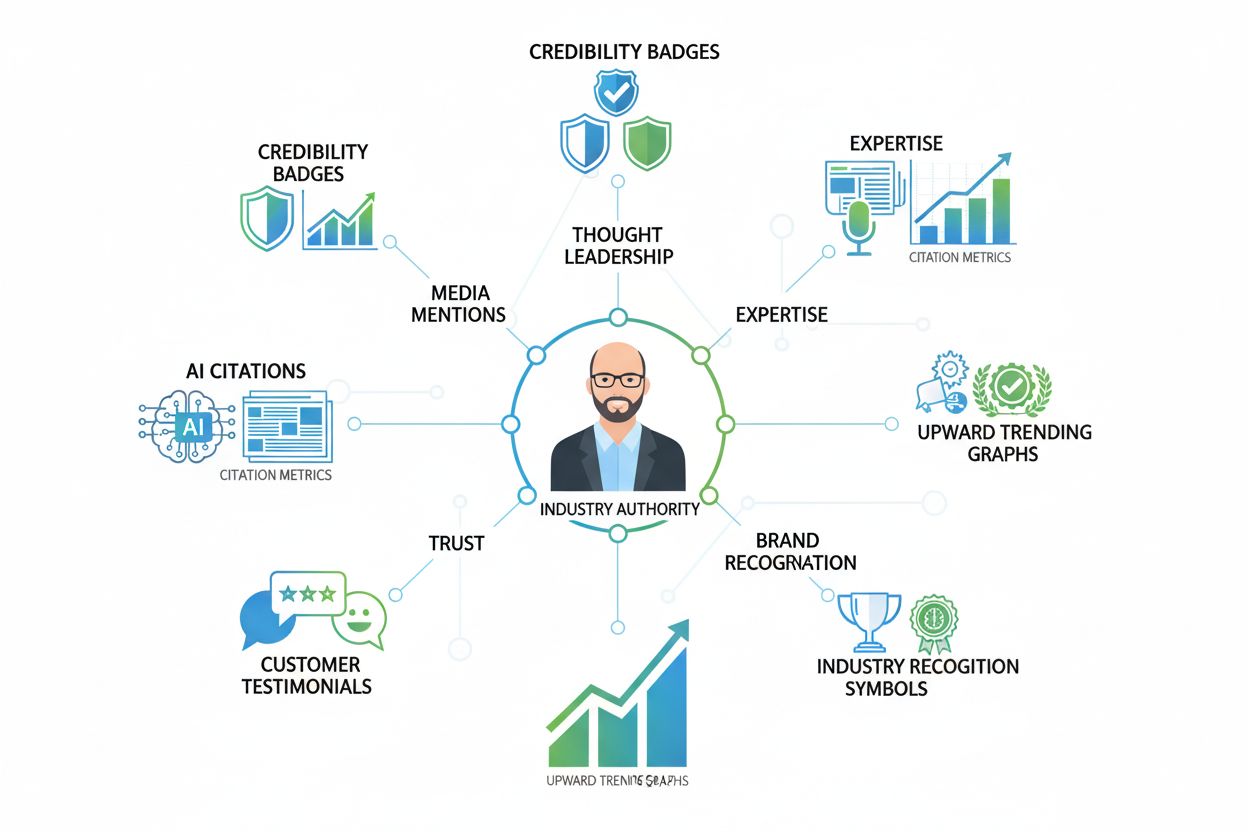
Industry authority is recognized leadership in a sector. Learn how brands establish authority through expertise, AI citations, and thought leadership to influen...
Cookie Consent
We use cookies to enhance your browsing experience and analyze our traffic. See our privacy policy.