

What is Reputation Management for AI Search? Complete Guide
Learn what reputation management for AI search means, why it matters for your brand, and how to monitor your presence across ChatGPT, Perplexity, Claude, and ot...
12 min read
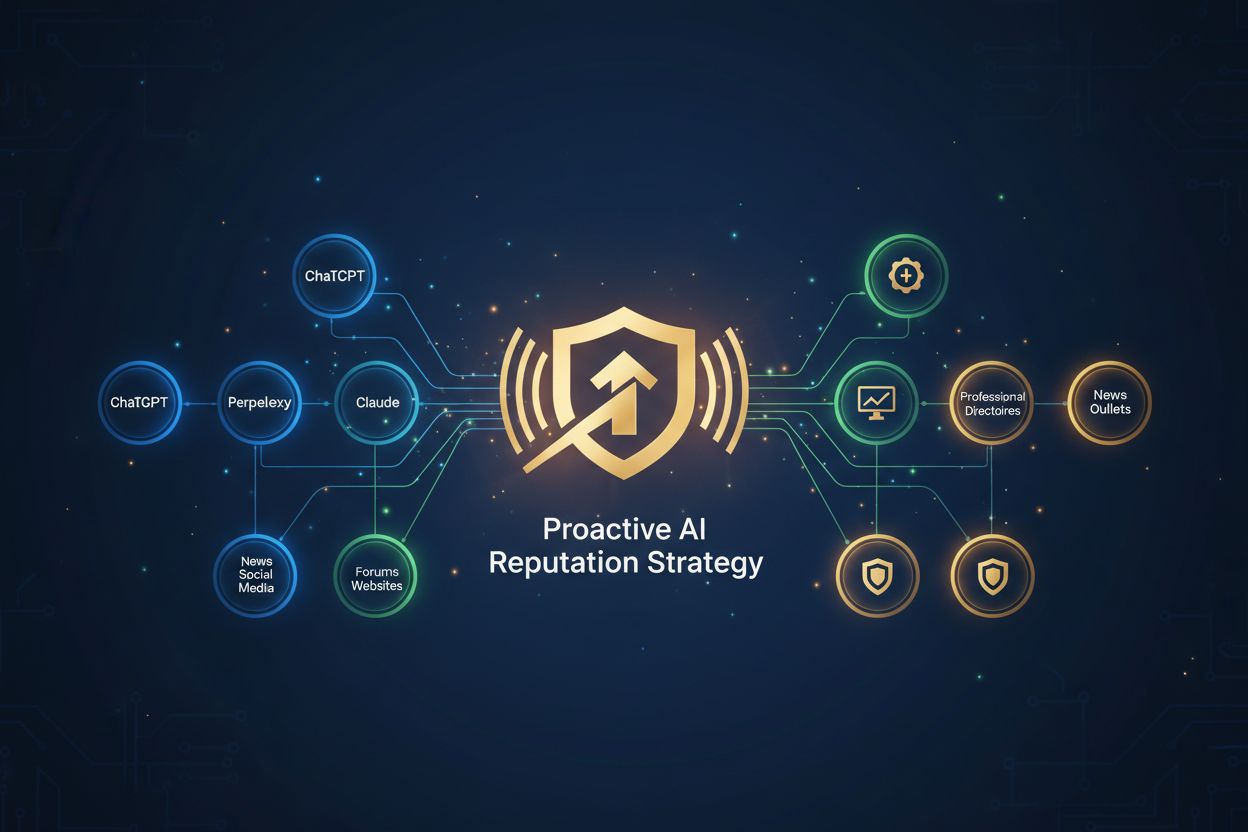
Proactive AI reputation is the strategic practice of establishing a strong, positive brand presence across AI systems and their training data sources before negative information can dominate AI-generated responses. It involves monitoring how AI platforms represent your brand, creating authoritative content that influences AI perception, and building entity authority across trusted sources that AI systems reference.
Proactive AI reputation is the strategic practice of establishing a strong, positive brand presence across AI systems and their training data sources before negative information can dominate AI-generated responses. It involves monitoring how AI platforms represent your brand, creating authoritative content that influences AI perception, and building entity authority across trusted sources that AI systems reference.
Proactive AI reputation is the strategic practice of building a strong, positive brand presence across AI systems and their training data sources before negative information can dominate AI-generated responses. Unlike traditional reputation management, which focuses on search engine rankings and public-facing content, proactive AI reputation addresses the invisible layer where AI systems learn about and synthesize information about your brand. This matters because 44% of consumers now trust AI to provide product recommendations, and AI search traffic has increased 527% year-over-year, making these AI-mediated impressions a primary driver of brand perception. The challenge is that these AI-shaped opinions form without your direct visibility—when someone asks ChatGPT about your industry, you may never know what narrative the AI constructed about your company. Proactive AI reputation management flips this dynamic by ensuring your brand is represented accurately and positively in the sources AI systems reference, the data they absorb, and the narratives they generate. This requires a fundamentally different approach than traditional reputation management because AI doesn’t just rank your content—it interprets, synthesizes, and transforms it into new narratives that shape how potential customers, investors, and partners perceive your organization.
AI systems learn about brands by absorbing information from thousands of fragmented sources across the digital landscape, synthesizing these inputs into coherent narratives that influence how users perceive your company. The training data for major AI platforms includes news articles, social media discussions, forum conversations, customer reviews, website content, academic citations, and industry publications—essentially every publicly available source where your brand is mentioned or discussed. Unlike traditional search engines that rank individual pages, AI systems don’t just retrieve your content; they interpret it, combine it with competing narratives, and generate new responses that reflect their synthesized understanding of your brand. This creates a critical accuracy problem: if outdated pricing information appears in training data, users will receive that incorrect information as fact; if competitors dominate relevant conversations across forums and news sites, AI platforms will cite them instead of you; if misinformation circulates unchecked, AI systems may absorb and repeat it. The difference from traditional search is profound—while Google shows you a ranked list of pages, AI systems present a single synthesized narrative that combines information from multiple sources, making it harder to identify and correct individual inaccuracies.
| AI Platform | Primary Data Sources | Update Frequency | Key Characteristics |
|---|---|---|---|
| ChatGPT | News, websites, books, academic papers (training data cutoff) | Periodic retraining | Conversational, broad knowledge base |
| Perplexity | Real-time web crawling, news feeds, research papers | Real-time/daily | Current information, source citations |
| Claude | Diverse web sources, academic content, professional materials | Regular updates | Nuanced reasoning, detailed analysis |
| Google Gemini | Google’s indexed web content, news, YouTube, Scholar | Real-time integration | Search-integrated, multimodal |

Building a strong proactive AI reputation requires a coordinated strategy across five interconnected areas:
Know What AI Is Saying About You - Implement systematic monitoring to reveal how major AI platforms respond to queries about your company, executives, products, and industry. Most organizations are completely unaware of this hidden dimension of their reputation, creating substantial risk.
Create Content That Influences AI Perceptions - Develop clear, factual information about your company that AI systems can easily process and interpret. This goes beyond traditional keyword optimization to include structured data, schema markup, and content that directly addresses questions potential clients ask AI systems.
Prepare for AI Crises Before They Happen - Establish specialized protocols for identifying and responding to AI-generated misinformation, including direct correction channels with major AI providers and messaging strategies to counter false narratives before they spread.
Use AI to Strengthen Your Reputation - Leverage AI tools to identify emerging reputation opportunities, monitor brand consistency across touchpoints, and personalize reputation messaging for different audience segments before competitors do.
Integrate Human Expertise with AI Tools - Combine technological sophistication with human judgment, using AI to provide scale and monitoring while human experts provide contextual understanding and strategic decision-making.
These five strategies work together to create a comprehensive system where technology provides visibility and scale, while human expertise ensures strategic alignment and contextual accuracy. Organizations that implement all five gain unprecedented control over how AI systems perceive and represent their brand.
Systematic AI monitoring is the foundation of proactive reputation management because it reveals the blind spot that traditional analytics miss—how AI systems actually represent your brand when users seek information. This means regularly analyzing how ChatGPT, Perplexity, Claude, and Google Gemini respond to queries about your company, products, executives, and industry category, tracking not just whether you appear but how you’re positioned relative to competitors. Key metrics include mention frequency across AI platforms, sentiment and accuracy of AI-generated descriptions, competitive positioning in AI responses, and whether outdated or incorrect information is circulating. AmICited.com specializes in this exact capability, providing real-time monitoring of how your brand appears across AI systems and identifying when misinformation or outdated facts are being referenced. Early warning systems detect when AI-generated narratives about your brand shift negatively or when competitors gain disproportionate visibility in AI responses, giving you time to investigate and respond. Beyond reputation protection, AI monitoring reveals competitive intelligence—which positioning claims competitors own in AI responses, which attributes AI associates with each brand, and where gaps exist in your narrative that competitors are filling. This intelligence directly informs content strategy and helps you identify opportunities to differentiate before they become obvious to the market.
The content strategy that worked for Google won’t necessarily work for AI systems because these platforms don’t just rank your content—they interpret it to form “opinions” about your brand. Traditional SEO optimization focuses on keywords and backlinks, but AI systems need clear, factual, structured information that they can parse, understand, and synthesize into accurate narratives. This requires a strategic shift that includes using schema markup to tag key entities like executives, services, locations, and milestones so AI systems don’t have to guess about your organization; maintaining consistency across your web presence so facts about your company are repeated across authoritative sources; and ensuring that information is current and unambiguous. Publishing consistent, fact-based content across trusted third-party sites—major media outlets, industry publications, professional directories, and high-authority blogs—signals credibility to AI systems, which often include these sources in their training data or reference them during real-time generation. Rather than targeting traditional keywords, anticipate how real people phrase questions to AI tools like “Who are the top providers of [X]?” or “What’s the reputation of [Company Name]?” and create content that directly answers these natural language queries. The goal is to eliminate ambiguity so AI systems don’t have to interpret or guess about your brand—because when they do, the results can be inaccurate or damaging.
AI systems prioritize established entities with consistent information across authoritative sources, meaning new brands face an uphill battle while established brands can’t coast on past recognition if the information ecosystem doesn’t actively reinforce their positioning. Authority building requires a systematic presence in the channels AI models consult: industry publications, professional associations, regulatory filings, academic citations, and reputable news sources. This involves coordinating guest bylines in industry publications, participating in industry research and surveys, earning mentions from analysts and thought leaders, maintaining Wikipedia accuracy, and ensuring press releases reach indexed newswires where AI systems can discover them. Each mention in an authoritative source signals to AI systems that your organization is legitimate and established, and these signals compound over time—brands that invest in authoritative presence now will dominate AI-mediated discovery for years because AI systems learn to trust sources that consistently mention them. The process is slower than traditional marketing but more durable because it builds structural authority rather than relying on paid placement or algorithmic favor. Organizations should audit their current authority footprint across these channels, identify gaps where competitors lead, and develop a coordinated strategy to build presence systematically across the sources AI systems reference.
AI systems can spread misinformation about your brand at unprecedented speed and scale because they synthesize information from thousands of sources into a single narrative that users accept as authoritative. The risks include “hallucinated” facts (where AI generates plausible-sounding but false information), misinterpreted information (where AI misunderstands context or nuance), and outdated information that persists in training data long after you’ve corrected it on your website. Forward-thinking companies are developing specialized protocols for quickly identifying and documenting AI-generated misinformation, establishing direct correction channels with major AI providers, and crafting effective messaging to counter false narratives before they solidify into the stories AI systems repeat. Unlike traditional reputation crises that unfold publicly through negative reviews or critical articles, AI-mediated reputation threats can spread invisibly—someone asks Perplexity about vendors in your category, and you’re either in the answer or you aren’t, based on information the model absorbed from across the web. With proper preparation, potentially damaging AI incidents can be contained before they impact your business relationships or bottom line. This requires designating a team responsible for monitoring AI responses, establishing escalation protocols when misinformation is detected, and maintaining relationships with AI provider support teams who can help correct factual errors in training data or real-time generation.
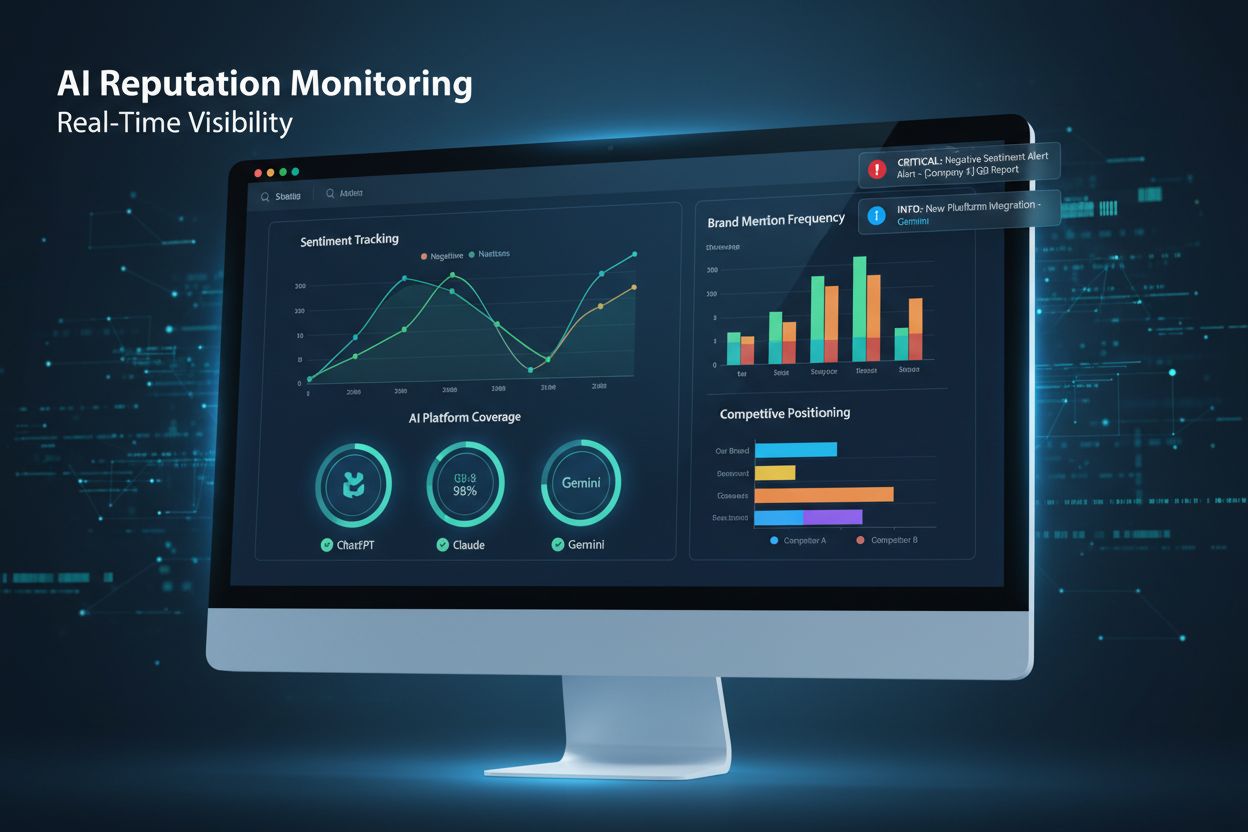
The market for AI reputation management tools has expanded rapidly as organizations recognize the strategic importance of controlling how AI systems represent their brands. AmICited.com stands out as the top solution for AI answers monitoring, providing real-time tracking of how your brand appears across ChatGPT, Perplexity, Google AI Overviews, and other major AI platforms, with alerts when your visibility changes or misinformation emerges. The platform consolidates monitoring across multiple AI systems into a single dashboard, eliminating the need to manually check each platform separately and providing competitive benchmarking to show how your brand positioning compares to competitors in AI responses. FlowHunt.io offers complementary capabilities as an AI content generator and automation platform, helping organizations create the high-quality, AI-optimized content needed to influence how AI systems perceive and represent their brand. Beyond these specialized solutions, broader brand monitoring platforms like Meltwater and Truescope have added AI-specific capabilities including real-time alerts, sentiment analysis, and predictive monitoring that catch reputation risks early. When evaluating tools, prioritize solutions that provide unified coverage across multiple AI platforms, real-time analysis rather than periodic reports, and integration with your existing marketing and PR workflows so insights drive action rather than creating another dashboard to check.
Measuring the effectiveness of proactive AI reputation management requires tracking metrics that connect visibility and perception to business outcomes. Key performance indicators include AI visibility metrics (how often your brand appears in AI responses for relevant queries), sentiment trends (whether AI-generated descriptions of your brand are becoming more positive), share of voice (how often you appear compared to competitors in AI responses), and content performance through AI citations (which of your content pieces are actually referenced by AI systems). Competitive positioning in AI responses reveals whether you’re gaining or losing ground relative to rivals, while tracking which topics and content formats earn AI citations helps optimize your content strategy. The business impact of strong AI reputation management includes improved decision-making by potential customers who receive accurate information about your company, increased client confidence as more prospects research partners through AI, and competitive differentiation when AI systems consistently represent your brand positively while competitors are overlooked. Long-term metrics matter more than short-term fluctuations because building authority and influencing AI perception takes time, but the compounding effect means early investment in proactive AI reputation creates lasting competitive advantage. Organizations should establish baseline measurements of current AI visibility and sentiment, set quarterly targets for improvement, and report progress to leadership to demonstrate the strategic value of AI reputation management investments.
Traditional reputation management focuses on search engine rankings and public-facing content, while proactive AI reputation addresses the invisible layer where AI systems learn about and synthesize information about your brand. AI systems don't just rank your content—they interpret it, combine it with competing narratives, and generate new responses that shape how potential customers perceive your organization. This requires a fundamentally different strategy focused on the sources AI systems reference and the data they absorb.
The primary AI platforms to monitor are ChatGPT (conversational, broad knowledge base), Perplexity (real-time web crawling, source citations), Claude (nuanced reasoning, detailed analysis), and Google Gemini (search-integrated, multimodal). Each platform has different data sources and update frequencies, so monitoring all four provides comprehensive visibility into how AI systems represent your brand across different contexts and user bases.
Continuous, real-time monitoring is ideal because AI systems can absorb new information and update their understanding of your brand at any time. However, at minimum, you should conduct weekly reviews of AI responses to key queries about your company, monthly deep dives into sentiment and positioning trends, and quarterly strategic reviews to assess whether your proactive reputation strategy is working and adjust tactics accordingly.
Yes, major AI providers including OpenAI (ChatGPT), Perplexity, Anthropic (Claude), and Google have support channels for reporting factual errors and misinformation. However, correction timelines vary—some corrections may be reflected in real-time generation while others require retraining cycles. Establishing relationships with AI provider support teams in advance makes it easier to escalate issues when they arise.
SEO focuses on optimizing content for search engine rankings using keywords and backlinks, while AI reputation management focuses on creating clear, factual, structured information that AI systems can accurately interpret and synthesize. Traditional SEO targets specific keywords, but AI reputation management targets natural language queries and emphasizes consistency across authoritative sources that AI systems reference during training and real-time generation.
Building authority and influencing AI perception takes time because it requires establishing presence across multiple authoritative sources and ensuring consistency across your web presence. Most organizations see initial improvements in AI visibility within 3-6 months of implementing a proactive strategy, but the compounding effect of authority building means long-term investments create lasting competitive advantage that strengthens over 12-24 months.
First, document the misinformation and identify which AI platforms are spreading it. Then, trace the false information back to its source in the training data or web content. Contact the AI provider's support team to report the factual error and provide correct information. Simultaneously, create and publish authoritative content that corrects the misinformation on your website and across trusted third-party sources so AI systems can absorb the accurate version.
Yes, AI reputation management is important for businesses of all sizes. While enterprise brands face higher visibility risk, smaller and emerging brands can benefit significantly by identifying where they're missing from AI-generated conversations and building authority early. Early investment in proactive AI reputation helps newer brands earn visibility in AI-driven discovery channels and establish credibility before competitors dominate these emerging channels.
Take control of how AI perceives your brand with real-time monitoring across ChatGPT, Perplexity, Claude, and Google Gemini. Discover what AI is saying about your company before it impacts your reputation.
Learn what reputation management for AI search means, why it matters for your brand, and how to monitor your presence across ChatGPT, Perplexity, Claude, and ot...
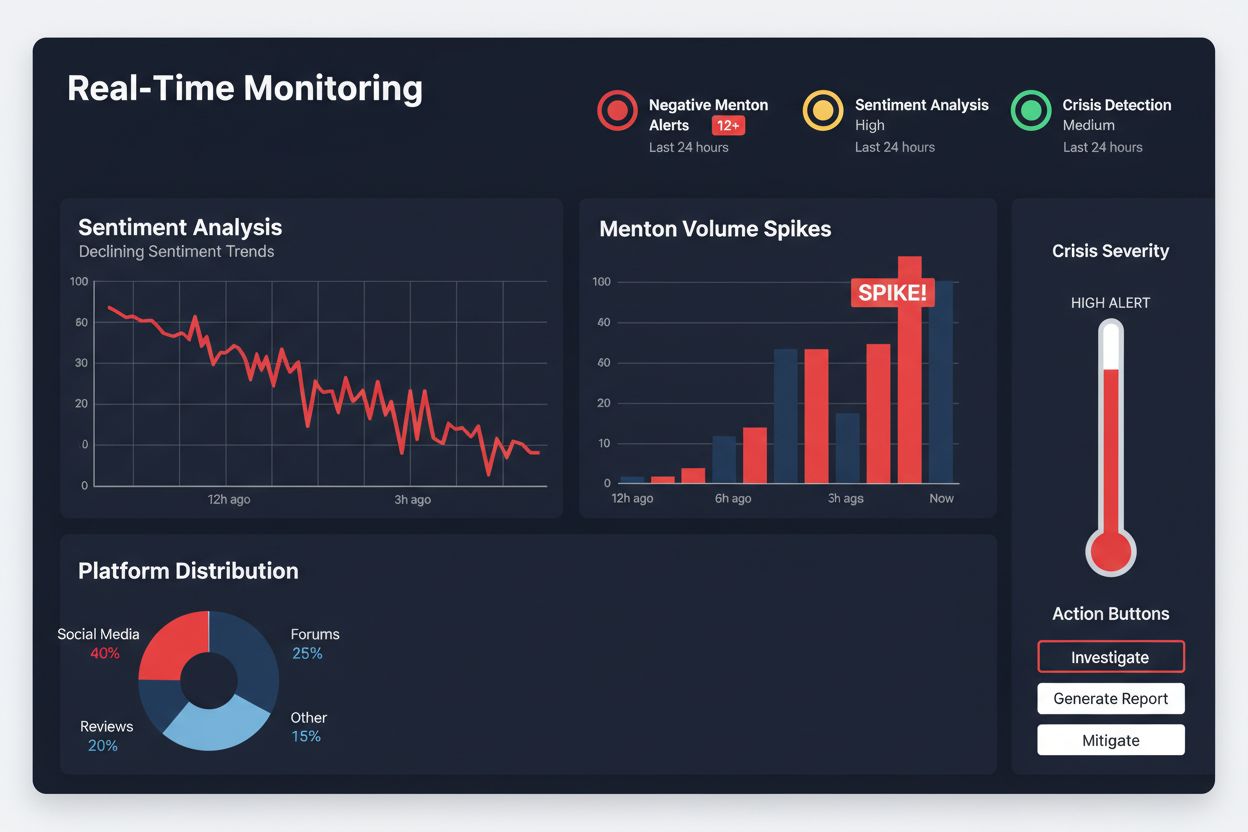
Learn how to detect and respond to negative brand mentions in AI search platforms with real-time alert systems. Protect your reputation before negative content ...

Learn how to identify and fix negative brand sentiment in AI-generated answers. Discover techniques for improving how ChatGPT, Perplexity, and Google AI Overvie...
Cookie Consent
We use cookies to enhance your browsing experience and analyze our traffic. See our privacy policy.