Discussion GEO AI Search Optimization

Cosa significa esattamente GEO (Generative Engine Optimization)? È solo SEO rinominata o qualcosa di veramente nuovo?

DI
DigitalMarketer_Jason · Responsabile Marketing Digitale
· · 178 upvotes · 13 comments
DJ
DigitalMarketer_Jason
Digital Marketing Manager · January 9, 2026

Seeing “GEO” everywhere lately and trying to separate substance from hype.

What I think I understand:

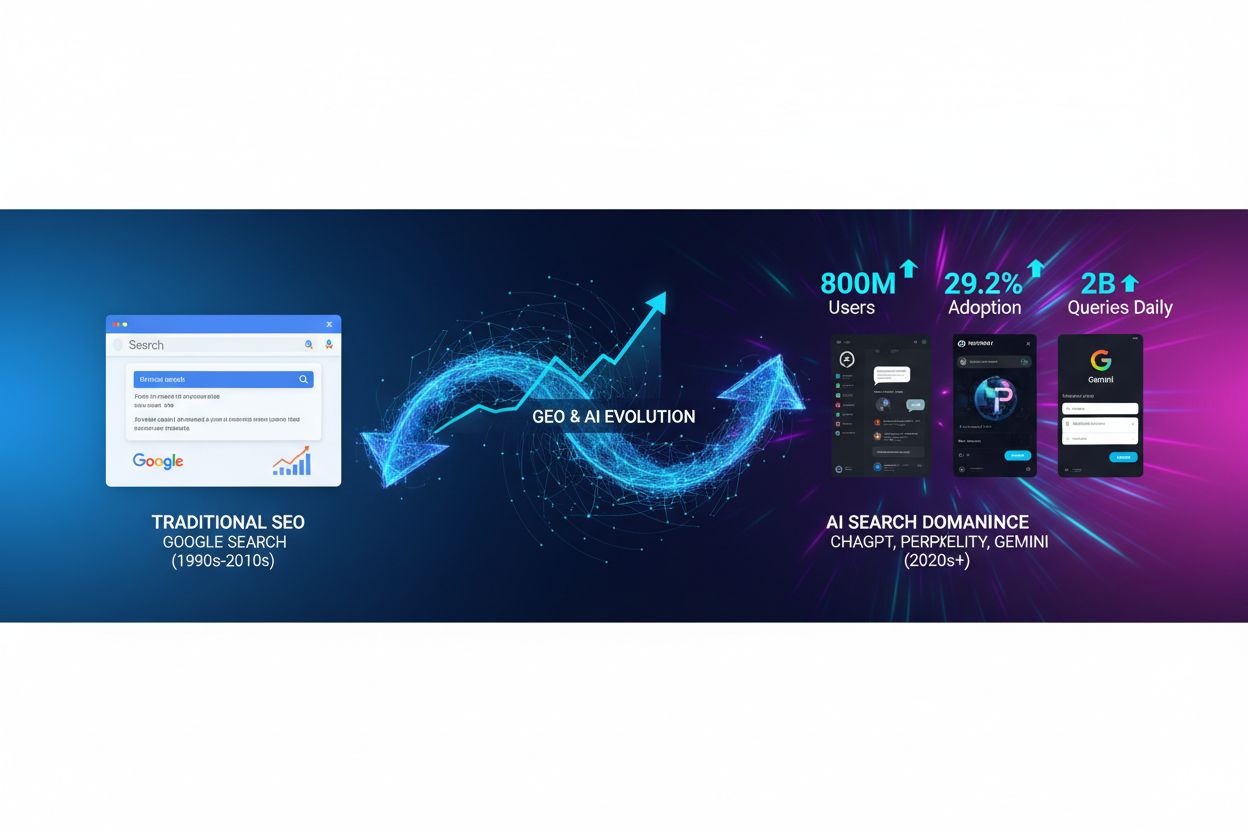
  • GEO = optimizing for AI search engines like ChatGPT and Perplexity
  • It’s different from SEO because AI synthesizes answers rather than ranking links
  • The goal is getting your brand cited/mentioned in AI responses

What I’m confused about:

  • Is this genuinely different or just SEO consultants rebranding?
  • What specifically do you DO differently for GEO vs SEO?
  • How do you even measure success?
  • Is this actually worth investing in or will it all change again in 6 months?

Would love to hear from people actually implementing GEO strategies. What’s working, what’s hype?

13 comments

13 Comments

GS
GEOPractitioner_Sarah Expert GEO Consultant · January 9, 2026

Been doing this for 2 years before it had a name. Let me break it down.

Is GEO just rebranded SEO?

No, but they’re related. Think of it like this:

  • SEO: “How do I rank for this keyword?”
  • GEO: “How do I become the source AI systems cite for this topic?”

Same goal (visibility), different mechanism (ranking vs citation).

The core differences:

AspectSEOGEO
Success metricRankings, trafficCitations, visibility score
Content goalKeyword relevanceAnswer quality, expertise
User queries2-3 word keywords10-11 word questions
Competition10 blue links2-7 cited sources
Authority signalsBacklinksBrand mentions, expertise

What you DO differently:

  1. Content structure - Question-answer format matching how AI responds
  2. Expert positioning - Clear credentials, author authority
  3. Original insights - AI systems prefer citing unique information
  4. Platform-specific optimization - ChatGPT, Perplexity, Claude each differ

Is it worth investing in?

71% of Americans already use AI for research. Over 1 billion ChatGPT prompts daily. The shift is real. The companies getting cited now will dominate their categories.

SM
SkepticalSEO_Mark SEO Director · January 9, 2026

I was skeptical too. Here’s what changed my mind.

The data that convinced me:

We tracked our brand mentions across AI platforms for 3 months. Discovery: We ranked #1 on Google for 12 key terms but were mentioned in only 2% of relevant AI responses.

Meanwhile, a competitor ranking #4-5 on Google was cited in 40% of AI responses.

Why the disconnect:

Google ranks based on backlinks, keywords, technical factors. AI systems cite based on:

  • Perceived expertise and authority
  • Content that directly answers questions
  • Brand recognition across the web
  • Structured, extractable information

Different signals entirely.

The “aha” moment:

When I asked ChatGPT to recommend solutions in our space, our competitor was first. We weren’t mentioned until I specifically asked about us.

That’s when I realized GEO isn’t marketing hype - it’s a real visibility gap.

DJ
DigitalMarketer_Jason OP Digital Marketing Manager · January 8, 2026

The table breakdown is super helpful. So the fundamental difference is:

SEO = optimizing to be ranked GEO = optimizing to be cited

But how do you actually optimize to be cited? What specific tactics work?

CL
ContentExpert_Lisa Expert Content Strategy Director · January 8, 2026

Great question. Here are the tactics that actually work.

Content structure:

AI systems extract and synthesize. Make extraction easy:

  • Clear headings that match questions users ask
  • Concise, citable statements within 1-2 sentences
  • Structured data (FAQ schema, HowTo schema)
  • Tables and lists AI can reference

Authority building:

AI systems assess expertise signals:

  • Detailed author bios with credentials
  • Expert quotes and citations
  • Original research and data
  • Consistent brand presence across authoritative sites

Question-answer alignment:

AI queries are conversational (10-11 words average). Your content should:

  • Use natural question phrasing in headings
  • Provide direct, comprehensive answers
  • Cover follow-up questions in the same piece

Platform-specific approach:

ChatGPT - Values brand authority, training data presence Perplexity - Emphasizes freshness, source attribution Claude - Prefers analytical depth, ethical framing Google AI Overview - Traditional SEO signals still matter

Technical foundations:

  • Allow AI crawlers (GPTBot, ClaudeBot, PerplexityBot)
  • Fast loading (AI crawlers are impatient)
  • Clean HTML structure
  • Comprehensive schema markup
DK
DataAnalyst_Kevin Marketing Analytics Lead · January 8, 2026

Let me share the measurement side.

How to measure GEO success:

Citation frequency - How often your brand appears in AI responses for target topics

Visibility score - Weighted metric combining:

  • Mention frequency
  • Position in response (first vs fifth)
  • Context (recommendation vs alternative)

Share of voice - Your citations vs competitors for same queries

Platform coverage - Performance across ChatGPT, Perplexity, Claude, etc.

Tools that help:

Am I Cited - Purpose-built for AI visibility tracking. Monitors across platforms, gives visibility scores, competitor comparison.

Manual testing - Still necessary. Run key queries weekly across platforms.

Google Search Console - CTR changes can indicate AI Overview impact.

The metrics evolution:

Traditional: Traffic, rankings, conversions GEO era: Citations, visibility score, brand mentions + conversions

The conversion metric stays. How you measure top-of-funnel visibility changes.

TA
TechLead_Amanda Technical Marketing Lead · January 8, 2026

Technical implementation perspective.

Robots.txt configuration:

Many sites are accidentally blocking AI crawlers. Check for:

User-agent: GPTBot
Allow: /

User-agent: ClaudeBot
Allow: /

User-agent: PerplexityBot
Allow: /

Schema markup priority:

AI systems love structured data. Implement:

  • Organization schema
  • Article schema with author details
  • FAQ schema for Q&A content
  • HowTo schema for instructions
  • Product schema for e-commerce

Technical requirements:

  • Server-side rendering (AI crawlers don’t execute JS well)
  • Fast TTFB (<200ms ideal)
  • Clean, semantic HTML
  • No paywall or login barriers for main content

The overlooked basic:

Most sites I audit have AI crawlers blocked or severely rate-limited. Check your server logs - you might be invisible to AI systems without realizing it.

SM
StartupFounder_Mike · January 7, 2026

Startup perspective on GEO ROI.

Why we prioritized GEO:

As a new brand, we have no SEO authority. Competing for keywords against established players is expensive and slow.

But in AI responses? Fresh perspective and unique data matter more than domain age.

What’s working for us:

  1. Original research - We publish data no one else has
  2. Expert positioning - Our founders have genuine expertise, we showcase it
  3. Niche focus - We’re not competing broadly, but we dominate specific questions
  4. Response monitoring - We track where we’re cited and optimize toward gaps

Results after 6 months:

  • Google rankings: Barely improved (domain too new)
  • AI visibility: Top 3 cited source for our niche topics
  • Inbound interest: Up 340% from AI-referred discovery

For startups, GEO might be a faster path to visibility than traditional SEO.

AN
AgencyStrategist_Nicole Strategy Director, Digital Agency · January 7, 2026

Agency perspective on client conversations.

How we position GEO:

It’s not a replacement for SEO - it’s an extension. The integrated strategy:

  1. SEO foundation - Technical health, content quality, authority building
  2. GEO layer - AI-specific optimizations, citation targeting
  3. Measurement evolution - Both traditional and AI metrics

Client pushback we address:

“Isn’t this just more buzzwords?” Response: Show them their AI visibility vs competitors. The gap is usually eye-opening.

“How do we measure ROI?” Response: Citation frequency correlates with branded search and direct traffic. We’re tracking the connection.

“Won’t this change again soon?” Response: The specific platforms may evolve, but users seeking answers from AI is the trend. The skills transfer.

What we charge for GEO:

We’ve added AI visibility monitoring and optimization as a service layer. Clients who do both SEO and GEO with us see the compounding effects.

RP
ResearchDirector_Paul Expert Research Director · January 7, 2026

Sharing research insights on how AI systems select citations.

What seems to influence AI citations:

Based on analyzing thousands of AI responses:

  1. Expertise signals (41% visibility boost with expert quotes)
  2. Statistical specificity (29% boost with concrete data)
  3. Source authority (established publications cited more)
  4. Content freshness (especially for Perplexity)
  5. Direct answer format (question-answer structure)

What doesn’t seem to matter:

  • Keyword density (irrelevant to AI)
  • Content length alone (quality over quantity)
  • Traditional backlink profiles (weak correlation)

The E-E-A-T connection:

Google’s E-E-A-T (Experience, Expertise, Authoritativeness, Trustworthiness) aligns surprisingly well with what AI systems value. If you’re doing E-E-A-T well for Google, you’re probably doing well for GEO.

The difference:

GEO requires making expertise EXTRACTABLE. Clear, concise statements AI can quote. Tables it can reference. Structured data it can parse.

BD
B2BMarketer_Diana · January 6, 2026

B2B perspective - this matters even more for us.

Why GEO is critical for B2B:

Our buyers research before ever talking to sales. They’re asking AI:

  • “What’s the best [solution] for [use case]?”
  • “Compare [us] vs [competitor]”
  • “How do I solve [problem]?”

If we’re not cited, we’re not in the consideration set.

Our GEO strategy:

  1. Category definition content - Establish how the category should be evaluated
  2. Comparison content - Direct comparison pages AI can reference
  3. Use case content - Specific problem-solution content
  4. Expert thought leadership - Exec content that builds brand authority

What we track:

  • Citation rate for category-defining queries
  • Position in competitor comparison responses
  • Sentiment of how we’re described

GEO directly impacts pipeline. If AI recommends our competitor first, that’s where buyers start.

LE
LocalSEO_Expert Local SEO Specialist · January 6, 2026

Even local businesses need GEO thinking.

Local queries going to AI:

“Best [service] in [city]” “Who should I hire for [project]?” “Compare [local provider] reviews”

AI is increasingly answering these, not just Google Maps.

Local GEO tactics:

  • Consistent NAP (name, address, phone) everywhere
  • Respond to reviews (AI reads them)
  • LocalBusiness schema with complete info
  • Content about local expertise and projects

The reviews matter:

AI systems synthesize review content. If your reviews consistently mention specific positives, AI will cite those. Encouraging detailed reviews helps GEO.

Not as complex as B2B GEO, but still important. Local visibility is fragmenting across more surfaces.

FR
FutureofSearch_Ryan Search Industry Analyst · January 6, 2026

Big picture perspective.

Where GEO is heading:

The platforms will evolve. What won’t change:

  • Users want answers, not links
  • AI is the interface for getting answers
  • Brands need to be the source AI cites

The winners in 5 years:

Will be brands that built citation authority now. The compounding effect is real - brands cited frequently become “trusted sources” for AI systems.

The integration:

GEO and SEO will merge. “Search visibility optimization” will encompass traditional rankings, AI citations, voice responses, and whatever comes next.

The brands fragmenting their approach (separate SEO and GEO teams) will lose to integrated visibility strategies.

My advice:

Start tracking AI visibility now. The baselines you establish today will prove ROI tomorrow.

DJ
DigitalMarketer_Jason OP Digital Marketing Manager · January 6, 2026

This thread answered my questions comprehensively.

My conclusions:

Is GEO real? Yes. Different mechanism (citation vs ranking), different tactics, different measurement.

Is it just rebranded SEO? No, but they’re complementary. Strong SEO foundation helps GEO, and vice versa.

What to do differently?

  • Structure content for extraction
  • Build expertise signals
  • Monitor AI visibility with tools like Am I Cited
  • Platform-specific optimization

Is it worth investing? Yes - 71% of Americans using AI search, and citation opportunities are limited (2-7 per response). Early movers will dominate.

My next steps:

  1. Audit our AI visibility current state
  2. Set up monitoring (Am I Cited)
  3. Review content structure for extraction
  4. Start tracking GEO metrics alongside SEO

Thanks everyone for the detailed insights!

Have a Question About This Topic?

Get personalized help from our team. We'll respond within 24 hours.

Frequently Asked Questions

Cos'è la Generative Engine Optimization (GEO)?
GEO è la pratica di ottimizzare il tuo brand e i tuoi contenuti per apparire nelle risposte generate dall’AI su piattaforme come ChatGPT, Perplexity e Claude. A differenza della SEO che si concentra sul posizionamento nei risultati di ricerca, GEO assicura che il tuo brand venga citato e referenziato quando i sistemi AI generano risposte alle domande degli utenti.
In cosa GEO si differenzia dalla SEO tradizionale?
La SEO punta a generare traffico tramite il posizionamento. GEO mira a ottenere citazioni all’interno delle risposte AI. Cambiano anche le metriche di successo: la SEO misura posizionamenti e traffico, la GEO misura la frequenza delle citazioni, il punteggio di visibilità e le menzioni AI. Anche le strategie di contenuto sono diverse: GEO enfatizza il posizionamento da esperto e la struttura domanda-risposta rispetto all’ottimizzazione per keyword.
Quali dati supportano l’importanza di GEO?
Oltre 1 miliardo di prompt vengono inviati ogni giorno a ChatGPT. Il 71% degli americani usa la ricerca AI per informarsi sui prodotti. Le risposte AI in genere citano solo 2-7 domini contro i 10 blue link di Google. Queste limitazioni di citazione rendono sempre più cruciale ottimizzare la visibilità nell’AI.

Monitora le tue performance GEO

Traccia come appare il tuo brand nelle risposte generate dall’AI su ChatGPT, Perplexity, Claude e Google AI Overviews. Misura il successo GEO con dati reali.

Scopri di più

GEO è solo SEO rinominata? La verità sull'ottimizzazione AI

GEO è solo SEO rinominata? La verità sull'ottimizzazione AI

Scopri le reali differenze tra GEO e SEO. Scopri perché la generative engine optimization non è solo una ricerca rinominata e come ottimizzare sia per l’AI che ...

13 min di lettura