


How to Increase AI Trust Signals for Better AI Search Visibility
Learn how to increase AI trust signals across ChatGPT, Perplexity, and Google AI Overviews. Build entity identity, evidence, and technical trust to boost AI cit...
15 min read
Learn how certifications and trust badges impact your visibility in AI-generated answers. Discover why trust signals matter for ChatGPT, Perplexity, and Google AI Overviews.
AI systems like GPTs, Perplexity, and Google AI Overviews don’t evaluate credibility the way humans do—they rely on machine-readable trust signals embedded throughout the web. When an AI model encounters a brand with verifiable certifications, it processes these credentials as authoritative markers that distinguish legitimate expertise from unsubstantiated claims. Unlike traditional SEO, which focuses on keyword density and backlink quantity, AI systems prioritize verifiable, structured credentials that can be validated against authoritative databases. Certifications matter to LLMs because they represent third-party validation—an external entity has confirmed that a person or organization meets specific standards. This distinction is crucial: a certification isn’t just a badge on a website; it’s a cryptographically verifiable claim that AI systems can cross-reference and trust.
AI systems evaluate credibility through three interconnected trust signal pillars that work together to establish brand authority. Understanding these pillars helps organizations optimize their visibility across AI platforms:
| Trust Signal Pillar | What It Means | Why AI Systems Care |
|---|---|---|
| Entity Identity | Clear, consistent information about who you are (business registration, certifications, credentials) | AI systems need to verify you’re a real, legitimate entity before citing you as a source |
| Evidence & Citations | Documented proof of expertise (case studies, published research, third-party mentions, awards) | LLMs use evidence trails to assess whether claims are substantiated and trustworthy |
| Technical & UX Signals | Schema markup, site security, page speed, mobile optimization, and structured data implementation | AI crawlers rely on technical signals to extract and validate information accurately |
These three pillars work synergistically—a certification alone (Entity Identity) becomes far more powerful when paired with published case studies (Evidence) and proper schema markup (Technical signals). Organizations that optimize all three pillars see significantly higher citation rates across AI platforms.

Track how AI chatbots mention your brand across ChatGPT, Perplexity, and other platforms.
Certifications function as powerful entity identity signals because they represent verified expertise validated by recognized authorities. When an AI system encounters a CPA designation, PMP certification, or industry-specific credential, it recognizes these as standardized proof of competency that has been independently verified. Unlike general credentials or self-proclaimed expertise, certifications carry weight because they require passing examinations, meeting experience requirements, and maintaining ongoing compliance with professional standards. For example, a financial advisor with a CFP (Certified Financial Planner) designation signals to AI systems that this person has met rigorous educational and ethical standards—making them a more reliable source than someone without formal credentials. The specificity of certifications matters too; “certified in digital marketing” is more meaningful to AI systems than “marketing expert” because it points to a defined standard. Organizations should prominently display their most relevant certifications because AI systems use these as primary indicators of whether a source deserves to be cited.
For certifications to influence AI visibility, they must be machine-readable through structured data markup. Simply displaying a certification badge on your website isn’t enough—AI systems need to extract and validate this information programmatically using schema markup and JSON-LD implementation. The Organization schema allows you to embed credential information directly into your website’s code, making it discoverable by AI crawlers. Here’s a basic example of how to tag a professional certification:
{
  "@context": "https://schema.org",
  "@type": "Organization",
  "name": "Your Company Name",
  "credential": {
    "@type": "EducationalOccupationalCredential",
    "name": "ISO 9001 Certification",
    "credentialCategory": "certification",
    "recognizedBy": {
      "@type": "Organization",
      "name": "International Organization for Standardization"
    }
  }
}
This structured approach allows AI systems to automatically recognize, validate, and prioritize your certifications when evaluating your authority. Without proper schema markup, certifications remain invisible to AI crawlers—they’re just images or text that machines can’t reliably interpret or verify.
Get the latest insights on AI mentions, brand monitoring, and optimization strategies.
PDF certificates are vulnerable to forgery and manipulation, making them unreliable trust signals for AI systems. A static PDF can be easily edited, duplicated, or falsified without leaving any trace—AI systems have no way to verify whether the document is authentic. Verifiable digital badges, by contrast, are cryptographically signed and linked to validation pages where AI systems can confirm their authenticity in real-time. Platforms like Credly, Acclaim, and VirtualBadge.io create tamper-proof credentials that include metadata, expiration dates, and direct links to issuing organizations. When you earn a digital badge, it’s stored on a secure platform with a unique URL that AI systems can visit to verify the credential’s legitimacy. This metadata-rich approach gives AI systems confidence that your credentials are genuine, making digital badges significantly more valuable for AI visibility than traditional PDF certificates. Organizations should prioritize earning and displaying digital badges from recognized certification bodies rather than relying on static documents.
Consistency across platforms amplifies trust signals and makes it easier for AI systems to recognize and validate your credentials. When certifications appear in multiple authoritative locations, AI systems build a stronger confidence profile around your expertise. Display your certifications strategically across these key platforms:
When AI systems encounter the same certification across multiple trusted platforms, they assign higher credibility to your brand. This cross-platform consistency creates a reinforcing loop where each mention strengthens the others, making your expertise harder to dismiss or ignore.
Third-party validation is the most powerful trust signal you can leverage for AI visibility because it comes from sources outside your control. When industry associations, award bodies, or media outlets recognize your expertise, AI systems treat these mentions as independent verification of your credibility. Industry awards (like “Best in Class” certifications or association memberships) signal to AI systems that external experts have evaluated and endorsed your work. Media mentions and press coverage serve as additional validation layers—if reputable publications have covered your achievements, AI systems view you as newsworthy and credible. Professional association memberships amplify this effect because they indicate you’ve met peer-reviewed standards and maintain ongoing professional development. The key distinction is that third-party validation can’t be manufactured or faked the way self-promotion can—it represents genuine external recognition. Organizations should actively pursue industry awards, seek media coverage, and maintain memberships in respected professional associations because these signals dramatically increase the likelihood that AI systems will cite you as an authoritative source.
Tracking whether certifications improve your AI citations requires systematic monitoring and clear metrics. Start by establishing a baseline of how often your brand appears in AI-generated content before implementing certification strategies, then measure changes over time. Key metrics to monitor include: frequency of citations in AI Overviews, mentions in ChatGPT responses, appearance in Perplexity answers, and visibility in other AI-generated content. Tools like AmICited.com provide dedicated monitoring for AI citations, allowing you to track which certifications and trust signals drive the most visibility. You can also use Google Search Console to monitor when your content appears in AI Overviews, and set up alerts for brand mentions across AI platforms. Attribution tracking is critical—note which certifications were added before citation increases occurred, so you can identify which credentials have the strongest impact. By measuring these metrics consistently, you’ll develop data-driven insights into which certifications and trust signals deliver the best ROI for your AI visibility strategy.
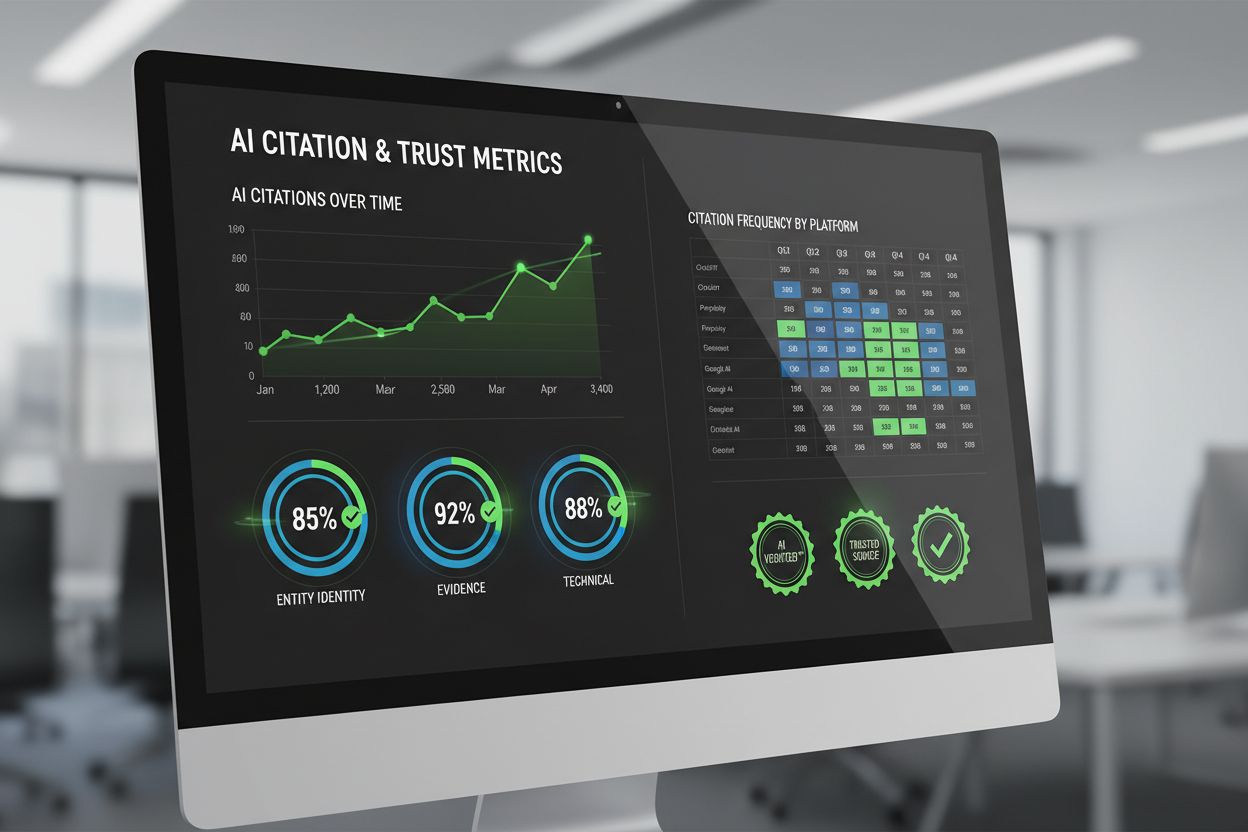
AmICited.com is purpose-built to solve the AI visibility challenge that traditional monitoring tools ignore. As an AI monitoring platform specifically designed for GPTs, Perplexity, and Google AI Overviews, AmICited.com tracks how often your brand appears in AI-generated responses and identifies which trust signals drive citations. The platform helps you understand whether your certifications, credentials, and third-party validations are actually improving your AI visibility—providing the data you need to optimize your certification strategy. AmICited.com’s insights reveal which trust signals resonate most with different AI systems, allowing you to prioritize certifications that deliver measurable results. By combining AmICited.com’s monitoring capabilities with the trust signal strategies outlined in this article, organizations can build a comprehensive approach to AI visibility that goes far beyond traditional SEO.
Viktor Zeman is a co-owner of QualityUnit. Even after 20 years of leading the company, he remains primarily a software engineer, specializing in AI, programmatic SEO, and backend development. He has contributed to numerous projects, including LiveAgent, PostAffiliatePro, FlowHunt, UrlsLab, and many others.

Discover how your certifications and trust badges are performing in AI-generated answers. AmICited.com tracks your brand mentions across ChatGPT, Perplexity, and Google AI Overviews.
Learn how to increase AI trust signals across ChatGPT, Perplexity, and Google AI Overviews. Build entity identity, evidence, and technical trust to boost AI cit...
Community discussion on how certifications and credentials impact AI trust and citations. Real experiences from businesses tracking how certifications affect th...
Discover how trust signals differ between AI search engines and traditional SEO. Learn which credibility factors matter most for AI systems like ChatGPT and Per...
Cookie Consent
We use cookies to enhance your browsing experience and analyze our traffic. See our privacy policy.