



Inline CTA Button: Copy, Placement and Limits
Design an inline CTA button with one timely next action, clear outcome-led copy, firm frequency limits, and placement that never interrupts a procedure.
16 min read
A Call to Action (CTA) is a marketing element designed to prompt an immediate response or encourage a specific action from users, such as ‘Buy Now’, ‘Sign Up’, or ‘Learn More’. CTAs are essential components of digital marketing campaigns that guide visitors toward conversion by providing clear, actionable instructions on what to do next.
A Call to Action (CTA) is a marketing element designed to prompt an immediate response or encourage a specific action from users, such as 'Buy Now', 'Sign Up', or 'Learn More'. CTAs are essential components of digital marketing campaigns that guide visitors toward conversion by providing clear, actionable instructions on what to do next.
A Call to Action (CTA) is a marketing element consisting of text, a button, or interactive component designed to prompt an immediate response or encourage a specific action from users. The term encompasses any instruction or message that directs audiences toward a desired outcome, whether that’s making a purchase, signing up for a newsletter, downloading a resource, or engaging with content. CTAs are the critical bridge between marketing awareness and conversion, transforming passive observers into active participants in your marketing funnel. In the context of digital marketing, CTAs serve as explicit invitations that remove ambiguity about what action users should take next, significantly reducing friction in the customer journey. Without a clear and compelling CTA, even the most engaging marketing content fails to convert interested prospects into leads or customers.
The concept of calls to action predates digital marketing, originating in traditional advertising and direct mail campaigns where marketers used phrases like “Order Now” or “Call Today” to drive immediate responses. However, the digital revolution transformed CTAs from static text into dynamic, interactive elements optimized for user engagement and conversion tracking. In the early days of web marketing during the 1990s, banner advertisements dominated, but research has since demonstrated that anchor text CTAs embedded within content increase conversions by 121% compared to traditional banner ads. The evolution accelerated with the rise of conversion rate optimization (CRO), where marketers began systematically testing CTA variations through A/B testing, discovering that even minor changes in wording, color, or placement could yield dramatic improvements in conversion rates. Today, CTAs have become data-driven, personalized elements that leverage artificial intelligence and behavioral analytics to deliver the right message to the right user at the right time, with the CRO software market expected to grow to $5.07 billion by 2025, reflecting the critical importance of CTA optimization in modern marketing strategies.

Track how AI chatbots mention your brand across ChatGPT, Perplexity, and other platforms.
| CTA Type | Primary Purpose | Example Copy | Ideal Placement | Conversion Focus |
|---|---|---|---|---|
| Lead Generation | Build email lists and qualify prospects | “Download Free Guide”, “Get Your Quote” | Blog posts, landing pages, ads | Early funnel engagement |
| Click-Through | Drive traffic and build awareness | “Learn More”, “See How It Works” | Blog content, social media, ads | Mid-funnel interest building |
| Sales/Signup | Direct conversion and account creation | “Buy Now”, “Start Free Trial” | Product pages, checkout, email | Bottom-funnel conversion |
| Click-to-Call | Facilitate direct contact | “Call Now”, “Speak with Expert” | Mobile pages, service sites | Immediate consultation |
| Social Engagement | Build community and reach | “Follow Us”, “Share This Post” | Social media, blog sidebars | Brand awareness and reach |
| Video CTAs | Encourage video interaction | “Watch Now”, “Play Video” | Landing pages, email, ads | Engagement through multimedia |
CTAs operate through a combination of psychological triggers and technical implementation to guide user behavior toward desired outcomes. From a technical standpoint, CTAs are typically implemented as clickable HTML elements—buttons, hyperlinks, or form submissions—that are tracked through analytics platforms to measure performance metrics such as click-through rates, conversion rates, and cost per acquisition. The psychology behind effective CTAs involves several key principles: urgency (using words like “Now” or “Today”), specificity (clearly stating what happens after clicking), and benefit-oriented language (emphasizing what the user gains). Research demonstrates that using specific, clear CTAs increases conversion rates by 161%, while personalized CTAs convert 42% more visitors than generic alternatives. The technical infrastructure supporting CTAs includes conversion tracking pixels, UTM parameters, and analytics dashboards that allow marketers to attribute conversions to specific CTA variations. CTAs can be deployed across multiple channels—websites, email campaigns, social media, paid advertising, and increasingly, AI-generated content—each requiring platform-specific optimization to account for different user contexts and behaviors.
Get the latest insights on AI mentions, brand monitoring, and optimization strategies.
The business impact of well-optimized CTAs is substantial and measurable across all marketing channels. Organizations that implement strategic CTA optimization experience significant improvements in key performance indicators: email marketing with a single CTA increases sales by approximately 1,617%, while CTAs embedded in blog posts as anchor text drive 121% more conversions than traditional banner advertisements. The average conversion rate across websites is approximately 2.4%, with top-performing websites achieving 11.5% or higher, demonstrating the wide variance in CTA effectiveness. Visually appealing CTAs boost click-through rates by 42%, and center-aligned CTAs receive over 680% more clicks compared to left-aligned versions. For mobile users, optimizing CTAs on mobile devices improves conversion rates by 32.5%, addressing the critical gap where mobile conversion rates average only 1.5% compared to 4% on desktop. A/B testing CTAs can yield a 49% increase in conversions, making it one of the highest-ROI optimization activities available to marketers. These metrics underscore why 70% of small business B2B websites that lack CTAs are leaving significant revenue on the table, as the absence of clear calls to action removes the final catalyst needed to convert interested prospects into customers.
Different digital platforms require tailored CTA strategies to maximize effectiveness within their unique contexts and user behaviors. On landing pages and websites, CTAs should be prominently placed above the fold (achieving 73% visibility) and center-aligned to maximize clicks, with button-shaped CTAs receiving 45% more clicks than text links. In email marketing, research shows that 43% of successful marketers use one CTA per email, as multiple CTAs dilute focus and reduce overall conversion rates; additionally, email campaigns with a single CTA increase sales by 1,617%. On social media platforms, CTAs should be conversational and platform-appropriate, encouraging actions like “Follow Us”, “Share This”, or “Tag a Friend” to build community and extend reach. In video content, CTAs embedded within videos receive 380% more clicks than standalone buttons, making video an exceptionally effective CTA delivery mechanism. For mobile applications and responsive websites, CTAs must be optimized for touch interfaces with larger tap targets (minimum 44x44 pixels) and fast load times (under 2 seconds for optimal conversion). In AI-generated content and search results, CTAs are increasingly appearing as recommendations within AI responses from platforms like ChatGPT, Perplexity, and Google AI Overviews, requiring brands to monitor their CTA performance across these emerging channels through platforms like AmICited to understand how their recommendations translate into user actions.
Implementing effective CTAs requires adherence to proven best practices that have been validated through extensive A/B testing and conversion research. First, maintain clarity and specificity: CTAs should use action-oriented verbs (Get, Start, Join, Create, Discover) and clearly state what happens after clicking, such as “Get Your Free Marketing Template” rather than vague language like “Submit”. Second, create urgency through strategic language: incorporating words like “Now”, “Today”, “Limited Time”, or “Ending Soon” increases conversions by 332%, as users perceive scarcity and feel motivated to act immediately. Third, optimize visual design elements: button-shaped CTAs with contrasting colors (red outperforms green by 21%), arrow icons (increasing clicks by 26%), and larger sizes (increasing click-through rates by 90%) all contribute to higher engagement. Fourth, ensure strategic placement: CTAs above the fold achieve 73% visibility, center-aligned CTAs receive 680% more clicks, and multiple CTAs should follow a clear hierarchy with one primary action. Fifth, minimize friction in forms: CTAs linked to forms should keep field requirements to three or fewer to maximize completion rates, as longer forms significantly reduce conversions. Sixth, personalize based on user context: customized CTAs convert 42% more visitors than generic alternatives, and dynamic CTAs that adapt based on user behavior, device type, or traffic source perform substantially better. Seventh, implement rigorous A/B testing: testing different CTA variations (copy, color, size, placement) can yield 49% conversion improvements, making testing an essential ongoing practice rather than a one-time optimization.
Symptom: high page traffic but almost no CTA clicks. Check placement first—if your CTA sits below the fold, it may simply never be seen; above-the-fold placement achieves 73% visibility versus 44% below it. If placement is fine, check button contrast and size against the surrounding page; a CTA that visually blends into the layout gets ignored even when it’s technically visible.
Symptom: clicks are healthy but form completions are low. This points to friction after the click rather than the CTA itself. Count your form fields—anything beyond three fields measurably increases abandonment. Also check load time on the destination page; if it takes longer than two seconds to load, especially on mobile, you’re losing a meaningful share of users who clicked with genuine intent.
Symptom: desktop conversion is solid but mobile conversion lags badly. This is one of the most common and diagnosable CTA problems. Check button size against the 44x44 pixel minimum tap target, confirm the page loads in under two seconds on mobile networks, and verify the CTA isn’t requiring precise taps next to other clickable elements—mobile conversion averages 1.5% against desktop’s 4%, and most of that gap is fixable friction, not inherent mobile reluctance.
Symptom: a CTA that used to convert well has quietly declined over time. Before rewriting copy, check whether banner blindness has set up—users who’ve seen the same CTA repeatedly stop registering it consciously. Rotate visual treatment (color, wording, icon) periodically rather than assuming the offer itself has lost appeal.
Symptom: multiple CTAs on one page, but overall conversion is worse than pages with a single CTA. This is a focus problem, not a volume problem—email campaigns with a single CTA dramatically outperform multi-CTA versions because competing calls to action force the user to make a choice instead of taking the one action you actually want.
Start tracking how AI chatbots mention your brand across ChatGPT, Perplexity, and other platforms. Get actionable insights to improve your AI presence.
Design an inline CTA button with one timely next action, clear outcome-led copy, firm frequency limits, and placement that never interrupts a procedure.
Build a CTA block that matches reader intent, names the next step, limits competing asks, appears at the right moment, and supports reliable attribution.
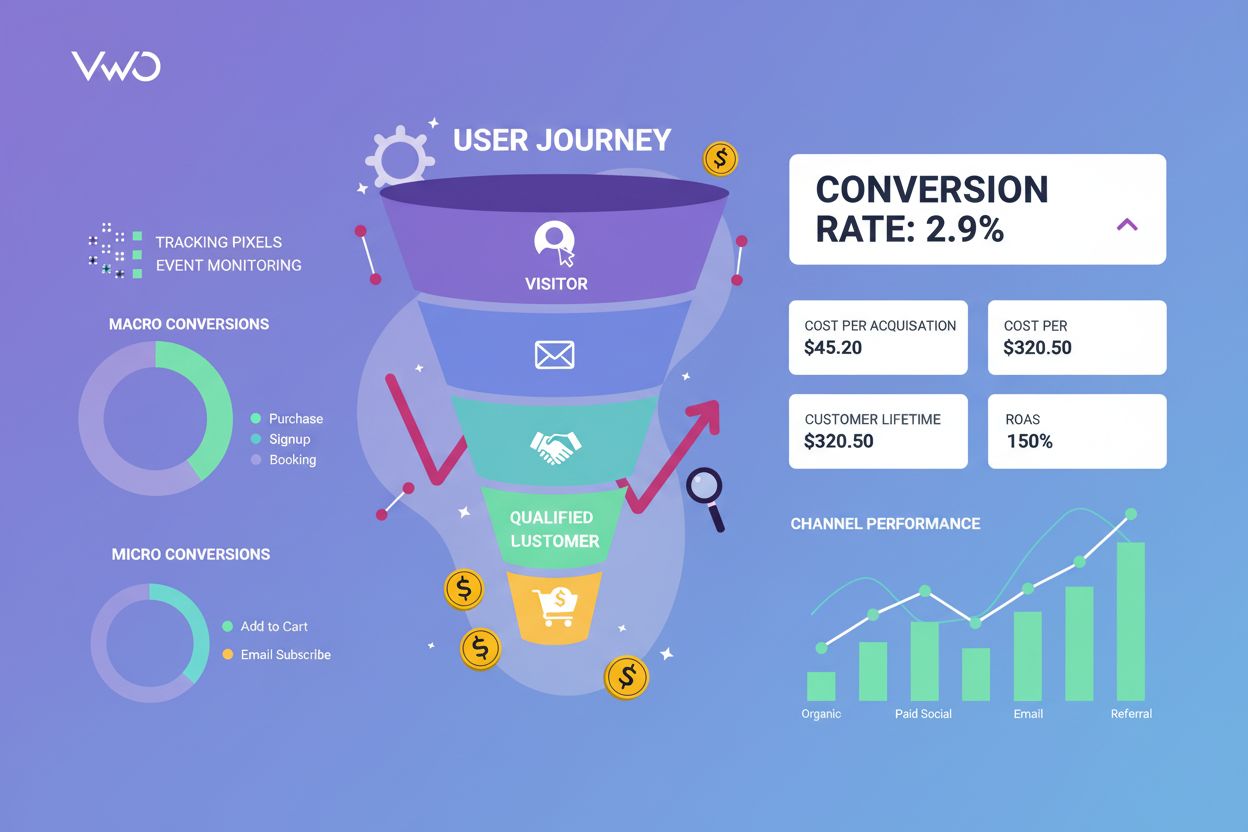
Conversion tracking monitors user actions toward business goals. Learn how to measure conversions, track metrics, and optimize marketing ROI with comprehensive ...
Cookie Consent
We use cookies to enhance your browsing experience and analyze our traffic. See our privacy policy.