



Content Atomization for AI: Breaking Down Pillar Content
Learn how to break down pillar content into multiple formats using AI. Master content atomization strategy to maximize reach, engagement, and ROI across all cha...
11 min read
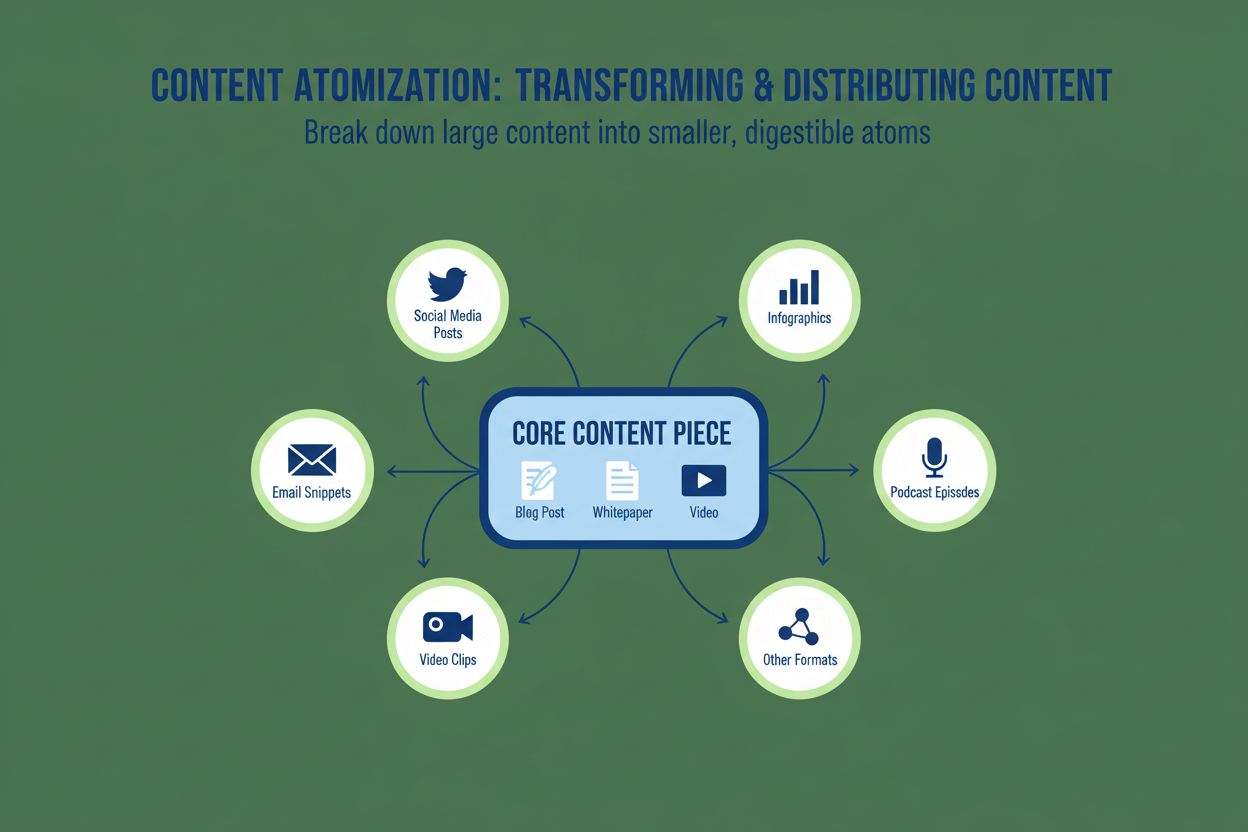
Content atomization is the strategic process of breaking down a single, comprehensive piece of content into smaller, standalone assets that can be distributed across multiple channels and formats. This approach maximizes content value, extends reach, and improves audience engagement without requiring entirely new content creation.
Content atomization is the strategic process of breaking down a single, comprehensive piece of content into smaller, standalone assets that can be distributed across multiple channels and formats. This approach maximizes content value, extends reach, and improves audience engagement without requiring entirely new content creation.
Content atomization is the strategic process of deconstructing a single, comprehensive piece of content into multiple smaller, standalone assets designed for distribution across diverse channels and formats. Rather than creating entirely new content for each platform, atomization extracts valuable insights, data points, quotes, and themes from a core piece and repackages them as independent, platform-optimized content units. This approach fundamentally transforms how organizations maximize content value, extend audience reach, and maintain consistent messaging across digital touchpoints. The term draws from particle physics, where atomic fission releases substantial energy by breaking down larger structures—similarly, content atomization releases the latent potential within comprehensive content pieces by fragmenting them strategically into smaller, more consumable units.
The concept of content atomization emerged in the early 2010s as digital marketing professionals recognized the inefficiency of creating siloed content for individual platforms. Industry pioneer Jay Baer formally defined atomization as “taking a strong content marketing platform or theme, and executing it in many, strategically sound ways.” This definition acknowledged a fundamental shift in content strategy: rather than treating each platform as requiring entirely original content, marketers could leverage core insights across multiple channels. The evolution accelerated with the rise of social media, where bite-sized content became essential, and later with the proliferation of content formats including podcasts, webinars, and interactive experiences. Today, content atomization represents a cornerstone of efficient content marketing, with over 78% of enterprises now incorporating atomization into their content strategies to maximize ROI and maintain consistent brand presence across fragmented digital landscapes.
Content atomization operates on several foundational principles that distinguish it from simple content repurposing. First, granular decomposition breaks content into its smallest meaningful components—individual data points, quotes, statistics, or concepts that can stand alone while contributing to larger narratives. Second, platform optimization ensures each atom is tailored to the specific requirements, audience expectations, and technical specifications of its distribution channel. Third, narrative coherence maintains that while each atom functions independently, collectively they reinforce a unified brand message and strategic theme. The mechanics involve identifying a core content nucleus—typically a comprehensive piece like a whitepaper, research report, or in-depth guide—then systematically extracting and reformatting its constituent elements. A single 5,000-word blog post, for example, might yield 15-20 distinct content atoms: social media posts, email snippets, infographic sections, podcast discussion points, video clips, and LinkedIn articles. This systematic approach ensures no valuable insight remains confined to a single format or audience segment.
| Aspect | Content Atomization | Content Repurposing |
|---|---|---|
| Scope | Breaks content into multiple smaller pieces | Converts entire content into different format |
| Output Volume | Creates 8-20+ distinct assets from one source | Typically creates 1-3 variations |
| Granularity | Extracts individual insights and data points | Maintains comprehensive original structure |
| Audience Targeting | Tailors each atom to specific segments | Adapts format for broader audience |
| Time Investment | Higher upfront planning, faster execution | Lower planning, moderate execution |
| SEO Impact | Creates multiple keyword entry points | Focuses on single primary keyword |
| Platform Fit | Highly optimized for each channel | Moderately adapted for format |
| Message Consistency | Reinforces core theme across variations | Maintains original message structure |
| Resource Efficiency | Maximizes output from single source | Moderate efficiency gains |
| Ideal Content Types | Whitepapers, reports, webinars, guides | Blog posts, videos, presentations |
The business case for content atomization is compelling and data-driven. Research demonstrates that companies implementing systematic atomization strategies achieve 45% higher engagement rates compared to single-format content distribution. More significantly, atomization reduces cost-per-lead by up to 62% because the incremental cost of creating additional atoms from existing content approaches zero after the initial core content investment. Organizations report that atomized content strategies generate 3-5x more qualified leads than traditional single-channel approaches, with video-based atoms delivering returns approximately 49% faster than text-only formats. The efficiency gains are substantial: a team that previously required 40 hours to create four separate pieces of content can now produce 12-15 atomized assets from a single comprehensive source in roughly the same timeframe. This represents a 70% improvement in content production efficiency while simultaneously expanding reach across platforms. For enterprises, these metrics translate to significant competitive advantages, particularly in crowded markets where content volume and consistency directly correlate with brand authority and market share.
Implementing content atomization effectively requires a structured workflow that balances strategic planning with operational efficiency. The process begins with core content identification, where teams select high-value, comprehensive pieces containing multiple extractable insights. This typically involves analyzing existing content performance data to identify pieces that generated strong engagement, traffic, or conversions—these proven performers become ideal atomization candidates. Next, audience segmentation analysis maps different audience personas to their preferred content formats and consumption channels, ensuring each atom reaches the most receptive segment. The extraction and mapping phase involves systematically identifying all extractable elements: key statistics, quotes, case studies, process steps, and conceptual frameworks. Teams then create an atomization matrix documenting which elements will be transformed into which formats for which channels. The production phase leverages templates, design systems, and content management tools to efficiently create each atom while maintaining brand consistency. Finally, distribution scheduling uses marketing automation platforms to coordinate release timing across channels, preventing audience fatigue while maximizing cumulative reach. Advanced implementations incorporate performance tracking dashboards that monitor each atom’s engagement metrics, enabling real-time optimization and informing future atomization strategies.
Different platforms demand distinct content formats and optimization approaches, making platform-specific atomization critical for success. Social media platforms (LinkedIn, Twitter, Instagram, TikTok) require highly condensed atoms—typically 50-280 characters—with visual elements, hashtags, and platform-native features. LinkedIn atoms emphasize professional insights and thought leadership, while TikTok atoms prioritize entertainment value and trend alignment. Email marketing benefits from atomized content in the form of teaser copy, subject lines, and call-to-action variations extracted from core content, with segmentation ensuring relevance to subscriber interests. Search engines reward atomized blog posts and articles that target specific long-tail keywords derived from the core content’s broader topic, creating a network of interconnected, mutually-reinforcing content pieces. Video platforms (YouTube, Vimeo) require atoms formatted as clips, shorts, or full-length videos with platform-specific metadata, thumbnails, and descriptions. Podcast platforms benefit from atomized audio content extracted from webinars or interviews, with transcripts repurposed as blog posts and quotes. AI monitoring platforms like AmICited track how atomized content appears across AI systems—more frequent, diverse content distribution increases the likelihood of brand citations in AI-generated responses from ChatGPT, Perplexity, Google AI Overviews, and Claude. Understanding these platform-specific requirements ensures each atom achieves maximum visibility and engagement within its native environment.
Teams new to atomization tend to repeat a handful of predictable errors. The first is atomizing weak source content—extracting 15-20 atoms from a mediocre blog post just multiplies mediocrity across channels instead of multiplying value; only pieces that already generated strong engagement, traffic, or conversions should become atomization candidates. The second is treating extraction as copy-paste, dropping the same sentence into LinkedIn, email, and a social caption without adjusting for each platform’s character limits, tone, and native format; an atom that ignores platform fit performs worse than no atom at all. The third is losing narrative coherence, where atoms become so fragmented that no single piece stands alone or reinforces the source material’s core argument—each atom needs to deliver standalone value, not just a disconnected fragment. The fourth is publishing all atoms simultaneously, flooding a single audience segment across every channel at once and causing fatigue rather than the intended reach expansion; staggered distribution scheduling avoids this. The fifth is skipping the atomization matrix step—jumping straight to production without mapping which elements go to which channel leads to redundant atoms covering the same insight while other extractable data points go unused. Finally, teams often never revisit performance data, producing dozens of atoms per source piece without tracking which formats and channels actually convert, meaning the same avoidable mistakes repeat with every new atomization cycle.
Start tracking how AI chatbots mention your brand across ChatGPT, Perplexity, and other platforms. Get actionable insights to improve your AI presence.
Learn how to break down pillar content into multiple formats using AI. Master content atomization strategy to maximize reach, engagement, and ROI across all cha...
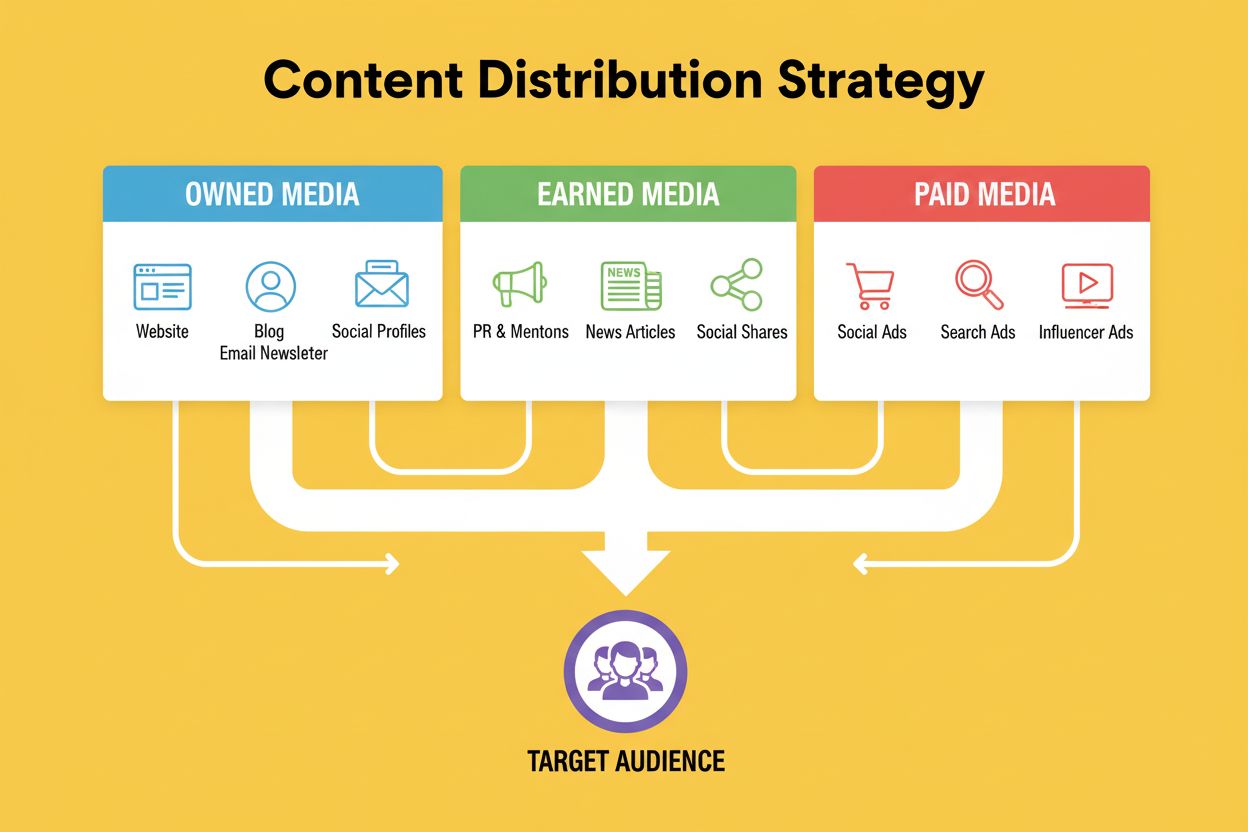
Learn what content distribution is, explore owned, earned, and paid channels, and discover strategies to amplify your content across platforms including AI sear...
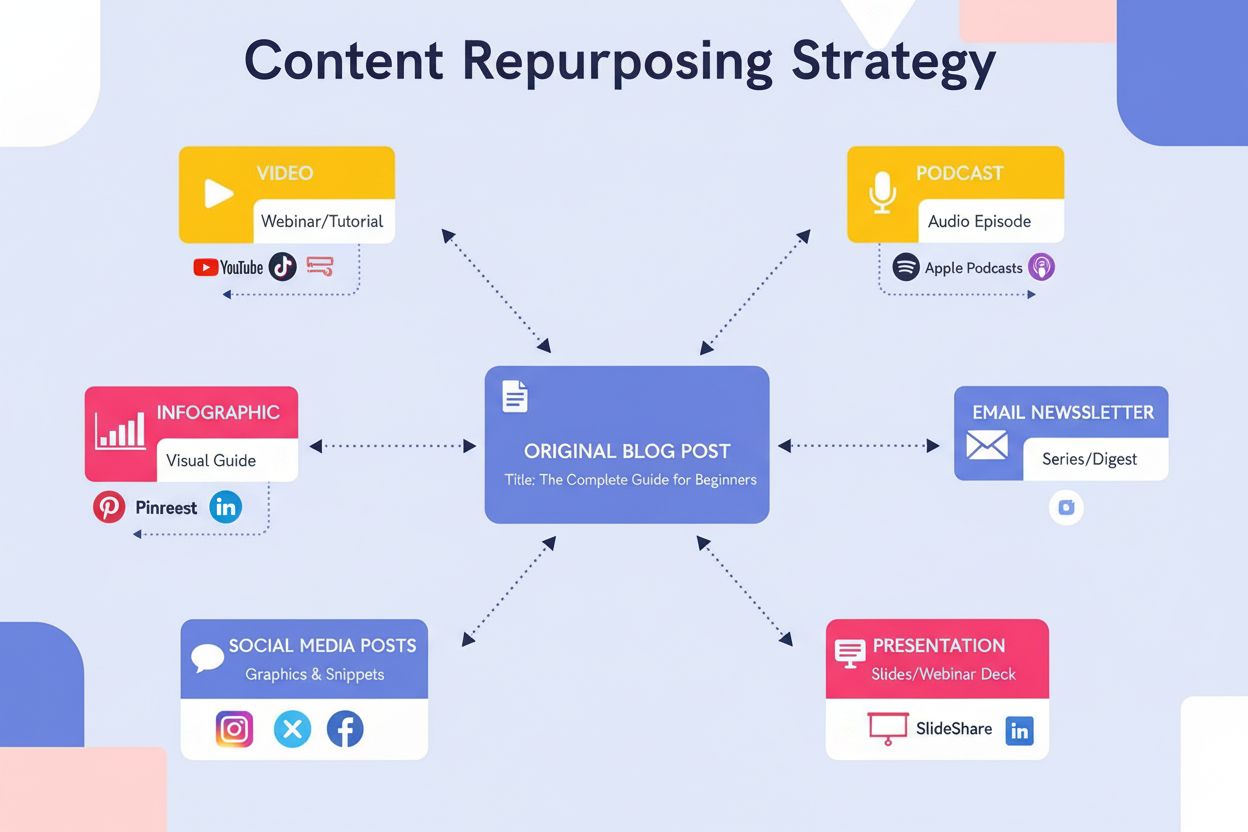
Content repurposing is the strategic practice of transforming existing content into multiple formats for new audiences. Learn how to maximize ROI and reach acro...
Cookie Consent
We use cookies to enhance your browsing experience and analyze our traffic. See our privacy policy.