


Cross-Channel Attribution
Cross-channel attribution is the practice of tracking and crediting sales or conversions across the multiple marketing channels a customer interacts with before purchasing, rather than crediting a single last-clicked channel. It combines data from paid ads, organic search, email, and other sources into one unified view of what actually drove a sale.
Definition of Cross-Channel Attribution
Cross-channel attribution is the practice of tracking a customer’s interactions across multiple marketing channels — paid ads, organic search, email, social, direct visits — and distributing credit for a resulting sale across those channels rather than assigning it entirely to whichever channel happened to be clicked last. It exists because most real customer paths to purchase touch more than one channel: a shopper might first see a paid social ad, later find the brand again through an organic search, and finally complete the purchase after clicking an email link. Attributing the sale only to the email, as simple last-click tracking would, ignores the paid and organic touchpoints that built the awareness and intent leading up to that final click.
How Cross-Channel Attribution Works
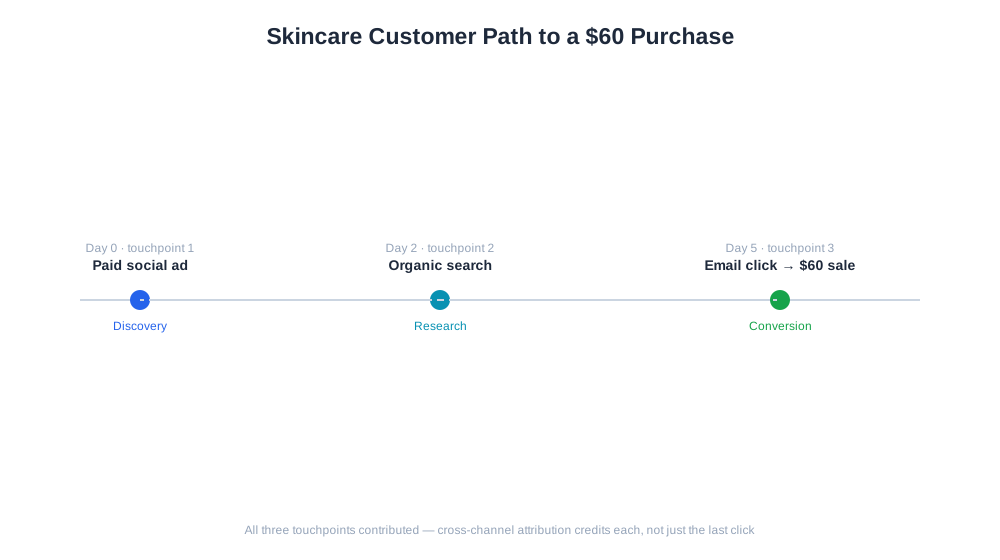
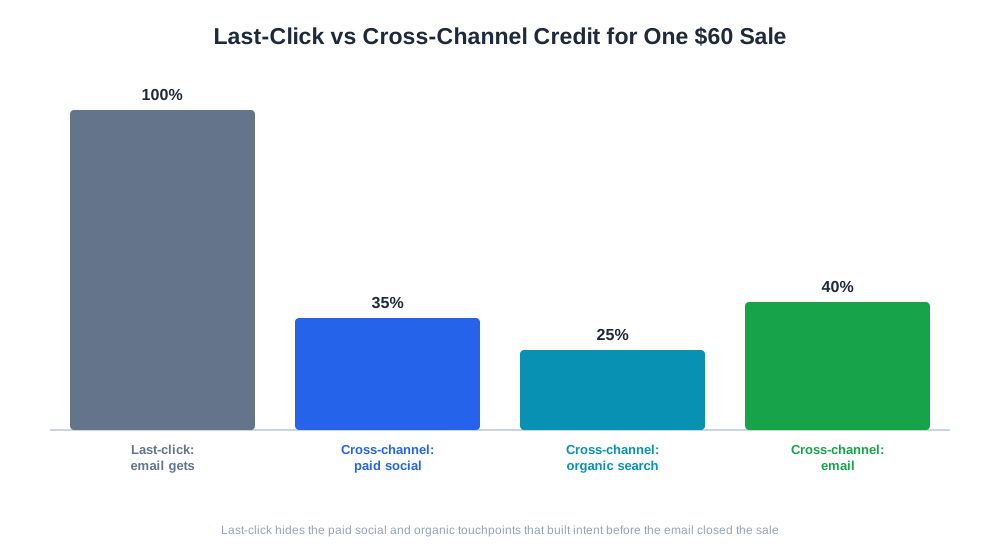
Cross-channel attribution requires joining data that normally lives in separate systems — ad platform reporting, organic search analytics, and store order data — into a single view where each touchpoint for a given customer can be lined up chronologically. Worked example: a customer sees a paid social ad for a skincare brand (touchpoint 1), searches the brand name organically two days later and browses the site without buying (touchpoint 2), then clicks a retargeting email three days after that and completes a $60 purchase (touchpoint 3). Last-click attribution would credit the email alone with the full $60. A cross-channel model instead recognizes all three touchpoints contributed to the outcome, giving a more accurate read on which channels are doing upper-funnel discovery work versus simply closing sales that were already in motion.

Ready to Monitor Your AI Visibility?
Track how AI chatbots mention your brand across ChatGPT, Perplexity, and other platforms.
Why Cross-Channel Attribution Matters for E-commerce Brands
Without cross-channel visibility, marketers commonly overinvest in channels that excel at capturing the final click — often paid search or retargeting — while underinvesting in the channels that create the initial demand those closing channels are converting. This can lead to cutting an organic content or paid social campaign that looks unproductive on a last-click basis but is actually driving significant downstream conversions credited elsewhere. Seeing the full cross-channel path corrects this blind spot and supports more accurate budget allocation across the full marketing mix.
Cross-Channel Attribution and AmICited’s Tools
AmICited’s eshop_get_cross_source tool joins shop, ad platform, and organic search measurements together, giving merchants visibility into where paid and organic traffic actually convert rather than analyzing each channel’s reporting in isolation. This is particularly relevant as AI shopping assistants like ChatGPT Shopping and Perplexity Shopping introduce new discovery touchpoints that don’t fit neatly into either the “paid” or “organic” bucket most attribution setups were originally built around.
Stay Updated on AI Visibility Trends
Get the latest insights on AI mentions, brand monitoring, and optimization strategies.
Common Cross-Channel Attribution Challenges
Building a genuinely accurate cross-channel view is harder than it sounds, mainly because different platforms track customer identity differently, and a shopper who browses on a phone and later purchases on a laptop may appear as two unrelated visitors unless identity is stitched together through a login or email match. Privacy changes across browsers and ad platforms have also made some individual touchpoints harder to observe directly, pushing more attribution work toward modeled or aggregated estimates rather than a fully deterministic path for every customer. This means cross-channel attribution should generally be treated as a strong directional signal for reallocating budget, not as a precise ledger where every touchpoint receives a mathematically perfect share of credit.
Best Practices for Cross-Channel Attribution
- Combine ad platform, organic search, and store order data into a single reporting view rather than reviewing each channel separately
- Watch for channels that show weak last-click performance but strong presence earlier in converting paths before cutting their budget
- Reassess attribution periodically as new discovery channels, including AI shopping assistants, become a meaningful part of the customer path
- Treat cross-channel attribution as directional guidance for budget allocation, not a perfectly precise accounting of credit
- Revisit the attribution model itself periodically, since a model that fit last year’s channel mix may misrepresent this year’s if a new channel has become a bigger part of the customer journey