



Dynamic Pricing
Dynamic pricing is the practice of adjusting product prices in real time or on a scheduled basis based on demand, competitor prices, inventory levels, or customer segment. It lets retailers capture more margin during high-demand periods and move slow stock without a blanket discount, provided the changes are tracked and bounded by rules.
Definition of Dynamic Pricing
Dynamic pricing is the practice of changing a product’s selling price in response to shifting conditions — demand, time of day, remaining inventory, competitor prices, or even the shopper’s device or location — rather than holding a single fixed price for weeks or months at a time. It is the mechanism behind an airline seat that costs more the closer you book to departure, a rideshare fare that spikes during a downpour, and, increasingly, the price a Shopify or WooCommerce store shows for a best-selling SKU depending on how much stock remains. Unlike a one-time discount or seasonal sale, dynamic pricing is meant to run continuously, with rules or algorithms deciding, sometimes multiple times a day, whether the current price should move up, down, or stay put. Done carefully, it lets a retailer capture extra margin when demand is high and clear inventory faster when it is not, without resorting to blanket storewide discounts that erode margin on products that didn’t need one.
How Dynamic Pricing Works
Most dynamic pricing systems combine a handful of input signals with a set of guardrails. Typical inputs include current inventory depth (low stock on a popular item can justify a price increase), sell-through velocity (how fast units are moving relative to a target pace), competitor prices scraped or fed in from a monitoring service, and time-based factors such as day of week or proximity to a known demand spike like a holiday. A simple rule-based version might say: “if stock drops below 15% of the original order and sell-through is above the 30-day average, raise price by 5%.” A more sophisticated version feeds these signals into a model that outputs a recommended price band, which a merchandiser can accept, adjust, or override.
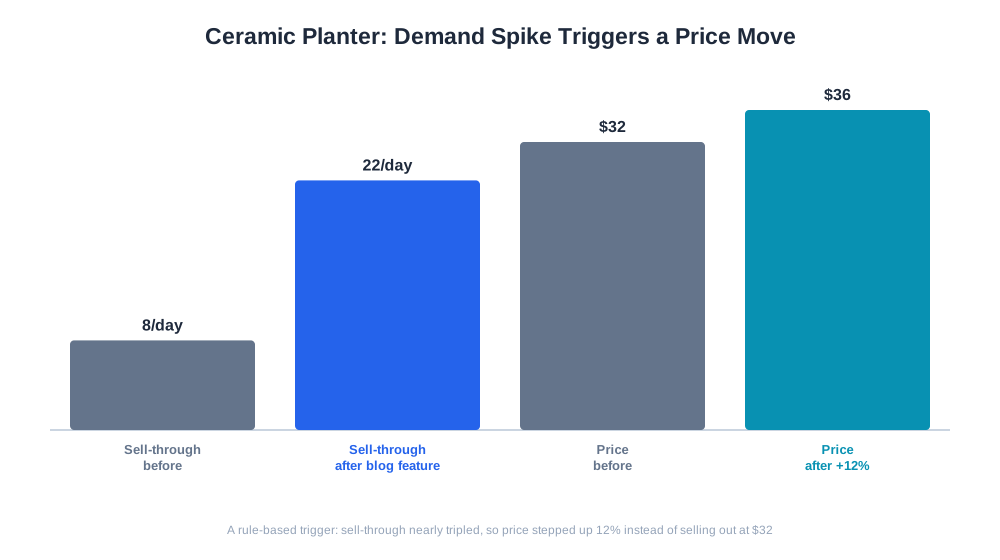
Consider a worked example: a home goods store lists a ceramic planter at $32. Over a three-day span, sell-through jumps from an average of 8 units/day to 22 units/day after the product is featured on a popular design blog. Remaining stock is 140 units. A dynamic pricing rule triggers a 12% price increase, moving the listed price to roughly $36. Demand cools slightly but stays well above baseline, and the retailer sells through the remaining stock at the higher price instead of running out at $32 and leaving margin on the table. Two weeks later, as the same product’s sales normalize, the price gradually steps back down toward its original level.

Ready to Monitor Your AI Visibility?
Track how AI chatbots mention your brand across ChatGPT, Perplexity, and other platforms.
Why Dynamic Pricing Matters for E-commerce Brands
For most online retailers, price is the single lever with the most direct and immediate effect on both revenue and margin — a small increase on a popular SKU can add real dollars to gross profit without touching marketing spend, while a well-timed decrease on aging inventory can prevent a markdown from becoming a total write-off. Static, “set it and forget it” pricing leaves this value on the table in both directions: it under-prices products during genuine demand spikes and over-prices products that are quietly losing relevance. Dynamic pricing turns price into an active, data-responsive part of the merchandising toolkit rather than a number set once at launch and rarely revisited.
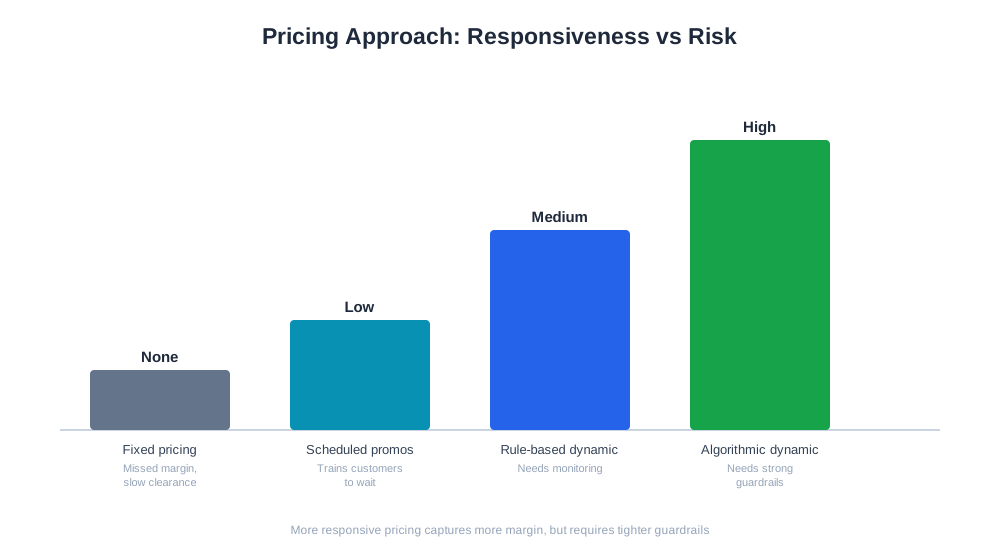
| Approach | Responsiveness | Typical Use Case | Risk |
|---|---|---|---|
| Fixed pricing | None — set once, changed rarely | Simple catalogs, brand-sensitive pricing | Missed margin during demand spikes, slow clearance of aging stock |
| Scheduled promotions | Low — planned in advance | Seasonal sales, holiday campaigns | Can train customers to wait for discounts |
| Rule-based dynamic pricing | Medium — triggered by defined thresholds | Inventory-driven markdowns, demand-driven markups | Requires monitoring to avoid erratic swings |
| Algorithmic dynamic pricing | High — continuous, model-driven | High-SKU-count catalogs, competitive categories | Needs strong guardrails and human oversight |
Dynamic Pricing and AI-Driven Commerce
AI shopping assistants such as ChatGPT Shopping, Perplexity Shopping, and Amazon’s Rufus increasingly surface price comparisons directly inside a conversational answer, which means a price that looked competitive yesterday can look out of step today if a competitor moves first. This raises the stakes for merchants to actually know their own achieved price history, not just their current list price. AmICited’s eshop_get_product_price_series tool tracks the real, achieved unit selling price for every product day by day — capturing the effect of discounts, coupon codes, and price changes on what customers actually paid, not just what the price tag said. That series is the raw material for evaluating any dynamic pricing rule: without it, a merchant can tell that revenue moved after a price change but not cleanly separate the price effect from a simultaneous traffic or seasonality shift.
Stay Updated on AI Visibility Trends
Get the latest insights on AI mentions, brand monitoring, and optimization strategies.
Best Practices for Dynamic Pricing
- Start with a small set of high-volume, well-understood SKUs before automating across an entire catalog
- Cap both the size and frequency of any single price change so shoppers don’t perceive the store as unstable or predatory
- Keep a full historical log of achieved price per product, not just list price, so post-hoc analysis is possible
- Separate price changes driven by inventory clearance from those driven by demand strength — they should use different rules and different guardrails
- Avoid personalizing prices to individual shoppers based on browsing behavior; this invites both trust and regulatory risk
- Review algorithmic recommendations periodically rather than letting the system run fully unsupervised, especially for new or unusual products
Common Dynamic Pricing Mistakes
A frequent failure mode is treating every demand spike as permanent and raising prices aggressively, only to find sell-through collapses once the price no longer reflects genuine willingness to pay — the fix is to size increases conservatively and monitor conversion rate alongside revenue, not revenue alone. Another common mistake is running dynamic pricing without tracking achieved price history, which makes it nearly impossible to attribute a revenue change to the pricing rule versus a marketing campaign or seasonal trend that happened at the same time; a day-by-day price series per product closes this gap. Some merchants let price change too frequently and too visibly, which erodes trust when a repeat shopper notices the same item priced differently on back-to-back visits — capping change frequency to, at most, once every few days for most products avoids this. A subtler problem is applying the same dynamic pricing logic across a whole catalog when only a handful of SKUs actually have the sales volume to generate reliable signal; low-volume products should generally stay on simpler, less frequently adjusted pricing. Finally, some teams optimize purely for margin per unit and miss that a modest price increase can quietly depress conversion rate enough to reduce total profit — always check both metrics together before calling a pricing change a win.