


Product Feed
A product feed is a structured file listing a store's products with attributes like title, price, availability, and images, formatted for consumption by shopping platforms, ad networks, marketplaces, and increasingly AI shopping assistants. It's the mechanism by which a store's catalog gets distributed and kept current across external channels.
Definition of Product Feed
A product feed is a structured data file that lists every product in a store’s catalog along with standardized attributes — title, description, price, availability, image URL, category, and identifiers like a SKU or GTIN — formatted for a specific destination platform to ingest. Feeds power shopping ad placements on Google Shopping and Meta, listings on marketplaces like Amazon or Etsy, comparison shopping engines, and increasingly serve as one of the inputs AI shopping assistants draw on when recommending or comparing products. Rather than a platform crawling a store’s website generically, a feed gives it a clean, structured, and (ideally) frequently updated dataset it can trust — which is why feed quality has a direct, measurable effect on how visible and accurately represented a store’s products are across every channel that consumes it.
How a Product Feed Works
A product feed is typically generated automatically from a store’s product database — either natively by the e-commerce platform (Shopify and similar platforms generate a base feed structure automatically), through a dedicated feed management app, or via a custom export script for stores with more complex catalog logic. That feed is then submitted to each destination platform (Google Merchant Center, Meta Commerce Manager, a marketplace’s seller portal) according to that platform’s specific schema requirements, which vary in required attributes, formatting, and update cadence.
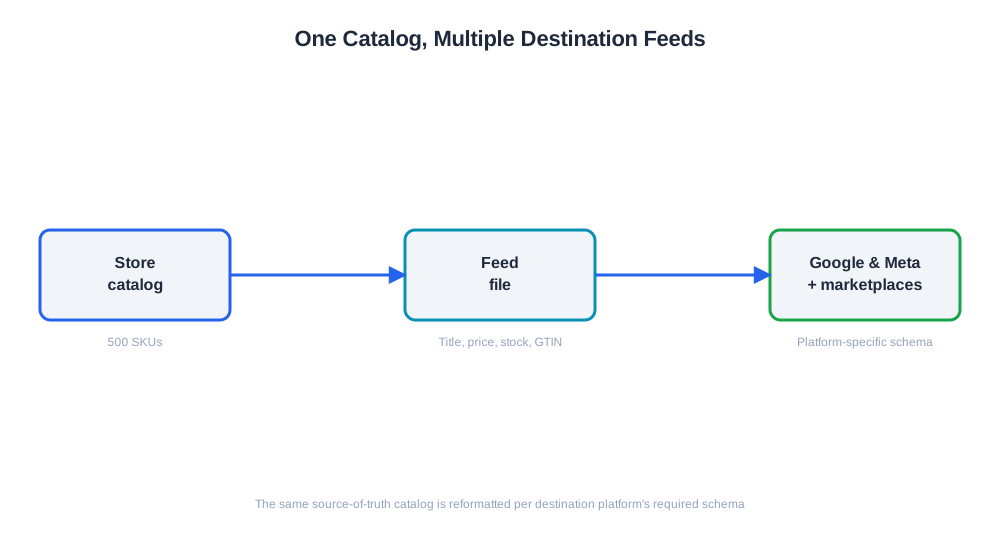
A worked example: a store has 500 SKUs. Its feed management tool generates a feed file containing each SKU’s title, price, availability status, primary image, and a Google product category mapping. That feed is submitted to Google Merchant Center, which validates it against required fields, flags any products missing a GTIN or with a mismatched price versus the live landing page, and approves the rest for shopping ad eligibility. The same underlying catalog data, reformatted slightly, also feeds a separate feed submission to Meta for Instagram and Facebook shopping placements — meaning a single source-of-truth catalog can serve multiple destination-specific feeds simultaneously, provided the feed management process handles the format differences correctly.

Ready to Monitor Your AI Visibility?
Track how AI chatbots mention your brand across ChatGPT, Perplexity, and other platforms.
Why Product Feeds Matter for E-commerce Brands
Product feeds matter because they are frequently the actual mechanism determining whether a product shows up at all in a shopping placement, marketplace search result, or increasingly an AI-generated product recommendation — not the store’s own website SEO. A product with excellent on-site content but an incomplete or stale feed may simply not appear in Google Shopping results, regardless of how well-optimized its actual product page is. Feed accuracy also directly affects ad spend efficiency: an outdated price or availability status in a feed can lead to a shopping ad driving a click to a product that’s actually out of stock or priced differently than advertised, wasting spend and damaging customer trust simultaneously.
Because feeds are consumed by external platforms that apply their own validation rules, feed health also requires ongoing monitoring rather than one-time setup — a feed that worked perfectly at launch can silently degrade as new products are added without complete attribute data, or as a platform updates its own requirements.
Product Feed Attributes Compared Across Platforms
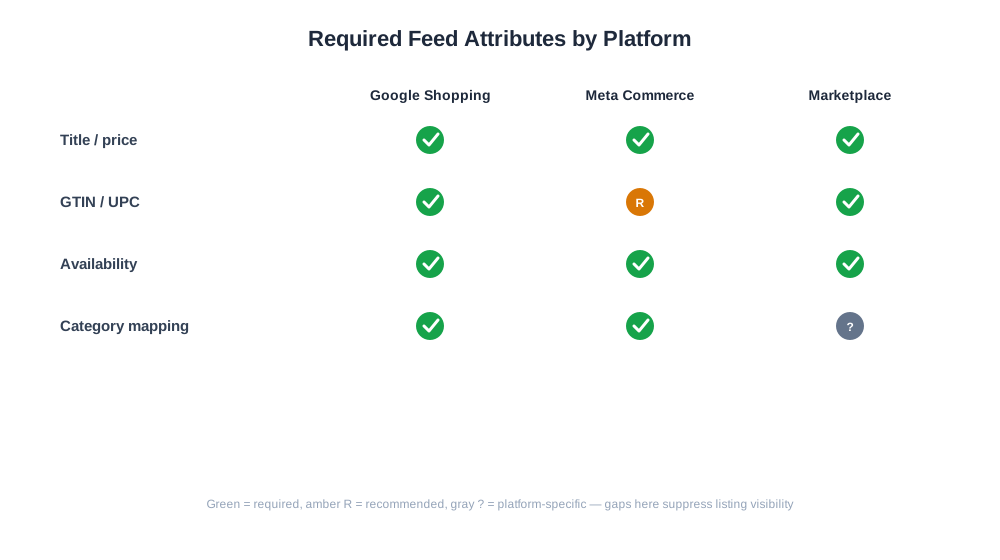
| Attribute | Google Shopping | Meta Commerce | Typical Marketplace |
|---|---|---|---|
| Title, description, price | Required | Required | Required |
| GTIN/UPC | Required for most categories | Recommended | Often required |
| Availability status | Required | Required | Required |
| Product category mapping | Required (Google taxonomy) | Required (Meta taxonomy) | Platform-specific taxonomy |
| Update frequency expectation | Daily minimum, more frequent for price/availability | Daily minimum | Varies, often near real-time for price/stock |
Stay Updated on AI Visibility Trends
Get the latest insights on AI mentions, brand monitoring, and optimization strategies.
Product Feeds and AI-Driven Commerce
As AI shopping assistants like ChatGPT Shopping, Perplexity Shopping, and Amazon Rufus become a meaningful discovery channel, the same discipline that keeps a traditional shopping feed accurate becomes relevant to AI visibility as well. These systems favor structured, current, and complete product data — whether sourced through a feed-like mechanism, product schema markup on the page itself, or a direct catalog connection — over ambiguous or stale information scraped from an unoptimized page. A store whose feed data is accurate, complete, and consistently updated is better positioned for both traditional shopping ad placements and emerging AI-driven product recommendations, since both depend on the same underlying signal: can the data be trusted at the moment it’s being used to make a recommendation.
Feed accuracy problems often trace back to a mismatch between what the feed says and what’s actually true in the store — stale pricing, incorrect stock status, or attributes that drifted after a catalog update. Keeping visibility into actual store performance and inventory state, the way AmICited’s eshop tools do by connecting directly to a merchant’s store data, helps catch these mismatches before they show up as disapproved listings or wasted ad spend.
Best Practices for Product Feed Management
- Keep price and availability attributes updated at least daily, and near real-time for fast-moving or limited-stock products.
- Fill in every recommended attribute, not just the required minimum — richer feeds tend to perform better in ranking and matching across most platforms.
- Use accurate, platform-specific category taxonomy mapping rather than a generic or mismatched category, which can suppress a listing’s visibility.
- Monitor each destination platform’s feed diagnostics dashboard regularly for disapprovals or warnings rather than waiting for a performance drop to investigate.
- Keep feed data and live landing page data consistent — a price or availability mismatch between the two is one of the most common causes of listing suppression.
- Automate feed generation from the same source-of-truth catalog data used elsewhere in the business, rather than maintaining a separate, manually updated feed file.
Common Product Feed Mistakes
A frequent mistake is treating feed setup as a one-time task rather than an ongoing maintenance responsibility, which leads to feeds that were accurate at launch gradually drifting out of sync as new products are added without complete attribute data or as pricing changes fail to propagate. Another common issue is submitting a feed that satisfies a platform’s minimum required fields but skips recommended attributes like GTIN or detailed category mapping, which can quietly suppress a listing’s visibility even without triggering an outright disapproval. Stores also sometimes let feed data and live site data diverge — a sale price updated on the website but not reflected in the feed, for example — which platforms increasingly flag as a policy violation rather than a minor inconsistency. Finally, a subtler mistake is managing separate, disconnected feed files for each destination platform by hand, which multiplies the chance of inconsistency; centralizing feed generation from a single catalog source and adapting format per platform automatically tends to produce far more reliable results than maintaining parallel manual feeds.