


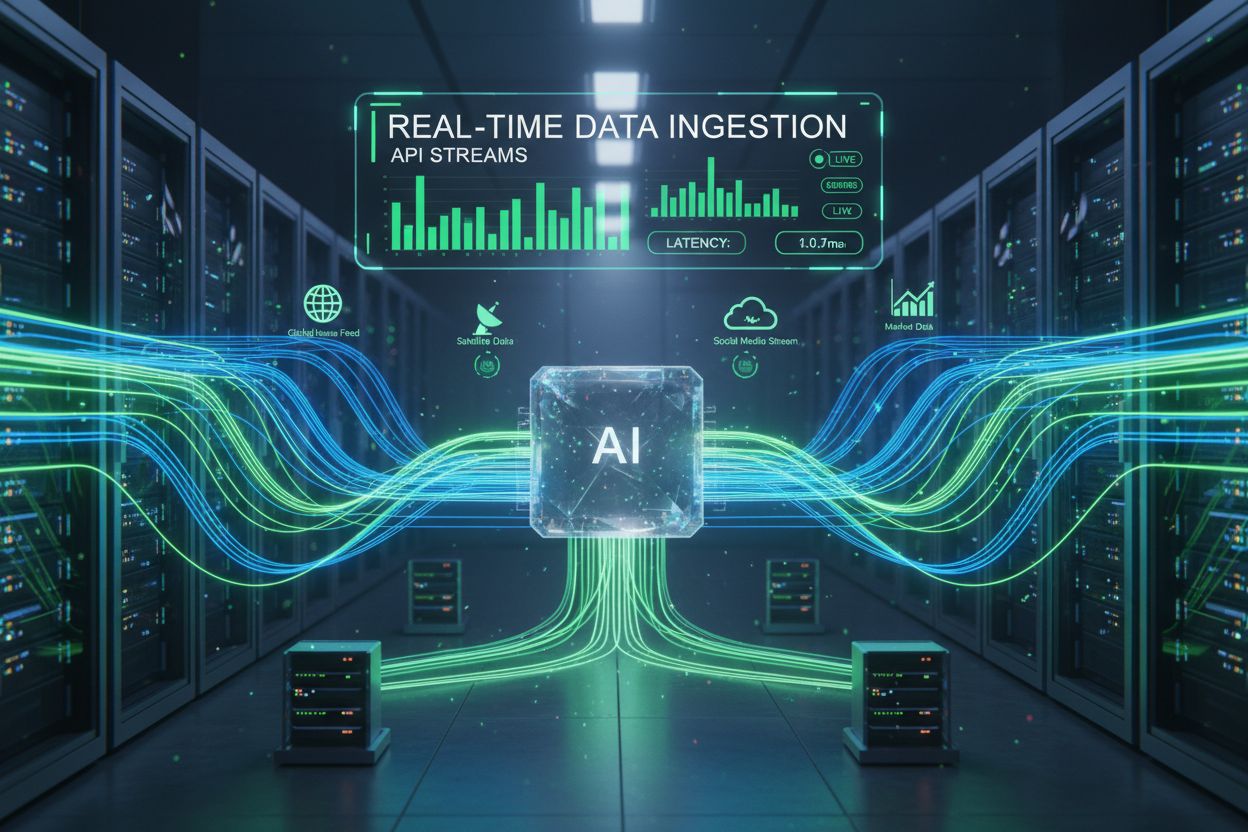
Real-Time Content API
Learn what Real-Time Content APIs are and how they provide AI systems with current content updates for time-sensitive information. Explore streaming protocols, ...
9 min read
Real-Time AI Adaptation refers to AI systems that continuously learn from and adjust to current events and incoming data without requiring manual retraining. These systems update their recommendations, decisions, and behaviors dynamically as new information becomes available, enabling organizations to respond instantly to changing market conditions, customer behavior, and operational needs.
Real-Time AI Adaptation refers to AI systems that continuously learn from and adjust to current events and incoming data without requiring manual retraining. These systems update their recommendations, decisions, and behaviors dynamically as new information becomes available, enabling organizations to respond instantly to changing market conditions, customer behavior, and operational needs.
Real-time AI adaptation refers to machine learning systems that continuously learn and adjust their behavior based on incoming data streams without requiring manual retraining cycles. Unlike traditional static AI models that operate on fixed parameters until scheduled retraining, adaptive systems process new information instantaneously and update their decision-making logic in milliseconds. The fundamental difference lies in continuous learning versus batch learning—real-time systems ingest and respond to data as it arrives, while conventional approaches accumulate data for periodic offline updates. Key enabling technologies include online learning algorithms, stream processing platforms, and federated learning frameworks that distribute computation across edge devices.
Real-time AI adaptation operates through a sophisticated pipeline of data ingestion, processing, and feedback mechanisms. Systems employ online learning algorithms that update model parameters incrementally as new data points arrive, stream processing engines like Apache Kafka and Apache Flink that handle high-velocity data flows, and federated learning architectures that train models across distributed nodes without centralizing sensitive data. The decision-making process occurs in real-time, with models generating predictions while simultaneously incorporating feedback signals that refine future outputs. This creates self-reinforcing feedback loops where each prediction and outcome improve subsequent model performance.
| Feature | Traditional AI | Real-Time Adaptive AI |
|---|---|---|
| Model Updates | Weekly/Monthly scheduled retraining | Continuous, millisecond-level updates |
| Learning Speed | Hours to days for new patterns | Immediate pattern recognition |
| Context Awareness | Static historical context | Dynamic, current-moment context |
| Adaptation Capability | Limited to predefined scenarios | Unlimited scenario adaptation |
| Best Use Cases | Stable, predictable environments | Dynamic, rapidly changing markets |

Track how AI chatbots mention your brand across ChatGPT, Perplexity, and other platforms.
Real-time AI adaptation leverages several critical technologies and methodologies:
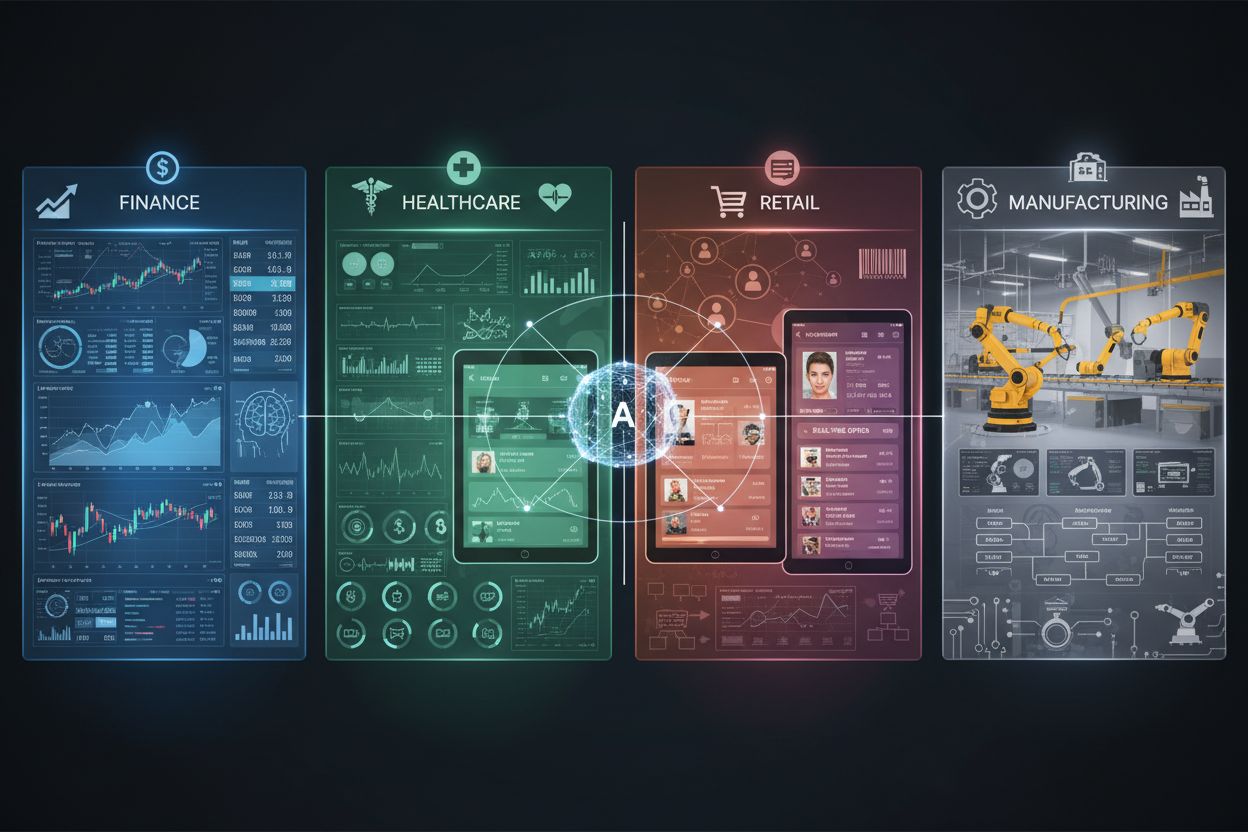
Real-time AI adaptation transforms operations across diverse industries with measurable impact. Finance institutions deploy adaptive fraud detection systems achieving 94.2% accuracy with AUC-ROC scores of 0.96, while algorithmic trading systems adjust strategies within microseconds to market fluctuations. Healthcare providers implement patient monitoring systems that adapt treatment recommendations based on real-time vital signs and lab results, with diagnostic systems continuously improving accuracy through clinical feedback. E-commerce platforms leverage adaptive recommendation engines that increase conversion rates from 2.5% to 4.2% and boost order values by 30%—Netflix’s personalization engine drives 80% of viewer activity through real-time adaptation. Manufacturing facilities employ predictive maintenance systems that reduce equipment breakdowns by 70% and cut planning time by 50%. Customer service chatbots improve response quality with each interaction, learning customer preferences and communication patterns. Autonomous vehicles make split-second navigation decisions by processing sensor data and adapting to road conditions, weather, and traffic patterns instantaneously.
Get the latest insights on AI mentions, brand monitoring, and optimization strategies.
Adaptive AI systems deliver substantial business advantages through accelerated decision-making and continuous performance improvement. Real-time adaptation enables decisions in milliseconds rather than hours or days, critical for fraud prevention, trading, and autonomous systems where delays create financial or safety risks. Continuous learning mechanisms improve accuracy exponentially—models trained on yesterday’s data become obsolete in dynamic markets, while adaptive systems maintain peak performance by incorporating today’s patterns immediately. Organizations reduce operational costs by automating retraining cycles and minimizing manual model maintenance, with some implementations cutting ML operations overhead by 40%. Customer experience improves dramatically as systems learn individual preferences, behavior patterns, and needs in real-time, driving loyalty and retention. Businesses implementing adaptive AI are projected to outperform competitors by 25%, with the real-time AI market valued at $1.04B in 2024 and expected to reach $30.51B by 2034, reflecting explosive demand for adaptive capabilities.
Implementing real-time AI adaptation presents significant technical and organizational challenges requiring careful management. Data quality and noise become critical issues at scale—streaming data contains errors, duplicates, and anomalies that corrupt models if not filtered properly, requiring robust data validation pipelines. Computational resource requirements escalate dramatically; processing millions of events per second demands specialized infrastructure, GPUs, and distributed systems that increase capital and operational expenses. Latency constraints create engineering complexity—systems must process data, update models, and generate predictions within strict time windows (often under 100 milliseconds), leaving minimal margin for error. Model drift and concept drift occur when data distributions shift unexpectedly, causing previously accurate models to degrade without warning, necessitating continuous monitoring and automatic retraining triggers. Privacy and security concerns intensify with continuous data collection and model updates, particularly in regulated industries like healthcare and finance where data governance becomes exponentially more complex. Explainability challenges worsen as models continuously evolve—understanding why a system made a specific decision becomes difficult when parameters change constantly. Legacy system integration proves costly and time-consuming, as existing infrastructure often lacks the streaming capabilities and real-time processing architecture that adaptive AI requires.
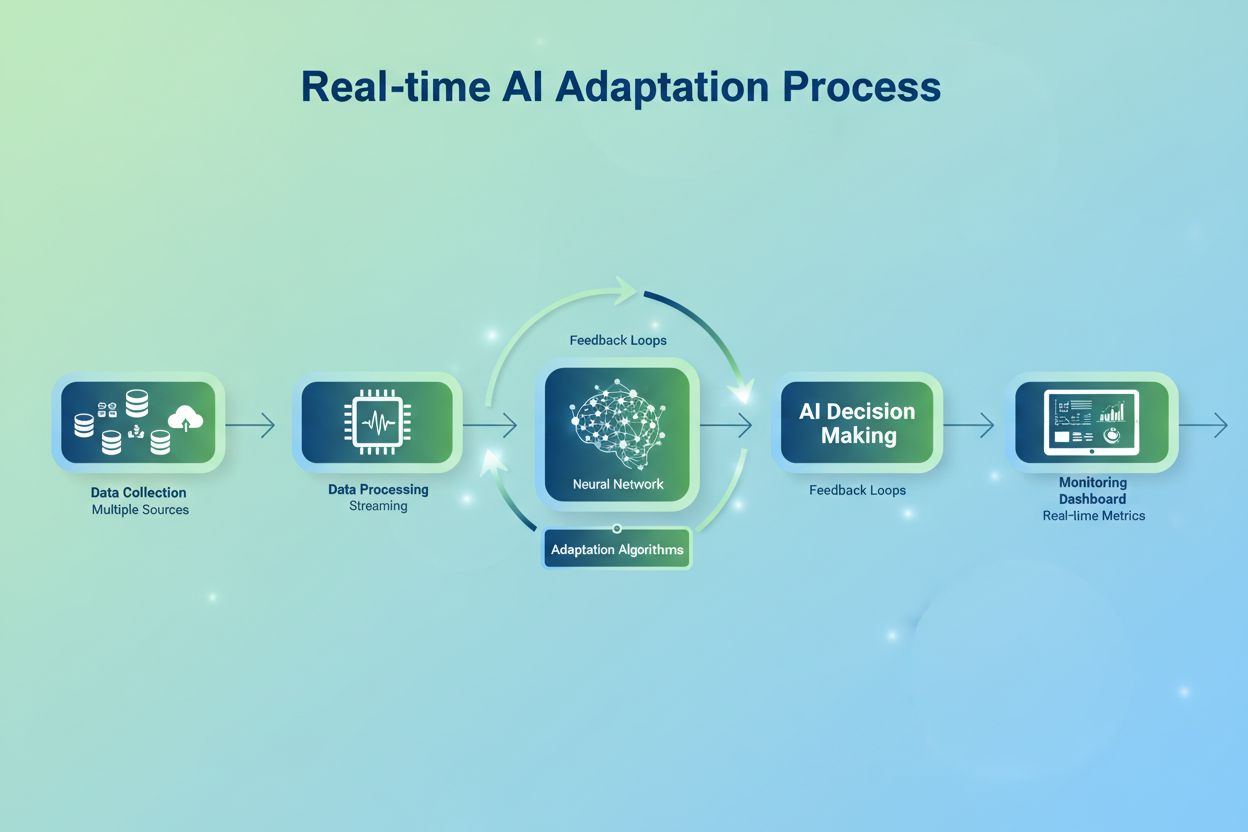
Successful real-time AI adaptation implementations follow proven best practices that balance innovation with operational stability. Start with high-impact use cases where real-time adaptation delivers measurable ROI—fraud detection, recommendation engines, and predictive maintenance typically show faster payback than experimental applications. Ensure robust data infrastructure by investing in stream processing platforms, data validation systems, and monitoring tools before deploying adaptive models; poor data quality undermines all downstream benefits. Implement comprehensive monitoring and governance frameworks that track model performance, detect drift, and trigger alerts when accuracy degrades below acceptable thresholds. Deploy edge computing strategically to reduce latency for latency-sensitive applications while maintaining cloud connectivity for complex computations and data aggregation. Establish feedback mechanisms that capture ground truth labels, user interactions, and outcome data to fuel continuous learning loops. Plan for scalability from inception—design systems that handle 10x current data volumes without architectural redesign. Consider hybrid approaches combining real-time adaptation for critical decisions with batch learning for non-urgent pattern discovery, optimizing cost and performance simultaneously.
Follow this sequence when rolling out a real-time adaptive system rather than jumping straight to model deployment. 1. Pick a high-impact, well-bounded use case first—fraud detection, recommendation engines, and predictive maintenance consistently show faster payback than experimental applications, and starting narrow limits blast radius if the rollout has issues. 2. Build the streaming data infrastructure before the model, selecting a platform like Apache Kafka or Flink capable of the event volume you actually need, not a theoretical maximum; undersized infrastructure is the most common early failure point. 3. Implement data validation pipelines from day one, since streaming data arrives with errors, duplicates, and anomalies that corrupt online learning models if unfiltered—this is not an optional hardening step, it’s foundational. 4. Set explicit latency budgets per component (ingestion, inference, feedback) and test against them before launch, since critical applications often require sub-100-millisecond adaptation and that constraint should shape architecture decisions, not be discovered after deployment. 5. Deploy concept drift detection alongside the model, not after, so that shifts in data distribution trigger recalibration automatically rather than silently degrading accuracy. 6. Establish monitoring and governance dashboards that track live model performance and alert when accuracy drops below threshold, since continuously evolving models can’t be validated with a one-time accuracy check the way static models can. 7. Build feedback loops that capture ground truth, not just predictions, so the system has something real to learn from. 8. Plan for 10x scale before launch, since redesigning streaming architecture after volume growth is far more expensive than over-provisioning early. 9. Decide explicitly which decisions get full real-time adaptation versus batch learning—not every component needs millisecond updates, and hybrid approaches often deliver better cost-to-performance than adapting everything in real time.
Real-time AI adaptation is transforming how AI systems respond to current events. AmICited tracks how AI mentions your brand across GPTs, Perplexity, and Google AI Overviews as they happen. Stay informed about your AI presence.
Learn what Real-Time Content APIs are and how they provide AI systems with current content updates for time-sensitive information. Explore streaming protocols, ...

Learn how real-time search in AI works, its benefits for users and businesses, and how it differs from traditional search engines and static AI models.
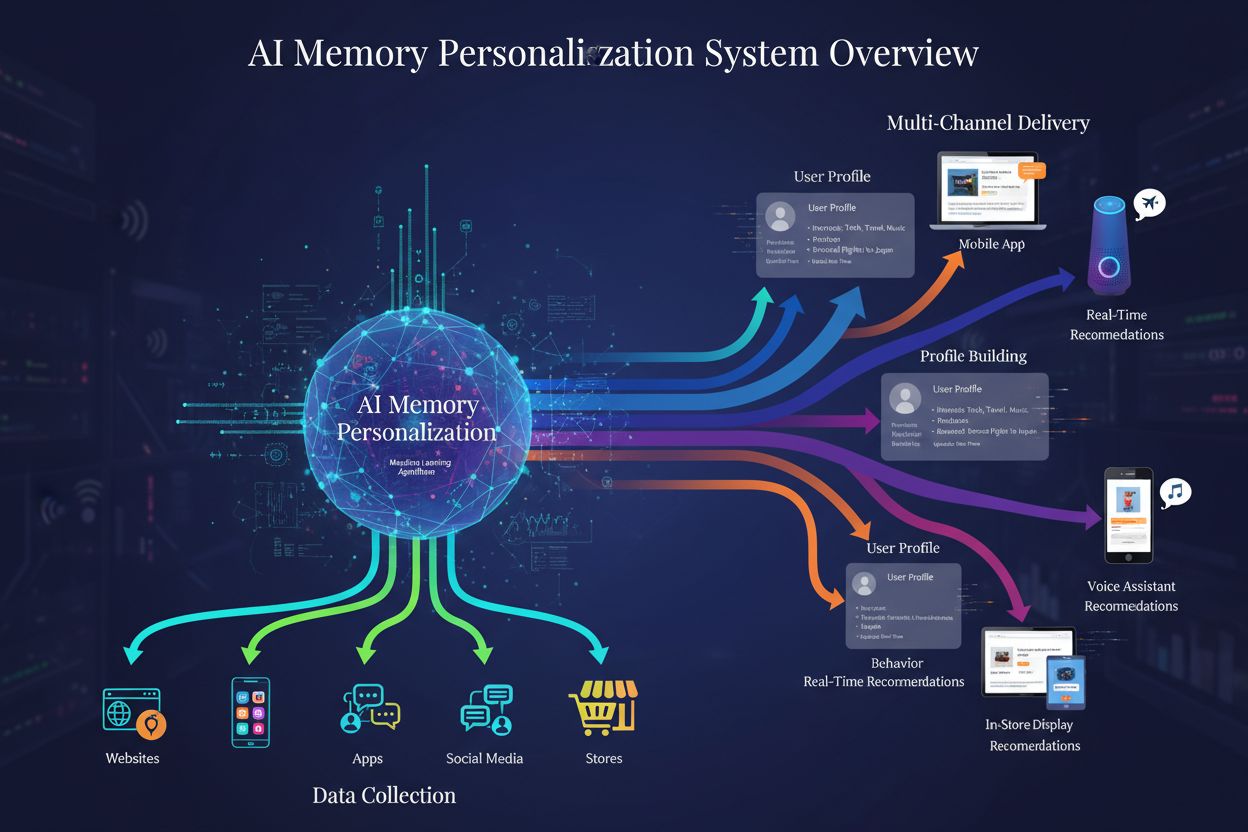
Learn how AI memory personalization systems build detailed user profiles to deliver personalized brand recommendations. Understand the technology, benefits, pri...
Cookie Consent
We use cookies to enhance your browsing experience and analyze our traffic. See our privacy policy.