


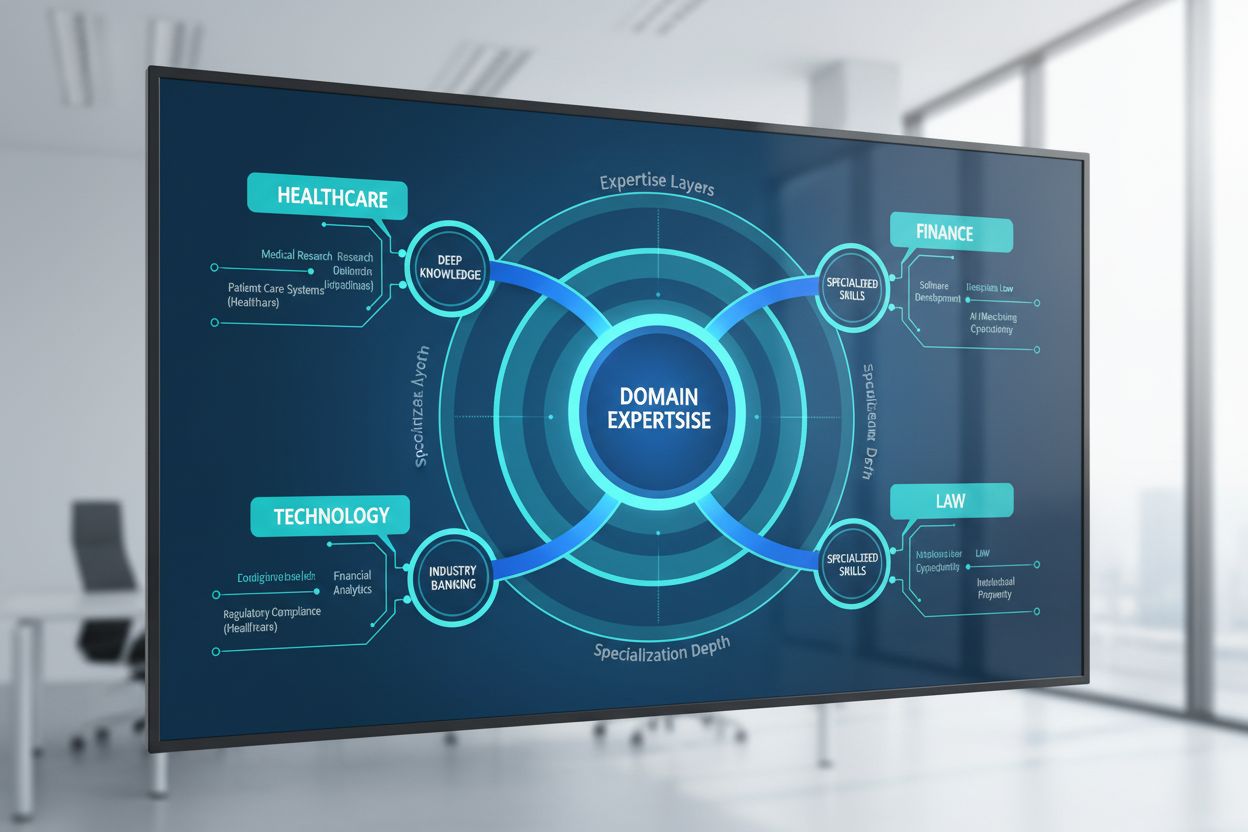
Domain Expertise
Domain expertise is specialized knowledge in a specific field or industry. Learn how deep domain knowledge impacts AI accuracy, business decisions, and professi...
10 min read
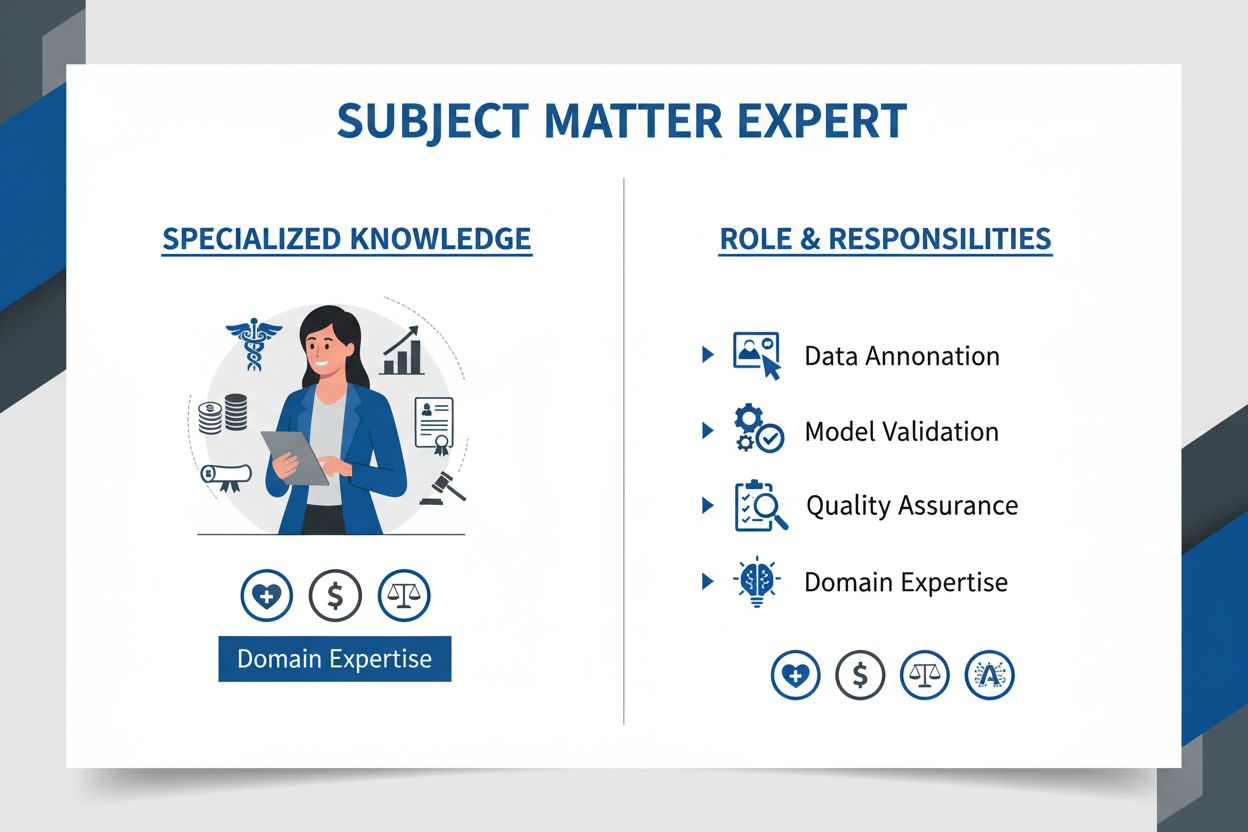
A Subject Matter Expert (SME) is a person with specialized, in-depth knowledge and expertise in a particular field or domain, acquired through formal education, professional certifications, and practical experience. SMEs play a critical role in AI training by curating data, annotating datasets, validating model outputs, and ensuring AI systems are accurate, ethical, and aligned with real-world applications.
A Subject Matter Expert (SME) is a person with specialized, in-depth knowledge and expertise in a particular field or domain, acquired through formal education, professional certifications, and practical experience. SMEs play a critical role in AI training by curating data, annotating datasets, validating model outputs, and ensuring AI systems are accurate, ethical, and aligned with real-world applications.
A Subject Matter Expert (SME) is a person who has accumulated extensive, specialized knowledge and expertise in a particular field, domain, or area of specialization. According to the U.S. Office of Personnel Management, an SME is defined as “a person with bona fide expert knowledge about what it takes to do a particular job.” This expertise is typically acquired through a combination of formal education, professional certifications, hands-on experience, and demonstrated mastery within their specific domain. SMEs serve as authoritative sources of information and guidance, providing critical insights that organizations rely upon to make informed decisions, develop accurate training materials, and ensure quality outcomes. In the context of artificial intelligence and machine learning, SMEs have become indispensable for training, validating, and refining AI models to ensure they perform accurately and ethically in real-world applications.
The concept of Subject Matter Experts has existed for decades across various industries, from academia to government to corporate sectors. Historically, SMEs were primarily consulted for their specialized knowledge in documentation, training, and decision-making processes. However, the emergence of artificial intelligence and machine learning has fundamentally transformed the SME role. As organizations began developing AI systems, they quickly realized that generic training data alone was insufficient for creating accurate, reliable models. The need for domain-specific expertise became critical, particularly in regulated industries like healthcare, finance, and legal services. Today, SMEs are recognized as essential contributors to AI development pipelines, with their involvement directly correlating to improved model performance and reduced errors. Research indicates that 92% of technical professionals consider SMEs vital or very useful in creating accurate documentation and training materials, reflecting the widespread recognition of their value across industries.

Track how AI chatbots mention your brand across ChatGPT, Perplexity, and other platforms.
Subject Matter Experts perform multiple critical functions within AI development and organizational contexts. Their primary responsibilities include data curation and annotation, where SMEs carefully select, clean, and label training data to ensure accuracy and relevance. In healthcare, for example, an SME with medical expertise might annotate thousands of medical images, identifying specific pathologies and clinical features that help train diagnostic AI models. SMEs also provide contextual insights that raw data cannot convey—they understand the nuances, edge cases, and real-world complexities of their domain. This contextual knowledge is essential for AI models to make accurate predictions and decisions. Additionally, SMEs validate AI model outputs by comparing predictions against actual outcomes and expected results, identifying discrepancies that indicate areas for improvement. They also play a crucial role in ensuring regulatory compliance and ethical standards, reviewing AI systems to verify they meet industry regulations, protect privacy, and avoid perpetuating biases. Furthermore, SMEs contribute to continuous improvement by monitoring model performance over time and recommending refinements to maintain accuracy and reliability.
| Context | Primary Focus | Key Responsibilities | Industry Examples | Validation Method |
|---|---|---|---|---|
| Traditional Documentation | Knowledge transfer and training | Creating manuals, guides, and training materials | Manufacturing, IT, Operations | Peer review and user feedback |
| AI Model Training | Data quality and accuracy | Data annotation, curation, and labeling | Healthcare, Finance, Legal | Model performance metrics and real-world testing |
| Regulatory Compliance | Standards adherence | Ensuring compliance with industry regulations | Healthcare (HIPAA), Finance (SEC), Legal (Bar standards) | Audit trails and compliance verification |
| Product Development | Feature validation | Testing product features against user needs | Software, Hardware, Consumer goods | User acceptance testing and feedback |
| AI Model Validation | Output accuracy | Comparing AI predictions to real-world outcomes | All AI-dependent industries | Accuracy metrics and domain-specific benchmarks |
| Bias Mitigation | Fairness and equity | Identifying and reducing bias in datasets and models | All sectors | Demographic parity analysis and fairness audits |
Get the latest insights on AI mentions, brand monitoring, and optimization strategies.
The technical role of SMEs in AI training has become increasingly sophisticated and specialized. When organizations develop machine learning models, they require massive amounts of labeled training data—data that has been annotated with correct answers or classifications. SMEs provide the domain-specific knowledge necessary to create these accurate annotations. In the financial sector, for instance, an SME might label transaction data to identify patterns indicative of fraud, money laundering, or other financial crimes. This labeled data then trains AI models to detect similar patterns in new transactions with high accuracy. In legal technology, SMEs with expertise in contract law annotate legal documents, highlighting specific clauses, obligations, and risk factors that AI models must learn to recognize. The quality of these annotations directly impacts model performance—poorly annotated data leads to inaccurate models, while high-quality SME annotations produce reliable, trustworthy AI systems. Research from the AI annotation market shows that the global market for AI annotation services, which heavily relies on SME expertise, was valued at USD 1.45 billion in 2024 and is projected to reach USD 13.11 billion by 2033, growing at a compound annual growth rate of 27.2%, demonstrating the critical importance of SME-driven data annotation.
The strategic value of Subject Matter Experts extends far beyond technical data annotation—they directly impact organizational outcomes and competitive advantage. Organizations that invest in SME-driven AI development experience significantly improved model accuracy, faster deployment timelines, and reduced risk of costly errors. In healthcare, AI models trained with SME expertise can achieve diagnostic accuracy rates comparable to or exceeding human specialists, potentially saving lives and reducing healthcare costs. In financial services, SME-validated fraud detection models protect institutions from billions in losses annually. The business case for SMEs is compelling: while hiring and retaining expert talent requires investment, the cost of deploying inaccurate AI models—including regulatory fines, reputational damage, and operational failures—far exceeds the investment in SME expertise. Furthermore, SMEs serve as knowledge bridges between technical AI teams and business stakeholders, ensuring that AI systems align with organizational objectives and industry best practices. Their involvement in AI projects also enhances organizational credibility and trustworthiness, particularly in regulated industries where stakeholders demand assurance that AI systems have been validated by qualified experts.
In the context of AI monitoring platforms like AmICited, understanding the role of SMEs becomes particularly relevant. When AI systems like ChatGPT, Perplexity, Google AI Overviews, and Claude generate responses, they often cite or reference domain expertise and specialized knowledge. SMEs are frequently the original sources of this expertise—their research, publications, and validated knowledge form the foundation of training data for these AI systems. Organizations and individuals need to understand how their expertise and content are being cited or referenced in AI-generated responses. AmICited’s monitoring capabilities help track when your domain expertise, brand, or specialized knowledge appears in AI responses across multiple platforms. This is particularly important for SMEs and organizations that invest heavily in developing specialized knowledge, as they need visibility into how their expertise is being attributed and used by AI systems. By monitoring these citations, SMEs can ensure proper attribution, identify opportunities for thought leadership, and understand how their expertise influences AI-generated content across the digital landscape.
Organizations that bring SMEs into AI development pipelines run into a predictable set of problems, and most of them show up as quality issues far downstream in model performance. Annotation inconsistency across a team of SMEs is the most common failure: when multiple experts label data without a shared rubric, one SME’s “borderline fraud case” is another’s “clean transaction,” and the resulting model learns contradictory patterns. The fix is a calibration pass—have all SMEs annotate the same sample set first, measure inter-annotator agreement, and resolve disagreements into a written standard before scaling up. Domain mismatch is another recurring issue: a healthcare SME asked to validate a financial fraud model, or a legal SME reviewing medical imaging annotations, will produce plausible-looking but unreliable feedback because their expertise doesn’t actually transfer. Match SME credentials to the specific domain, not just the general industry. SME bottlenecks slow iteration when a single expert becomes the sole gate for validating every batch of training data—distribute review across a panel and use sampling rather than 100% manual review once initial calibration is established. Stale expertise is subtler: an SME’s knowledge reflects the state of their field at the time they were trained or certified, and regulations, clinical guidelines, or financial instruments change faster than that expertise gets refreshed—schedule periodic re-validation against current standards, not just a one-time onboarding review. Finally, watch for unacknowledged bias blind spots: an SME’s own experience with a narrow patient population, customer segment, or case type can quietly bias their annotations even when they’re technically accurate, which is why demographic parity analysis and fairness audits should run alongside, not instead of, SME review.
Start tracking how AI chatbots mention your brand across ChatGPT, Perplexity, and other platforms. Get actionable insights to improve your AI presence.
Domain expertise is specialized knowledge in a specific field or industry. Learn how deep domain knowledge impacts AI accuracy, business decisions, and professi...

Expert author definition: A credible writer with subject expertise, credentials, and experience. Learn how expert authorship impacts E-E-A-T, AI citations, and ...
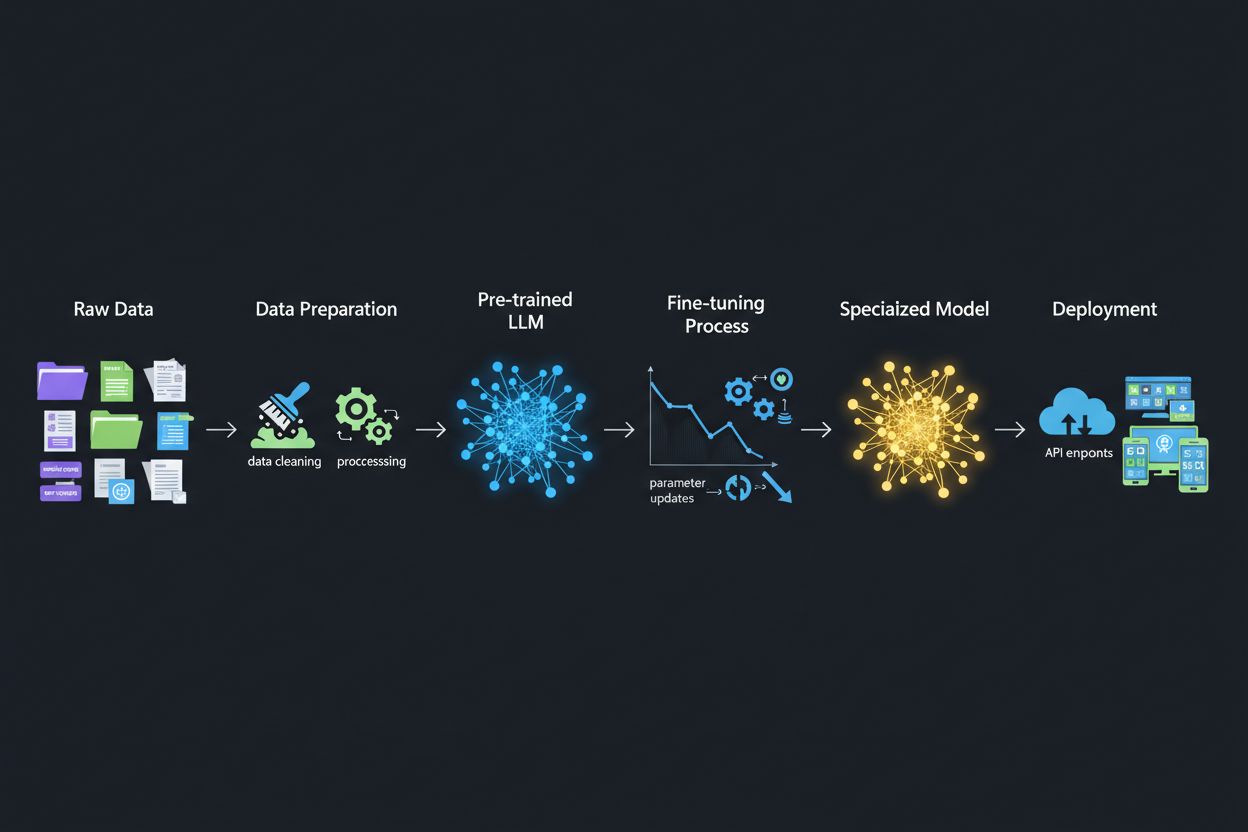
Learn how AI model fine-tuning adapts pre-trained models for specific industry and brand-related tasks, improving accuracy while reducing costs and computationa...
Cookie Consent
We use cookies to enhance your browsing experience and analyze our traffic. See our privacy policy.