


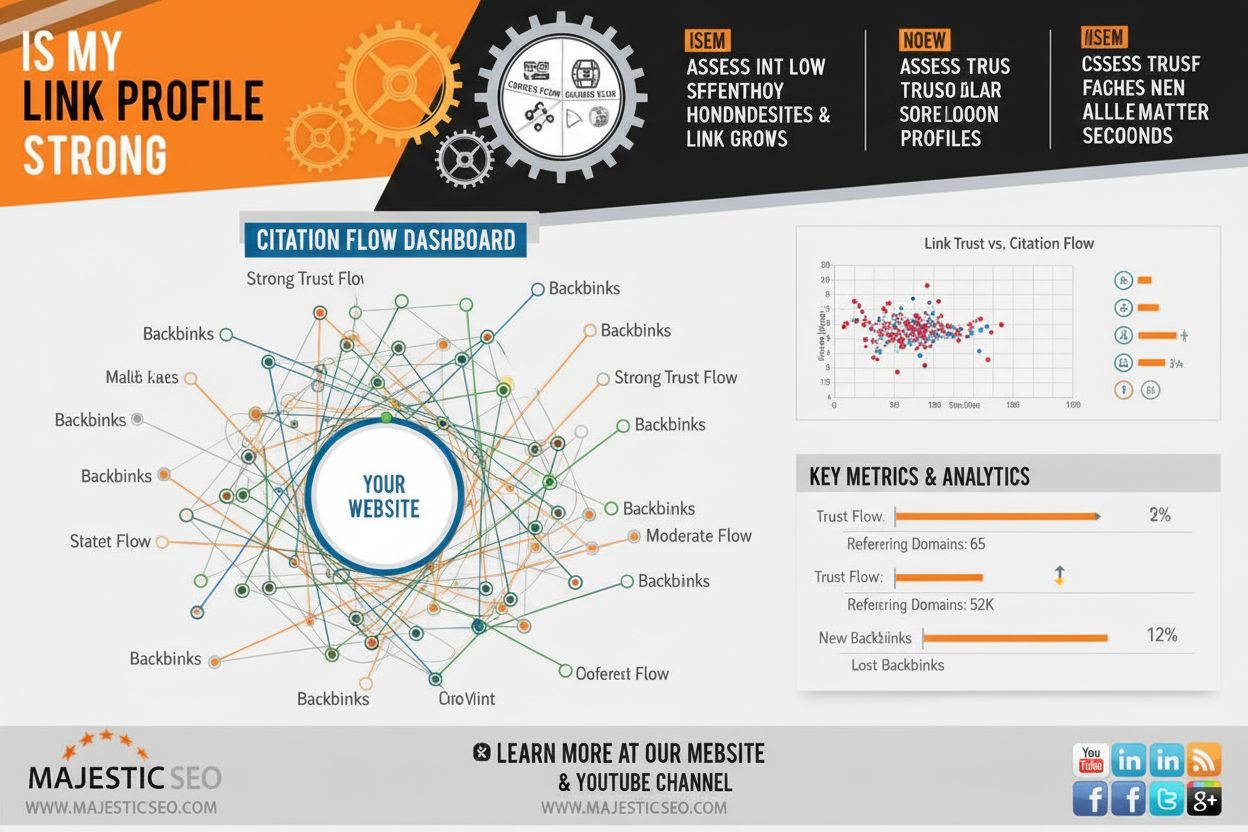
Citation Flow
Citation Flow is a Majestic SEO metric (0-100 scale) measuring website authority through backlink quantity and link equity. Learn how it impacts SEO and brand m...
11 min read
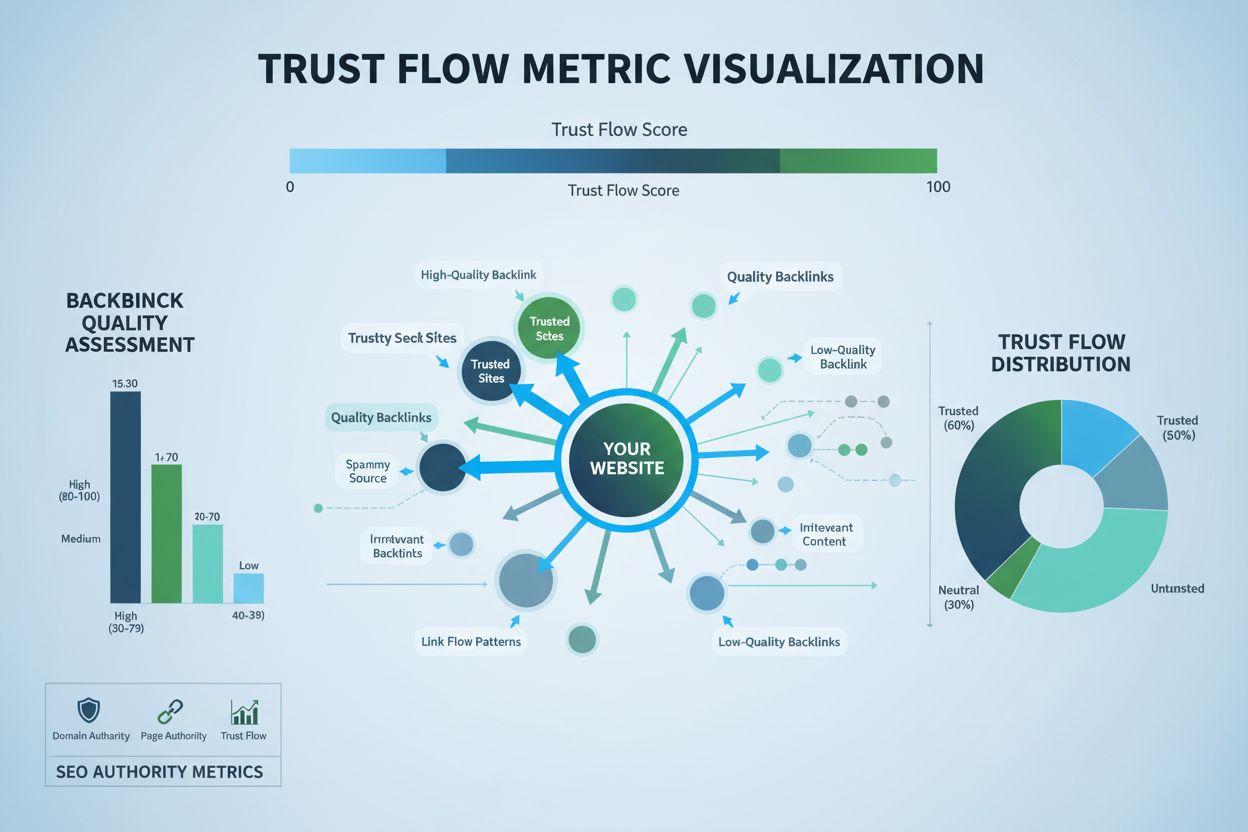
Trust Flow is a metric developed by Majestic that measures the trustworthiness and quality of a website’s backlinks on a scale from 0 to 100. It evaluates how closely a site is linked to a curated set of trusted seed sites, providing insights into backlink quality rather than quantity, making it a valuable tool for assessing link profile credibility in SEO strategies.
Trust Flow is a metric developed by Majestic that measures the trustworthiness and quality of a website's backlinks on a scale from 0 to 100. It evaluates how closely a site is linked to a curated set of trusted seed sites, providing insights into backlink quality rather than quantity, making it a valuable tool for assessing link profile credibility in SEO strategies.
Trust Flow is a proprietary metric developed by Majestic SEO in 2012 that measures the trustworthiness and quality of a website’s backlinks on a scale from 0 to 100. Rather than counting the quantity of links pointing to a domain, Trust Flow evaluates the quality of those links by analyzing how closely a website is connected to a curated set of manually reviewed, highly authoritative “seed sites.” The metric uses an iterative algorithm that flows trust through the web graph, meaning that links from trustworthy sources pass more trust value than links from questionable domains. This fundamental distinction makes Trust Flow a critical tool for SEOs, digital marketers, and brand monitoring professionals who need to assess backlink quality and domain credibility. Unlike Google’s proprietary ranking algorithms, Trust Flow is transparent and accessible through Majestic’s platform, making it one of the most widely adopted third-party authority metrics in the SEO industry.
Majestic SEO introduced Trust Flow and Citation Flow in May 2012 as a revolutionary advancement in link analysis technology. Prior to this launch, the SEO industry relied heavily on PageRank (which Google stopped updating publicly) and MozRank, leaving professionals without reliable, frequently updated metrics for assessing backlink quality. The development of Trust Flow addressed a critical gap in the market: while Citation Flow measures link quantity, Trust Flow specifically targets link quality by starting with a manually curated list of trusted websites reviewed by real developers, writers, and editors. This human-reviewed foundation makes Trust Flow significantly harder to manipulate through black hat SEO tactics compared to purely algorithmic metrics. According to industry research, approximately 58.1% of SEOs believe that backlinks have a significant impact on search engine rankings, underscoring the importance of understanding metrics like Trust Flow. The metric has since become a cornerstone of professional SEO analysis, with over a decade of data demonstrating its correlation with search visibility and domain authority.

Track how AI chatbots mention your brand across ChatGPT, Perplexity, and other platforms.
The exact algorithm behind Trust Flow calculation remains proprietary to Majestic, but the company has disclosed key principles that govern how the metric works. Trust Flow begins with a manually curated list of highly authoritative seed sites—websites that have been reviewed and deemed trustworthy by Majestic’s team of experts. These seed sites serve as the foundation for the entire calculation. From these trusted sources, the algorithm uses an iterative process to flow trust through the web graph, analyzing how websites link to each other and how trust propagates through those connections. The further a website is from these trusted seed sites in terms of link distance, the lower its Trust Flow score tends to be. Importantly, Trust Flow considers both external backlinks and internal links, meaning that a strong homepage can pass trust to inner pages through strategic internal linking. The metric also uses a logarithmic scale, making it progressively harder to increase Trust Flow as scores rise—jumping from 5 to 15 is easier than jumping from 25 to 35. This design prevents artificial inflation and rewards genuine authority building over time.
| Aspect | Trust Flow (TF) | Citation Flow (CF) |
|---|---|---|
| Primary Focus | Quality of backlinks | Quantity of backlinks |
| Measurement | Trustworthiness and authority | Link volume and link equity |
| Scale | 0-100 (harder to manipulate) | 0-100 (easier to inflate) |
| Starting Point | Manually curated seed sites | Automated link counting |
| Ideal Ratio | Higher TF relative to CF | Balanced with TF |
| Manipulation Risk | Low (requires high-quality links) | High (can be inflated with spam) |
| Use Case | Assessing backlink quality | Understanding link volume |
| Correlation | Reflects domain credibility | Reflects link popularity |
| Best Practice | Aim for TF close to or exceeding CF | Monitor CF/TF ratio for health |
| Industry Adoption | Widely used for quality assessment | Used alongside TF for complete analysis |
Get the latest insights on AI mentions, brand monitoring, and optimization strategies.
The iterative flow process that powers Trust Flow is fundamentally different from simple link counting algorithms. When Majestic’s crawler discovers a backlink to your website, it doesn’t just add one point to your score. Instead, the algorithm analyzes the Trust Flow value of the linking page, then passes a proportional amount of trust to your site. This process repeats iteratively across the entire web graph, meaning that trust can flow indirectly through multiple hops of links. For example, if a high-Trust Flow page links to a medium-Trust Flow page, which then links to your site, your site receives some trust value even though it’s not directly linked by the high-Trust Flow source. This cascading effect makes Trust Flow a sophisticated measure of how well-connected your domain is to the broader ecosystem of trusted websites. The algorithm also accounts for the number of outgoing links on a page—a link from a page with few outgoing links passes more trust than a link from a page with hundreds of outgoing links. This principle, known as link equity distribution, ensures that Trust Flow rewards natural, editorially-placed links over artificial link networks.
Understanding Trust Flow has profound implications for modern SEO strategy, particularly in the context of link building and domain authority development. When evaluating potential link sources, SEOs should prioritize acquiring backlinks from websites with high Trust Flow scores, as these links carry significantly more weight than links from low-Trust Flow domains. Research indicates that websites with Trust Flow scores between 30-50 typically rank well in competitive niches, while scores above 50 place a site in the upper echelon of authority. However, Trust Flow should never be the sole criterion for link building decisions. Topical relevance remains critical—a link from a high-Trust Flow site in an unrelated industry may provide less value than a link from a lower-Trust Flow site within your niche. Additionally, the anchor text, link placement, and surrounding content all influence the actual SEO value of a backlink. Professional SEOs use Trust Flow as one data point among many, combining it with metrics like Domain Authority, Page Authority, organic traffic data, and keyword ranking performance to make informed link-building decisions. The metric is particularly valuable for identifying toxic backlinks that may harm your domain—links from sites with Trust Flow below 10 often warrant investigation and potential disavowal.
Topical Trust Flow represents an advanced application of the Trust Flow concept, measuring a website’s trustworthiness within specific subject categories or industries. While overall Trust Flow provides a domain-wide authority score, Topical Trust Flow breaks this down by topic, revealing where your site is perceived as most authoritative. For instance, a technology blog might have an overall Trust Flow of 45, but its Topical Trust Flow for “Artificial Intelligence” could be 52, while its Topical Trust Flow for “Fashion” might be only 15. This distinction is crucial for SEOs working in specialized niches, as it helps identify the most relevant link-building opportunities and content strategies. When building backlinks, acquiring links from sites with high Topical Trust Flow in your industry is more valuable than links from high-authority sites in unrelated fields. Majestic displays Topical Trust Flow scores alongside category labels (such as “Computers/Internet/Web Design”), allowing professionals to assess how well their domain is positioned as an authority in their specific market. This metric has become increasingly important as search engines like Google place greater emphasis on topical authority and E-E-A-T signals (Expertise, Experience, Authoritativeness, Trustworthiness) when ranking content.
As artificial intelligence systems like ChatGPT, Perplexity, Google AI Overviews, and Claude become primary sources of information for millions of users, understanding how these systems evaluate source credibility becomes essential for brand monitoring. While AI language models don’t directly use Majestic’s Trust Flow metric, they do evaluate source authority and trustworthiness when generating responses and citations. Websites with higher Trust Flow scores are more likely to be recognized as authoritative sources by AI systems, potentially increasing the likelihood of brand mentions and citations in AI-generated content. This creates a new dimension for AI monitoring platforms like AmICited, which track how brands appear across AI search results. A brand with strong Trust Flow across its domain and content properties is more likely to be cited by AI systems when users ask questions related to that brand’s industry or expertise. Furthermore, understanding Trust Flow helps brands identify which backlinks contribute most to their perceived authority, allowing them to optimize their link profile for both traditional search engines and AI systems. As AI becomes increasingly influential in shaping brand perception and customer discovery, maintaining a healthy Trust Flow score becomes part of a comprehensive digital credibility strategy.
Building and maintaining a strong Trust Flow requires a strategic, long-term approach focused on quality over quantity. The following practices have proven effective for improving Trust Flow scores:
Several misunderstandings lead SEOs to misuse or misinterpret Trust Flow. The first is assuming Trust Flow is a Google ranking factor—it isn’t; Trust Flow is a proprietary Majestic metric built from its own seed-site methodology, not a signal Google has confirmed using, so treating a Trust Flow increase as a direct cause of ranking improvement conflates correlation with a confirmed mechanism. The second misconception is believing a higher Trust Flow score always beats a lower one regardless of context—a Trust Flow 20 link from a site squarely within your niche can be more valuable than a Trust Flow 40 link from an unrelated industry, since Topical Trust Flow specifically exists to capture this distinction that the overall score misses. Third, many assume Trust Flow and Citation Flow should always be as high as possible together—but the ratio between them matters more than either number alone; a large gap where Citation Flow far exceeds Trust Flow is itself a warning sign of many low-quality links, not a sign of overall strength. Fourth, there’s a common belief that acquiring links from high-Trust Flow domains guarantees real authority or rankings—it doesn’t; Trust Flow measures link graph position, not actual traffic, relevance, or keyword performance, so a page can have a strong Trust Flow while still failing to rank because it lacks genuine topical relevance or content quality. Finally, some assume Trust Flow updates instantly when new backlinks are built—recovery or improvement is iterative and calculated across the entire link graph, so score changes typically lag actual link-building activity by days to weeks depending on Majestic’s crawl and recalculation cycle.
Start tracking how AI chatbots mention your brand across ChatGPT, Perplexity, and other platforms. Get actionable insights to improve your AI presence.
Citation Flow is a Majestic SEO metric (0-100 scale) measuring website authority through backlink quantity and link equity. Learn how it impacts SEO and brand m...
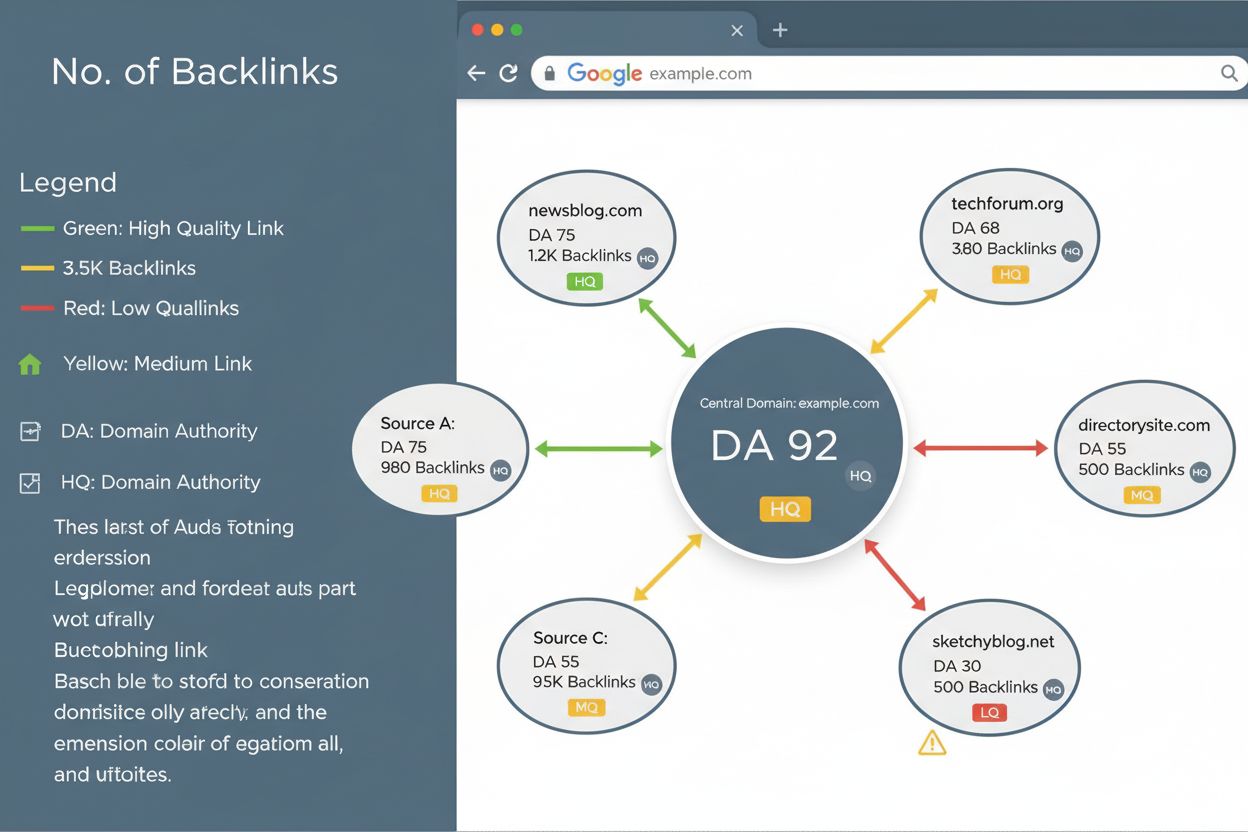
Learn what a link profile is, how it impacts SEO rankings, and why monitoring backlink quality, diversity, and domain authority is essential for website visibil...

Discover how trust signals differ between AI search engines and traditional SEO. Learn which credibility factors matter most for AI systems like ChatGPT and Per...
Cookie Consent
We use cookies to enhance your browsing experience and analyze our traffic. See our privacy policy.