



AI Visibility Checker: Free vs Paid Tools Compared
Compare free and paid AI visibility checkers by use case, plan limits, and verified 2026 pricing.
14 min read

Compare free AI visibility tools by what they track, their limits, and the best fit for your needs across ChatGPT, Perplexity, and Google AI Overviews.
AI visibility testing has become essential for brands navigating the rapidly evolving landscape of 2025, where artificial intelligence platforms like ChatGPT, Google Gemini, and Claude are reshaping how consumers discover information. This guide is a tool-by-tool comparison: what each free AI visibility tool actually tracks, where it falls short, and which one fits a given use case — from category-based product rankings to sentiment-aware monitoring. If you’d rather build your own systematic set of test queries instead of relying on a tool’s built-in prompts — useful when you want full control over methodology or don’t want to depend on any single vendor — see our guide to building a prompt library for manual AI visibility testing instead.
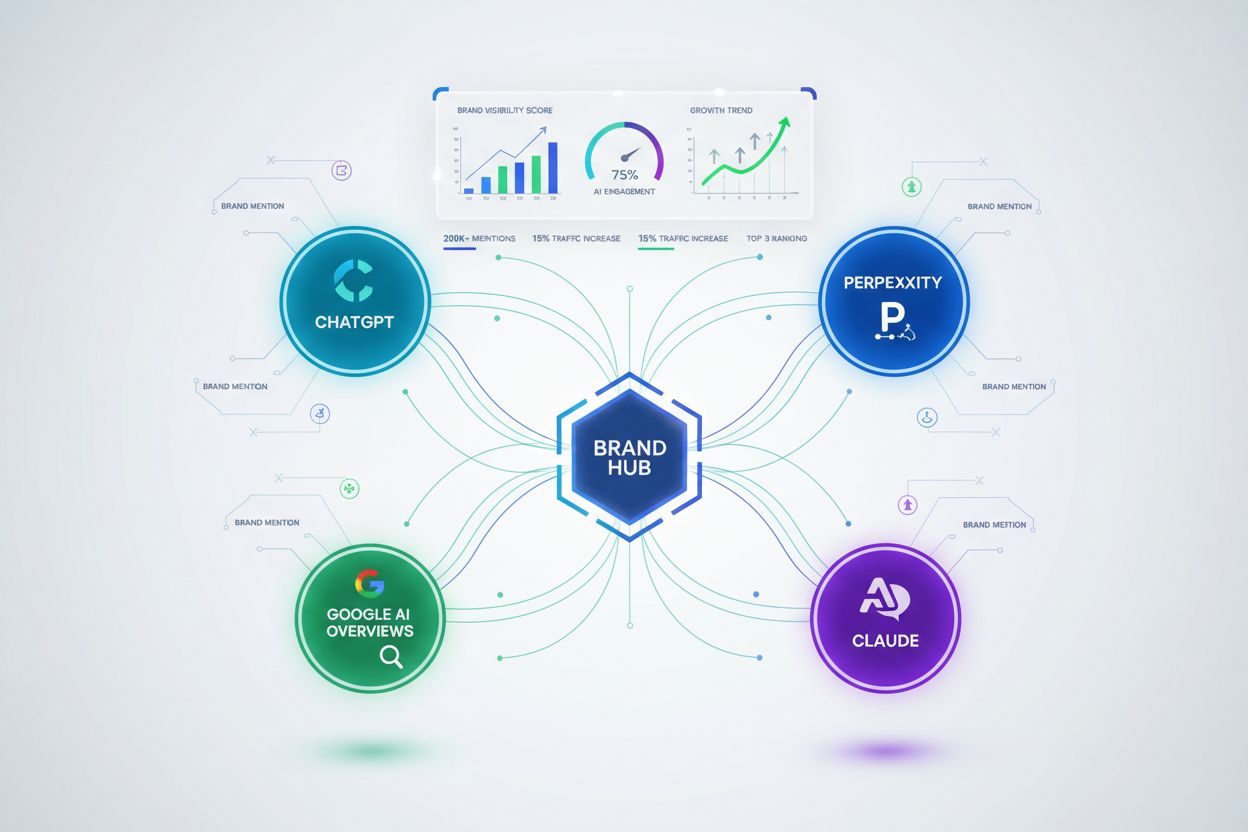
The barrier to entry for AI visibility testing has historically been high, with comprehensive monitoring tools commanding premium price tags that put them out of reach for small businesses, startups, and marketing teams with limited budgets. Fortunately, the market has responded with a growing selection of free tools and generous free tiers that democratize access to AI visibility insights. These free options provide genuine value without requiring credit card commitments, allowing you to test methodologies and understand your baseline AI visibility before investing in paid solutions. Here are the key benefits of starting with free AI visibility tools:

Track how AI chatbots mention your brand across ChatGPT, Perplexity, and other platforms.
To help you navigate the free tool landscape, here’s a comprehensive comparison of the best free AI visibility testing options available today:
| Tool Name | Free Tier Features | Best For | Limitations |
|---|---|---|---|
| AI Product Rankings | Brand mentions by category, citation tracking, LLM visibility across products | Brands wanting to see how they rank against competitors in AI responses | Limited to viewing rankings; no detailed analytics or historical tracking |
| Semrush AI Visibility Checker | AI visibility score, mention counts, platform coverage (ChatGPT, Gemini, Google AI Overviews), source tracking, competitor comparison | Comprehensive brand visibility assessment across multiple AI platforms | Free version may have limited historical data or comparison depth |
| Hall | 1 project, 25 questions, mini visibility report, competitor comparison, prompt generation, sentiment analysis | Australian brands and companies wanting affordable AI monitoring with sentiment insights | Free tier is quite limited; paid plans start at $239/month |
| Mentions | Basic visibility tracking and prompt ideas | Budget-conscious teams seeking lightweight, simple AI visibility monitoring | Limited features compared to comprehensive platforms; $49/month for full access |
| Amplitude AI Visibility | Free visibility report, competitive rankings, prompt suggestions, source identification | Brands wanting a quick snapshot of AI visibility without ongoing commitment | One-time report only; no continuous monitoring in free tier |
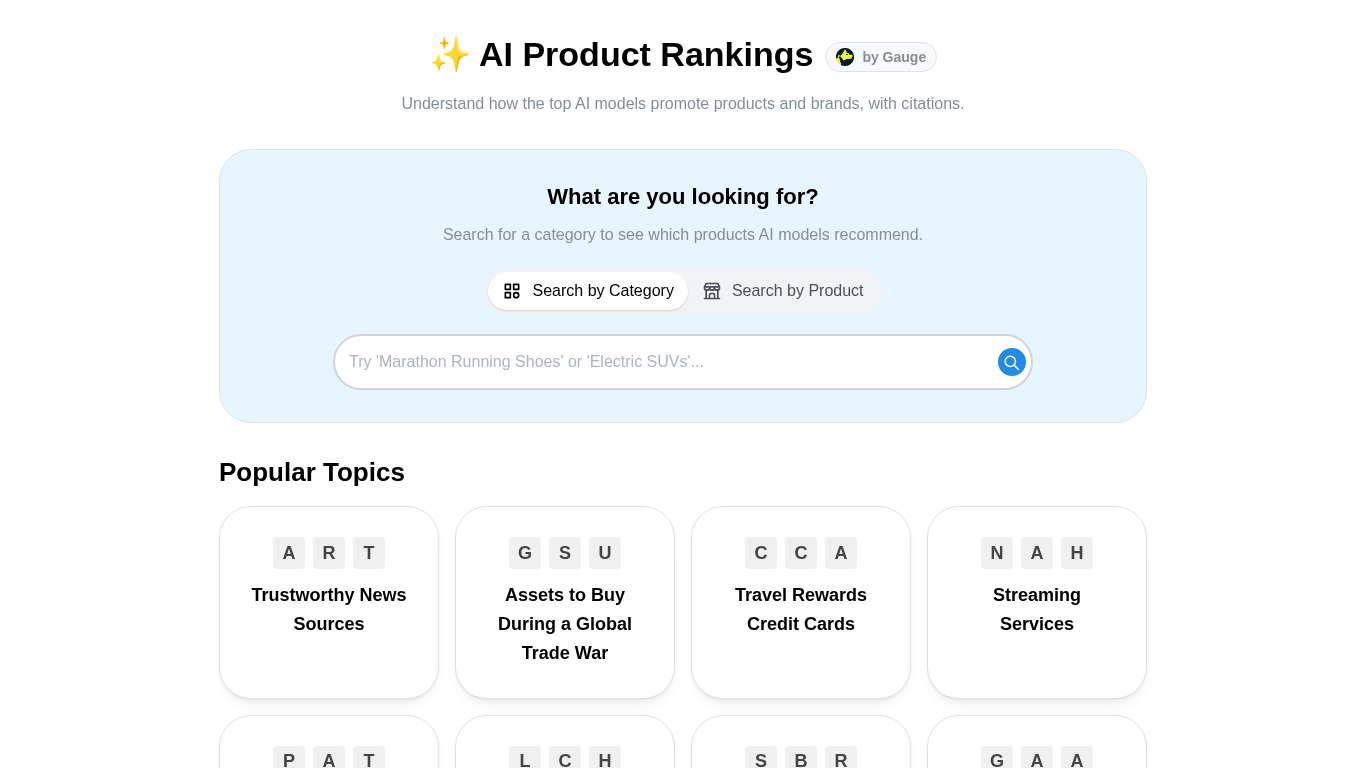
AI Product Rankings stands out as a uniquely valuable free tool that takes a category-based approach to AI visibility monitoring. Rather than tracking your brand in isolation, it shows you exactly where your products rank among competitors within specific categories as mentioned by major language models. The tool displays citations alongside rankings, giving you insight into which sources AI systems are drawing from when they mention your brand or competitors. This is particularly valuable for product-based companies and e-commerce brands that want to understand their competitive positioning in AI-generated responses. Use cases include identifying which product categories need more visibility work, understanding which competitors are dominating AI mentions in your space, and discovering citation opportunities by seeing which sources AI systems trust most. The transparency of seeing actual citations makes it easier to develop a content strategy that gets picked up by the sources that feed AI systems.
Get the latest insights on AI mentions, brand monitoring, and optimization strategies.
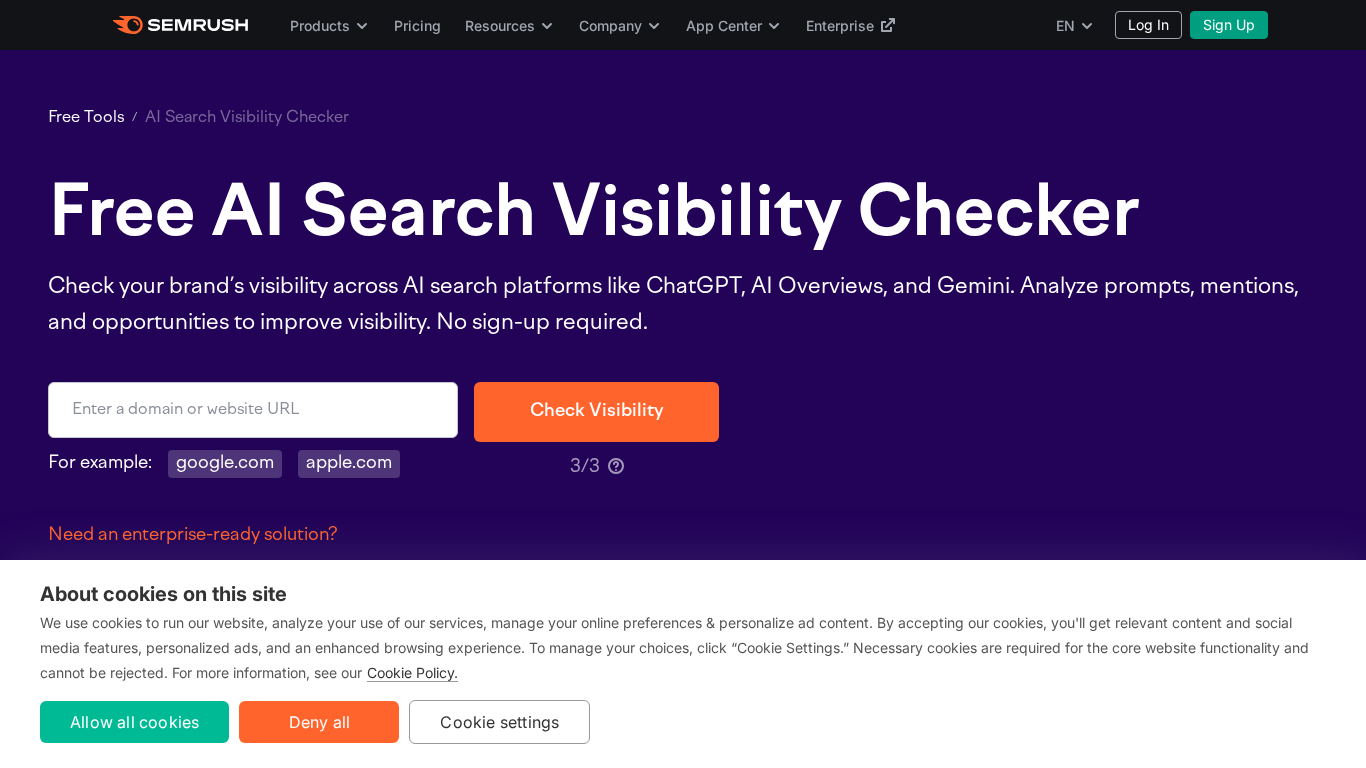
Semrush’s AI Visibility Checker delivers enterprise-grade insights in a free package, making it one of the most comprehensive free tools available for serious AI visibility assessment. The tool analyzes your brand’s presence across the three major AI platforms that matter most: ChatGPT, Google Gemini, and Google AI Overviews, providing a unified AI visibility score that aggregates your performance across all three. Beyond the headline score, you get detailed metrics including mention counts, platform-specific coverage, source attribution, and direct competitor comparisons that show how your visibility stacks up against rivals. The tool also generates specific prompts that trigger your brand mentions in AI responses, helping you understand which topics and contexts activate your visibility. Semrush’s approach aligns with the GEO (Generative Engine Optimization) principles that forward-thinking marketers are adopting, treating AI visibility as a distinct discipline from traditional SEO. This makes it ideal for brands that want a professional-grade assessment without the premium price tag of paid tools.
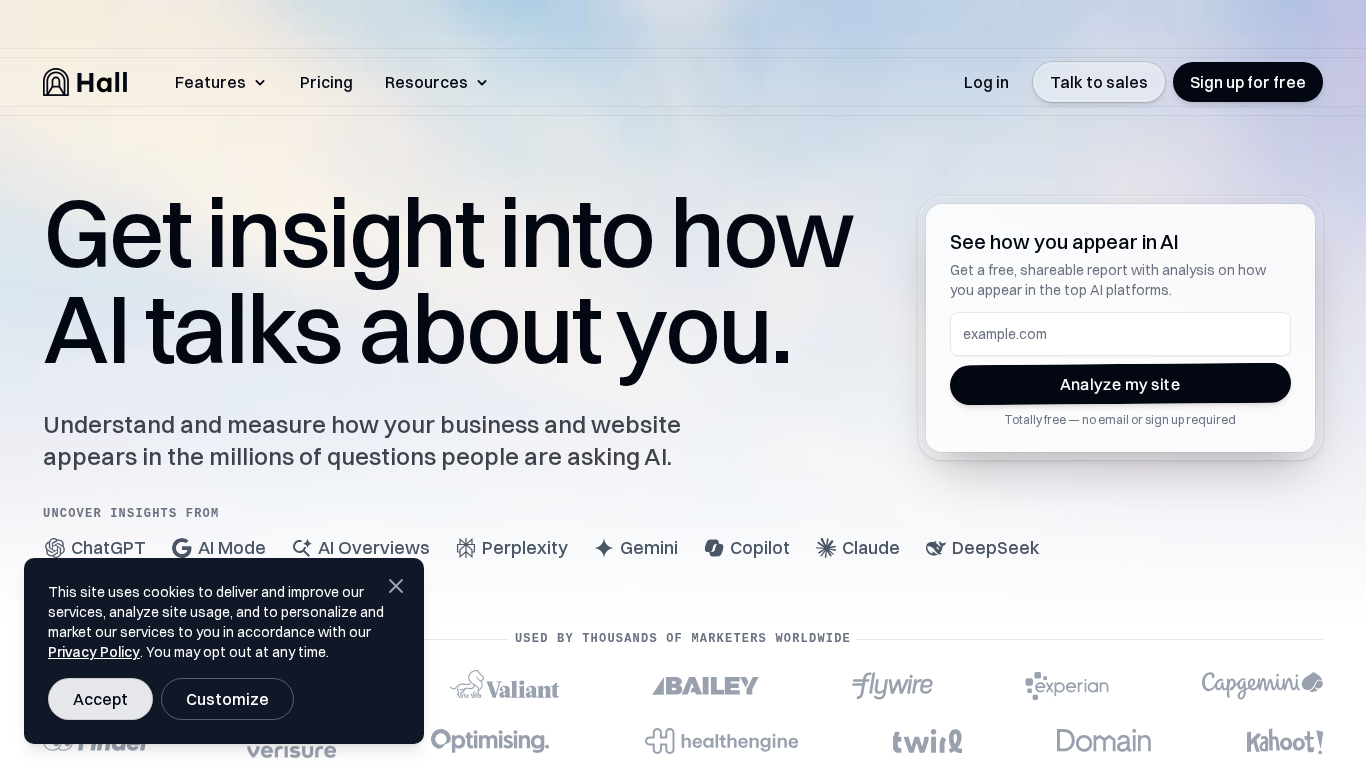
Hall represents a refreshing approach to AI visibility monitoring, particularly for brands that value affordability and actionable insights over feature complexity. The free tier allows you to set up one project with 25 questions, which is enough to establish a baseline understanding of how your brand appears in AI responses and identify immediate optimization opportunities. Beyond basic visibility tracking, Hall’s free tier includes prompt generation that shows you exactly what questions trigger your brand mentions, plus sentiment analysis that reveals whether those mentions are positive, neutral, or negative. The competitor comparison feature lets you see how your visibility and sentiment stack up against direct competitors, providing context for your performance. Hall’s Australian origins mean it’s particularly well-suited for regional brands, though it serves companies globally. The $239+ monthly pricing for paid plans is reasonable for teams ready to scale, but the free tier provides genuine value for initial exploration and validation.
Beyond the free tiers of established platforms, several tools offer free trials or freemium models worth testing before committing to paid subscriptions. Mentions provides a lightweight, budget-friendly option starting at $49/month, but their free trial gives you access to basic visibility tracking and prompt ideas that help you understand your AI visibility baseline. Peec AI offers a 7-day free trial despite its $89-$499/month pricing, making it worth testing if you have existing branded search volume and want to explore competitor analysis and visibility scoring. Nimt.ai, positioned at $79-$179/month, appeals to B2C and DTC brands with its share of voice feature, and testing it during a trial period can help you determine if competitive benchmarking is worth the investment. These tools are worth testing because they each bring different perspectives to AI visibility monitoring—whether that’s simplicity, competitive depth, or industry-specific features—and the trial periods let you evaluate them risk-free before deciding if they fit your long-term strategy.
Choosing the right free AI visibility tool depends on understanding your specific needs, competitive landscape, and growth stage. Start by asking yourself these critical questions: Are you primarily concerned with product visibility or brand awareness? Do you need competitor benchmarking, or is your own baseline sufficient for now? How much time can you dedicate to manual analysis versus automated reporting? What AI platforms matter most to your audience—ChatGPT, Gemini, Google AI Overviews, or all three? If you’re a product-focused company, AI Product Rankings’ category-based approach may be ideal; if you want comprehensive cross-platform analysis, Semrush’s free checker is hard to beat. For teams that need sentiment analysis and prompt generation, Hall’s free tier offers surprising depth. Consider also whether you need integration with existing tools—some platforms connect with your marketing stack, while others operate independently. The best tool is the one you’ll actually use consistently, so prioritize ease of use and alignment with your existing workflows.
Getting started with free AI visibility testing follows a straightforward process that yields immediate insights without requiring technical expertise. Begin by selecting one or two tools from the options above based on your primary use case, then run your initial assessment to establish your baseline visibility across AI platforms. Document your current metrics—visibility scores, mention counts, platform coverage, and competitor rankings—as your starting point for measuring progress. Next, review the prompts each tool surfaces as triggering your brand mentions, and identify quick wins where minor content updates or strategic placements could improve visibility — if you want a more systematic, tool-independent set of test prompts to run alongside these, our prompt library guide walks through how to build one. Track which sources AI systems cite when mentioning your brand, as these become targets for future content and partnership opportunities. Set a monthly cadence for re-running your free tool assessments to monitor trends, and use the data to inform your content strategy, SEO efforts, and thought leadership initiatives. Success with free tools comes from consistent monitoring and acting on the insights they provide, not from the sophistication of the tool itself.
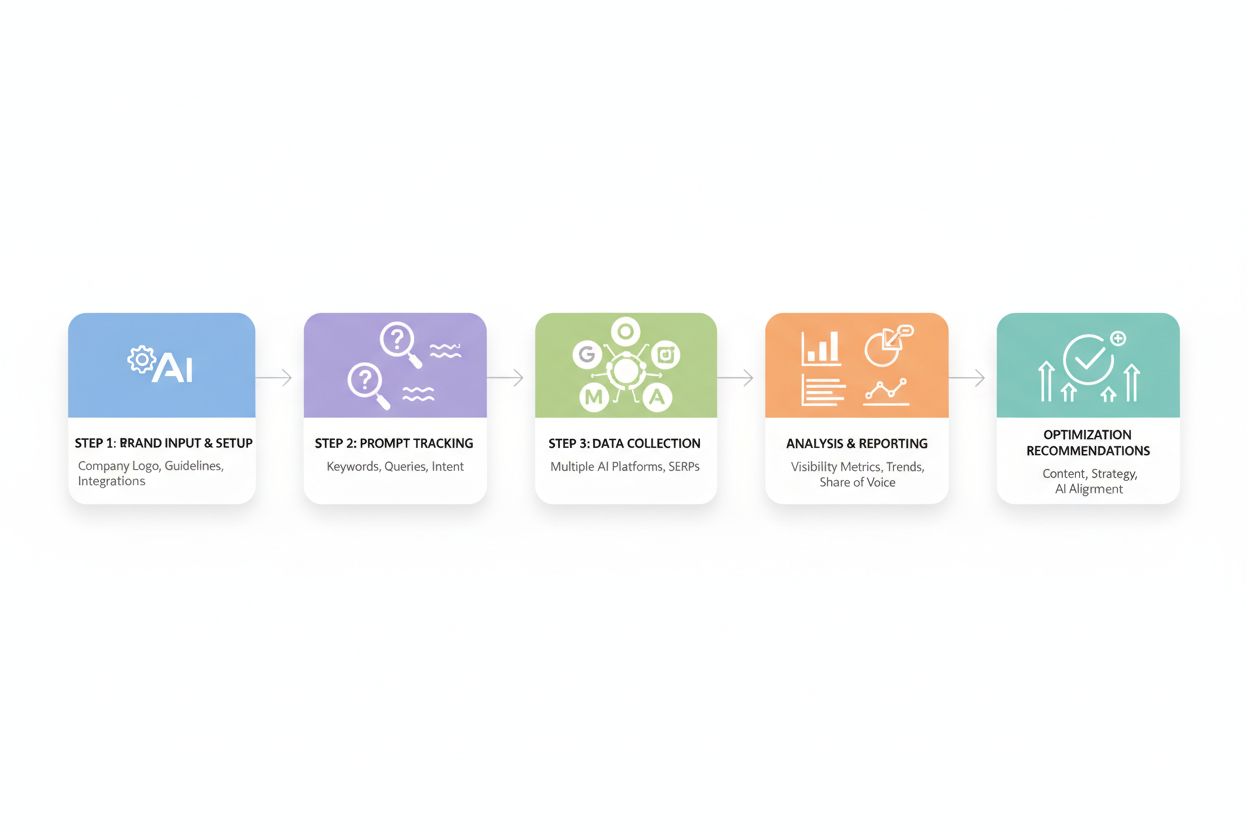
While free tools provide genuine value, they do have meaningful limitations that become apparent as your AI visibility strategy matures. Free tiers typically offer limited historical data, preventing you from tracking trends over extended periods or understanding seasonal patterns in your AI visibility. Most free tools provide snapshots rather than continuous monitoring, meaning you won’t catch real-time changes in how AI systems represent your brand. If you’re managing multiple brands, projects, or need advanced features like conversation analysis, custom competitor tracking, or integration with your marketing automation platform, paid tools become necessary. Premium platforms like Profound ($499+/month) offer conversation explorer features that fuse keyword research with AI monitoring, while Scrunch AI ($300-$1000/month) provides optimization recommendations that go beyond visibility scoring. For enterprise brands or those in highly competitive markets, AmICited serves as a premium alternative offering deeper insights and more sophisticated analysis. The transition from free to paid tools typically happens when you’ve validated that AI visibility matters to your business and need the consistency, depth, and integration that premium platforms provide.
Viktor Zeman is a co-owner of QualityUnit. Even after 20 years of leading the company, he remains primarily a software engineer, specializing in AI, programmatic SEO, and backend development. He has contributed to numerous projects, including LiveAgent, PostAffiliatePro, FlowHunt, UrlsLab, and many others.

Get comprehensive insights into how your brand appears across AI platforms. AmICited tracks your mentions in ChatGPT, Perplexity, Google AI Overviews, and more.
Compare free and paid AI visibility checkers by use case, plan limits, and verified 2026 pricing.

Compare AI search visibility tracking tools for ChatGPT, Perplexity, and Google AI Overviews. Learn how to monitor brand mentions, citations, and rankings.

Learn how to analyze competitor AI visibility across ChatGPT, Perplexity, and Google AI Overviews. Discover methodology, metrics, and tools for competitive inte...
Cookie Consent
We use cookies to enhance your browsing experience and analyze our traffic. See our privacy policy.