


Headless Commerce
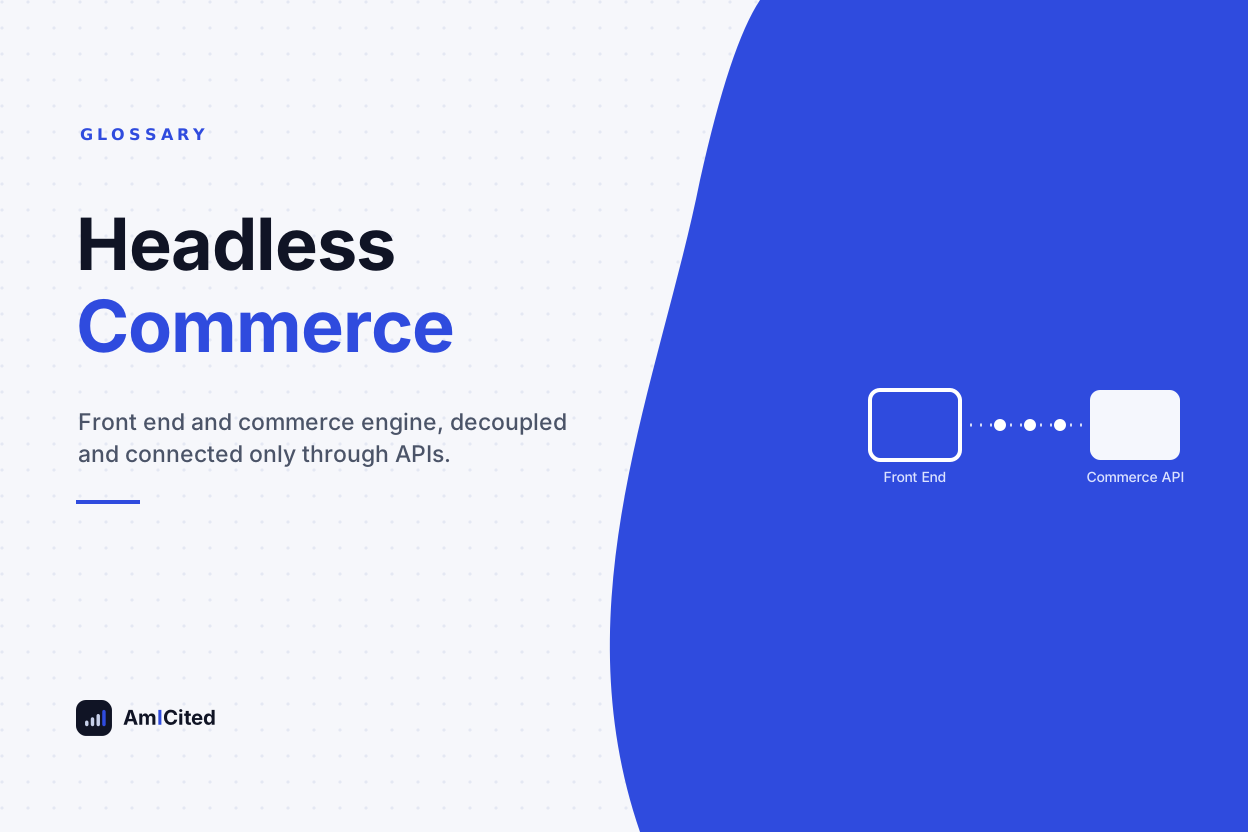
Headless commerce is an architecture that separates the front-end presentation layer of an online store from the back-end commerce engine that handles inventory, pricing, and orders, connecting the two through APIs. This lets a brand build custom shopping experiences across a website, app, or even a voice or AI interface, without being locked into a single storefront template. It trades some out-of-the-box simplicity for flexibility and control.
Definition of Headless Commerce
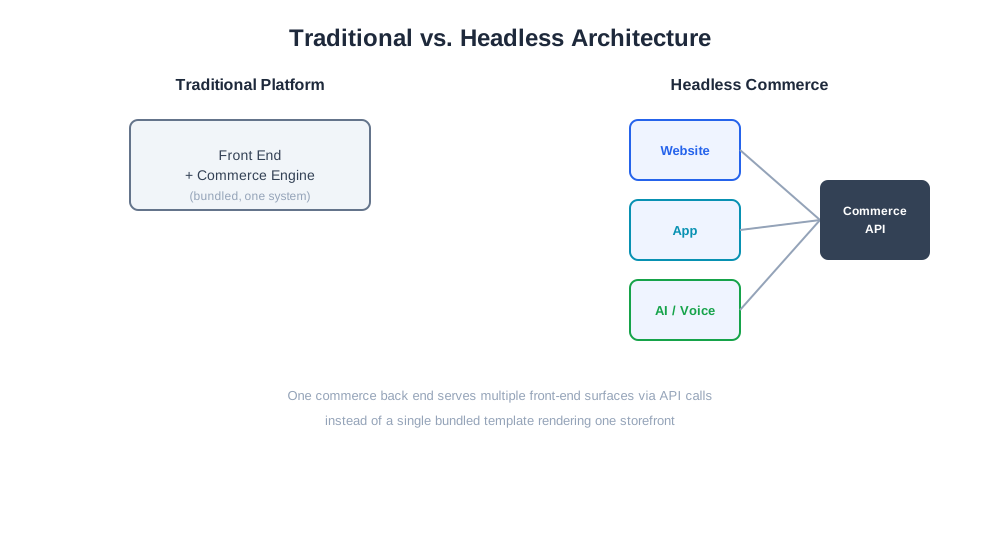
Headless commerce is an e-commerce architecture where the front-end presentation layer — the “head” a customer actually sees and interacts with — is built and deployed independently from the back-end commerce engine that manages product data, inventory, pricing, and order processing. The two layers communicate through APIs rather than being packaged together as a single system. This separation means a brand can build a fully custom website experience, a native mobile app, an in-store kiosk, or even a conversational shopping interface, all pulling live data from the same underlying commerce platform, without being constrained to a single vendor’s theme system or template structure.
How Headless Commerce Works
In a traditional e-commerce setup, the platform vendor provides both the storefront templates customers see and the back-end systems that manage products and orders, bundled as one product. Customizing the front end usually means working within that vendor’s theme framework and its constraints.
In a headless setup, the back-end commerce engine exposes its functionality — product catalog, cart, checkout, inventory, customer accounts — through APIs. A separate front-end application, built with whatever framework a development team chooses, calls those APIs to render pages, add items to a cart, and process orders. The customer-facing experience and the commerce logic can then be updated, scaled, and deployed independently of each other.
As a practical example: a brand might keep its existing platform to handle inventory, pricing, and order management, but build an entirely custom, highly interactive product configurator as the front end, calling the platform’s APIs behind the scenes to check stock and calculate pricing in real time. The customer never sees the underlying platform’s default templates at all.

Ready to Monitor Your AI Visibility?
Track how AI chatbots mention your brand across ChatGPT, Perplexity, and other platforms.
Why Headless Commerce Matters for E-commerce Brands
The core trade-off in headless commerce is flexibility versus complexity. A traditional, tightly coupled platform gets a store running quickly with sensible defaults for checkout, SEO markup, and page structure already handled. A headless architecture removes those guardrails in exchange for near-total control over the customer experience — useful for brands with a highly distinctive visual identity, unusual interaction patterns like configurators or 3D previews, or a need to serve the same product data across many different surfaces (web, app, kiosk, marketplace) consistently.
That flexibility comes with real cost: a headless build requires an engineering team capable of building and maintaining the front end, handling things a template platform would otherwise provide automatically, such as server-side rendering for search engines, structured data markup, and page speed optimization. For a store without in-house engineering capacity, this overhead frequently outweighs the benefit.
Headless vs. Traditional Commerce
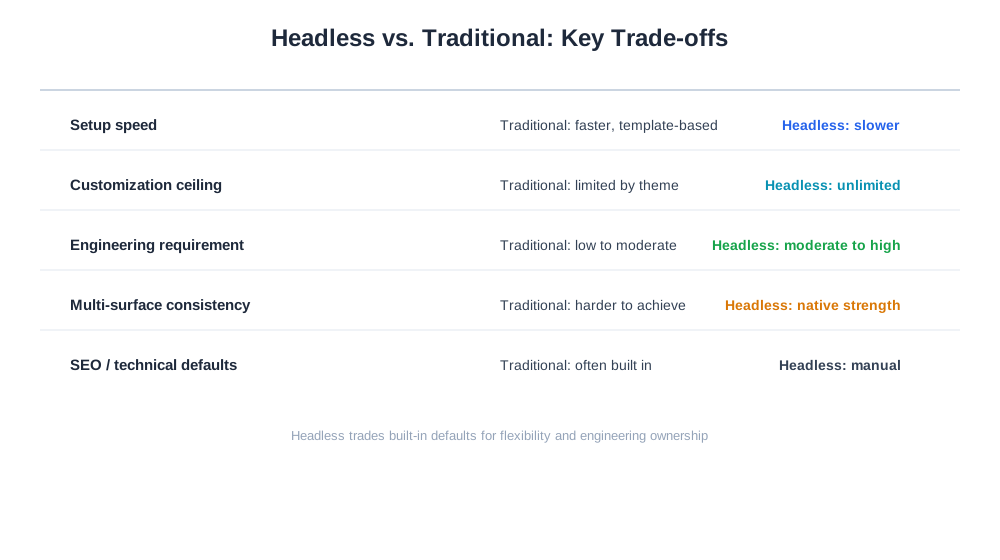
| Aspect | Traditional Platform | Headless Commerce |
|---|---|---|
| Front end and back end | Bundled together | Decoupled, connected via APIs |
| Setup speed | Faster, template-based | Slower, custom-built |
| Customization ceiling | Limited by theme framework | Effectively unlimited |
| Engineering requirement | Low to moderate | Moderate to high |
| Multi-surface consistency | Harder to achieve | Native strength |
| SEO / technical defaults | Often built in | Must be handled manually |
Stay Updated on AI Visibility Trends
Get the latest insights on AI mentions, brand monitoring, and optimization strategies.
Headless Commerce and AI-Driven Commerce
The rise of AI shopping assistants adds a new argument for headless architectures: as more shopping activity happens through conversational interfaces like ChatGPT Shopping or through structured data consumed by AI crawlers rather than a traditional rendered page, brands need their product data available in clean, API-accessible form regardless of what a human-facing storefront looks like. A headless setup, where product data already lives behind an API rather than baked into a specific theme’s HTML, can make it easier to also feed that same data to AI shopping surfaces consistently.
That said, headless commerce is an architectural choice about the front end and doesn’t by itself guarantee AI visibility — the underlying product data, pricing accuracy, and structured markup still need to be built correctly for AI assistants to use them well, whichever architecture serves the storefront.
Best Practices for Headless Commerce
- Only move to a headless architecture when a clear business need — a highly custom experience, multiple sales surfaces, or performance requirements a template platform can’t meet — justifies the added engineering investment
- Plan for SEO fundamentals explicitly, since a headless front end must handle server-side rendering, sitemaps, and structured data manually rather than inheriting them from a platform
- Keep product and inventory data centralized in the commerce back end so multiple front-end surfaces stay consistent rather than drifting out of sync
- Budget for ongoing front-end maintenance, not just the initial build, since a custom front end doesn’t receive vendor updates the way a templated platform does
- Evaluate composable add-ons (search, personalization, checkout) individually rather than assuming headless automatically requires replacing every part of the stack
Common Headless Commerce Mistakes
A frequent mistake is adopting headless commerce for its own sake — because it sounds modern or a competitor uses it — without a concrete customization need that a traditional platform genuinely can’t serve. This results in a significant engineering investment that produces a front end functionally similar to what a templated platform already offered, with none of the flexibility benefit realized.
Another common issue is underestimating the SEO work required after decoupling the front end. Teams sometimes launch a headless storefront only to find organic traffic drops because server-side rendering, meta tags, or structured data weren’t implemented as thoroughly as the previous platform handled them by default — the fix is treating SEO infrastructure as a first-class requirement in the front-end build, not an afterthought.
Some brands also underinvest in the ongoing maintenance a custom front end requires, assuming the initial build is a one-time cost. Without a dedicated team to maintain it, a headless front end can quietly accumulate technical debt and security risk that a maintained platform template would have avoided by default.