


Marketplace Commission
Marketplace commission is the percentage fee a third-party marketplace, such as Amazon, Etsy, or eBay, deducts from each sale a seller makes through its platform. It's charged in exchange for access to the marketplace's traffic, payment processing, and infrastructure, and it varies by product category and platform. Commission rates directly affect true margin and must be factored into pricing decisions on any marketplace channel.
Definition of Marketplace Commission
Marketplace commission is the percentage fee a third-party marketplace platform — such as Amazon, Etsy, or eBay — deducts from each sale a seller completes through that platform. In exchange for the fee, sellers gain access to the marketplace’s existing customer traffic, built-in checkout and payment processing, and trust infrastructure that would otherwise take significant time and marketing spend to build independently. Commission rates aren’t uniform: they typically vary by product category within the same marketplace, and each platform sets and periodically updates its own fee schedule, so sellers need to check current published rates for their specific category rather than assuming a single flat percentage applies everywhere.
How Marketplace Commission Works
When a sale completes on a marketplace, the platform deducts its commission percentage from the sale price before remitting the remainder to the seller. This deduction happens automatically as part of the platform’s payment processing, distinct from any separate fulfillment, advertising, or listing fees the marketplace may also charge.
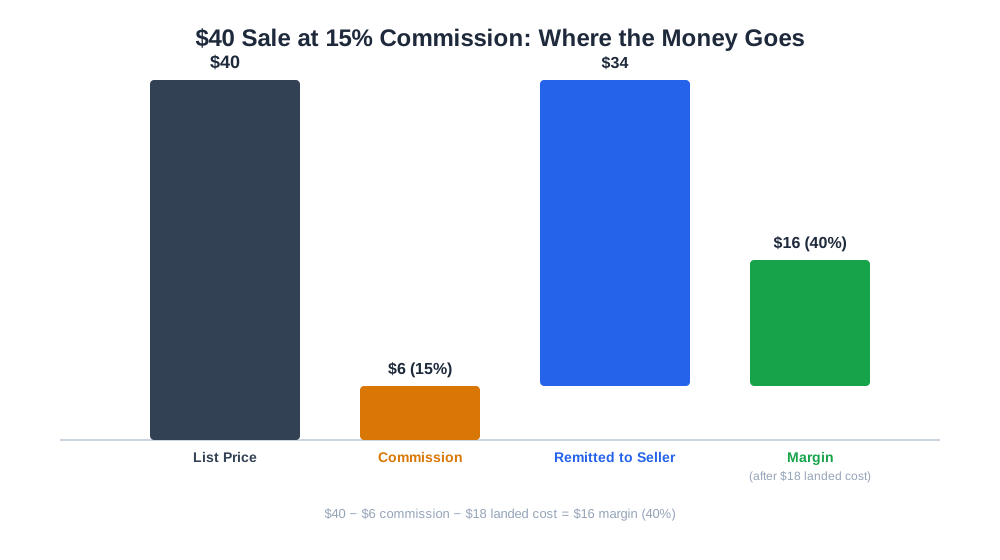
As an illustrative example: a seller lists a product at $40 on a marketplace with a category commission rate of 15%. On each sale, the marketplace keeps $6 as commission, remitting $34 to the seller before any other fees. If that seller’s landed cost for the product is $18, their margin after commission alone is $34 − $18 = $16, or 40% of the sale price — notably thinner than the margin the same product might generate through a direct-to-consumer channel with no commission at all.

Ready to Monitor Your AI Visibility?
Track how AI chatbots mention your brand across ChatGPT, Perplexity, and other platforms.
Why Marketplace Commission Matters for E-commerce Brands
Commission fees directly compress margin on every marketplace sale relative to a brand’s own direct channel, which means pricing strategy can’t simply mirror a direct-to-consumer price across every channel. A price that yields a healthy margin sold direct may yield a thin or even negative margin on a marketplace once commission and any additional fulfillment or advertising fees are subtracted. Brands selling across both marketplace and direct channels need channel-specific margin visibility, not a single blended assumption, to know which channel is actually contributing profit.
Marketplace Commission vs. Other Platform Fees
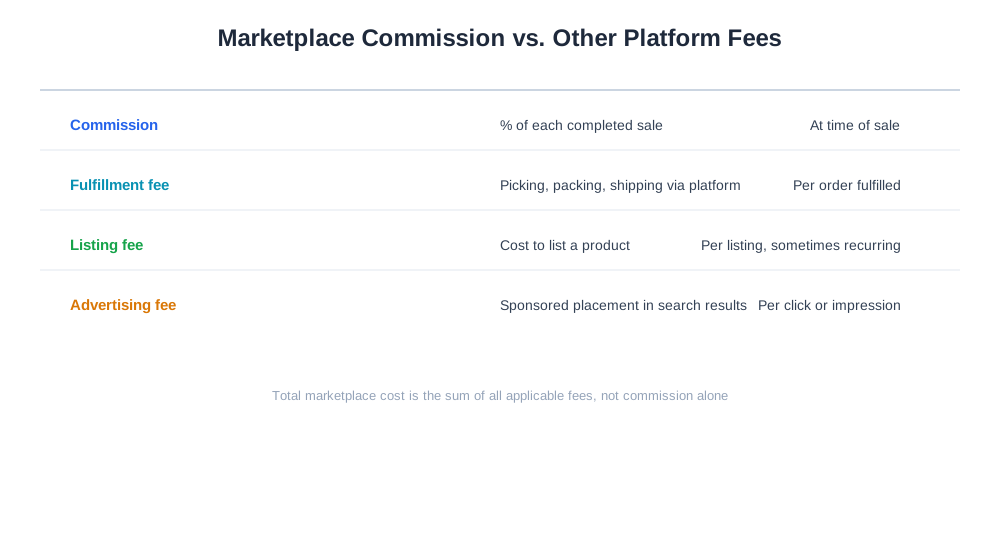
| Fee Type | What It Covers | Charged When |
|---|---|---|
| Commission | Percentage of each completed sale | At time of sale |
| Fulfillment fee | Picking, packing, and shipping via the platform | Per order fulfilled |
| Listing fee | Cost to list a product on the platform | Per listing, sometimes recurring |
| Advertising fee | Sponsored placement within marketplace search results | Per click or impression |
Total marketplace cost to a seller is the sum of all applicable fees, not commission alone, which is why two products with the same commission rate can have very different total platform costs depending on how much they rely on fulfillment or advertising fees.
Stay Updated on AI Visibility Trends
Get the latest insights on AI mentions, brand monitoring, and optimization strategies.
Marketplace Commission and AI-Driven Commerce
As AI shopping assistants surface products from multiple marketplaces and direct brand sites side by side, a brand’s true margin on any given comparison depends heavily on which channel the sale actually completes through. A brand competing on price against its own marketplace listing needs to know its true post-commission margin on that channel, not just its direct-to-consumer economics, to avoid pricing itself into a loss when an AI assistant routes a customer to the marketplace listing instead of the brand’s own site.
Best Practices for Marketplace Commission
- Always price marketplace listings using post-commission margin, not the same price logic used for a direct-to-consumer channel
- Check current commission rates by category directly from the marketplace, since rates and category definitions change periodically
- Factor in all marketplace fees together, not commission alone, when evaluating whether a channel is genuinely profitable
- Compare true per-channel margin regularly, since a marketplace channel can drift from profitable to marginal as fee schedules or product costs change over time