



Multi-Currency Pricing
Multi-currency pricing is the practice of displaying and charging product prices in a customer's local currency rather than a single default currency. It typically relies on real-time or periodically updated exchange rates to convert a base price, or on separately set fixed prices per currency.
Definition of Multi-Currency Pricing
Multi-currency pricing refers to displaying and charging product prices in a shopper’s local currency rather than forcing every customer to see and pay in a single default currency. Instead of a European shopper seeing a US dollar price and having their bank convert it at checkout, multi-currency pricing shows that shopper a price already denominated in euros, calculated either through real-time exchange rate conversion or a separately configured fixed price for that currency.
How Multi-Currency Pricing Works
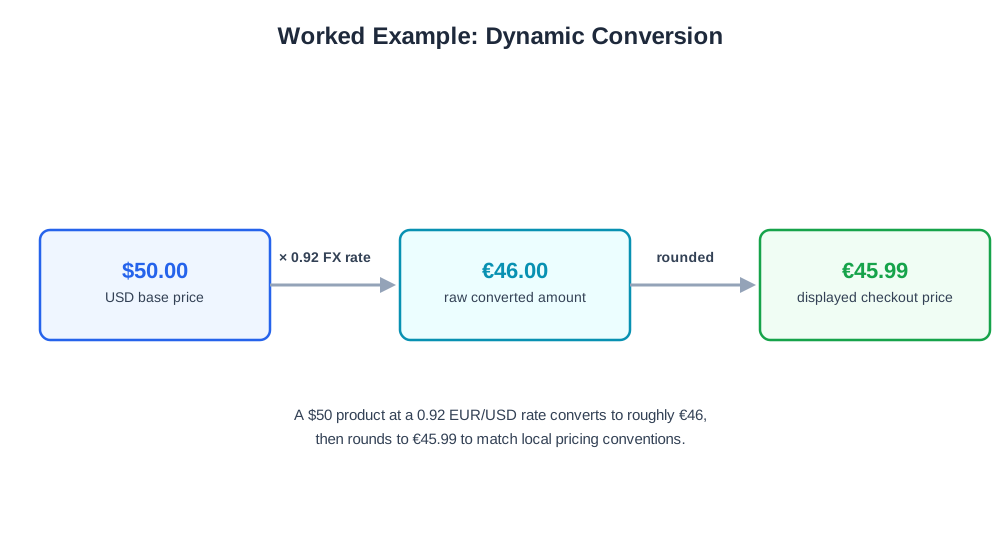
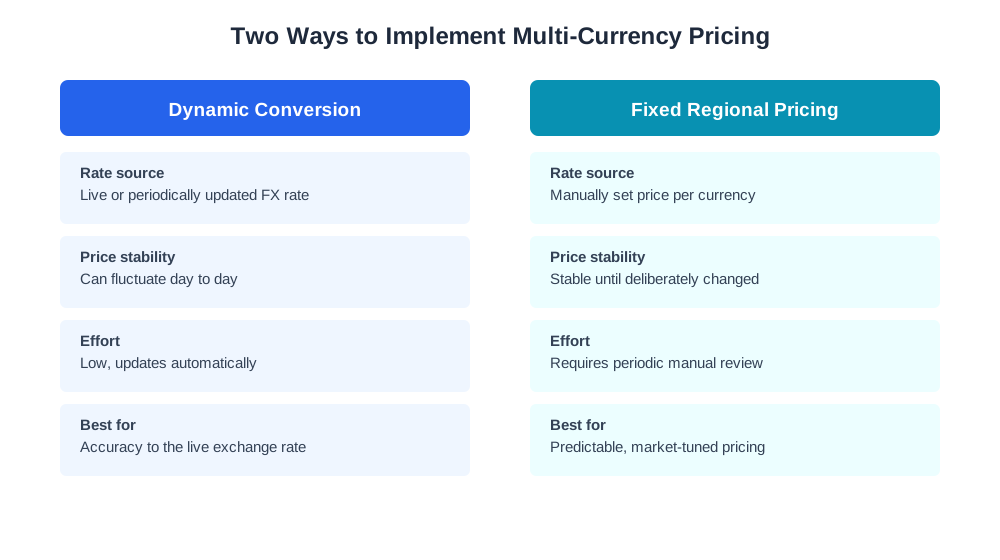
There are two common implementation approaches. Dynamic conversion takes a store’s base price and applies a current exchange rate to calculate the displayed price in each supported currency, updating periodically as rates shift. Fixed regional pricing instead sets a manually chosen price per currency or region, which stays stable regardless of daily exchange rate movement and can be adjusted deliberately to account for local pricing norms or competition, rather than fluctuating automatically. A store using dynamic conversion for a $50 product with a rate of 0.92 euros to the dollar would show a converted price of roughly €46, typically rounded to a cleaner figure like €45.99 to match local pricing conventions rather than displaying the exact converted amount.

Ready to Monitor Your AI Visibility?
Track how AI chatbots mention your brand across ChatGPT, Perplexity, and other platforms.
Why Multi-Currency Pricing Matters for E-commerce Brands
For any store selling internationally, requiring customers to check out in an unfamiliar currency introduces uncertainty at exactly the moment they’re deciding whether to complete a purchase — not knowing the final cost in their own currency, or the foreign transaction fee their bank may add, is a well-documented source of hesitation and abandonment. Multi-currency pricing removes that uncertainty by showing a clear, final price the customer already understands. It also allows a brand to align pricing with local market conditions and psychological price points rather than exposing every market to identical, awkwardly converted figures.
Multi-Currency Pricing and AI-Driven Commerce
As AI shopping assistants compare prices across international retailers on a shopper’s behalf, having accurate, clearly denominated local currency pricing helps ensure the comparison reflects what a customer will actually pay rather than an unconverted or stale figure. On the reporting side, AmICited’s eshop_list_currencies and eshop_update_settings tools let a merchant see every currency a store transacts in and set a consistent reporting currency with FX overrides where needed, so revenue and margin analysis stays coherent even when sales span multiple currencies.
Stay Updated on AI Visibility Trends
Get the latest insights on AI mentions, brand monitoring, and optimization strategies.
Best Practices for Multi-Currency Pricing
- Round converted prices to locally familiar price points rather than displaying exact converted figures
- Update exchange rates on a consistent schedule rather than leaving prices stale for long periods
- Clearly label the currency being shown, especially near checkout, to avoid last-minute confusion
- Reconcile multi-currency revenue back to a single reporting currency for consistent margin tracking
Troubleshooting Multi-Currency Pricing
A common issue is prices that look inconsistent to returning customers because exchange rates update too frequently, making the same product appear to change price day to day — moving to a fixed or less frequently updated rate schedule usually resolves this. Another frequent problem is failing to reconcile multi-currency sales back into one reporting currency, which can distort margin and revenue trends if left unaddressed; setting a clear reporting currency with documented FX handling avoids this confusion. A third issue arises when a store adds a new currency but forgets to update rounding rules for it, resulting in prices ending in unfamiliar or awkward figures for that market — reviewing rounding conventions per currency, not just applying one global rule, keeps pricing looking intentional rather than mechanically converted. Finally, some stores discover late that their payment gateway doesn’t actually settle in every currency they display prices in, meaning the customer sees a local price but the merchant still absorbs a conversion step during settlement; confirming gateway currency support before advertising a new local price avoids this mismatch between what’s shown and what’s actually processed.