


Take Rate
Take rate is the percentage of a transaction's value that a marketplace, platform, or payment intermediary keeps as its fee, rather than passing through to the seller. It is the core revenue mechanism for marketplaces like Amazon, Etsy, and Shopify's payment products, and it directly shapes seller margin on every sale made through the platform. Take rate can be a flat percentage or a tiered structure that varies by category, seller tier, or transaction size.
Definition of Take Rate
Take rate is the percentage of a transaction’s total value that a marketplace, platform, or payment intermediary retains as its fee, with the remainder passed through to the seller. It is the primary revenue model behind most e-commerce marketplaces: rather than charging sellers a flat listing fee, platforms like Amazon, Etsy, and various vertical marketplaces take a cut of each completed sale, aligning their revenue directly with seller success. Take rate shows up under different names depending on the platform — referral fee, commission, marketplace fee, or platform fee — but the underlying concept is the same: a percentage of gross transaction value that never reaches the seller. Payment processors also charge a form of take rate, though typically a much smaller one, since their service is limited to processing the payment rather than providing the sales channel, audience, and marketing infrastructure a full marketplace offers.
How Take Rate Is Calculated
The formula is simple:
Take Rate (%) = Platform Fee ÷ Total Transaction Value × 100
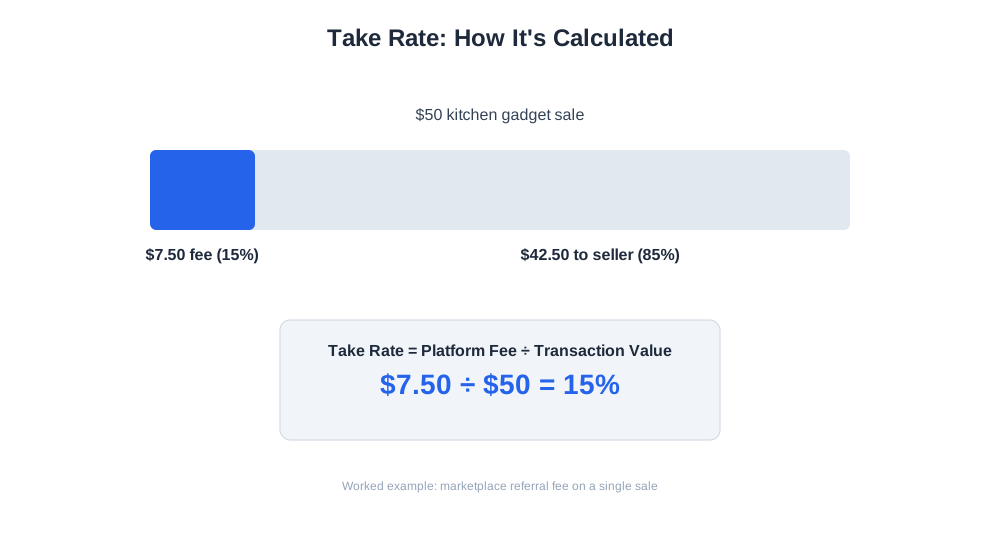
Worked example: a seller lists a $50 kitchen gadget on a marketplace. The platform charges a 15% referral fee on the sale.
- Transaction value: $50
- Platform fee: $50 × 15% = $7.50
- Seller receives: $50 − $7.50 = $42.50
- Take rate: $7.50 ÷ $50 = 15%
At scale, take rate is usually calculated across a platform’s total transaction volume, known as gross merchandise value (GMV), to determine the platform’s overall revenue. A marketplace processing $10 million in GMV per month at a blended 12% take rate generates $1.2 million in platform revenue that month, independent of the sellers’ own cost of goods or profit.

Ready to Monitor Your AI Visibility?
Track how AI chatbots mention your brand across ChatGPT, Perplexity, and other platforms.
Why Take Rate Matters for E-commerce Brands
For sellers operating on marketplaces, take rate is a direct and often underestimated deduction from revenue that must be priced into every product. A seller who calculates margin only against their own cost of goods, without separately accounting for the marketplace’s take rate, will discover their real margin is significantly thinner than expected — sometimes thin enough to make certain products unprofitable to sell on that channel at all. Take rate also shapes channel strategy: a brand selling both direct-to-consumer and through marketplaces needs to compare margin across channels honestly, since a marketplace sale with a 15% take rate can be meaningfully less profitable than a direct sale at the same price, even after accounting for the marketplace’s additional traffic and lower acquisition cost. For platforms themselves, take rate is the lever that balances seller competitiveness against platform revenue — set it too high and sellers migrate elsewhere or raise prices uncompetitively; set it too low and the platform’s own economics suffer.
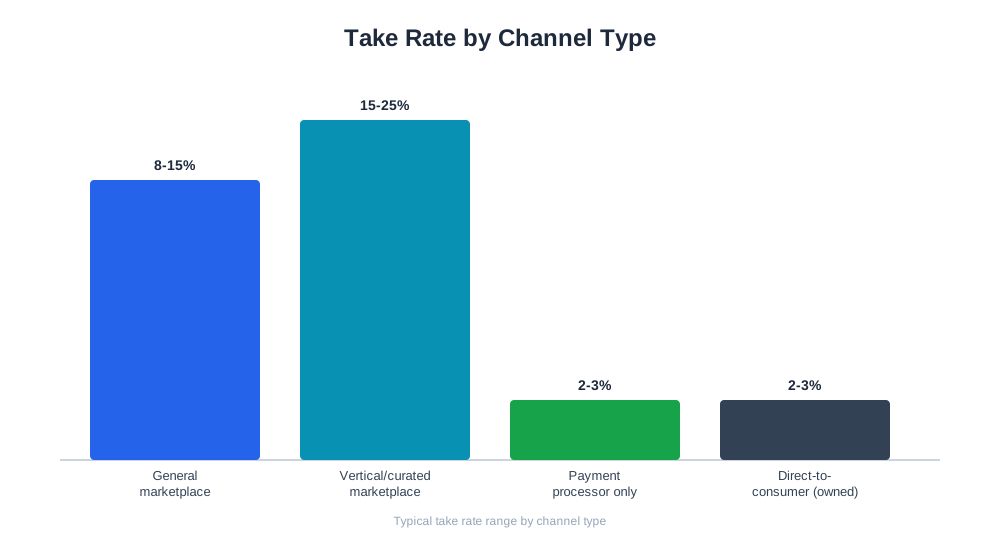
| Channel Type | Typical Take Rate Range | What It Covers |
|---|---|---|
| General marketplace (e.g. large multi-category platforms) | 8-15%, varies by category | Sales channel access, traffic, payment processing |
| Vertical/curated marketplace | 15-25% | Curated audience, category expertise, marketing |
| Payment processor only | 2-3% | Payment processing and fraud protection only |
| Direct-to-consumer (owned site) | 2-3% (payment processing only) | No channel fee, seller owns the customer relationship |
Take Rate and AI-Driven Commerce
As AI shopping assistants like ChatGPT Shopping, Perplexity Shopping, and Amazon Rufus route an increasing share of purchase decisions through marketplace integrations, take rate economics extend into a new layer: a brand may be paying a marketplace’s take rate and, indirectly, absorbing whatever cost structure sits behind the AI shopping surface that drove the referral. Sellers evaluating whether to prioritize a marketplace channel versus their own direct site need to weigh the marketplace’s take rate against the acquisition cost they’d otherwise spend to drive that same traffic independently — a channel with a high take rate can still be worthwhile if it delivers demand a brand could not economically generate on its own. AmICited’s eshop analytics reconcile revenue against every fee layer in a transaction, including marketplace take rates and payment processing costs, giving merchants an accurate picture of true per-order margin across channels rather than a headline revenue number that obscures how much of each sale was actually retained by the platform.
Stay Updated on AI Visibility Trends
Get the latest insights on AI mentions, brand monitoring, and optimization strategies.
Best Practices for Managing Take Rate Exposure
- Price products with the marketplace’s take rate explicitly factored in, not just cost of goods and desired margin
- Compare true post-fee margin across channels (marketplace vs. direct site) rather than comparing gross revenue alone
- Track take rate changes by category, since platforms frequently adjust rates unevenly across their catalog
- Model the break-even take rate for each product to know which SKUs stop being profitable if fees rise
- Diversify across channels where possible, so a take rate increase on any single platform doesn’t disproportionately affect total margin
- Reassess channel mix periodically, since a marketplace’s traffic value can shift over time independent of its take rate
Common Take Rate Mistakes
Pricing products without factoring in the marketplace’s take rate at all. Sellers who calculate margin purely from cost of goods and desired profit routinely discover, after the fact, that the real margin on marketplace sales is thinner than planned once the platform fee is deducted, sometimes to the point of being unprofitable. Assuming take rate is uniform across a marketplace’s entire catalog. Many platforms apply different rates by category, and a seller expanding into a new category without checking its specific rate can be caught off guard by a meaningfully different fee structure than they’re used to. Comparing marketplace revenue to direct-site revenue without normalizing for take rate. A marketplace channel can look more profitable on a revenue basis while actually delivering less margin per order once its take rate is subtracted, leading to a misallocation of marketing or inventory investment toward the wrong channel. Not tracking take rate changes over time. Platforms periodically adjust fees, and a seller who isn’t monitoring this can see margin erode silently across an entire catalog without an obvious single cause. Treating take rate purely as a cost to minimize rather than weighing it against acquisition value. A high take rate marketplace that delivers customers a brand could never reach cost-effectively on its own can still be the more profitable channel overall; the right comparison is take rate against the acquisition cost of replicating that same demand independently, not take rate in isolation.