Capterra Review Playbook: Requests, Responses, and Profile Optimization
A tactical playbook for growing your Capterra reviews: request timing, response templates, profile optimization, automation, and measuring the AI-citation payoff.
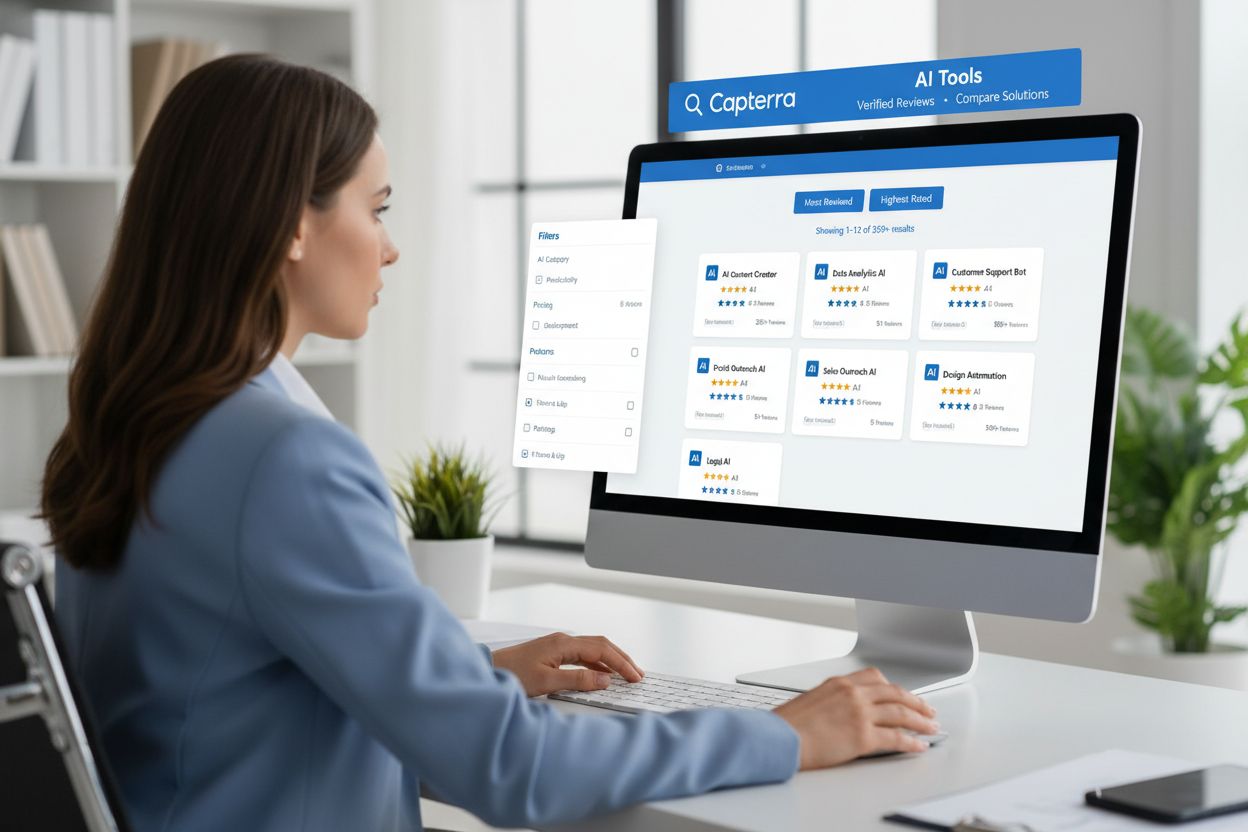
Capterra stands as one of the most influential software discovery platforms in B2B SaaS, hosting over 2.5 million verified reviews that shape purchasing decisions across industries. For AI tool vendors, a strong Capterra profile does double duty: it converts human buyers directly, and it feeds the review signals that AI systems increasingly treat as citation-worthy evidence of credibility. It’s worth being precise about the difference between reviews and AI citations up front — a review is customer feedback left on a review site, a citation is when an AI system references that feedback (or your product) inside its own generated answer. The two reinforce each other, but it’s not just the review volume it signals that matters; sentiment, recency, and consistency across your review base are what determine whether that volume actually converts into an AI citation. For the underlying research on citation rates by platform and how much volume actually moves the needle, see our data-focused breakdown of why G2 and Capterra reviews drive AI citations
. This guide instead stays on the execution side: the concrete tactics for growing your Capterra review base, optimizing your profile, and turning reviews into a compounding citation asset.
Optimizing Your Capterra Profile for Maximum Visibility
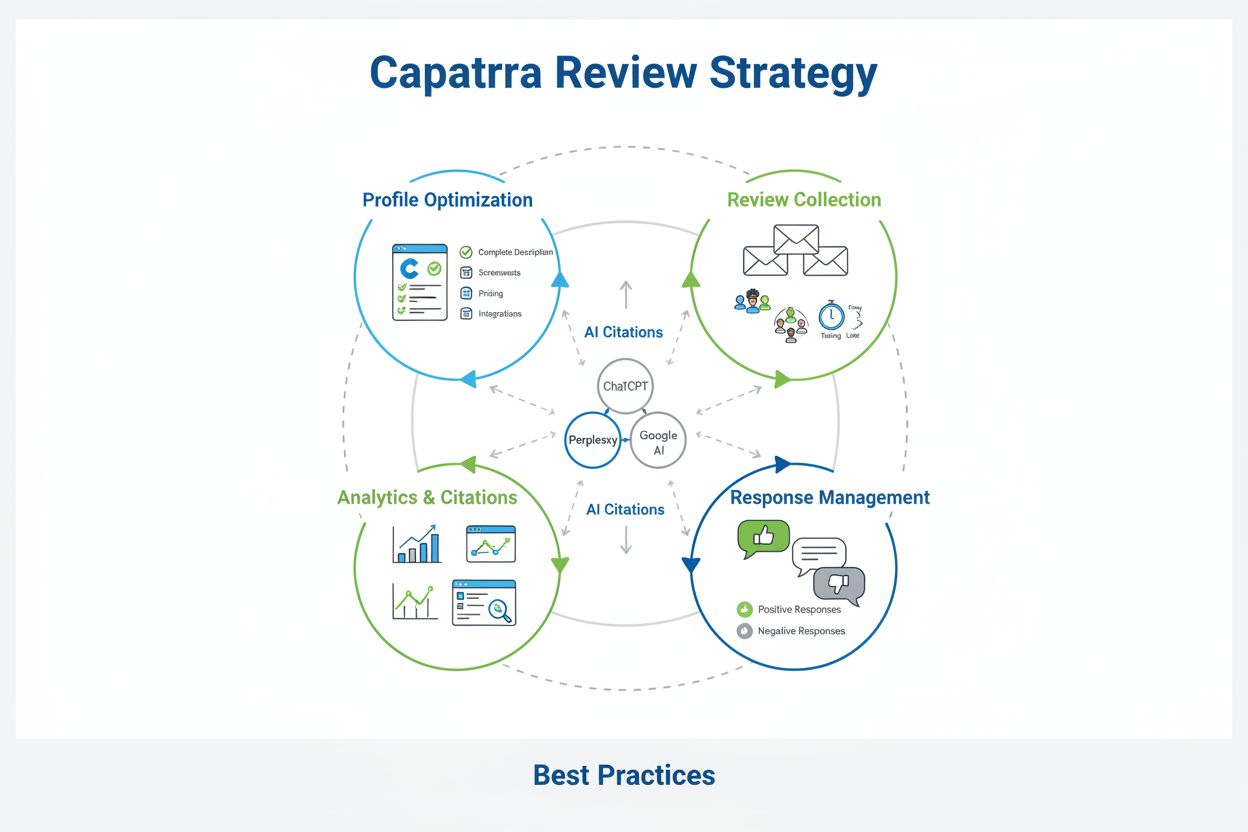
Optimizing your Capterra profile requires systematic attention to every element that influences both human discovery and AI citation tracking. The foundation begins with complete profile setup, including detailed product descriptions, high-resolution screenshots, feature highlights, and comprehensive category selections that accurately represent your AI tool’s capabilities. Visual elements carry disproportionate weight on Capterra—professional product images, demo videos, and clear feature comparisons significantly improve profile engagement and review conversion rates. Profile completeness directly impacts your ranking within Capterra’s algorithm, with fully optimized profiles appearing higher in category searches and receiving more visibility from potential reviewers. From an SEO perspective, your Capterra profile URL becomes a high-authority backlink that strengthens your domain’s overall credibility, while the structured data within your profile helps search engines understand your product’s positioning. When your profile is thoroughly optimized with relevant keywords, clear value propositions, and compelling visuals, it becomes easier for AI monitoring systems to extract accurate information about your tool, which improves the quality and frequency of citations your brand receives across AI platforms.
Ready to Monitor Your AI Visibility?
Track how AI chatbots mention your brand across ChatGPT, Perplexity, and other platforms.
Strategic Timing and Targeting for Review Requests
The timing and targeting of review requests dramatically influence both response rates and the quality of feedback you receive. Strategic review collection begins by identifying your highest-satisfaction customers—those who’ve achieved measurable success with your platform and demonstrate genuine enthusiasm during support interactions. The optimal moments to request reviews occur immediately after key customer milestones: successful implementation completion, achievement of ROI targets, renewal decisions, or positive support interactions that resolved critical issues. Avoid requesting reviews during onboarding phases when customers haven’t yet experienced full value, and space requests strategically to prevent review fatigue that diminishes response rates over time. Personalization transforms generic requests into compelling invitations by referencing specific features the customer uses, outcomes they’ve achieved, or challenges they’ve overcome with your platform.
Post-implementation reviews: Request 2-3 weeks after customers complete initial setup and achieve first measurable results
Milestone-based reviews: Trigger requests when customers reach usage thresholds, feature adoption milestones, or ROI targets
Renewal timing: Request reviews 30-60 days before renewal dates when satisfaction is top-of-mind
Support resolution reviews: Send requests within 24 hours of resolving critical support tickets or escalations
Quarterly engagement reviews: Schedule systematic requests for active customers on a quarterly basis, rotating through different customer segments
Crafting Compelling Review Requests That Convert
Crafting compelling review requests requires understanding the psychology of why customers hesitate to invest time in writing reviews, then removing those barriers through strategic communication. The most effective requests combine personalization that demonstrates you understand the customer’s specific use case with transparent incentives that acknowledge the time investment required. Your call-to-action must be crystal clear—provide a direct link to your Capterra profile, specify exactly which aspects of your tool to address, and indicate the estimated time required (typically 3-5 minutes). Mobile optimization matters significantly since many customers will access review requests on phones; ensure your email template renders beautifully on small screens and the Capterra link opens smoothly on mobile devices. A/B testing different request approaches—varying subject lines, personalization depth, incentive structures, and CTA placement—reveals which messaging resonates most strongly with your specific customer base.
Subject: [Customer Name], your experience with [Product Name] matters

Hi [Customer Name],

I hope [specific feature/outcome] has continued delivering value for your [department/use case]. Your team's success implementing [specific achievement] is exactly the kind of real-world impact we love seeing.

Would you be willing to share your experience on Capterra? Your honest review takes just 3-5 minutes and helps other teams like yours discover how [Product Name] can [key benefit].

[Direct Capterra Review Link]

As a thank you, we'd like to [specific incentive: discount/feature access/exclusive content].

Thanks for being a valued customer,
[Your Name]
Stay Updated on AI Visibility Trends
Get the latest insights on AI mentions, brand monitoring, and optimization strategies.
Leveraging Automation and Tools for Scale
Automation and workflow tools enable you to scale review collection without sacrificing the personalization that drives conversion. Platforms like Typeform, Delighted, and specialized review management software integrate directly with your CRM and customer success tools, triggering review requests automatically based on predefined customer actions or milestones. Triggered email workflows can activate when customers complete onboarding, reach usage thresholds, or interact positively with support—ensuring requests arrive at moments of peak satisfaction. These automation platforms provide tracking and analytics that reveal which customer segments respond most readily, which request timing performs best, and which messaging variations drive highest completion rates. The critical balance involves maintaining authenticity: automation should feel personalized and timely, not robotic or intrusive. Tools like AmICited.com complement review collection automation by monitoring how your reviews translate into actual AI citations, showing you the downstream impact of your Capterra optimization efforts and helping you understand which review characteristics most influence AI systems’ citation decisions.
Managing and Responding to Reviews Strategically
Strategic review management extends far beyond collection—your responses to reviews significantly influence both customer perception and citation credibility. Responding to reviews within 24-48 hours demonstrates active engagement and signals to potential customers that you take feedback seriously, which measurably improves conversion rates among review readers. Negative reviews require particular finesse: acknowledge the customer’s experience without defensiveness, take responsibility where appropriate, offer specific solutions, and invite private conversation to resolve underlying issues. This approach transforms potentially damaging reviews into demonstrations of your commitment to customer success, often resulting in customers updating their reviews after issues are resolved. Positive reviews deserve amplification through thoughtful responses that highlight specific customer achievements, reinforce key benefits, and thank customers for their partnership. Building community through engagement—responding to questions in review comments, acknowledging customer suggestions, and showing personality in your responses—creates a narrative around your brand that extends beyond individual reviews. These response patterns directly impact citation credibility because AI monitoring systems analyze not just review content but the quality of vendor engagement, using response patterns as signals of company reliability and customer-centricity.
Measuring Impact and Tracking AI Citations
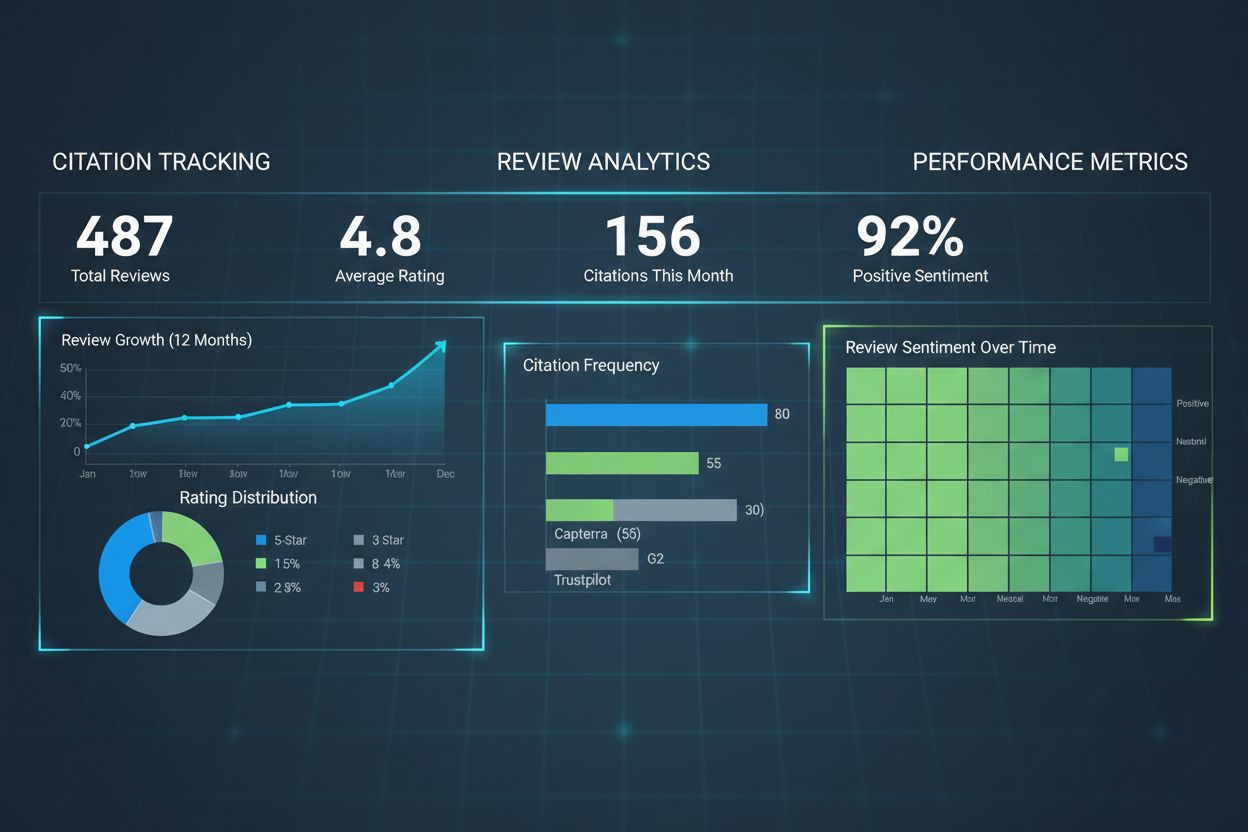
Measuring Capterra’s impact requires tracking multiple interconnected metrics that reveal both direct performance and broader citation influence. Core metrics include your overall rating, total review count, review velocity (new reviews per month), and sentiment distribution across rating categories. Competitive benchmarking against similar AI tools in your category reveals whether your Capterra performance is strengthening or weakening relative to alternatives customers evaluate. Citation tracking tools like AmICited.com provide visibility into how your Capterra presence translates into actual mentions across AI platforms—showing you whether strong reviews correlate with increased citations in ChatGPT, Perplexity, and Google AI Overviews. ROI measurement connects Capterra performance to business outcomes by tracking how review volume and rating correlate with website traffic, demo requests, and closed deals attributed to Capterra as a discovery source. Long-term trend analysis reveals whether your optimization efforts compound over time, with improving ratings and growing review volume creating accelerating citation momentum. If you want the platform-level benchmarks behind these numbers—citation rates, review-volume thresholds, and how G2 compares—that’s covered in depth on the companion data piece rather than duplicated here.
Integrating Capterra Reviews into Marketing Strategy
Integrating Capterra reviews into your marketing strategy multiplies their impact beyond the platform itself, transforming customer feedback into multi-channel social proof. Sales materials should prominently feature your Capterra rating, review count, and specific customer quotes that address common objections or highlight key differentiators—prospects encountering these elements in sales decks, one-pagers, and proposal documents gain confidence from third-party validation. Social media amplification involves sharing customer review highlights, celebrating rating milestones, and creating content around common themes in your reviews that resonate with your target audience. Website integration through Capterra widgets on your homepage, pricing page, and product pages provides real-time social proof that influences conversion rates at critical decision moments. Developing case studies from your most detailed and compelling reviews creates long-form content that explores customer challenges, implementation approaches, and measurable outcomes in depth. Email marketing can incorporate review highlights into nurture sequences, using customer testimonials to build credibility with prospects at different stages of the buying journey. This integrated approach ensures your Capterra success generates value across every customer touchpoint, while simultaneously strengthening the citation signals that AI systems use to evaluate your platform’s authority and relevance.
Common Challenges and Solutions
Common challenges in Capterra optimization require proactive strategies to overcome, beginning with the persistent problem of low review response rates. Many companies struggle to generate sufficient review volume because customers deprioritize the task despite good intentions; solving this requires removing friction through direct links, mobile optimization, and strategic timing rather than simply requesting more frequently. Negative reviews present a different challenge—some companies attempt to suppress or ignore them, but this approach backfires both with customers and AI systems that detect inauthentic review patterns; instead, embrace negative feedback as improvement opportunities and respond professionally to demonstrate accountability. Review authenticity concerns have intensified as companies seek to game review platforms; maintaining integrity by requesting reviews only from genuine customers and never incentivizing specific ratings protects your long-term credibility and ensures AI citation systems trust your review profile. Competitive pressure emerges when competitors aggressively pursue reviews, potentially outpacing your efforts; this requires sustained commitment to review collection rather than sporadic campaigns that create inconsistent momentum. Maintaining consistency across multiple review platforms—ensuring your messaging, positioning, and customer value proposition align on Capterra, G2, Trustpilot, and other platforms—prevents confusion and strengthens citation signals. Finally, overcoming review fatigue in your customer base demands sophisticated segmentation that ensures you’re requesting reviews from different customer cohorts on rotating schedules, preventing the same customers from receiving repeated requests that damage relationships and reduce response rates.
Frequently asked questions
Capterra is one of the most influential B2B software discovery platforms with over 2.5 million verified reviews. For AI tools, it serves as a critical visibility channel where potential customers evaluate solutions before adoption. Strong Capterra presence directly impacts both direct conversions and how AI systems cite your platform as an authoritative source.
The most effective approach combines strategic timing (post-implementation, after support resolution, at renewal), personalization that references specific customer achievements, and transparent incentives. Provide direct links to your Capterra profile, specify which aspects to address, and indicate the time required (3-5 minutes). A/B test different messaging to find what resonates with your customer base.
Respond professionally within 24-48 hours by acknowledging the customer's experience without defensiveness, taking responsibility where appropriate, and offering specific solutions. Invite private conversation to resolve underlying issues. This approach transforms potentially damaging reviews into demonstrations of your commitment to customer success, often resulting in updated reviews after resolution.
Yes, but carefully and transparently. Capterra allows incentives as long as they don't depend on the review rating. Appropriate approaches include offering small non-monetary rewards (extended trial, additional storage), donating to charity per review, entering reviewers in drawings, or providing exclusive content. Always disclose incentives in your review request and on your Capterra profile.
Track core metrics including overall rating, total review count, review velocity, and sentiment distribution. Use competitive benchmarking to compare against similar AI tools. Citation tracking tools like AmICited.com show how your Capterra presence translates into actual mentions across AI platforms. Connect these metrics to business outcomes by tracking how Capterra discovery correlates with website traffic and closed deals.
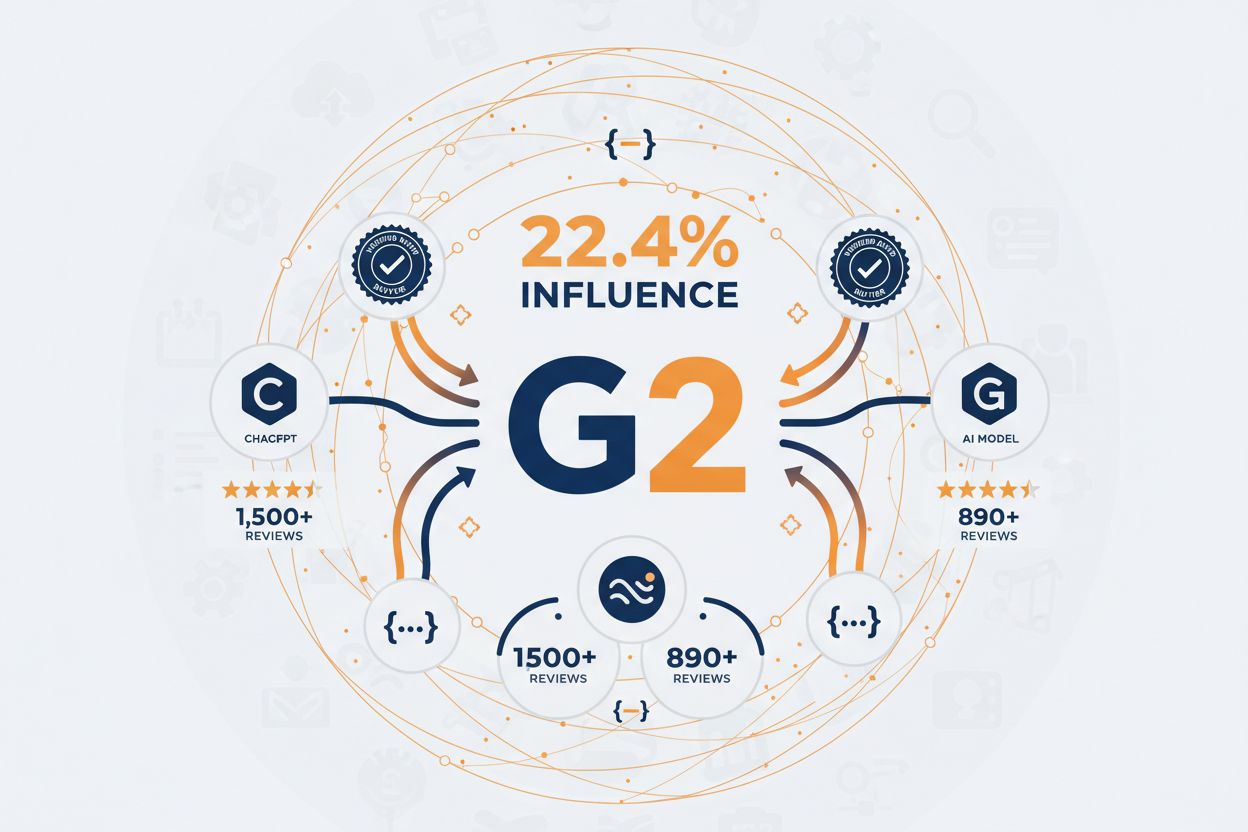
Not much, tactically. Capterra emphasizes verified purchases and has broader category coverage, while G2 uses email verification and skews toward AI-tool-specific buyers. The request timing, personalization, and response practices in this guide apply to both. For the underlying citation-rate data on why each platform matters, see our breakdown of G2 and Capterra's impact on AI recommendations.
Avoid overwhelming customers with frequent requests. Instead, use strategic segmentation that rotates review requests through different customer cohorts on a quarterly basis. Request reviews at optimal moments: post-implementation (2-3 weeks after setup), after achieving ROI milestones, during renewal periods, and within 24 hours of positive support interactions. Space requests to prevent review fatigue.
Yasha is a talented software developer specializing in Python, Java, and machine learning. Yasha writes technical articles on AI, prompt engineering, and chatbot development.
Yasha Boroumand
CTO, FlowHunt
Turn Capterra Reviews Into Tracked AI Citations
Track how AI tools like ChatGPT, Perplexity, and Google AI Overviews cite your brand as your Capterra review volume and quality grow. Get real-time insights into your AI visibility with AmICited.
Do customer reviews actually impact AI visibility? Trying to build a review strategy that helps AI search
Community discussion on customer reviews and AI search visibility. Real experiences from marketers on how reviews on G2, Capterra, and other platforms impact AI...
Why G2 and Capterra Reviews Drive AI Citations (With the Data)
The data behind how G2 and Capterra reviews shape AI-generated recommendations: citation rates, review-volume thresholds, and how to decide where to prioritize.
Master G2 review and profile optimization for AI search visibility. Learn how to increase AI citations, strengthen your G2 profile, and measure ROI with data-dr...
11 min read
Cookie Consent We use cookies to enhance your browsing experience and analyze our traffic. See our privacy policy.