



ChatGPT Instant Checkout
ChatGPT Instant Checkout let shoppers buy inside ChatGPT. OpenAI retired it in March 2026 to focus on product discovery. What merchants should do.
6 min read
ChatGPT Instant Checkout launched in September 2025 and ended in March 2026. What it was, why it ended and what merchants should do now.
Status update (2026): OpenAI launched Instant Checkout in September 2025 and retired it in March 2026, about six months later. OpenAI said the initial version “did not offer the level of flexibility that we aspire to provide,” so it is letting merchants use their own checkout experiences while it focuses on product discovery (Hypotenuse , Forklog ). Adoption was thin: reportedly only about 30 Shopify merchants went live, versus the million-plus announced (Stellagent ). The sections below describe how the feature worked and what carries over.
ChatGPT shopping conversations are still a real discovery channel. The shift from keyword-based search to conversational discovery, where natural language queries and contextual recommendations replace keyword matching, is what merchants need to plan for, even though the purchase itself now happens on their own site.
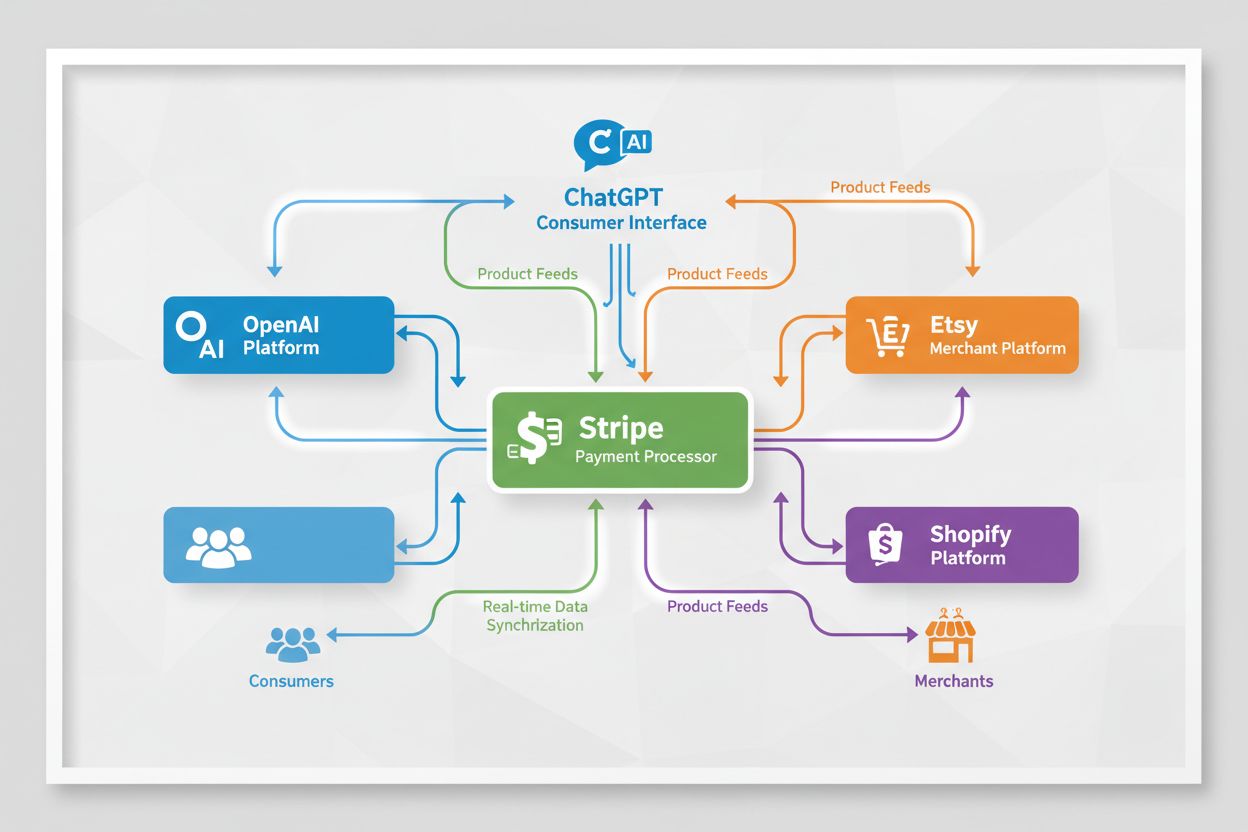
The Agentic Commerce Protocol represents an open standard developed collaboratively by OpenAI and Stripe to enable secure, standardized communication between buyers, AI agents, and merchants. The protocol was the technical backbone for in-chat purchases and continues to carry product data into ChatGPT, establishing a framework where merchants maintain complete control over customer relationships, payment processing, and order fulfillment. The protocol operates seamlessly across multiple platforms including web browsers, iOS, and Android devices, while supporting diverse payment methods from traditional credit cards to digital wallets. Built as open source software under the Apache 2.0 license, the Agentic Commerce Protocol encourages ecosystem participation and prevents vendor lock-in, allowing merchants and developers to implement checkout functionality without proprietary restrictions. This standardized approach ensures interoperability across different AI platforms and payment processors, creating a unified experience for both consumers and merchants.

Track how AI chatbots mention your brand across ChatGPT, Perplexity, and other platforms.
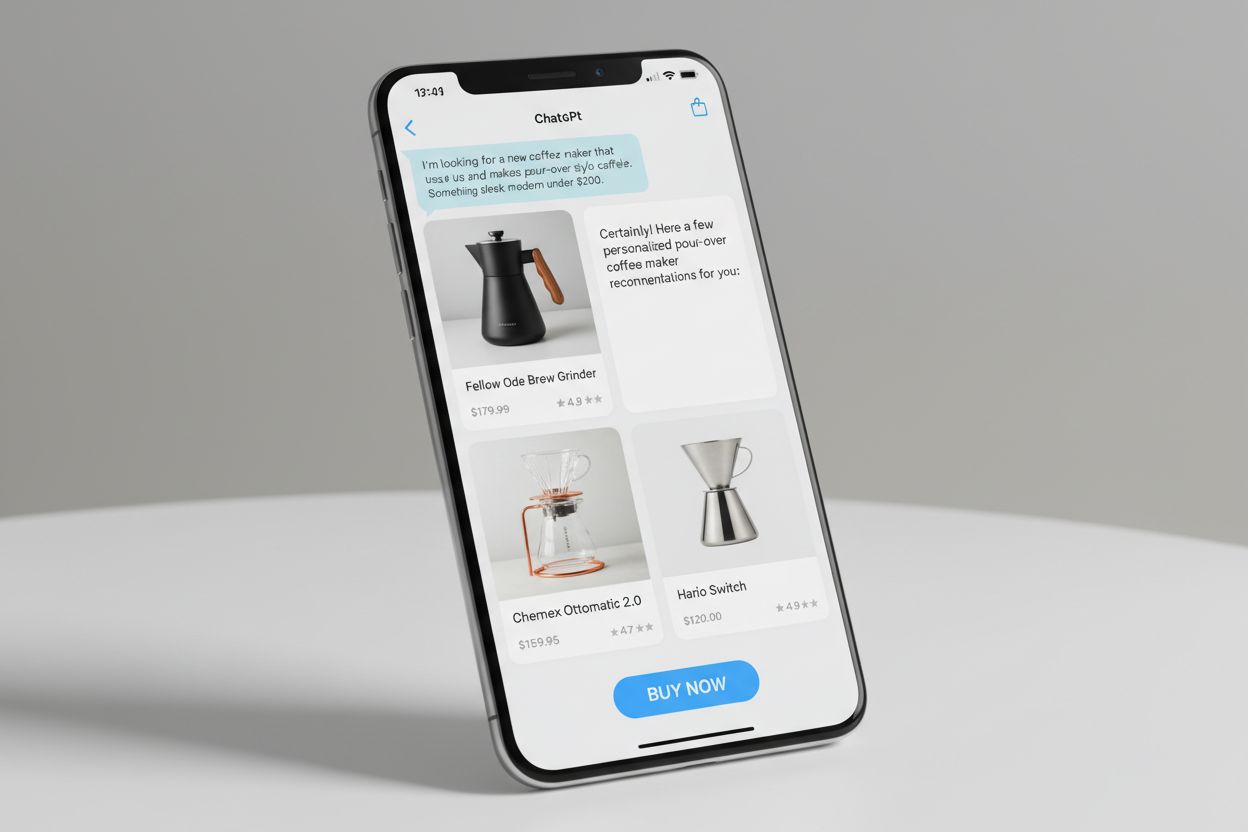
The consumer experience with ChatGPT Instant Checkout replaced keyword searches with natural language conversations about needs and preferences. Rather than typing “blue running shoes size 10,” users describe their requirements conversationally—“I need comfortable shoes for marathon training”—and ChatGPT acts as a personal shopping assistant, surfacing relevant products from integrated merchants. When a user found a product they wanted, a one-tap “Buy” button appeared directly in the conversation. Checkout supported multiple payment methods including credit cards, Apple Pay, Google Pay, and Link, allowing users to complete purchases using their preferred payment option without leaving the chat interface. This streamlined experience delivers significantly faster checkout compared to traditional e-commerce flows, where users typically navigate product pages, add items to carts, and complete multi-step checkout processes. The contextual nature of conversational discovery means products surface based on actual user needs rather than advertising spend, creating a more authentic shopping experience.
Etsy sellers were the first to go live. OpenAI and Shopify announced that 1 million+ Shopify merchants, including brands like Glossier, Skims, Spanx, and Vuori, would follow, but reportedly only about 30 Shopify merchants went live before the March 2026 retirement. Participating merchants provided real-time product feeds containing pricing, inventory levels, product images, and variant information, so that ChatGPT displayed accurate, up-to-date product data. Unlike traditional advertising models, ChatGPT recommendations were organic, as ChatGPT recommended products based on relevance to user conversations rather than bidding systems. Merchants kept control of customer relationships and order management, including the ability to accept or decline orders and handle fulfillment and customer service. The economic model was a small referral fee on completed sales.
Get the latest insights on AI mentions, brand monitoring, and optimization strategies.
The idea behind Instant Checkout was that organic, intent-based discovery could reduce dependence on paid visibility. Amazon’s advertising business has grown into a large share of its revenue, and merchants are looking for channels where relevance rather than bidding decides visibility. The in-chat checkout did not catch on, but the discovery half did: ChatGPT understands intent and context, so contextual queries can surface products that keyword matching would miss. That makes feed quality, schema and review signals the levers that matter now, and it is why monitoring your presence in ChatGPT answers is still worthwhile.
| Requirement | Description |
|---|---|
| Product Feed Implementation | Merchants must establish real-time product feeds with complete data including SKU, pricing, inventory levels, images, descriptions, and variant information in standardized formats compatible with the Agentic Commerce Protocol |
| Agentic Checkout API Integration | Implementation of OpenAI’s Agentic Checkout API endpoints to enable secure communication between ChatGPT and merchant systems, including product queries, order creation, and status updates |
| Payment Integration | Integration with Stripe or compatible payment processors to handle payment processing, with merchants maintaining PCI DSS compliance responsibility and payment method support (cards, digital wallets, Link) |
| Certification & Production Access | Completion of OpenAI’s merchant certification process, security audits, and compliance verification before gaining production access to handle real customer transactions |
| Final Status | Etsy sellers and a small number of Shopify merchants went live. The program was retired in March 2026; the product feed requirements still apply to ChatGPT discovery |
The Agentic Commerce Protocol was designed with security as a core architectural principle, not an afterthought, ensuring payment information and customer data remain protected throughout the transaction lifecycle. Payment information flows through delegated payment specifications that prevent merchants from directly handling sensitive card data, with OpenAI acting as an intermediary rather than a payment processor. Merchants retain full responsibility for PCI DSS compliance related to their systems and customer data storage, while OpenAI handles the secure transmission and processing of payment information. The protocol gave merchants order acceptance and decline authority, allowing them to review transactions and reject orders that violate their policies or raise fraud concerns before payment settlement. Compliance requirements vary by payment processor and jurisdiction, requiring merchants to understand their specific obligations regarding data protection, transaction reporting, and consumer protection regulations in their operating regions.
Conversational interfaces are becoming a standard way to research purchases, even though the retirement of Instant Checkout shows the purchase step is not moving into chat as quickly as predicted. AI agents will mediate consumer-merchant relationships, acting as trusted advisors that understand user preferences, purchase history, and contextual needs to surface products with unprecedented relevance. Personalization and contextual discovery can surface products at the moment of need within relevant conversations. New advertising and monetization models will emerge around preference data and recommendation algorithms, shifting value from keyword bidding to understanding consumer intent and behavior patterns. Merchants must adapt their discovery strategies beyond keyword optimization, investing in product data quality, conversational positioning, and integration with AI platforms rather than relying solely on search engine visibility.
As ChatGPT becomes a product discovery platform, brand visibility in conversational contexts becomes as critical as search engine rankings were in the previous era of e-commerce. Merchants need visibility into how their products are being discovered and recommended within AI conversations, understanding which products surface for which queries and how competitors are positioned. Understanding AI-driven discovery patterns is critical for competitive advantage, as the factors influencing product recommendations differ fundamentally from search algorithms and require new monitoring approaches. Tools like AmICited help merchants monitor brand mentions, product recommendations, and competitive positioning within AI conversations, providing data that informs product strategy, positioning, and integration optimization to maximize visibility in AI product discovery.
Yasha is a talented software developer specializing in Python, Java, and machine learning. Yasha writes technical articles on AI, prompt engineering, and chatbot development.

As ChatGPT becomes a shopping platform, understanding how your products are discovered and recommended in AI conversations is critical. AmICited helps you track brand mentions and competitive positioning across AI platforms.
ChatGPT Instant Checkout let shoppers buy inside ChatGPT. OpenAI retired it in March 2026 to focus on product discovery. What merchants should do.
Cookie Consent
We use cookies to enhance your browsing experience and analyze our traffic. See our privacy policy.