


ChatGPT Instant Checkout: What Happened and What Now
ChatGPT Instant Checkout launched in September 2025 and ended in March 2026. What it was, why it ended and what merchants should do now.
7 min read

OpenAI’s former native purchasing feature that let users buy products inside ChatGPT conversations. Launched in September 2025 with Etsy and Shopify merchants, it was retired in March 2026: checkout moved back to merchants’ own sites while ChatGPT focuses on product discovery.
OpenAI's former native purchasing feature that let users buy products inside ChatGPT conversations. Launched in September 2025 with Etsy and Shopify merchants, it was retired in March 2026: checkout moved back to merchants' own sites while ChatGPT focuses on product discovery.
Status update (2026): OpenAI launched Instant Checkout in September 2025 and retired it in March 2026, about six months later. OpenAI said the initial version “did not offer the level of flexibility that we aspire to provide,” so it is letting merchants use their own checkout experiences while it focuses on product discovery, per reporting by Hypotenuse and Forklog . Adoption was limited: reportedly only about 30 Shopify merchants went live, against the million-plus that had been announced. The Agentic Commerce Protocol (ACP) continues to carry product data from retailers such as Walmart, Target, Best Buy and Sephora into ChatGPT. The rest of this page describes how the feature worked.
ChatGPT Instant Checkout represents a fundamental shift in how consumers discover and purchase products online, enabling seamless transactions directly within conversational AI interfaces. This feature allows users to complete purchases without leaving the ChatGPT platform, transforming the traditional e-commerce funnel into a conversational commerce experience. By integrating direct merchant connections through the Agentic Commerce Protocol (ACP), ChatGPT Instant Checkout eliminates friction points that have historically defined online shopping. At launch it was available to ChatGPT Plus, Pro, and Free users in the United States, with Etsy and Shopify merchants as the first partners and other retailers announced.
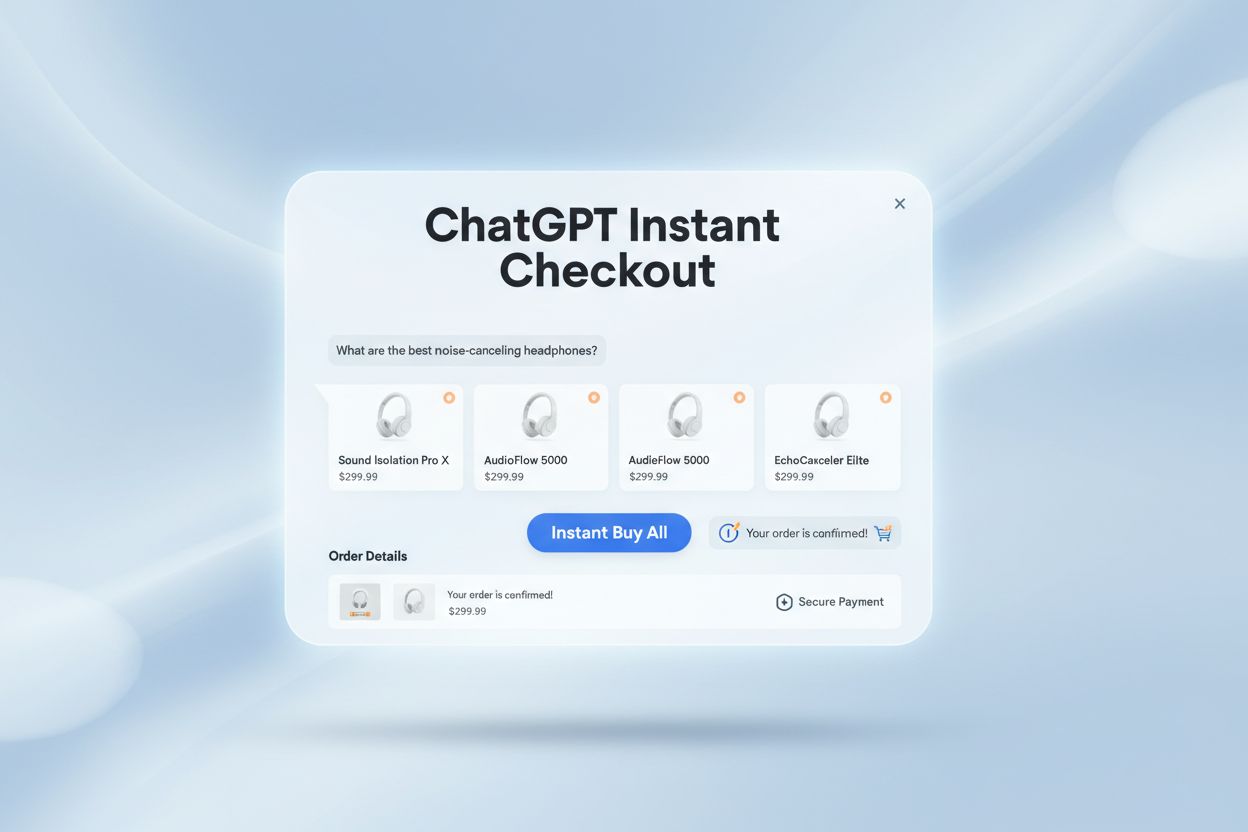
The checkout flow within ChatGPT Instant Checkout streamlines the traditional multi-step purchasing process into a conversational interaction, fundamentally changing how consumers move from product discovery to transaction completion. Rather than navigating through search results, clicking through product pages, and entering payment information across multiple screens, users described what they needed, receive AI-curated recommendations, and complete purchases through natural language commands. The following table illustrates how that flow compared to traditional e-commerce pathways:
| Traditional E-Commerce Flow | ChatGPT Instant Checkout Flow |
|---|---|
| Search engine query | Conversational product description |
| Browse search results | AI-curated recommendations |
| Click product link | Instant product details in chat |
| Navigate product page | Comparison within conversation |
| Add to cart | Direct purchase confirmation |
| Checkout page entry | Payment processing in-chat |
| Order confirmation | Transaction complete |
This conversational commerce model collapses the traditional search→click→checkout funnel into a single, unified experience where product research and purchasing happen simultaneously within the same interface.
At launch, OpenAI and Shopify said over 1 million Shopify merchants would be able to sell through Instant Checkout, but in practice only about 30 Shopify merchants reportedly went live before the feature was retired in March 2026. The lesson is that consumer appetite for AI-assisted research is real, while in-chat payment did not become the way people buy.
The lessons from Instant Checkout still apply to ChatGPT product discovery. Merchants who want to be recommended need to address several critical operational and strategic considerations:
These elements determine whether ChatGPT recommends your products and sends buyers to your site.
Instant Checkout launched with Etsy sellers and Shopify merchants, and OpenAI announced partnerships with retailers such as Walmart. Shopify was the main route for independent merchants, but few stores went live. After the March 2026 retirement, those merchants use their own checkout, while product data continues to flow into ChatGPT through ACP feeds from retailers including Walmart, Target, Best Buy and Sephora.
ChatGPT Instant Checkout was an attempt to shift e-commerce power dynamics, challenging the “gatekeeper” dominance that Amazon and Google have maintained over online commerce for the past two decades. Historically, these platforms controlled merchant access to consumers through search algorithms and marketplace placement, forcing retailers to compete on paid advertising and algorithmic visibility. The idea was that conversational commerce would enable merchant-to-consumer relationships mediated by AI rather than algorithmic gatekeepers, allowing brands to compete on product quality, relevance, and customer experience rather than advertising spend. This transition requires merchants to fundamentally rethink their go-to-market strategies, shifting investment from paid placement tactics to brand-building initiatives that make their products naturally discoverable through conversational queries. The long-term implication is a more distributed e-commerce landscape where merchant success depends on product excellence and brand recognition rather than platform favoritism.
The technical foundation of ChatGPT Instant Checkout was the Agentic Commerce Protocol (ACP), which establishes standardized communication between ChatGPT’s language models and merchant systems, enabling autonomous transaction processing without human intervention. The protocol let ChatGPT access real-time product catalogs, verify inventory availability, calculate shipping costs, process payments, and generate order confirmations—all within the conversational interface. Solutions like Syndigo OpenAI Connect and GEO gave merchants data preparation and enrichment capabilities, ensuring that product information is structured in formats that ChatGPT can reliably interpret and act upon. The technical sophistication required to maintain data accuracy, security, and real-time synchronization across millions of products and thousands of merchants proved harder than expected: stale prices, availability and delivery times in chat were among the reasons the feature was retired.
While Instant Checkout promised benefits, merchants and consumers face legitimate concerns regarding data privacy, transaction security, and the concentration of commerce power within a single AI platform. Consumers may worry about how their purchase history and preferences are stored, analyzed, and potentially used to train future AI models, particularly given OpenAI’s evolving data policies. Merchants express concerns about platform dependency—relying on ChatGPT for a significant portion of sales revenue creates vulnerability to algorithm changes, feature modifications, or policy shifts beyond their control. Additionally, the requirement for highly structured, AI-readable product data creates barriers for smaller merchants lacking sophisticated data management infrastructure, potentially widening the competitive gap between well-resourced retailers and independent sellers. Addressing these concerns through transparent data governance, merchant protections, and inclusive technical standards mattered for any in-chat checkout model to work, and OpenAI has since moved checkout back to merchants.
The retirement of Instant Checkout suggests that, for now, conversational interfaces work best for discovery and comparison, with the purchase completed on the merchant’s site. Product categories where detailed specifications and comparisons drive decisions are the natural fit. Merchants should keep investing in data quality, brand positioning and measurement of how often AI assistants recommend them.
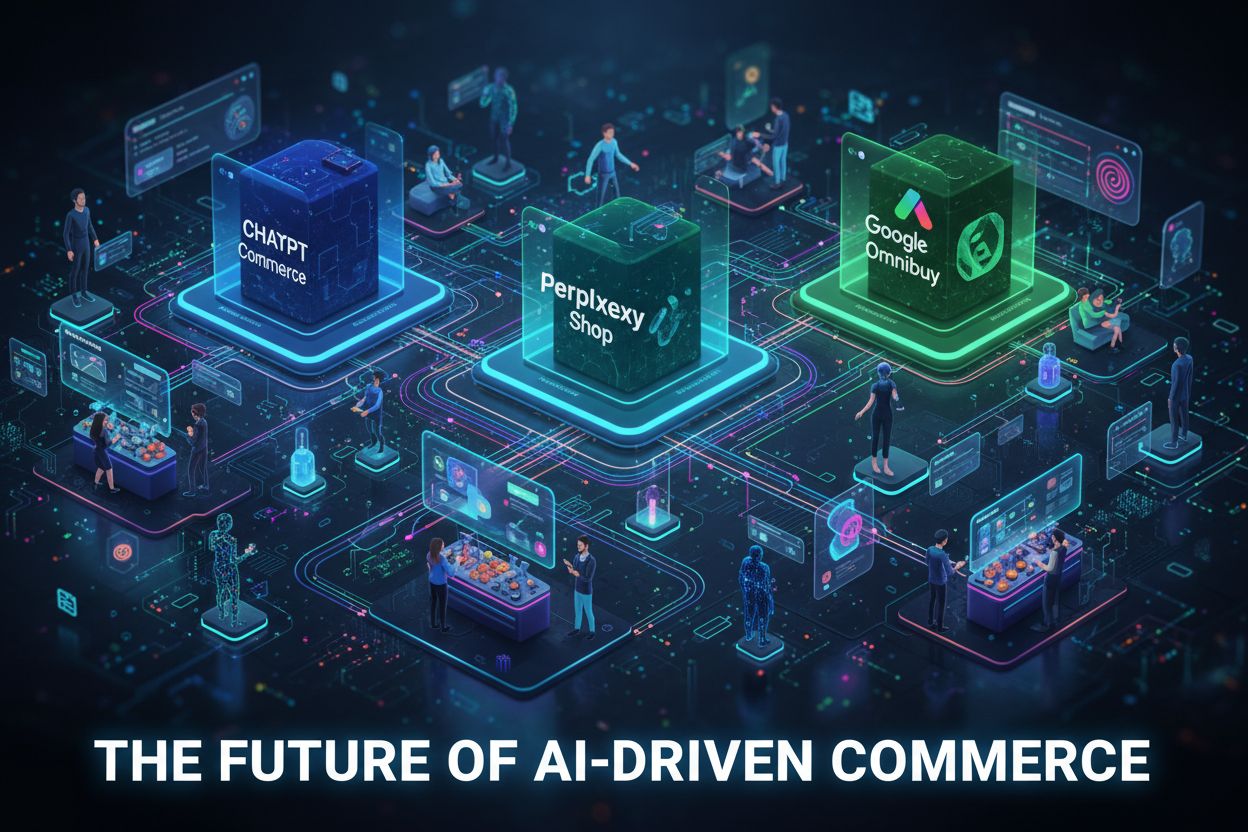
Instant Checkout did not become a lasting sales channel, but it showed where AI platforms are heading: they want to sit between shoppers and merchants at the moment of discovery. For the broader picture, see our agentic commerce guide .
Track mentions of your products and brand across ChatGPT, Perplexity, Google AI Overviews, and other AI platforms. AmICited helps you understand how AI systems recommend your products and competitors.
ChatGPT Instant Checkout launched in September 2025 and ended in March 2026. What it was, why it ended and what merchants should do now.
How ChatGPT Shopping Research works: the guided wizard, product evaluation, feeds and optimization tips. Includes the March 2026 end of Instant Checkout.
Compare ChatGPT Shopping and Perplexity Shopping for e-commerce. Explore features, user experience, pricing, and which AI platform works best for your business.
Cookie Consent
We use cookies to enhance your browsing experience and analyze our traffic. See our privacy policy.