


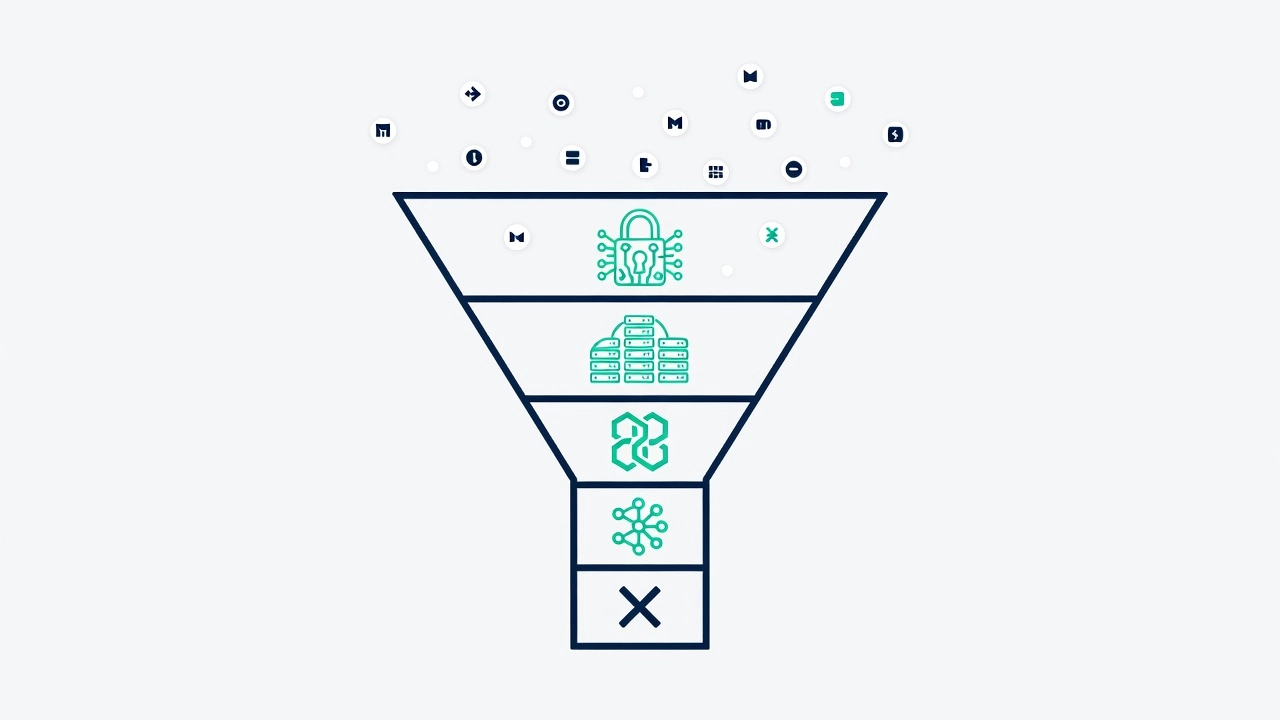
Why Meta AI Ignores Most Brands (5 Filters to Fix)
Meta AI, built into WhatsApp, Instagram, Messenger, and Facebook, filters out most brands before ever considering them for a recommendation. Here are the five d...
18 min read
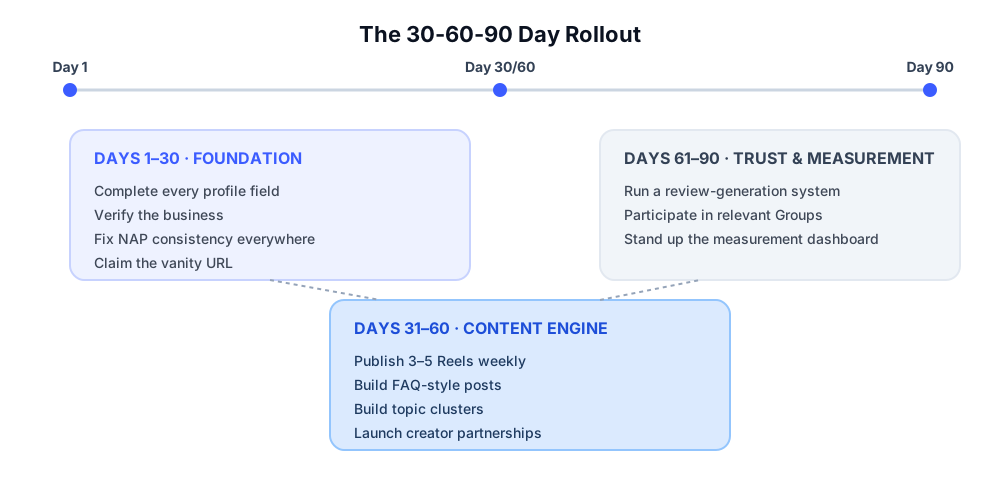
Meta AI now answers business questions directly instead of surfacing a page to browse. This is the complete 2026 checklist for making your Facebook Business Page visible to it: six phases, a 20-point audit, and a 30-60-90 day plan.
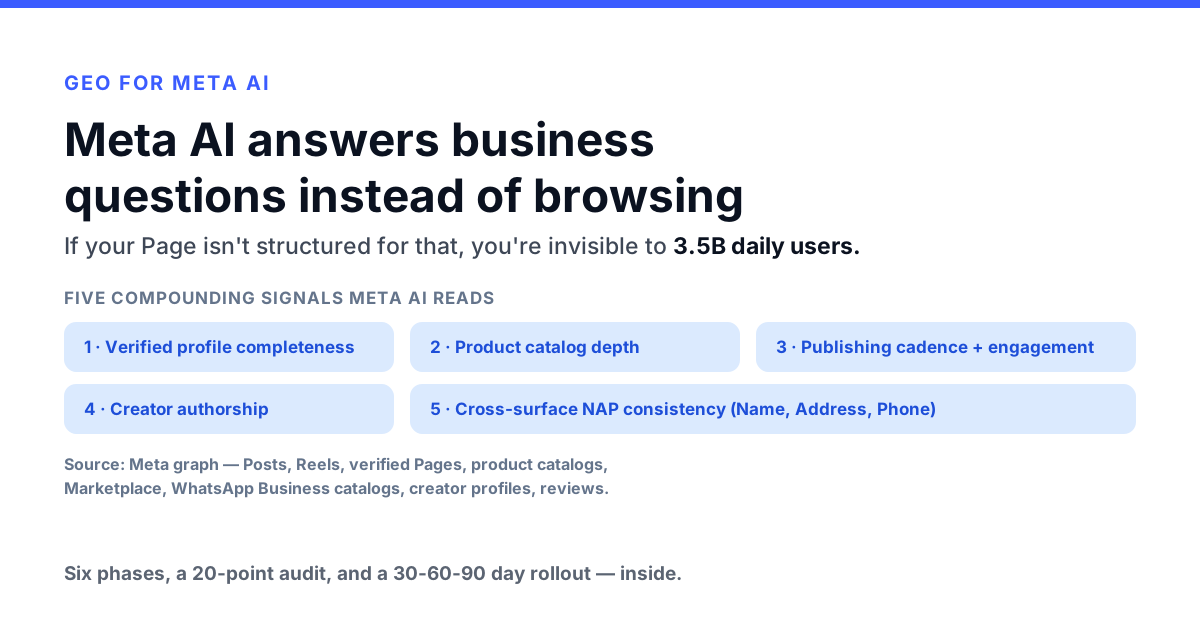
Facebook browsing used to mean scrolling, searching, and clicking through to a page. Increasingly, it means asking Meta AI a direct question and getting a synthesized answer back, no click required unless the answer is good enough to warrant one. If your Facebook Business Page isn’t structured for that reality, you’re effectively invisible to over 3.5 billion daily active users, no matter how good your actual product or service is.
This is the same shift that’s reshaped AI visibility everywhere else. Meta AI is just the newest surface applying it to local and small business discovery specifically. The mechanics are different from ChatGPT or Google AI Overviews, but the underlying discipline is the same: structure what you publish so an AI system can confidently retrieve and cite it.
This piece is the tactical build: the specific fields, phases, and audit points that make a Facebook Business Page legible to Meta AI. If you want the underlying reasons brands get filtered out of Meta AI answers in the first place, the five gates it applies, entity resolution, association, extractability, corroboration, and recency, are covered in why Meta AI ignores most brands . That piece explains the filtering logic across your whole web presence; this one is the Facebook Page checklist that helps you pass it.

Track how AI chatbots mention your brand across ChatGPT, Perplexity, and other platforms.
Meta AI’s primary data source is the Meta graph itself: public Posts, Reels, verified Business Pages, product catalogs submitted through Meta Business Manager, Marketplace listings, WhatsApp Business catalogs, creator profiles, and public reviews, augmented with web data pulled in from Google and Bing. That’s a meaningfully different retrieval surface than a general web crawler.
Five signals compound to determine whether your business gets surfaced accurately, or at all:
A gap in any one of these weakens the signal from the rest. A beautifully maintained content calendar sitting on top of an incomplete profile is still an incomplete profile as far as Meta AI is concerned.
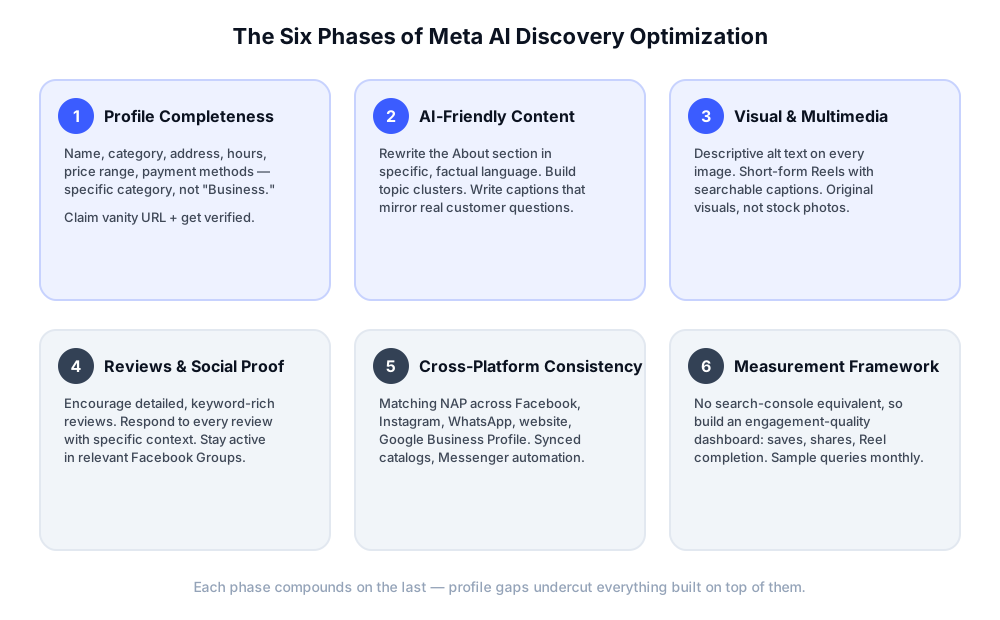
Start here, because everything else compounds on top of it. The fields that matter most:
The single most common mistake here is category laziness: avoid generic categories like “Business” or “Local Business.” Drill down instead: “Italian Restaurant” instead of “Restaurant.” A vague category gives Meta AI almost nothing to match your business against a specific query.
Claim your vanity URL and get Meta Verified while you’re at it. Verification helps meaningfully in trust-sensitive categories (finance, healthcare, legal) where the model has more reason to be cautious about which businesses it recommends.
Get the latest insights on AI mentions, brand monitoring, and optimization strategies.
Most About sections are written to sound impressive to a human skimming quickly. Meta AI needs something closer to a specification.
Ineffective: “We’re passionate about delivering excellence through innovative solutions.”
Effective: “We provide 24/7 emergency plumbing repairs in Phoenix, Arizona, including drain cleaning, water heater installation, leak detection, and sewer repair.”
The second version answers “what does this business actually do, where, and when” in one sentence: exactly what a retrieval system needs to match you against a real customer question. Build topic clusters around your core services, and write captions that mirror the actual questions customers ask rather than generic promotional copy. Deliberately writing some content in FAQ format helps too; it’s a format Meta AI can lift directly.
Images and video carry retrievable signal, but only if they’re described. Add descriptive alt text to every image, not “photo1.jpg” defaults, but something like “Master plumber repairing a kitchen sink drain pipe with a pipe wrench in a Phoenix residential home.” That single line does double duty: accessibility and machine-readable context.
Short-form Reels with searchable captions outperform static images for engagement signal, and original visuals consistently outperform stock photos or reposted content, both for the humans deciding whether to trust you and for the model reading engagement as a quality signal.
Encourage detailed, keyword-rich reviews rather than bare star ratings: a review that mentions the specific service performed is far more useful to Meta AI than “5 stars, great service.” Respond to every review with specific context rather than a copy-pasted thank-you, and stay active in relevant Facebook Groups. This is the same underlying logic behind managing reviews for AI visibility on any platform: detailed, current, responded-to reviews are a trust signal the model can actually use.
This is the phase most businesses underestimate, and it’s often the cheapest to fix. Your Name, Address, and Phone number need to match exactly across Facebook, Instagram, WhatsApp Business, your website, and Google Business Profile, the same local AI visibility discipline that matters everywhere else. Inconsistency doesn’t just confuse humans; it actively degrades the entity signal that helps Meta AI confirm you’re a real, single, coherent business rather than several loosely related listings.
Beyond NAP, keep product catalogs synchronized (100–1,000 SKUs where applicable), connect your full platform ecosystem, and set up Messenger automation so the loop closes when a customer does decide to reach out.
Meta doesn’t provide anything like a search console for AI visibility, so you have to build your own signal. Track an engagement-quality dashboard (saves, shares, Reel completion rates) as a leading indicator, and separately sample a representative set of real customer questions against Meta AI monthly to see whether, and how accurately, your business gets surfaced. This is the same measurement discipline that any serious AI visibility program runs across every platform, not just this one.
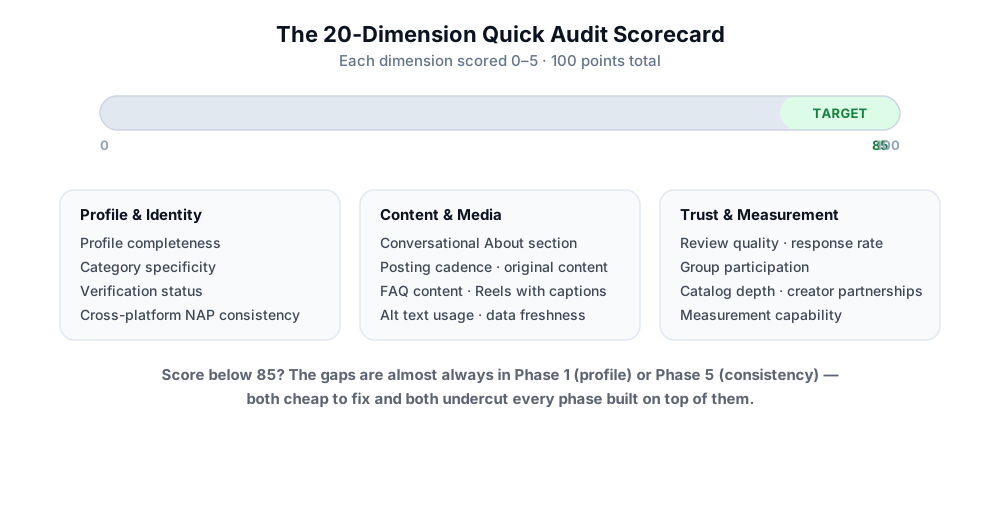
Score your Page across 20 dimensions, 0–5 points each, for a maximum of 100. They break down into three groups: profile and identity (completeness, category specificity, verification, NAP consistency), content and media (About section quality, posting cadence, original content, FAQ content, Reels with captions, alt text, freshness), and trust and measurement (review quality, response rate, Group participation, catalog depth, creator partnerships, measurement capability).
Target a score of 85–100. If you land below that, the gap is almost always in profile completeness or cross-platform consistency, both mechanical, cheap fixes that unlock everything built on top of them, rather than a content-quality problem that takes months to solve.
Treat your Facebook Page as a structured data asset, your content as a knowledge base, and your engagement as a trust signal: that’s the actual mental model shift this requires. None of the six phases above is individually hard; the businesses that fall behind are the ones that skip the boring, mechanical Phase 1 and Phase 5 work and go straight to content, then wonder why Meta AI still doesn’t surface them.
Knowing whether it’s actually working, not just on Meta, but across ChatGPT, Perplexity, Claude, and Google AI Overviews too, is exactly what Am I Cited is built to show you.
Yasha is a talented software developer specializing in Python, Java, and machine learning. Yasha writes technical articles on AI, prompt engineering, and chatbot development.

Am I Cited tracks how Meta AI, ChatGPT, Perplexity, Claude, and Google AI Overviews mention, cite, and recommend your brand, so you know if your Facebook Page optimization is actually working.
Meta AI, built into WhatsApp, Instagram, Messenger, and Facebook, filters out most brands before ever considering them for a recommendation. Here are the five d...
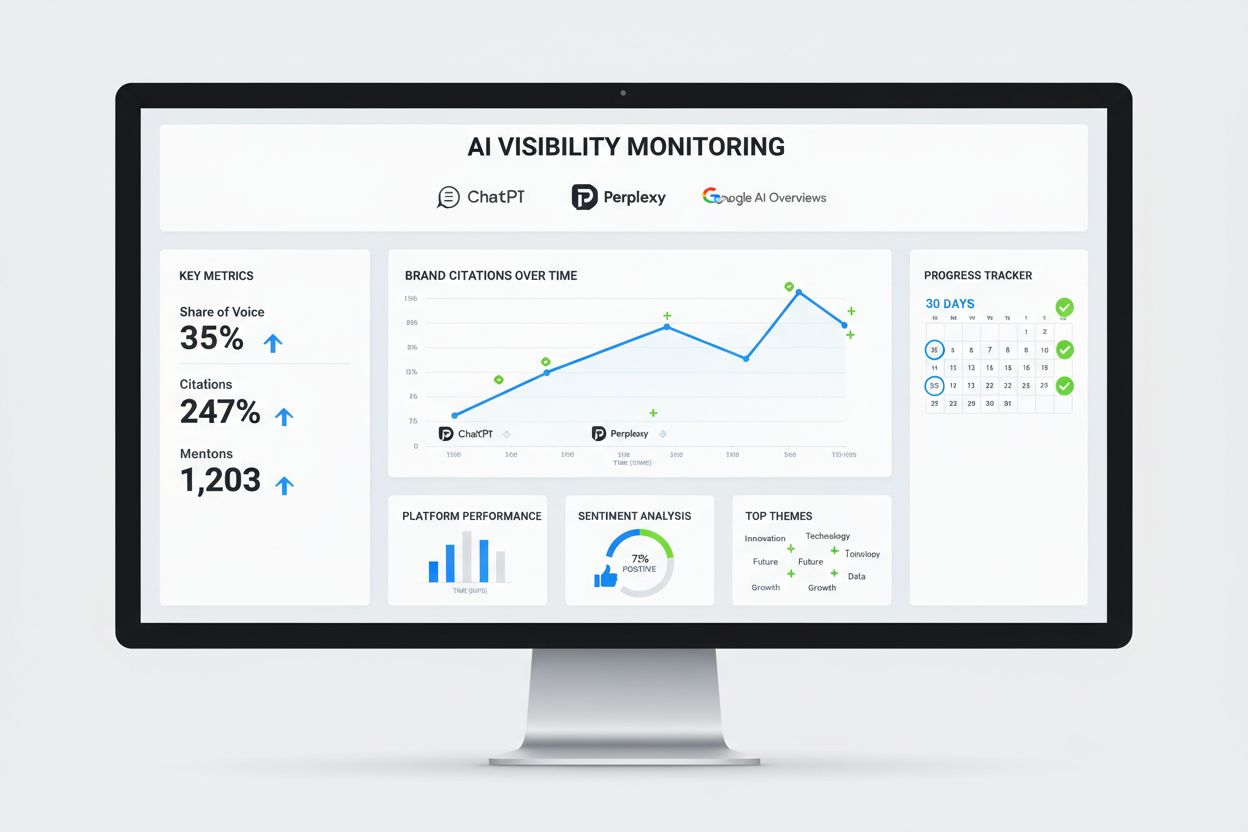
Discover 5 actionable quick wins to improve your AI visibility in 30-90 days. Learn how to optimize Google Business Profile, create conversational content, buil...
Learn how to build a comprehensive AI visibility strategy for 2026. Discover the 6 pillars of GEO, implementation roadmap, and tools to monitor your brand acros...
Cookie Consent
We use cookies to enhance your browsing experience and analyze our traffic. See our privacy policy.