


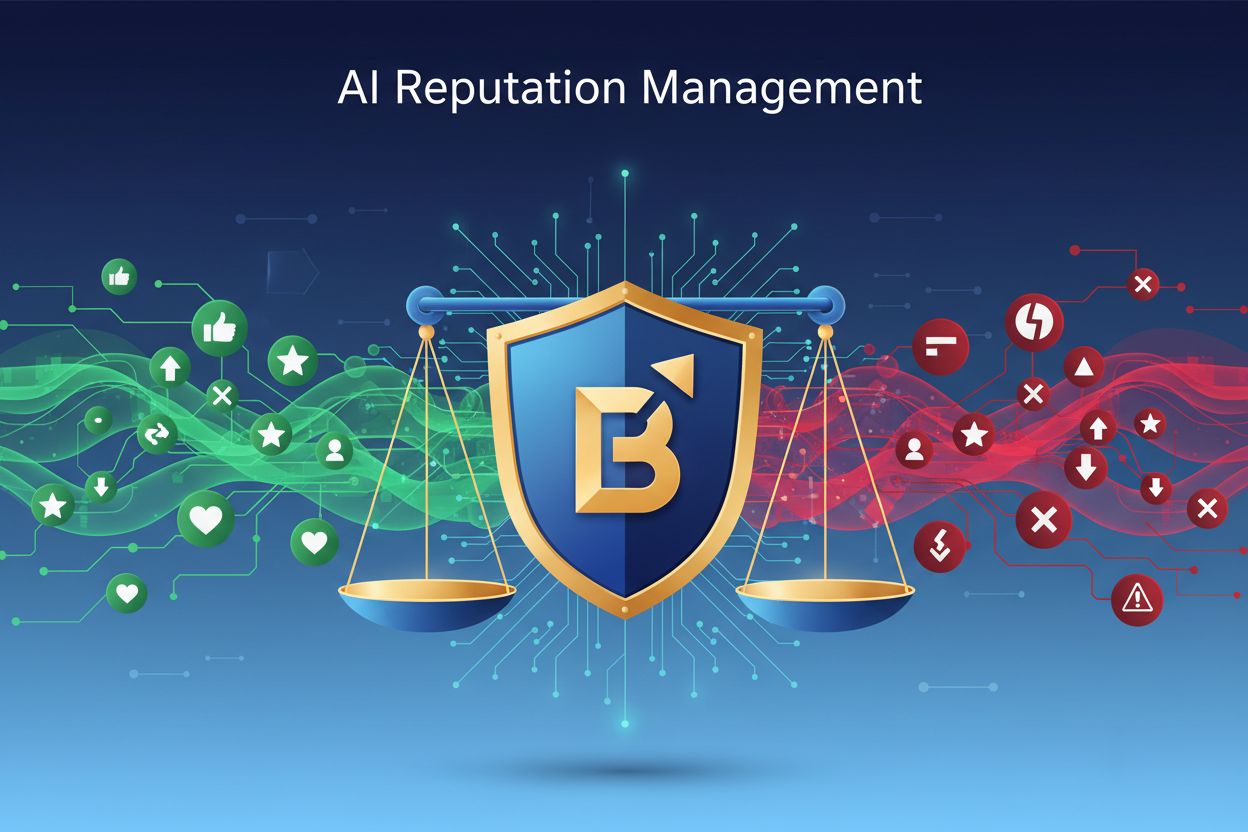
Managing Positive and Negative AI Brand Mentions
A framework for managing AI reputation as a full portfolio, not just a crisis log: how positive and negative mentions differ, how to amplify the positives, and ...
9 min read

A tactical playbook for negative AI mentions: how to set up detection, triage severity, escalate internally, and respond fast enough to keep them out of AI training data.
This is the tactical half of AI reputation work: how to catch a negative mention fast, decide how urgently it needs a response, and get through that response without dropping the ball on escalation. For the bigger-picture question—how negative mentions fit alongside positive ones in your overall AI reputation, and how to amplify positive mentions and build a sentiment portfolio instead of only firefighting—see our companion guide on managing AI reputation. Here, we’re staying narrowly focused on the negative side and the operational mechanics of catching and killing a bad mention before it spreads.
The urgency is real. 40% of shopping journeys now begin in AI tools like ChatGPT, Perplexity, and Google’s AI Overviews, meaning your brand’s visibility is no longer controlled by traditional search engines alone. When negative mentions appear in these AI-powered platforms, the damage spreads exponentially—negative sentiment travels 4x faster than positive feedback through AI systems, creating a dual exposure problem that traditional reputation management strategies simply weren’t designed to handle. According to McKinsey research, your official brand website accounts for only 5-10% of information sources that feed AI answers, and a single fabricated story can cascade across multiple AI platforms simultaneously, reaching millions of users before you even realize the crisis has begun.
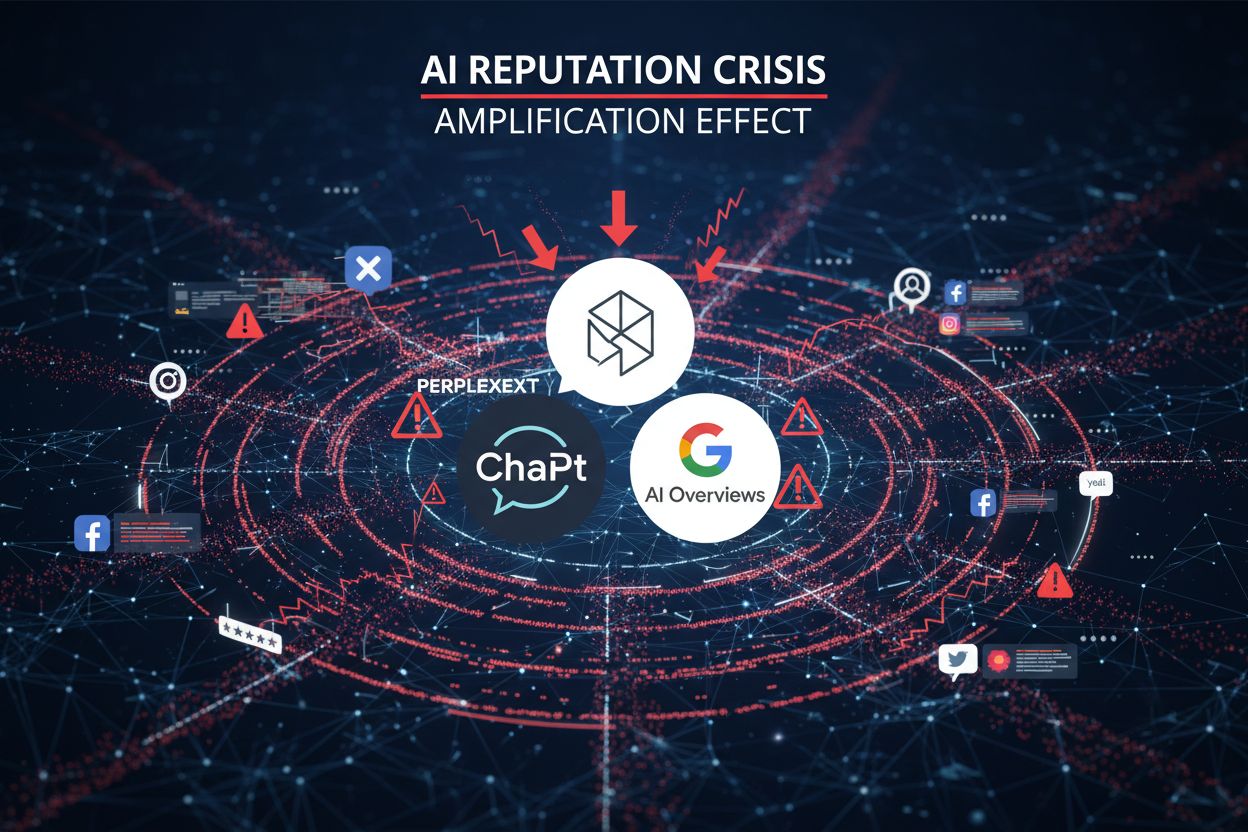
Legacy reputation monitoring tools were built for a different era—one where search engines were the primary concern and response times were measured in days. These systems struggle with the scale and speed of AI-driven information distribution, often missing negative mentions entirely because they lack visibility into proprietary AI platforms and their training data sources. Traditional monitoring also fails at detecting sarcasm, context-dependent negativity, and implicit complaints, with 60% of negative customer sentiment lacking explicitly negative language—a nuance that human reviewers might catch but automated legacy systems consistently miss. The response advantage is staggering: companies using AI-powered monitoring achieve 30% faster response times compared to those relying on manual tracking, a critical difference when negative mentions can reach millions in hours.
| Monitoring Type | Speed | Accuracy | Scale | Sentiment Detection | Cost |
|---|---|---|---|---|---|
| Traditional Monitoring | Slow (24-48 hrs) | 65-75% | Limited | Poor (explicit only) | $500-2,000/mo |
| AI-Powered Monitoring | Fast (real-time) | 90-95% | Enterprise-scale | Advanced (implicit & contextual) | $1,500-5,000/mo |
| Hybrid Approach | Very Fast (1-4 hrs) | 95%+ | Unlimited | Comprehensive | $2,000-7,000/mo |

Track how AI chatbots mention your brand across ChatGPT, Perplexity, and other platforms.
Negative sentiment in AI-generated content operates differently than traditional online reviews—it’s often more subtle, more credible-sounding, and more deeply embedded in conversational contexts where users trust the AI’s authority. When a user asks ChatGPT “Is this brand trustworthy?” and the AI references a negative article or complaint in its response, that mention carries significant weight because users perceive AI outputs as objective and factual, even when they’re drawing from biased or outdated sources. The emotional intensity of negative mentions matters tremendously; misinformation and fabricated stories trigger stronger emotional responses than factual criticism, making them spread faster and stick longer in user memory.
Anomaly detection is what turns this from an abstract risk into something you can act on—a sudden spike in negative mentions across multiple AI platforms within a short timeframe often indicates either a coordinated attack, viral misinformation, or a genuine crisis that requires immediate investigation. Consider the Target case study: a fabricated hoax claiming the retailer sold Satanic-themed children’s clothing, complete with AI-generated images made in Midjourney, spread across dozens of websites and became embedded in multiple AI training datasets within days—a timeline that would have been impossible in the pre-AI era. 60% of company leaders report that misinformation has directly affected their brand reputation, yet most lack the tools to detect these mentions before they reach critical mass. Companies that identified negative mentions within the first 24 hours reported 70% better outcomes in damage control compared to those who discovered the crisis after it had already spread—which is exactly why detection speed, not just detection accuracy, is the metric that matters here.
Building an effective detection framework requires moving beyond passive monitoring to continuous, proactive surveillance across AI platforms, social media, news sources, and emerging channels. Start by establishing baseline metrics for your brand—track current sentiment levels, identify your most vulnerable topics, and document which platforms generate the most traffic to your brand information. Configure intelligent alerts that trigger not just on explicit negative keywords, but on contextual patterns that indicate potential reputation threats: sudden spikes in specific topics, coordinated mentions across multiple platforms, or unusual engagement patterns that suggest organized campaigns.
Implement rapid response protocols with clear escalation paths—define who needs to be notified when different alert thresholds are triggered, and establish decision-making authority so responses aren’t delayed by bureaucratic approval processes. Set up monitoring for competitor mentions alongside your own brand tracking, as negative competitor stories often include comparative claims that shape your brand positioning in AI answers even when you’re not named directly. Create custom dashboards that surface the most critical information at a glance: sentiment trends, platform distribution, reach estimates, and recommended response actions. The framework should include both automated detection (for scale and speed) and human review (for context and nuance), recognizing that the most dangerous negative mentions are often the ones that sound most credible and require human judgment to properly assess. For a broader comparison of the monitoring tools and NLP techniques behind these dashboards, see our guide on managing positive and negative AI reputation—here, the framework is about wiring alerts to action, not the underlying technology.
Get the latest insights on AI mentions, brand monitoring, and optimization strategies.
Not every negative mention deserves the same urgency, and treating them all as five-alarm fires burns out your team fast. Start by defining your core monitoring prompts—the specific questions you want to track across AI platforms, such as “Is [brand name] trustworthy?”, “[brand name] complaints”, “[brand name] vs competitors”, and industry-specific queries relevant to your business. Then set your tracking frequency based on risk profile: high-risk industries (finance, healthcare, e-commerce) should monitor continuously with real-time alerts, while lower-risk sectors might use daily or weekly reviews.
Configure your alert thresholds to distinguish between different severity levels—misinformation and fabricated content warrant immediate escalation, legitimate complaints require response within 4 hours, and general negative sentiment should be reviewed within 24 hours. Assign clear ownership and decision-making authority so that alerts don’t get lost in approval chains; designate specific team members responsible for different alert types and empower them to take action without waiting for higher-level approval. Document your monitoring procedures, alert configurations, and response protocols in a centralized playbook that your entire team can reference, ensuring consistency and reducing response times when crises occur.
Speed is your most valuable asset once a negative mention clears your triage threshold. The first 24 hours are critical—companies responding within this window achieve significantly better outcomes in limiting spread and mitigating damage than those who wait longer. Your response should vary based on the type of negative mention: factual errors require corrections and fact-checking outreach, legitimate complaints demand genuine solutions and public acknowledgment, while misinformation necessitates coordinated debunking efforts across multiple platforms.
For AI-specific responses, focus on getting corrections into authoritative sources that AI systems use for training data—news articles, official statements, and verified business information are weighted more heavily by AI algorithms than social media posts. Timing matters enormously; a response published within hours can prevent a negative mention from becoming embedded in AI training datasets, while a response published days later may have minimal impact on AI outputs that have already incorporated the negative information. Connect reputation issues directly to revenue impact to secure executive buy-in for rapid response: calculate how negative mentions affect customer acquisition costs, conversion rates, and customer lifetime value, then use these metrics to justify investment in faster response capabilities. Develop templated response frameworks for common negative mention types, allowing your team to respond quickly without sacrificing quality or accuracy.
Generative Engine Optimization represents a longer-horizon complement to the response playbook above—the practice of strategically creating and promoting content specifically designed to appear in AI-generated responses. Unlike traditional SEO, which focuses on ranking in search results, GEO targets the training data and response generation logic of AI systems, ensuring that when users ask questions about your brand, the AI draws from positive, accurate sources. This dual-layer approach provides protection against negative mentions: while alerting and rapid response handle immediate crises, GEO builds a long-term buffer by ensuring your brand’s positive narrative is deeply embedded in AI training data.
The critical window for GEO intervention is narrow—once negative information becomes established in AI training datasets, it becomes exponentially harder to displace, making proactive content strategy essential alongside your detection framework. Effective GEO involves creating authoritative content on your official channels, securing mentions in trusted third-party sources, and ensuring your brand information is consistently accurate across all platforms that feed into AI systems. This strategy complements the escalation and response process above by shifting some of the burden from reactive crisis management to proactive reputation building, reducing the likelihood that negative mentions will ever reach critical mass in the first place.
The most effective playbook is the one you never have to run—building such a strong positive narrative around your brand that negative mentions struggle to gain traction in AI systems. Develop a proactive content strategy that consistently publishes authoritative, high-quality content across your official channels, ensuring that when AI systems search for information about your brand, they find credible, positive sources. Cultivate relationships with trusted third-party sources—industry publications, analyst firms, customer review platforms, and thought leadership venues—that can amplify your positive narrative and provide the authoritative backing that AI systems weight heavily in their responses.
Address potential vulnerabilities before they become crises: identify the most common complaints or criticisms in your industry, then create content that directly addresses these concerns with solutions and transparency. Implement robust customer service and quality assurance processes that minimize legitimate complaints in the first place—negative mentions rooted in real customer experiences are far harder to counter than misinformation, making prevention at the source invaluable. Monitor emerging topics and potential controversy vectors within your industry, allowing you to get ahead of narratives before they become embedded in AI training data. By combining a tight detection framework, a clear escalation path, and proactive content, you create a competitive advantage: while competitors scramble to respond to reputation crises, your brand maintains consistent, defensible visibility across AI platforms.
Yasha is a talented software developer specializing in Python, Java, and machine learning. Yasha writes technical articles on AI, prompt engineering, and chatbot development.

Protect your brand from negative AI mentions with real-time monitoring across ChatGPT, Perplexity, and Google AI Overviews.
A framework for managing AI reputation as a full portfolio, not just a crisis log: how positive and negative mentions differ, how to amplify the positives, and ...
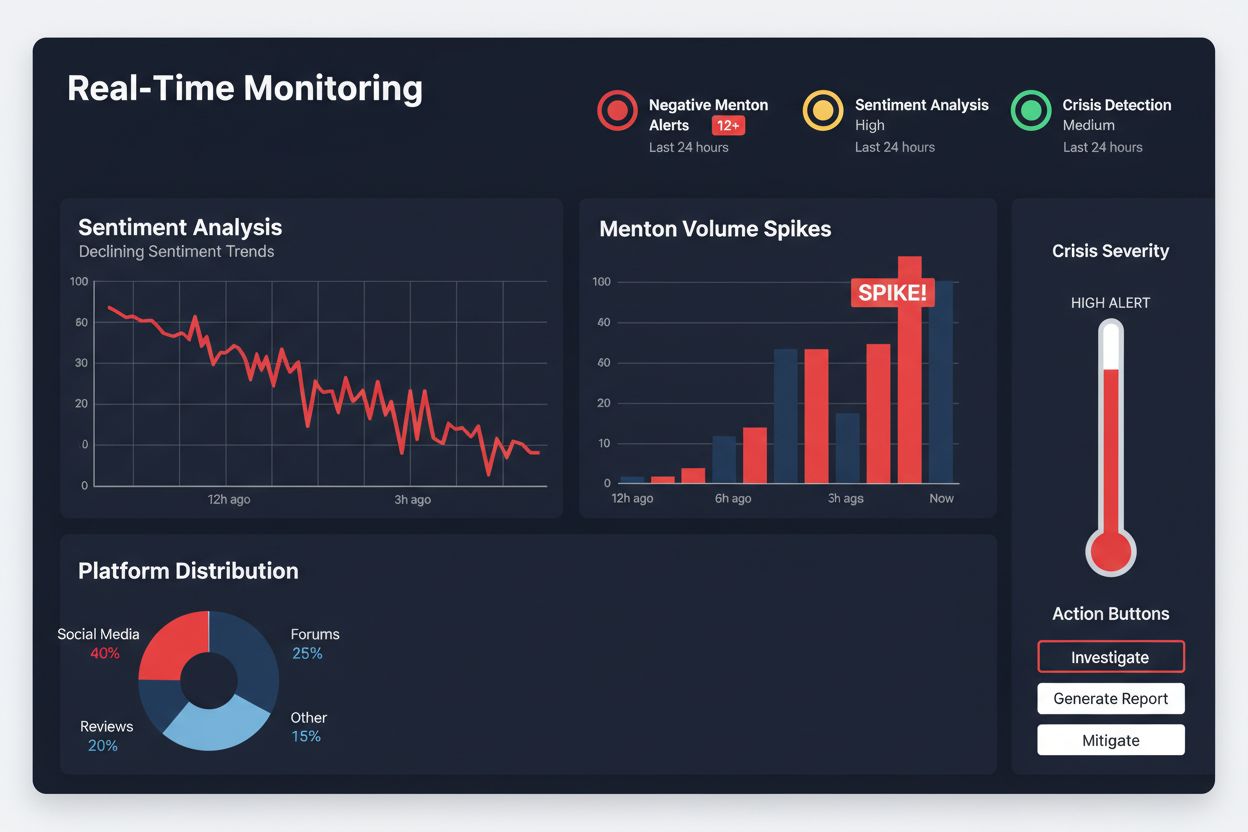
Learn how to detect and respond to negative brand mentions in AI search platforms with real-time alert systems. Protect your reputation before negative content ...

Learn effective strategies to identify, monitor, and correct inaccurate information about your brand in AI-generated answers from ChatGPT, Perplexity, and other...
Cookie Consent
We use cookies to enhance your browsing experience and analyze our traffic. See our privacy policy.