



Negative AI Mentions: The Detection and Response Playbook
A tactical playbook for negative AI mentions: how to set up detection, triage severity, escalate internally, and respond fast enough to keep them out of AI trai...
9 min read
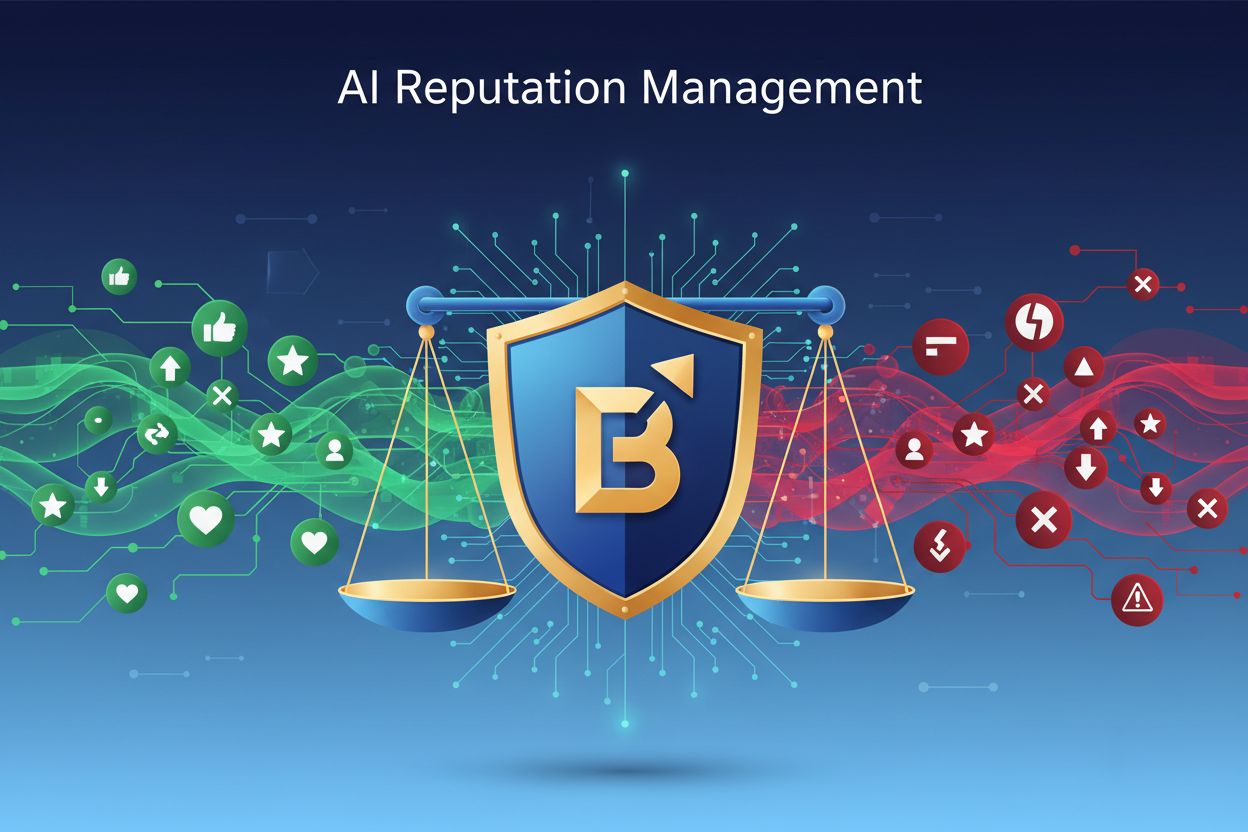
A framework for managing AI reputation as a full portfolio, not just a crisis log: how positive and negative mentions differ, how to amplify the positives, and how to measure the whole picture.
Most brands only start paying attention to AI mentions when something goes wrong. That’s a narrow way to think about AI reputation: it treats sentiment as a fire to put out rather than an asset to build. This guide takes the wider view—how positive and negative mentions fit together into a single portfolio, how to grow the positive share of that portfolio deliberately, and how to measure the whole picture rather than just the incidents. If you’re in the middle of an active negative mention and need the operational playbook right now, jump to how to detect and respond to negative mentions fast —that guide covers alert thresholds, escalation paths, and response templates in depth. Here, we’re zooming out.
The emergence of AI search engines and large language models has fundamentally transformed how consumers discover and evaluate brands. Unlike traditional search engines that return links to websites, AI tools like ChatGPT, Perplexity, and Google AI Overviews synthesize information from thousands of sources to generate direct answers about your company, products, and reputation. This creates a dual exposure problem: mentions—positive or negative—appear immediately in AI-generated responses and get amplified across multiple AI platforms simultaneously, reaching audiences who never visit your website. According to McKinsey research, brand websites account for only 5-10% of the sources that AI systems cite when generating responses about companies, meaning your official narrative competes with dozens of third-party sources for every mention, good or bad. With 40% of shopping journeys now starting in AI tools rather than traditional search engines, the stakes for managing that full portfolio have never been higher.
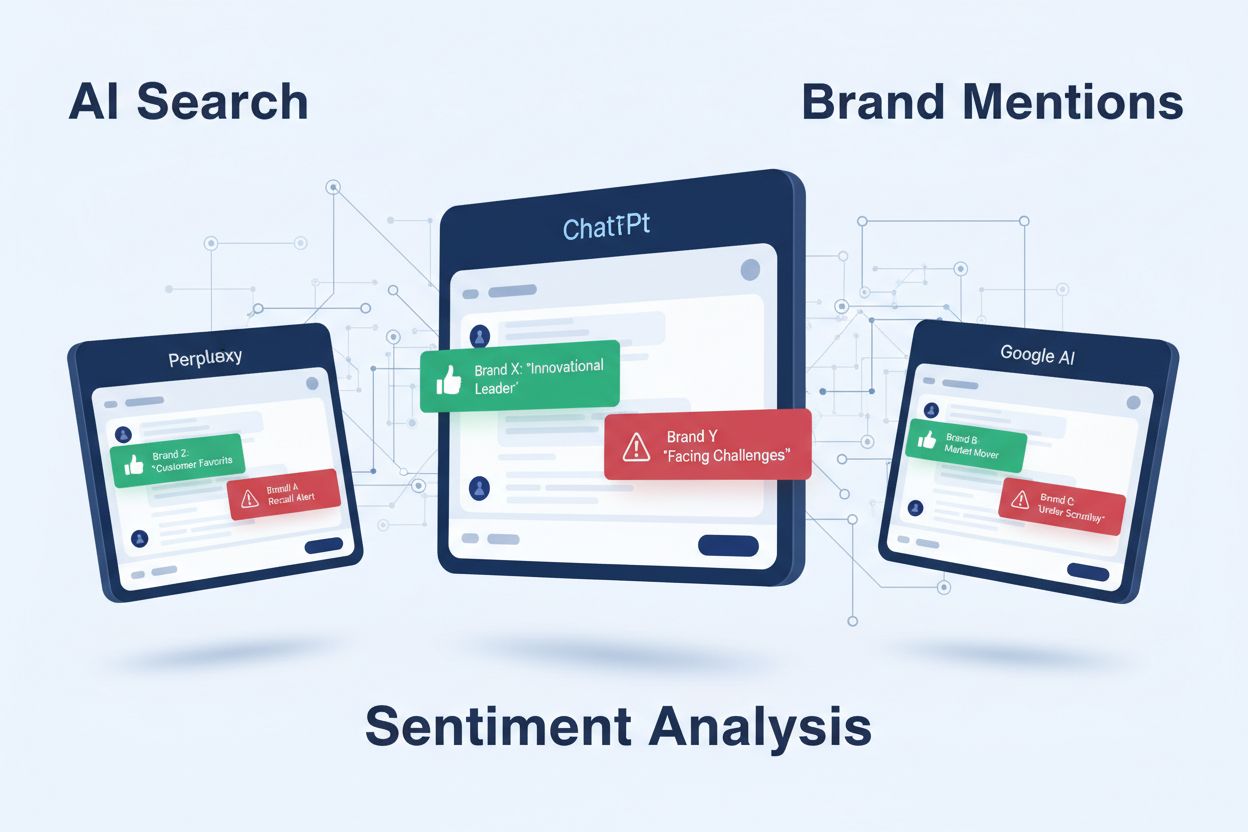
Positive mentions occur when AI systems cite your brand in favorable contexts—recommending your products, highlighting your expertise, praising your customer service, or positioning you as an industry leader. Negative mentions, conversely, include criticisms, complaints, warnings, or unfavorable comparisons that could influence purchasing decisions or damage brand perception. The challenge lies in the nuance: sarcasm, irony, and context-dependent language can fool basic keyword matching systems, requiring sophisticated sentiment analysis to accurately classify mentions. Understanding the distinction matters because sentiment directly impacts consumer behavior—77% of customers respond to and act upon concerns raised about brands, while 76% of consumers trust a brand’s positive online presence, and 9 out of 10 consumers make purchasing decisions influenced by positive reviews. Here’s how different mention types break down:
| Mention Type | Characteristics | Impact | Detection Difficulty |
|---|---|---|---|
| Positive | Recommendations, praise, endorsements, expert positioning | Increases trust, drives conversions, builds authority | Low-Medium (sarcasm can confuse) |
| Negative | Complaints, warnings, criticisms, unfavorable comparisons | Reduces trust, decreases conversions, damages reputation | Medium-High (context-dependent) |
| Neutral | Factual statements, mentions without sentiment | Minimal direct impact, provides context | Low |
| Mixed | Contains both positive and negative elements | Unpredictable impact, requires careful analysis | High (requires nuanced understanding) |
The point of tracking all four categories together, rather than only chasing negatives, is that your portfolio mix tells you where to invest. A brand with a healthy share of positive and neutral mentions can absorb an occasional negative one; a brand that’s never actively built up its positive share has no cushion when something goes wrong.

Track how AI chatbots mention your brand across ChatGPT, Perplexity, and other platforms.
Modern AI reputation monitoring relies on advanced natural language processing (NLP) and machine learning algorithms that go far beyond simple keyword matching. Deep learning models trained on millions of labeled examples can distinguish between genuine criticism and sarcastic praise, understanding context and tone in ways that rule-based systems cannot. These systems employ transformer-based architectures—the same technology powering ChatGPT itself—to analyze the semantic meaning of mentions rather than just surface-level language patterns. Multilingual support has become essential, as 71% of consumers prefer to read and write reviews in their native language, requiring monitoring systems to accurately assess sentiment across dozens of languages without losing nuance in translation. Real-time processing capabilities ensure that mentions are detected and classified within minutes of appearing in AI systems, whether they’re positive, negative, or somewhere in between. Leading sentiment analysis systems achieve accuracy rates between 85-92% in identifying positive versus negative mentions, though accuracy varies based on domain complexity, language, and the presence of sarcasm or cultural references. AmICited.com’s proprietary sentiment engine combines these technologies specifically for AI platforms, where the conversational nature of ChatGPT and Perplexity requires different analytical approaches than traditional social media monitoring.
Effective AI reputation management requires understanding how different platforms cite and represent your brand:
ChatGPT Mentions: OpenAI’s system draws from training data and web sources, often citing your brand in response to user queries about your industry, products, or services. Mentions appear in conversational contexts where ChatGPT provides recommendations or comparisons.
Perplexity AI Citation Patterns: Perplexity explicitly cites sources in its responses, making it easier to track which mentions reference your brand and where those citations originate. The platform’s focus on current information means recent news and social media mentions carry significant weight.
Google AI Overviews Brand Representation: Google’s AI-generated summaries appear at the top of search results, synthesizing information from multiple sources. Your brand’s representation here directly impacts visibility for millions of daily searches.
Traditional vs. AI Search Differences: Unlike Google Search, which returns links, AI systems generate synthesized answers that may paraphrase, summarize, or recontextualize your brand information. A single mention—positive or negative—can be amplified across multiple AI platforms simultaneously.
Why AI-Specific Monitoring is Critical: Generic brand monitoring tools miss AI-specific citation patterns, source weighting, and the unique ways each platform presents information. What appears as a minor social media mention might become a prominent feature in AI-generated responses.
Get the latest insights on AI mentions, brand monitoring, and optimization strategies.
Detection and response get the attention because negative mentions feel urgent, but the bigger lever over time is deliberately growing your positive share. Positive mentions don’t just happen—they’re the byproduct of proof points that AI systems can find, trust, and cite. Start by identifying where your positive mentions already originate: customer reviews, analyst write-ups, case studies, press coverage, and community discussions. Once you know the sources, invest in strengthening them rather than treating them as one-off wins.
Pitch your best customer outcomes to industry publications and analyst firms whose content AI systems weight heavily as authoritative sources. Publish detailed, specific case studies on your own channels—vague praise carries less weight with sentiment models than concrete outcomes and named results. Make it easy for satisfied customers to leave reviews on the platforms AI systems actually cite, and keep your own site’s proof points (testimonials, certifications, third-party recognition) current so they keep reinforcing the positive narrative rather than going stale. This is a different exercise from crisis response: instead of reacting to what’s already been said, you’re actively shaping what gets said next, which compounds over time in a way that pure defense never does.
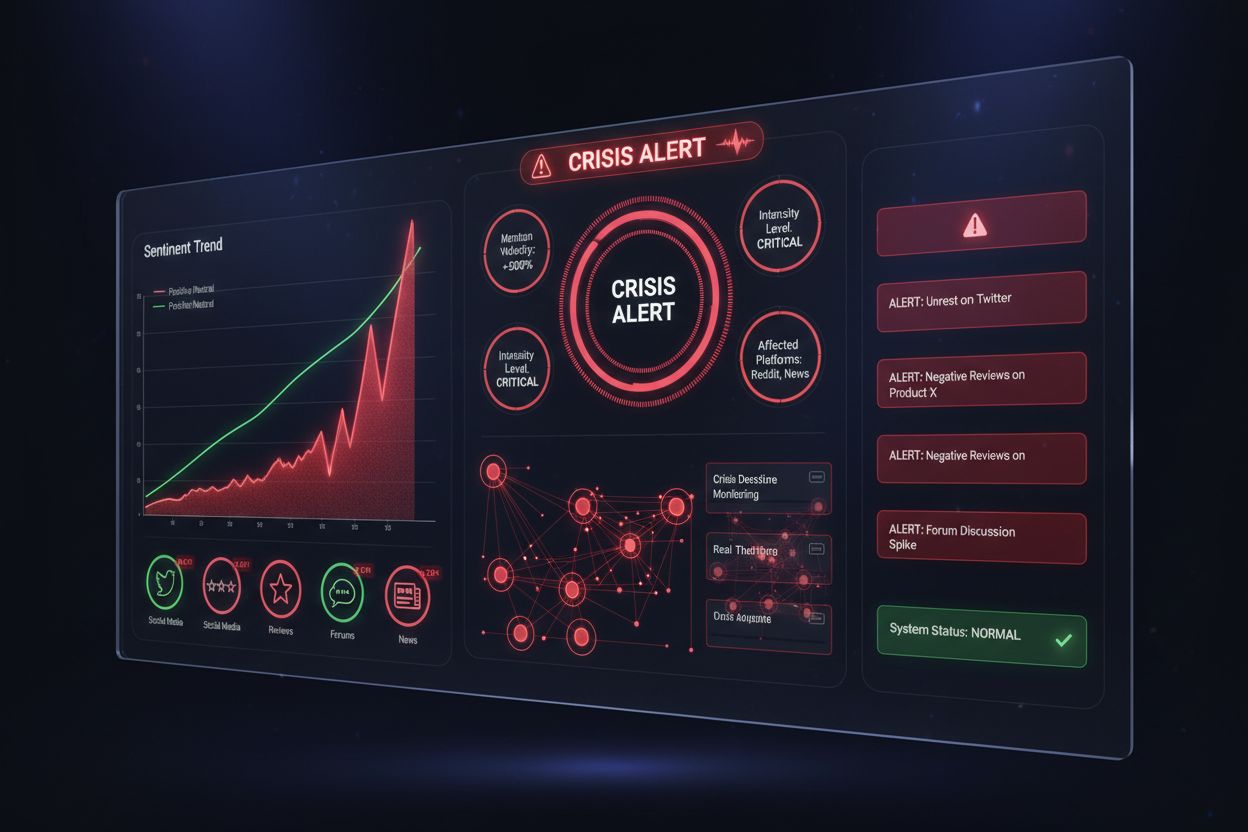
AI-powered reputation monitoring systems detect emerging crises by analyzing velocity (how quickly mentions spike), intensity (how negative the sentiment becomes), and spread (how many platforms are affected simultaneously). Anomaly detection algorithms establish baseline mention patterns for your brand, then flag unusual spikes that indicate potential problems—a sudden surge of negative mentions about a product recall, for example, or coordinated criticism from multiple sources. These systems can identify misinformation before it spreads widely, catching fabricated claims about your company before they become established “facts” in AI training data. Consider the case of a fashion brand that discovered through AI monitoring that Perplexity was citing a completely fabricated clothing line as one of their products—a false claim that had originated from a single blog post but was being amplified by AI systems. Real-time alerts enabled the company to contact Perplexity and provide corrected information within hours, preventing the misinformation from becoming entrenched. Research shows that 60% of major business leaders report that misinformation has negatively affected their company’s reputation, yet most lack the tools to detect and respond to AI-specific misinformation quickly enough to prevent damage. Once your monitoring surfaces a spike like this, the operational response—triage, escalation, templated replies—is where you’d turn to a dedicated negative-mention playbook rather than reinvent that process here.
The business impact of AI reputation management extends far beyond sentiment scores—it directly affects customer lifetime value (CLV), conversion rates, and brand equity. ROI calculation frameworks should connect reputation improvements to measurable business outcomes: track how positive sentiment correlates with increased website traffic from AI search results, how negative mention reduction affects customer acquisition costs, and how improved brand perception influences repeat purchase rates. Net Promoter Score (NPS) tracking provides another valuable metric, as customers who encounter positive brand mentions in AI systems report higher satisfaction and loyalty. A compelling case study comes from Bimbo, the multinational bakery company, which implemented comprehensive reputation monitoring and saw direct attribution of $580,000 in incremental sales to improved brand sentiment and visibility in AI search results. Sentiment improvement metrics should be tracked over time—establishing baseline positive-to-negative mention ratios, then measuring progress as you implement amplification and reputation management strategies. Long-term brand value compounds as positive AI mentions accumulate, creating a virtuous cycle where improved reputation attracts better sources, which further improves how AI systems represent your brand.
While several reputation monitoring platforms exist, most were designed for traditional media and social channels, leaving a critical gap in AI-specific monitoring. Competitors like Brand24, BrandMentions, and Brandwatch offer comprehensive social listening capabilities but lack specialized tracking for ChatGPT, Perplexity, and Google AI Overviews—the platforms where AI reputation increasingly matters most. AmICited.com fills this gap by specializing exclusively in AI mention monitoring, providing deep visibility into how ChatGPT, Perplexity, and Google AI represent your brand, both positive and negative. When evaluating AI reputation monitoring tools, look for several key features: real-time detection across multiple AI platforms, sentiment analysis sophisticated enough to catch sarcasm and context-dependent language, and the ability to track which sources AI systems cite when mentioning your brand. Multilingual support is essential if your brand operates internationally, as sentiment analysis must work accurately across languages and cultural contexts. Integration capabilities matter significantly—your reputation monitoring tool should connect with your existing marketing stack, CRM, and communication platforms to enable rapid response when it’s needed and easy amplification when it isn’t.
A comprehensive AI reputation management strategy begins with continuous monitoring deployment across all major AI platforms, establishing baseline metrics for your brand’s current representation and sentiment mix. Ownership should be defined before you need it—who reviews the portfolio weekly, who decides when a negative spike needs the full response playbook, and who’s responsible for amplification work like pitching case studies or cultivating third-party sources. Integration with your broader marketing and communications strategy ensures that AI reputation insights inform content creation, product development, and customer service improvements, rather than living in a monitoring dashboard nobody outside the team ever sees. Tracking which AI platforms cite which sources helps you understand your brand’s information ecosystem—if Perplexity frequently cites a particular review site, you might prioritize strengthening your presence there. AmICited.com’s monitoring dashboard provides the visibility needed to implement this strategy, showing exactly how your brand appears across ChatGPT, Perplexity, and Google AI Overviews, with actionable insights for both response and amplification.
Viktor Zeman is a co-owner of QualityUnit. Even after 20 years of leading the company, he remains primarily a software engineer, specializing in AI, programmatic SEO, and backend development. He has contributed to numerous projects, including LiveAgent, PostAffiliatePro, FlowHunt, UrlsLab, and many others.

Track how your brand is mentioned in ChatGPT, Perplexity, Google AI Overviews and other AI platforms. Get real-time alerts for positive and negative mentions to protect your AI reputation.
A tactical playbook for negative AI mentions: how to set up detection, triage severity, escalate internally, and respond fast enough to keep them out of AI trai...
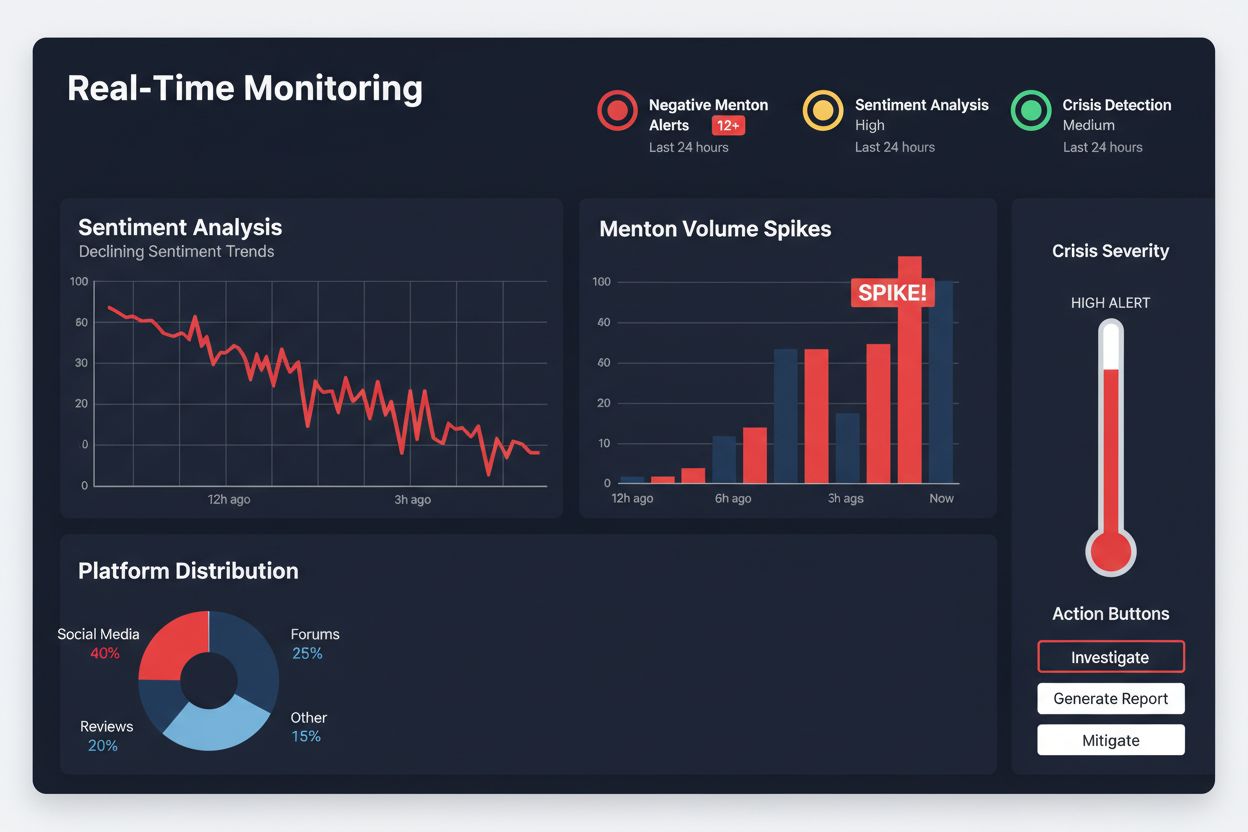
Learn how to detect and respond to negative brand mentions in AI search platforms with real-time alert systems. Protect your reputation before negative content ...

Learn how to monitor and manage your brand reputation across AI search engines like ChatGPT, Perplexity, and Gemini. Discover strategies for improving visibilit...
Cookie Consent
We use cookies to enhance your browsing experience and analyze our traffic. See our privacy policy.