


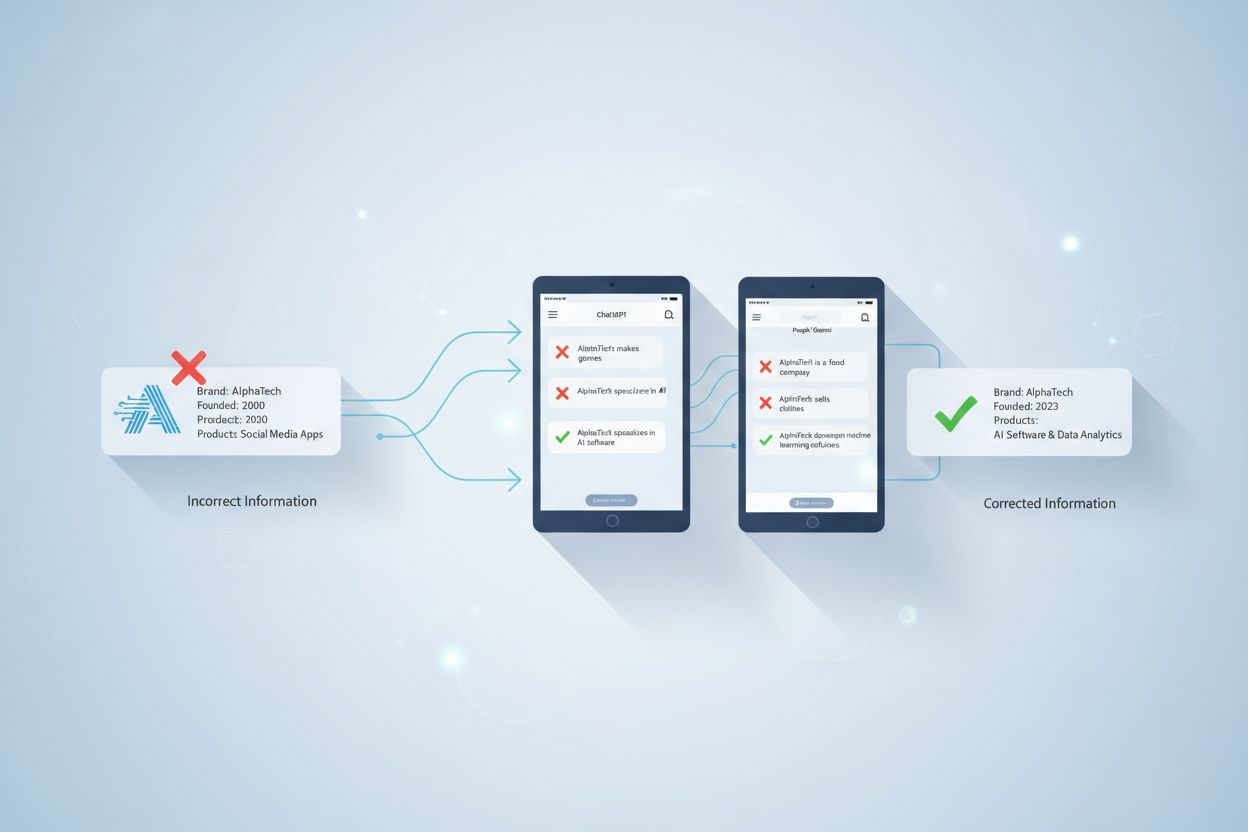
AI Misinformation Correction
Learn how to identify and correct incorrect brand information in AI systems like ChatGPT, Gemini, and Perplexity. Discover monitoring tools, source-level correc...
8 min read

Why AI systems misrepresent brands in the first place: the scale of the problem, misinformation vs hallucinations, Reddit’s outsized influence, and how to build long-term authority AI trusts.
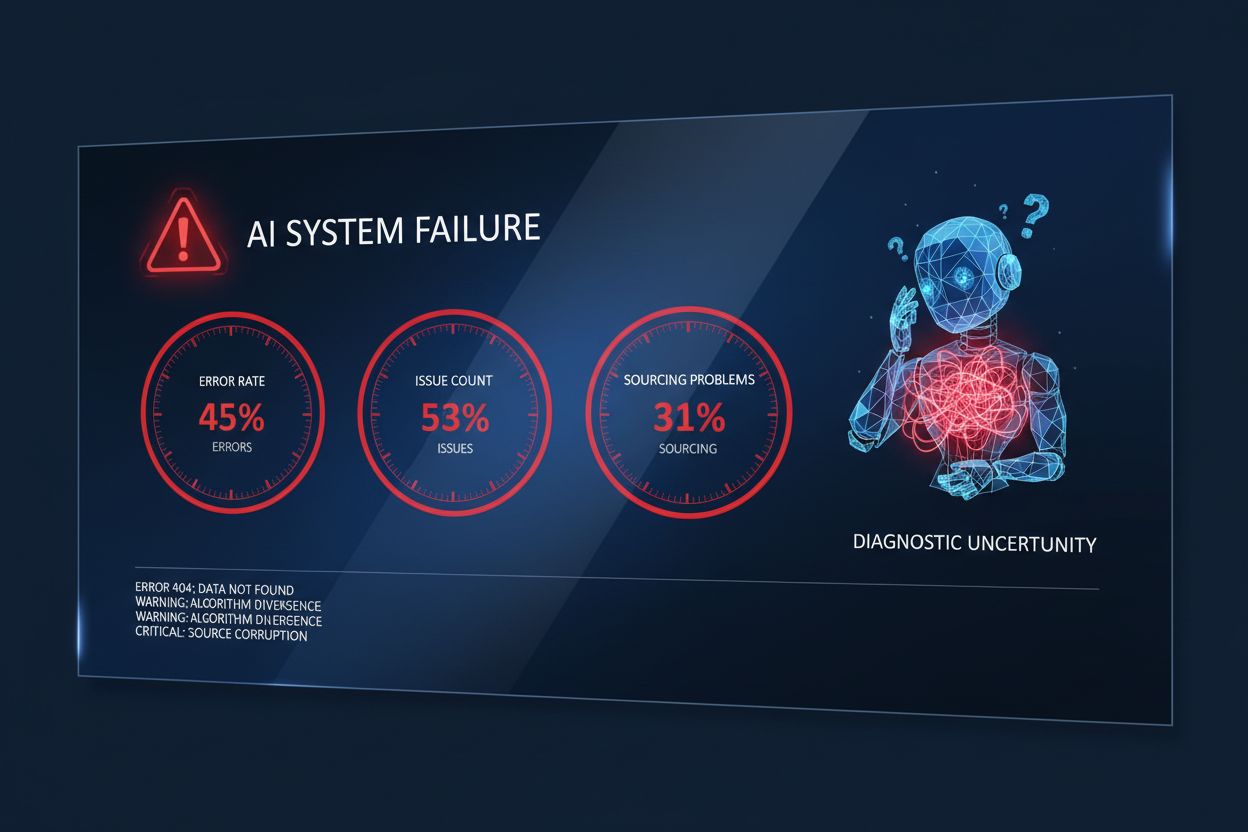
According to a groundbreaking study by the BBC and European Broadcasting Union (EBU) involving 22 international public broadcasters, approximately 45% of AI queries produce erroneous answers. This isn’t a minor glitch: it’s a systemic crisis affecting how billions of people discover information about brands. When a potential customer asks ChatGPT, Perplexity, or Google Gemini about your company, there’s nearly a one-in-two chance they’ll receive inaccurate information. The study revealed shocking examples: AI incorrectly identified the Pope, named the wrong German Chancellor (Scholz instead of Merz), and cited an outdated NATO Secretary General. For brands, this means your reputation is being shaped by information you didn’t create and can’t fully control. (If you’ve already found a specific wrong answer about your brand and need to fix it now, see the step-by-step correction playbook instead — this piece is about the why behind errors like these.)

Track how AI chatbots mention your brand across ChatGPT, Perplexity, and other platforms.
Before you can protect your brand, you need to understand what you’re fighting against. AI misinformation and AI hallucinations are two distinct problems with different root causes. AI misinformation occurs when language models cite biased, outdated, or erroneous information from their training data, essentially amplifying existing errors from the internet. AI hallucinations, by contrast, happen when an AI invents facts entirely, creating nonexistent studies, URLs, or expert quotes to fill knowledge gaps. The distinction matters because misinformation traces back to a real (if bad) source you can identify, while a hallucination has no source at all — it’s the model pattern-matching its way to something plausible-sounding.
| Characteristic | AI Misinformation | AI Hallucinations |
|---|---|---|
| Source | Biased or outdated training data | Invented content to fill gaps |
| Confidence Level | Sounds credible and authoritative | Often oddly specific but unverifiable |
| Identifiability | Repeats common myths and narratives | Creates fake URLs, studies, or experts |
| Root cause | A real source exists, it’s just wrong | No source exists; the model filled a void |
| Example | Citing a 2006 BBC article about bird flu vaccines | Claiming a product feature that doesn’t exist |
DW’s independent study found that 53% of AI responses had significant issues, with 31% experiencing serious sourcing problems and 20% containing major factual errors. Gemini performed particularly poorly, with 72% of its responses having sourcing issues. Knowing which failure mode you’re dealing with tells you where to look: misinformation means chasing down and updating a specific bad source; a hallucination means there’s a gap in your brand’s public information that the model filled in on its own.
The problem starts with how large language models actually work. LLMs don’t “understand” information the way humans do, instead, they use mathematical models called embeddings that calculate statistical relationships between words and concepts. When trained on the entire internet, these models absorb not just accurate information but also biases, outdated facts, and false narratives. This creates what experts call the “poisoned corpus” problem: if flawed information exists in your training data, the AI will confidently reproduce it.
One major culprit is Reddit’s outsized influence on AI training. Research shows that Reddit outranks corporate websites across all industries in AI search results. Google even signed a $60 million deal to train its AI models on Reddit posts. This means casual forum discussions, unverified claims, and outdated complaints about your brand can carry more weight than your official website. Additionally, AI systems have knowledge cutoff dates, ChatGPT’s training data ends in April 2024, meaning any recent changes to your products, leadership, or services won’t be reflected until a future retrain. When multiple sources contradict each other, the AI picks the statistically most common answer, which isn’t always the most accurate one.
Get the latest insights on AI mentions, brand monitoring, and optimization strategies.
The consequences of AI misinformation extend far beyond reputation damage. When potential customers receive incorrect information about your brand from AI platforms, they make purchasing decisions based on false premises. A customer might avoid your product because an AI cited an outdated review, or choose a competitor based on fabricated features. This directly impacts your bottom line: lost leads, reduced conversions, and damaged customer lifetime value. Unlike traditional PR crises that unfold over days or weeks, AI misinformation spreads instantly to millions of users across multiple platforms simultaneously. Your competitors gain an unfair advantage if their brands are accurately represented while yours isn’t. Perhaps most troubling, customers increasingly trust AI answers more than they trust traditional search results, making this problem exponentially more damaging to brand perception.
You can’t fix what you don’t know about. The first step in protecting your brand is conducting a comprehensive audit of how AI platforms perceive and represent you. Start by creating a systematic review process, either manually or using automated tools, that track AI visibility across multiple platforms. Prompt ChatGPT, Perplexity, Google Gemini, and Microsoft Copilot with questions your customers would ask: “What is [your company]?”, “What products does [company] offer?”, “What do people say about [company]?”, and “Is [company] trustworthy?”
Analyze the responses for biased opinions, inaccuracies, unverified claims, and harmful content. Pay special attention to which sources the AI cites most frequently — if it’s relying on Reddit threads and old reviews instead of your official website, you’ve identified a critical problem. Look for patterns: are certain topics consistently triggering negative responses? Does the AI show bias when discussing specific aspects of your business? Are there noticeable knowledge gaps where the AI lacks information entirely? Document everything, noting which AI platforms have the worst information about your brand and what sources they’re citing. This audit should be conducted quarterly, as AI models are continuously updated and new misinformation can emerge. When the audit turns up a specific wrong answer you need fixed now rather than understood, that’s the point where you’d move to correcting an inaccurate response rather than continuing the diagnostic work here.
A single correction fixes a single error. Preventing the next one requires building an information ecosystem where AI platforms naturally prefer to cite you. Six strategies do the heavy lifting:
Update high-impact website content. If AI is citing outdated or contradictory information from your website, refresh that content. Ensure your about page, service descriptions, and key landing pages are current, clear, and structured for AI readability using headers, bullet points, and FAQ sections.
Create “best of” positioning content. AI loves citing “best of” articles when recommending products. Write content like “The 5 Best Solutions for [Problem]” and position your product as a strong choice. This directly influences AI recommendations to your target audience.
Engage authentically in cited communities. If AI is citing Reddit, Quora, or industry forums, build a genuine presence there. Answer questions about your industry, respond to mentions of your brand, and share valuable insights. Avoid overt self-promotion; focus on genuine helpfulness.
Create original forum posts with case studies. Beyond responding to existing discussions, post your own content on commonly cited platforms. Share case studies showing real customer results, outline problems you’ve solved, and demonstrate your expertise. These posts become sources AI can cite instead of secondhand complaints.
Build relationships with influencers and publishers. Identify which industry voices and publications AI cites most. If they’ve posted inaccurate information about your brand, reach out to clarify. Partner with them to create accurate, positive content that AI will cite in future responses.
Encourage detailed customer reviews. Happy customers are your best defense against misinformation. Actively encourage satisfied clients to leave detailed reviews on review sites, industry directories, and platforms AI cites. Detailed reviews that address specific benefits are more likely to be cited by AI than generic praise.
Underpinning all six: use clear heading hierarchies, bullet points, FAQ sections, and comparison tables so AI systems can extract accurate information easily, and implement structured data markup so the facts are unambiguous. (The technical side of that — schema markup, sameAs links, Wikidata — is covered step-by-step in the correction playbook, since it doubles as both a prevention and a correction tool.) Become the go-to source for information in your industry by publishing thought leadership content that addresses gaps competitors are missing. Maintain a “brand hub” on your website — a centralized location with accurate company information, leadership bios, product specifications, and customer success stories — and keep it updated. The goal is to make your official information so comprehensive, authoritative, and well-structured that AI systems naturally prefer it over Reddit threads and outdated reviews. This isn’t a quick fix; it’s a long-term investment in your brand’s digital foundation that pays dividends as AI becomes increasingly central to how customers discover and evaluate companies.
While understanding the causes and building authority matters, none of it helps if you don’t know what’s happening in real-time. This is where AmICited becomes indispensable. AmICited is specifically designed to monitor how AI platforms — ChatGPT, Perplexity, Google AI Overviews, and others — reference your brand. Rather than manually checking each AI platform weekly, AmICited automatically tracks mentions, identifies misinformation patterns, and alerts you to emerging issues before they damage your reputation.
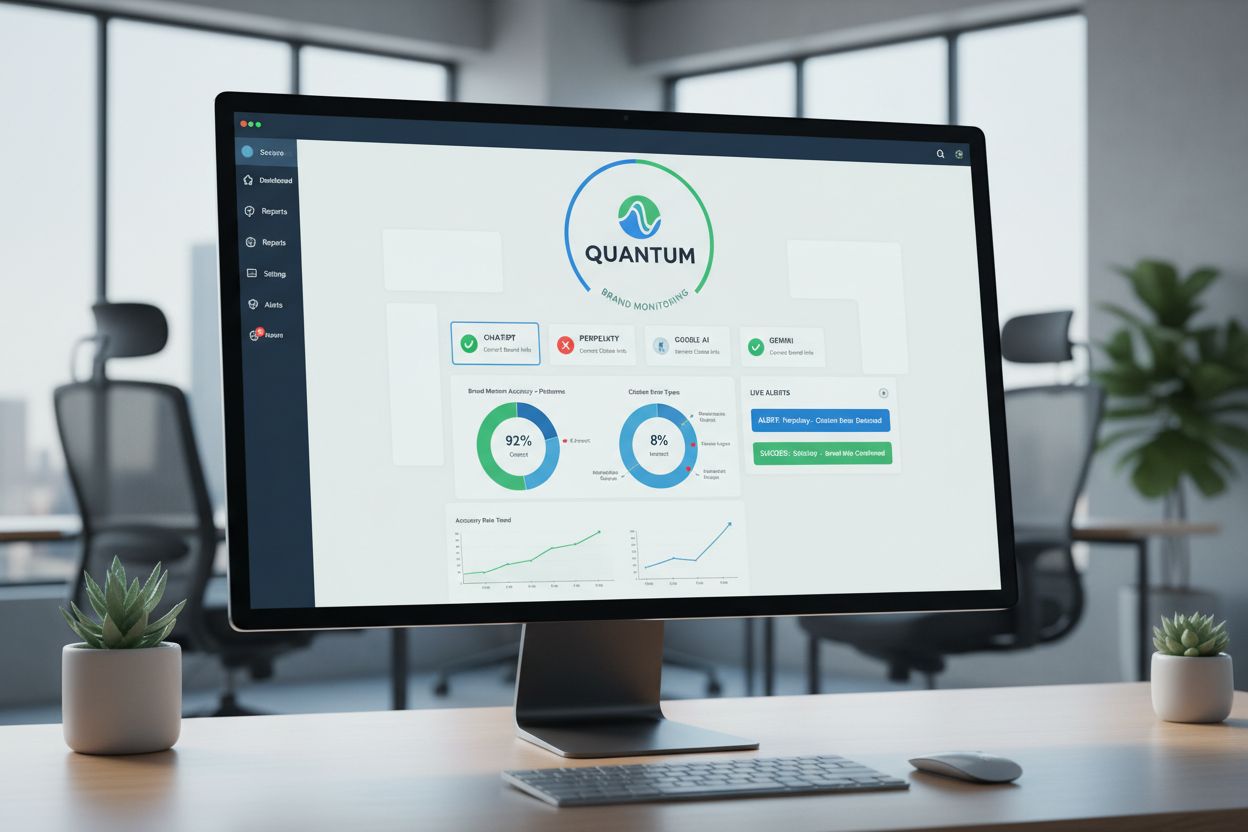
The platform provides detailed insights into which sources AI is citing about your brand, how frequently misinformation appears, and which AI platforms are most problematic. You get real-time alerts when new inaccuracies emerge, giving you the “why” and “where” while you decide whether it needs an immediate correction or fits into your longer-term authority-building work. AmICited’s competitive analysis feature shows how your brand’s AI representation compares to competitors, revealing opportunities to gain market advantage through better AI visibility. By pairing AmICited’s visibility with the strategies above, you transform brand protection from a reactive crisis management exercise into a proactive, data-driven process. The competitive advantage is clear: brands that understand and manage their AI presence will outpace those that ignore it.
Yasha is a talented software developer specializing in Python, Java, and machine learning. Yasha writes technical articles on AI, prompt engineering, and chatbot development.

Monitor how AI platforms reference your brand in real-time. Spot misinformation patterns before they damage your reputation and stay ahead of competitors.
Learn how to identify and correct incorrect brand information in AI systems like ChatGPT, Gemini, and Perplexity. Discover monitoring tools, source-level correc...

Learn effective strategies to identify, monitor, and correct inaccurate information about your brand in AI-generated answers from ChatGPT, Perplexity, and other...
Community discussion on protecting brand reputation in AI-generated answers. Real experiences from marketers dealing with brand misrepresentation, outdated info...
Cookie Consent
We use cookies to enhance your browsing experience and analyze our traffic. See our privacy policy.