


Cannibalization Detection for Search Queries
Cannibalization Detection identifies queries for which more than one URL ranked during a selected period on Google Search Console or Bing Webmaster Tools. It shows the trend, ranks the query list by severity or competition, and opens the URL-level detail where impression share, clicks, CTR, positions, volatility, and leadership flips can be inspected together.
Measure Query URL Competition
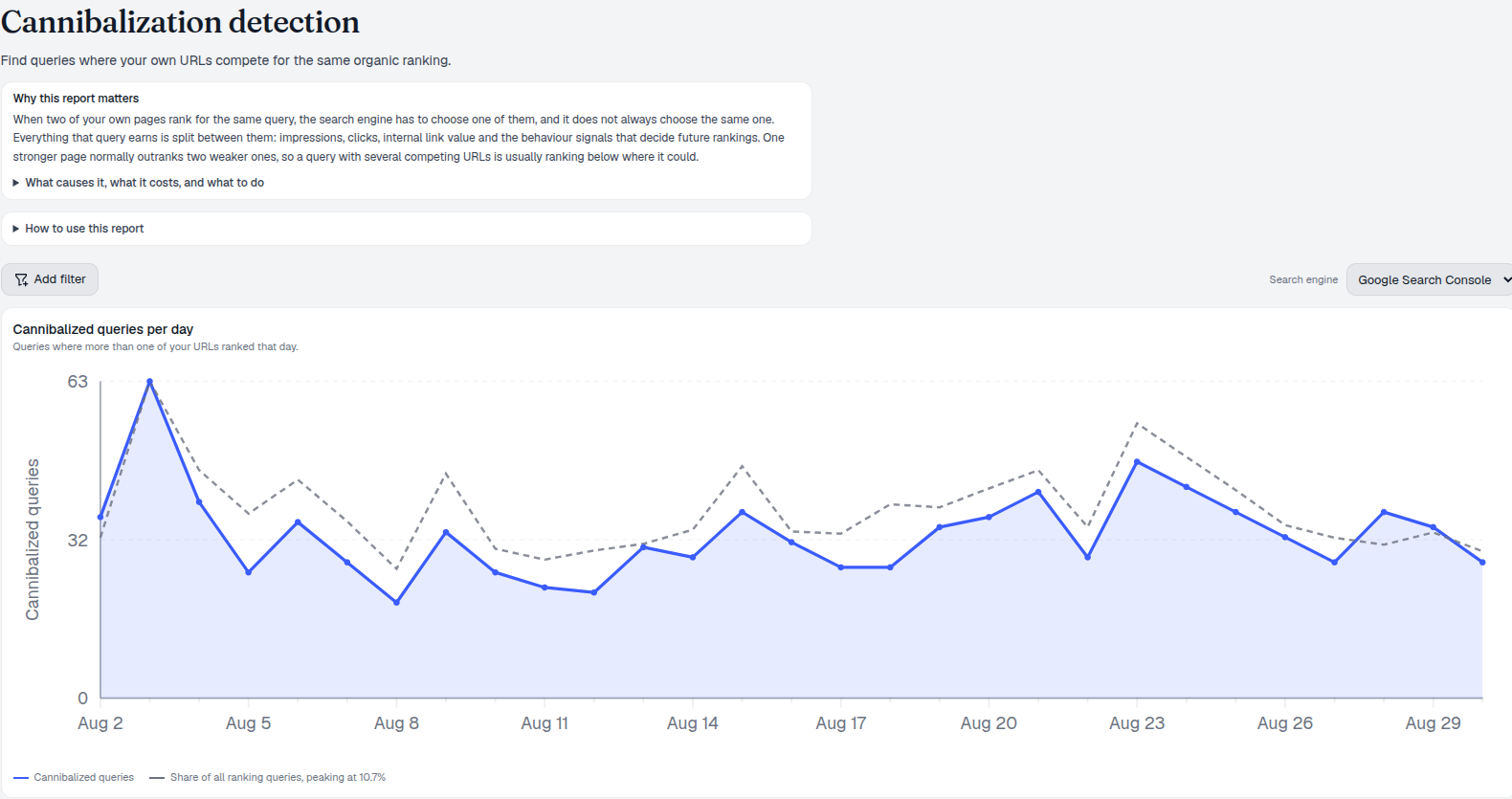
The opening trend counts cannibalized queries by day and pairs that count with every query that ranked on the same day. Filters from the list apply to the trend as well, so the chart describes the same scope a user is about to investigate. Choose a single platform because Google and Bing have different result sets and cannot be combined into one URL-competition claim.
- Google Search Console or Bing Webmaster Tools is selected explicitly.
- Date range and filters shape both the trend and list.
- Daily total queries provide the denominator for the cannibalized count.
- An empty state can mean no competing URLs for the chosen engine, range, and filters.
For an SEO expert, a sustained share can justify a content architecture review. For a domain owner, it is a way to distinguish a few normal overlaps from a recurring pattern worth paying attention to.
Review Cannibalization by Query
The query table can sort by severity or competition and page through the matched set. It includes URL count, impressions, clicks, CTR, average position, whether the top URL flipped, and the number of flips. An optional comparison window adds prior values so a team can see whether overlap became broader or more volatile.
Open a query to see each competing URL. The detail separates the current winner and loser, shows impression share and daily positions, and reports position volatility rather than implying a single average rank tells the whole story. Bubble and ranked-bar views make the URL distribution easier to scan, while the raw values remain available.
A query may have normal multi-URL visibility because intents differ, SERP layouts change, or a branded and informational page both have a legitimate role. The report surfaces the evidence; it does not prescribe consolidation, redirects, or canonical changes.
Prioritize Cannibalization Reviews
SEO specialists can compare URLs’ audience, titles, internal links, canonicals, and conversion value before deciding whether to clarify intent or merge work. Domain owners can use flips and material impression share to ask which page should represent the business, rather than changing every overlapping pair.
- A flip is a change in the leading URL, not a ranking-quality score.
- Positions are impression-weighted, so they summarise observed impressions rather than every possible search.
- URL-level daily points retain the time pattern behind the average and volatility measure.
- Comparison metrics are null when no comparison was requested, which is different from zero prior competition.
Use the report to make a short review queue, then validate search intent and page value before altering a site structure.
engines supported, one selected at a time
Find the queries with multiple ranking URLs, then decide whether the overlap is useful, unstable, or worth resolving.
Explore Google Search QueriesReview Competing Search URLs
Trend, query list, and URL-level evidence for an investigation that stays grounded in observed rankings.
Ready to inspect where your pages compete in search?
Free check · 7-day trial · card required