


Dropshipping
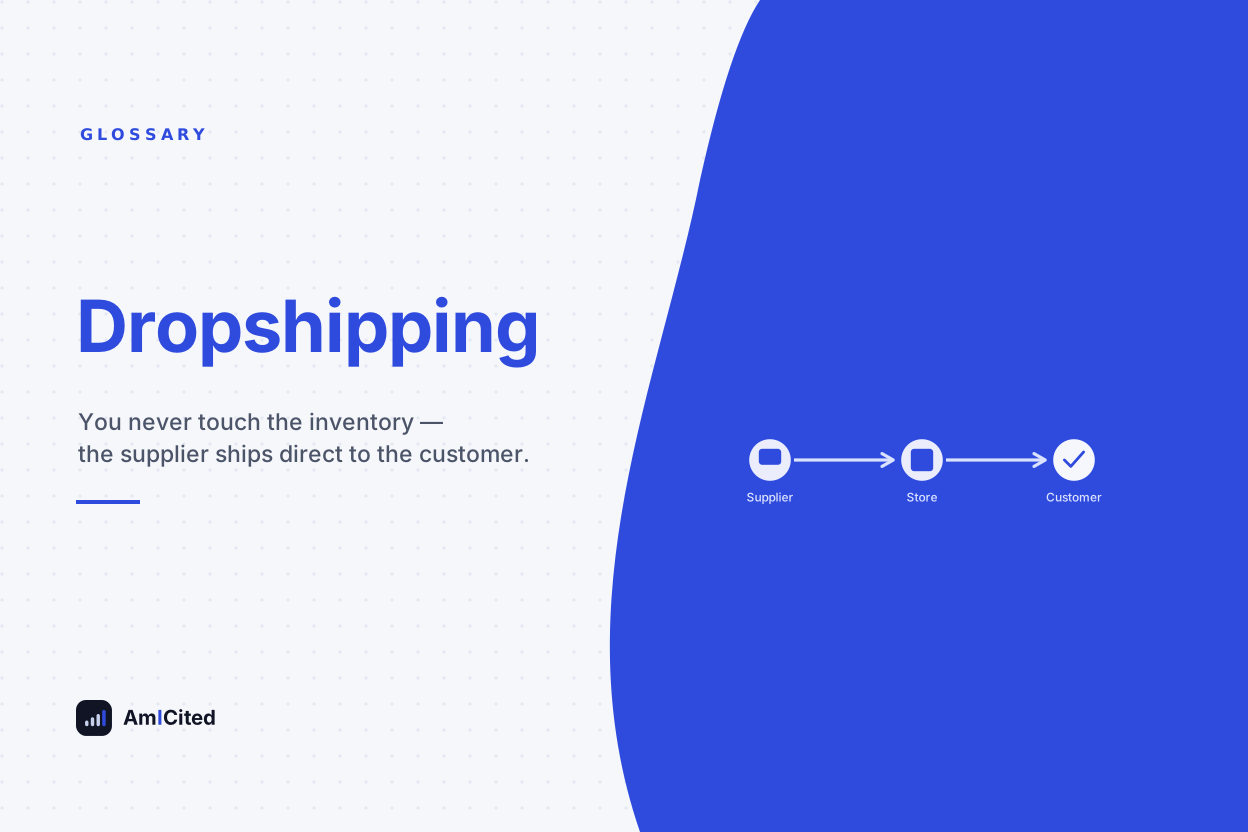
Dropshipping is a retail fulfillment model where a store sells products without holding inventory. When a customer places an order, the store forwards it to a third-party supplier who ships the item directly to the customer, letting the seller operate without warehousing or upfront stock purchases.
Definition of Dropshipping
Dropshipping is an order fulfillment model in which a retailer sells products online without ever holding physical inventory. Instead, when a customer places an order on the retailer’s store, the retailer forwards the order details and payment to a third-party supplier or manufacturer, who packs and ships the product directly to the customer under the retailer’s branding (or, in many cases, with no branding at all). The retailer’s role is essentially storefront, marketing, and customer service — the supplier handles warehousing, packing, and shipping logistics. This model lowers the barrier to entry for starting an online store dramatically, since a founder does not need capital to purchase inventory upfront or space to store it. Platforms like Shopify, WooCommerce, and apps such as Oberlo-successor tools, Spocket, and CJdropshipping made dropshipping accessible to non-technical founders over the past decade, turning it into one of the most searched business models in e-commerce.
How Dropshipping Works
The mechanics of dropshipping follow a consistent sequence regardless of platform. First, a retailer lists products sourced from a supplier’s catalog on their own storefront, typically marking up the supplier’s wholesale price to set a retail price. Second, a customer browses the store and places an order, paying the retail price through the store’s checkout. Third, the retailer places a matching order with the supplier, paying the supplier’s wholesale price and providing the customer’s shipping address. Fourth, the supplier packs and ships the product directly to the customer, often within a branded or unbranded package depending on the supplier relationship.
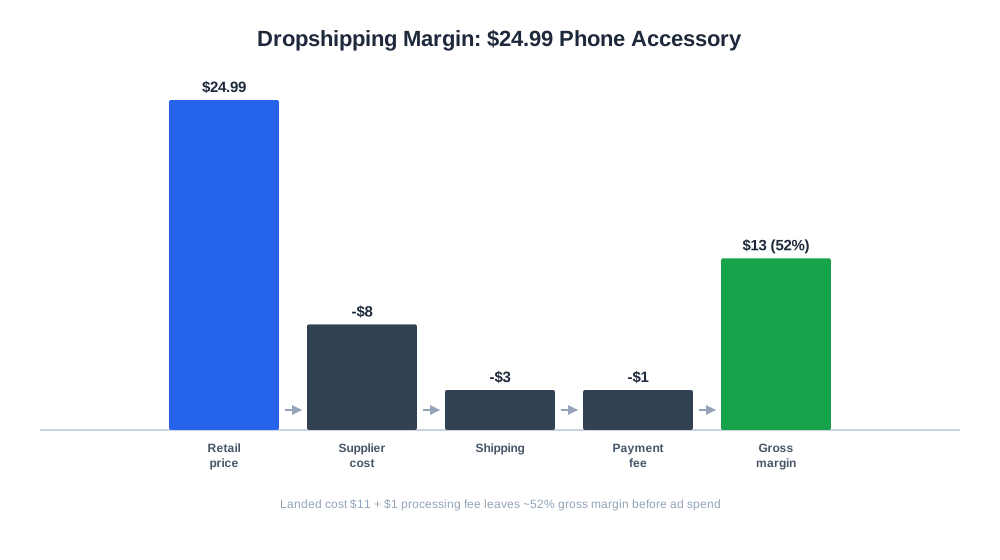
A worked example: a retailer lists a phone accessory at $24.99. The supplier charges the retailer $8 per unit plus $3 shipping, for a landed cost of $11. After payment processing fees of roughly $1, the retailer’s gross margin on that sale is around $13, or about 52% of the retail price — before accounting for advertising spend, which in competitive dropshipping niches can consume a large share of that margin.

Ready to Monitor Your AI Visibility?
Track how AI chatbots mention your brand across ChatGPT, Perplexity, and other platforms.
Why Dropshipping Matters for E-commerce Brands
Dropshipping matters because it fundamentally changes the risk profile of starting and running an online store. Without inventory to purchase upfront, a founder can test dozens of product ideas with minimal capital, quickly abandoning ones that don’t sell and doubling down on winners. This makes dropshipping a common entry point for new e-commerce entrepreneurs and a useful testing mechanism even for established brands exploring new product categories before committing to bulk inventory purchases.
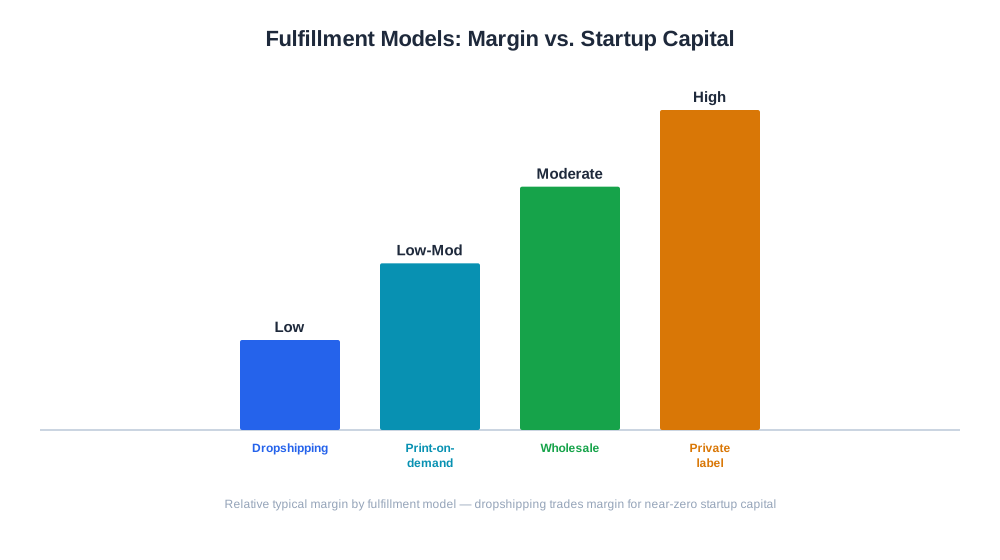
The tradeoff is control. Retailers depend on supplier reliability for shipping speed, product quality, and stock availability — none of which they directly manage. Shipping times from many international dropshipping suppliers can run one to three weeks, which is a poor fit for customers expecting the two-day delivery windows set by larger retailers. Margins are also typically thinner than in wholesale or private-label models, since suppliers price in their own margin for taking on fulfillment risk.
Dropshipping vs. Wholesale vs. Private Label
| Model | Inventory Risk | Typical Margin | Control Over Fulfillment | Startup Capital |
|---|---|---|---|---|
| Dropshipping | None — supplier holds stock | Lower | Low — depends on supplier | Very low |
| Wholesale | Retailer holds stock, bought in bulk | Moderate to high | High — retailer ships | Moderate to high |
| Private Label | Retailer holds stock, custom branded | High | High — retailer controls branding and shipping | High |
| Print-on-demand | None — item made per order | Lower to moderate | Low to moderate | Very low |
Stay Updated on AI Visibility Trends
Get the latest insights on AI mentions, brand monitoring, and optimization strategies.
Dropshipping and AI-Driven Commerce
As AI shopping assistants like ChatGPT Shopping, Perplexity Shopping, and Amazon Rufus increasingly summarize product options and shipping expectations for consumers, dropshipping stores face a new visibility challenge: these assistants often surface delivery time and price comparisons directly in their answers, which can expose the longer shipping windows typical of dropshipped products relative to competitors holding local stock. Stores that dropship successfully in an AI-mediated shopping environment tend to be transparent about realistic delivery windows on their product pages, since AI systems that crawl and cite store content will reflect whatever information is published rather than optimistic assumptions.
On the analytics side, dropshipping’s thin, variable margins make accurate financial tracking more important than in models with fixed inventory costs. AmICited’s eshop reporting tools reconcile order data against actual payment and ad-spend records, which matters for dropshippers whose true per-order profitability shifts constantly with supplier pricing, currency conversion, and shipping surcharges that a simple markup calculation would miss.
Best Practices for Dropshipping
- Vet suppliers directly before listing products — order samples yourself to verify quality and real shipping times.
- Set customer expectations clearly on product pages, including realistic delivery windows rather than generic “3-5 business days” claims that don’t match supplier reality.
- Track true per-order margin, not just the retail-minus-wholesale markup, factoring in payment processing, return handling, and advertising cost.
- Diversify suppliers for best-selling products so a single stockout or price change doesn’t take down your top revenue line.
- Build brand differentiation — packaging inserts, customer service quality, or niche curation — since product-level differentiation is often impossible when competitors source from the same supplier catalog.
- Monitor supplier reliability metrics over time; a supplier whose fulfillment speed or quality degrades can quietly erode customer trust before it shows up in obvious complaint volume.
Common Dropshipping Mistakes
A common failure mode is choosing products based purely on trending social content without checking whether the margin after supplier cost, shipping, and advertising spend leaves anything for the business — a product that looks viral can still be unprofitable once true landed cost is calculated. Another frequent mistake is underestimating shipping time communication: customers who receive a product two weeks after ordering with no warning tend to file chargebacks and leave negative reviews, both of which damage a store’s standing with payment processors and future customers alike. Some new dropshippers also over-rely on a single supplier for their entire catalog, which creates an existential risk if that supplier raises prices, runs out of stock, or simply stops responding — diversifying supplier relationships early avoids this trap. Finally, many dropshipping stores fail to reconcile what a supplier actually charged against what the store’s own accounting assumes, since supplier invoices, currency conversion, and shipping surcharges can drift from the assumed markup over time; regular reconciliation between order revenue and true supplier cost catches this before it silently compresses margin across the whole catalog.