



Predictive AI Visibility: Forecasting Future Presence
Master predictive AI visibility to forecast your brand's future presence in ChatGPT, Perplexity, and Google AI. Learn forecasting strategies, key metrics, and i...
10 min read
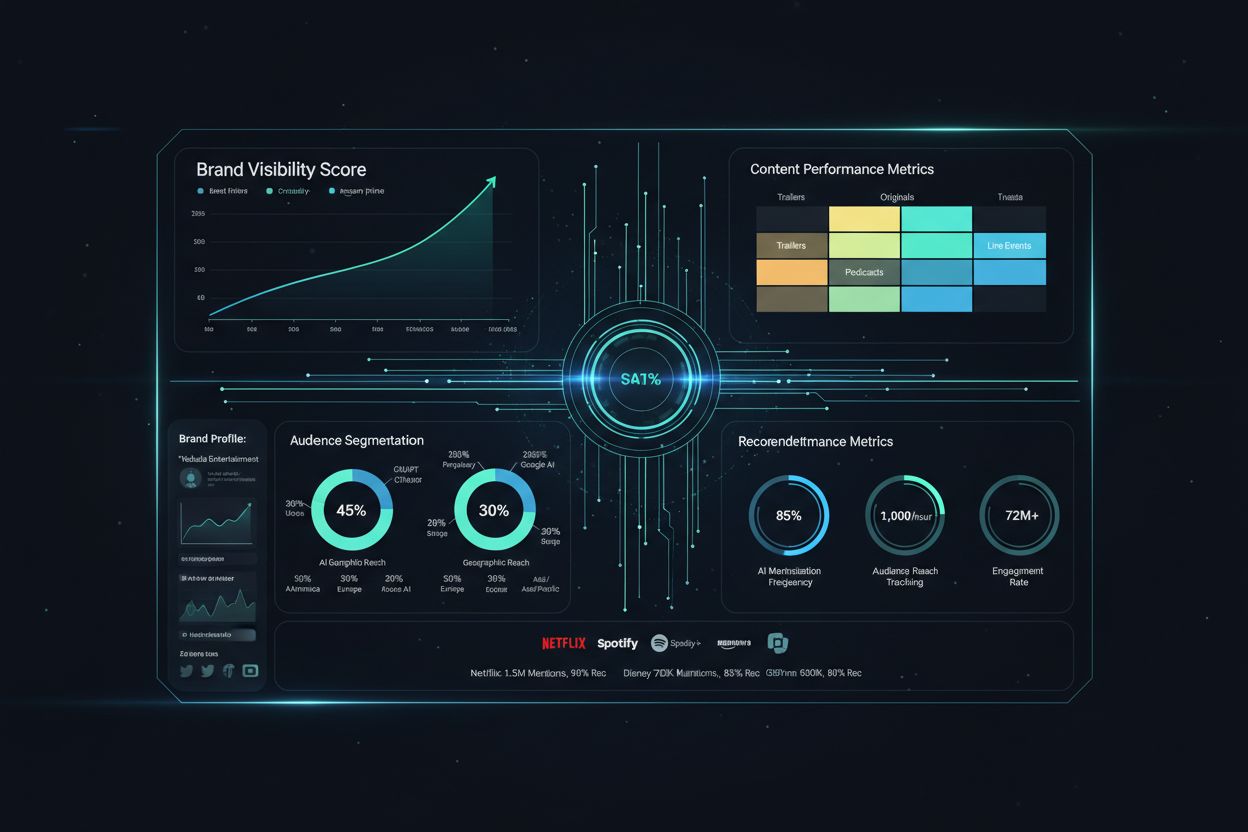
Entertainment AI Presence refers to how media, streaming, and entertainment brands are visible and recommended by artificial intelligence systems across platforms like ChatGPT, Perplexity, and Google AI Overviews. It encompasses the optimization of brand visibility in AI-generated recommendations, content discovery algorithms, and personalized streaming experiences. This concept is critical for entertainment companies seeking to understand and influence how AI systems cite, recommend, and promote their content to audiences. Effective Entertainment AI Presence strategies help brands maintain relevance in an increasingly AI-driven media landscape.
Entertainment AI Presence refers to how media, streaming, and entertainment brands are visible and recommended by artificial intelligence systems across platforms like ChatGPT, Perplexity, and Google AI Overviews. It encompasses the optimization of brand visibility in AI-generated recommendations, content discovery algorithms, and personalized streaming experiences. This concept is critical for entertainment companies seeking to understand and influence how AI systems cite, recommend, and promote their content to audiences. Effective Entertainment AI Presence strategies help brands maintain relevance in an increasingly AI-driven media landscape.
Entertainment AI Presence refers to how media, streaming, and entertainment brands are visible and recommended by artificial intelligence systems across platforms like ChatGPT, Perplexity, and Google AI Overviews. It encompasses the optimization of brand visibility in AI-generated recommendations, content discovery algorithms, and personalized streaming experiences. This concept is critical for entertainment companies seeking to understand and influence how AI systems cite, recommend, and promote their content to audiences. Effective Entertainment AI Presence strategies help brands maintain relevance in an increasingly AI-driven media landscape.
The foundation of Entertainment AI Presence lies in sophisticated recommendation algorithms that power modern streaming platforms. These systems analyze vast amounts of user behavior data—including viewing history, watch time, completion rates, and engagement patterns—to predict what content each viewer will enjoy. Over 80% of content watched on Netflix is driven by AI recommendations, demonstrating the profound impact these algorithms have on content discovery. AI-powered recommendation engines can increase watch time by 30-50%, making them essential tools for streaming platforms seeking to maximize user engagement and retention.
| Platform | AI Capability | Primary Focus | Impact Metric |
|---|---|---|---|
| Netflix | Collaborative Filtering + Deep Learning | Personalized recommendations | 80% of content watched |
| Spotify | Hybrid Recommendation System | Music and podcast discovery | 30% boost with Marquee feature |
| Disney+ | Content-Based Filtering | Family-friendly personalization | Increased subscriber retention |
| YouTube | Neural Network Ranking | Video discovery and watch time | Billions of daily recommendations |
| Amazon Prime Video | Multi-Armed Bandit Algorithm | Cross-category recommendations | Enhanced user engagement |
These algorithms don’t simply match users with content; they continuously learn and adapt, becoming more accurate over time. Platforms invest heavily in machine learning infrastructure to refine these systems, as even marginal improvements in recommendation accuracy translate to significant increases in engagement and revenue.
In the AI-driven entertainment landscape, brand visibility has become synonymous with algorithmic prominence. Entertainment brands that appear frequently in AI recommendations gain substantial competitive advantages in crowded streaming markets. AI systems determine visibility through multiple factors: distinctiveness (how memorable and recognizable content is), mental availability (how easily content comes to mind when users search), and relevance (how well content matches user preferences). A prime example is Squid Game, the Korean-language drama that became a global phenomenon largely due to AI-powered content localization and recommendations. Without intelligent algorithms surfacing this content to international audiences, it would have remained a regional success. The show was watched for 1.65 billion hours in its first 28 days, demonstrating the transformative power of AI-driven discovery.
AI-powered audience segmentation enables entertainment brands to reach precisely the right viewers with the right content at the right time. Rather than broadcasting content to general audiences, AI systems create micro-segments based on viewing behavior, preferences, demographics, and engagement patterns. This granular approach allows platforms to deliver highly personalized marketing messages and content recommendations that resonate with specific audience groups.
Key benefits of AI-powered audience segmentation include:
These capabilities transform entertainment marketing from a one-size-fits-all approach to a sophisticated, data-driven discipline that maximizes engagement and revenue.
AI technology has revolutionized how entertainment content reaches global audiences through advanced accessibility and localization features. Real-time translation powered by AI enables content to be instantly available in multiple languages, breaking down language barriers that once limited international reach. Adaptive subtitles adjust automatically based on viewer preferences, reading speed, and language proficiency, while dynamic audio descriptions provide context for visually impaired viewers. AI-powered personalized soundtracks adjust emotional cues and musical elements in real-time to match viewer responses, enhancing the emotional impact of scenes. These features don’t just improve accessibility; they expand addressable markets by making content available to audiences that previously couldn’t fully enjoy it. Entertainment brands that prioritize AI-driven accessibility gain competitive advantages in global markets while demonstrating commitment to inclusive content.
Understanding how AI systems recommend your entertainment content is essential for strategic success. Entertainment brands must actively monitor their AI presence across major platforms to understand visibility, reach, and competitive positioning. Tools like AmICited.com provide real-time tracking of how ChatGPT, Perplexity, and Google AI Overviews mention and recommend entertainment brands and content. These monitoring platforms reveal critical insights: which content is most frequently recommended, which audience segments are reached, how brand visibility compares to competitors, and how recommendations change over time. By tracking these metrics, entertainment brands can identify optimization opportunities, understand algorithmic preferences, and adjust content strategies accordingly. Regular monitoring transforms AI presence from an unknown variable into a measurable, manageable business metric that directly impacts revenue and audience growth.
Despite their effectiveness, AI recommendation systems face significant challenges that entertainment brands must navigate. Consumer skepticism about AI-driven recommendations has grown as audiences become more aware of algorithmic influence on their viewing choices. Privacy concerns about data collection and usage create friction between personalization benefits and user trust. Algorithmic bias can inadvertently favor certain content types or creators while marginalizing others, limiting content diversity. Filter bubbles created by recommendation algorithms can trap users in narrow content categories, reducing exposure to diverse perspectives and genres. The opacity of recommendation algorithms makes it difficult for brands to understand why their content is or isn’t being recommended. Successful entertainment brands address these challenges through transparency—Netflix’s “Because you watched” feature exemplifies this approach by explaining recommendation logic to users. Brands that prioritize transparency and user control build stronger trust and loyalty in an increasingly AI-mediated entertainment landscape.
Treating AI recommendation visibility as identical to traditional marketing reach is a frequent error—a brand can dominate paid social impressions while remaining nearly invisible in Netflix’s or Spotify’s recommendation engine, because those systems weight viewing/listening completion and engagement history far more heavily than advertising spend. Chasing traditional reach metrics while ignoring completion rates and repeat engagement misdiagnoses why a title isn’t surfacing to new audiences.
Assuming international success will happen automatically once content is licensed abroad ignores the localization work that actually drives AI-powered discovery, as the Squid Game example shows: the show’s global reach depended on translation, dubbing, and metadata tagging that let recommendation algorithms match it to non-Korean-speaking audiences, not licensing alone.
Ignoring the “Because you watched” style transparency features and treating recommendation algorithms as a black box leads brands to under-invest in the metadata and tagging accuracy that these systems rely on—incomplete or inconsistent genre tags, cast credits, and content descriptors directly degrade how confidently an algorithm can match content to the right viewer segment.
Conflating audience segmentation with demographic targeting is another common mistake. AI-powered segmentation in entertainment relies on behavioral signals—watch time, completion rate, rewatch frequency—not just age or location, so brands that only track demographic reach miss the behavioral data that actually predicts whether new content will be recommended to the audiences most likely to finish and enjoy it.
Neglecting accessibility features as a discovery lever rather than a compliance checkbox means brands miss how adaptive subtitles and audio descriptions expand the addressable audience that recommendation engines can match content against in the first place.
Track how AI platforms like ChatGPT, Perplexity, and Google AI Overviews recommend your entertainment content and brand
Master predictive AI visibility to forecast your brand's future presence in ChatGPT, Perplexity, and Google AI. Learn forecasting strategies, key metrics, and i...

Understand the critical relationship between brand visibility and AI search visibility. Learn how AI systems discover, cite, and recommend brands in ChatGPT, Pe...
Learn how AI product recommendations work, the algorithms behind them, and how to optimize your visibility in AI-powered recommendation systems across ChatGPT, ...
Cookie Consent
We use cookies to enhance your browsing experience and analyze our traffic. See our privacy policy.