



First-Time Buyer
A first-time buyer is a customer making their very first purchase from a brand, as distinct from a returning customer with prior order history. Tracking first-time buyers separately from the overall customer base allows a business to measure acquisition effectiveness and early retention independently from repeat-purchase behavior. The products a first-time buyer chooses, and what happens after that first purchase, are strong predictors of long-term customer value.
Definition of First-Time Buyer
A first-time buyer is a customer completing their first purchase from a brand, distinguished in a store’s data from a returning customer, who has at least one prior order on record. This is a straightforward definition operationally — most ecommerce platforms can flag an order as a first purchase automatically based on whether the associated customer account or email has any earlier order history — but the distinction matters far beyond bookkeeping. First-time buyers and returning customers typically behave differently in ways that matter for both marketing and merchandising: a first-time buyer is, by definition, still forming their impression of the brand, while a returning customer has already made at least one positive enough judgment to come back. Treating both groups identically in reporting can obscure meaningful differences in conversion rate, price sensitivity, and average order value between the two.
How First-Time Buyer Metrics Are Used
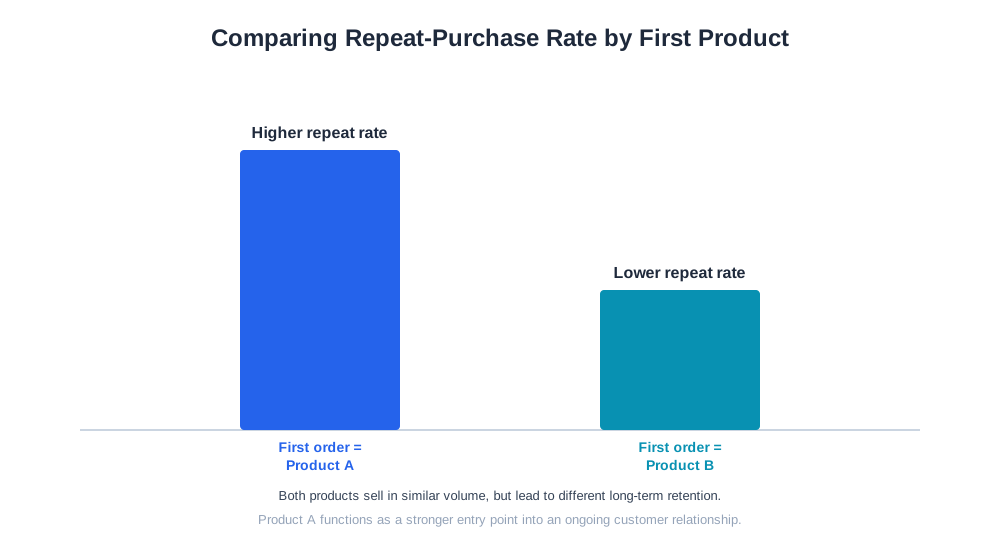
The most common application is measuring acquisition effectiveness separately from overall store performance: a marketing channel’s job is usually to generate first-time buyers, so its success should be judged against that specific conversion rate, not blended together with reorders from an already-loyal customer base. Beyond acquisition, first-time buyer behavior is a leading indicator of long-term customer value — the products chosen on a first order, the size of that first order, and how quickly (if at all) a second order follows are all measurable signals that correlate with whether a customer becomes a repeat buyer or a one-time purchaser. A store can, for example, compare the eventual repeat-purchase rate of first-time buyers who bought Product A against those who bought Product B, revealing that one product functions as a stronger entry point into an ongoing customer relationship than the other, even if both sell in similar volume.

Ready to Monitor Your AI Visibility?
Track how AI chatbots mention your brand across ChatGPT, Perplexity, and other platforms.
Why First-Time Buyer Data Matters for Ecommerce Brands
Every returning customer was, at some point, a first-time buyer, which makes the first purchase the actual foundation of long-term customer value rather than a separate, disconnected event from retention. A business that only tracks aggregate conversion rate and revenue has no way of knowing whether its acquisition spend is bringing in customers likely to stick around, or customers who buy once and never return — two outcomes that can look identical in a single month’s revenue figure but represent very different long-term value. Isolating first-time buyer data also makes it possible to evaluate specific interventions, like a welcome discount or an onboarding email sequence, against a cleanly defined baseline of what first-time buyers do without that intervention.
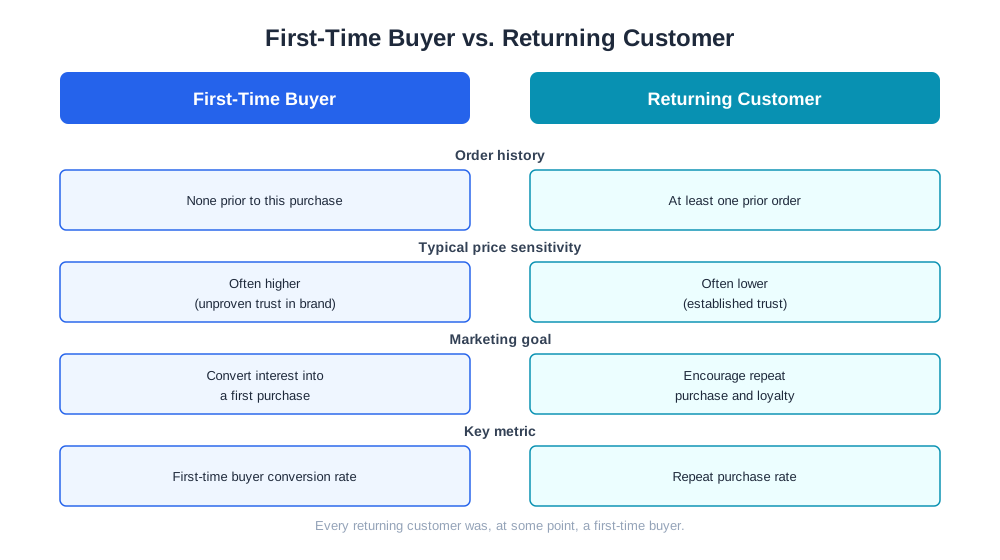
First-Time Buyer vs. Returning Customer
| Aspect | First-Time Buyer | Returning Customer |
|---|---|---|
| Order history | None prior to this purchase | At least one prior order |
| Typical price sensitivity | Often higher (unproven trust in brand) | Often lower (established trust) |
| Marketing goal | Convert interest into a first purchase | Encourage repeat purchase and loyalty |
| Key metric | First-time buyer conversion rate | Repeat purchase rate |
| Value uncertainty | High (future behavior unknown) | Lower (some behavior already observed) |
Stay Updated on AI Visibility Trends
Get the latest insights on AI mentions, brand monitoring, and optimization strategies.
First-Time Buyers and AI-Driven Commerce
As AI shopping assistants become a more common discovery channel, a growing share of first-time buyers may arrive at a store having never browsed it directly — instead landing on a specific product recommended by an AI assistant, with no prior brand context at all. This raises the stakes on getting that first purchase experience right, since a first-time buyer arriving through an unfamiliar, AI-mediated path may have even less established trust than one who found the brand through a more traditional search or referral. AmICited’s eshop_get_entry_products tool helps quantify which first purchases actually lead to a second one, giving a merchant evidence-based guidance on which products to feature prominently to new, unfamiliar visitors rather than relying on guesswork about what a first-time buyer is most likely to trust.
Best Practices for First-Time Buyers
- Track conversion rate, average order value, and repeat-purchase rate separately for first-time buyers versus the overall customer base
- Identify which products first-time buyers most often choose, and whether those choices correlate with a higher or lower repeat-purchase rate
- Time post-purchase follow-up messaging to match the product’s natural usage or reorder cycle, not a fixed generic schedule
- Evaluate acquisition channels specifically on the quality of first-time buyers they generate, not just raw conversion volume
- Treat a first-time buyer’s early experience (shipping speed, product quality, support responsiveness) as a retention lever, not just a one-off transaction to close