


Fulfillment Center
A fulfillment center is a warehouse facility where ecommerce orders are received, stored, picked, packed, and shipped to customers, typically operated by a third-party logistics provider on behalf of one or more merchants. Unlike a traditional distribution center, a fulfillment center is optimized for individual order processing rather than bulk shipments to retail stores. Merchants send inventory in, and the fulfillment center handles everything from that point until the package reaches the customer's door.
Definition of Fulfillment Center
A fulfillment center is a warehouse facility purpose-built to receive, store, and ship individual customer orders on behalf of an ecommerce merchant. Rather than moving goods in bulk to retail stores, a fulfillment center processes the “last mile before the last mile” — it picks specific items for a specific order, packs them, and hands the package off to a shipping carrier for delivery to the end customer. Fulfillment centers are typically operated by third-party logistics providers, though large retailers like Amazon and Walmart also run their own networks. The distinguishing feature of a fulfillment center is the granularity of its operations: instead of moving pallets, it processes thousands of individual, unique orders per day, each potentially containing a different combination of SKUs.
How a Fulfillment Center Works
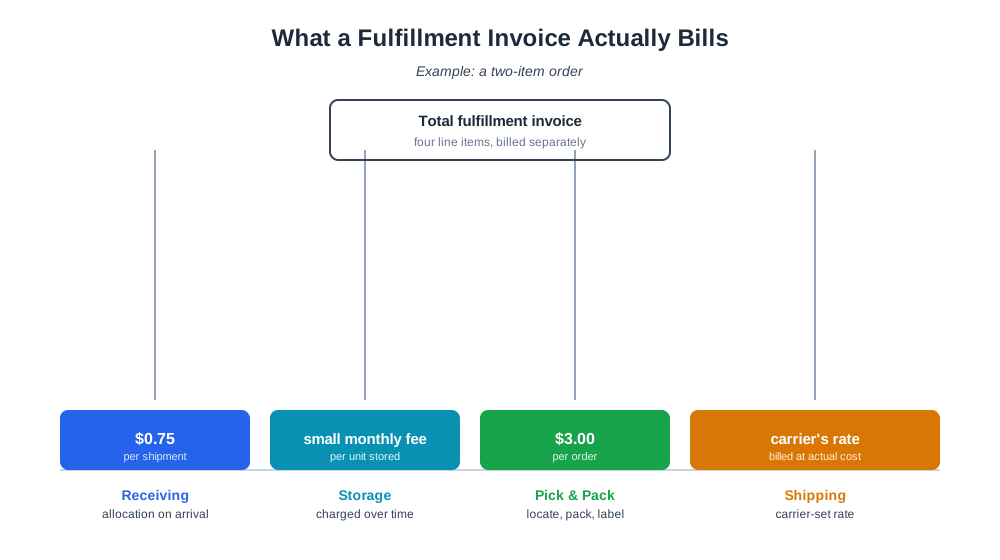
The typical flow starts with a merchant shipping inventory in bulk to the fulfillment center, which receives and checks it into the facility’s warehouse management system. When a customer places an order on the merchant’s storefront, that order is transmitted electronically to the fulfillment center, usually through an integration with the ecommerce platform. Warehouse staff (or increasingly, automated picking systems) then locate each item in the order, pack it according to the merchant’s specifications, generate a shipping label, and hand the package to a carrier. Most fulfillment centers charge for this in three separate line items: a receiving fee when inventory arrives, a storage fee based on how much space the inventory occupies over time, and a pick-and-pack fee per order processed, with actual carrier shipping cost billed on top. A merchant selling a two-item order might see a fulfillment invoice with a $0.75 receiving allocation, a small monthly storage charge, a $3 pick-and-pack fee, and the carrier’s shipping rate — all of which need to be accounted for to know the true cost of getting that order to the customer’s door.

Ready to Monitor Your AI Visibility?
Track how AI chatbots mention your brand across ChatGPT, Perplexity, and other platforms.
Why Fulfillment Centers Matter for Ecommerce Brands
For a growing store, in-house fulfillment eventually hits a ceiling: packing materials, staffing, shipping negotiation, and physical storage space all become bottlenecks well before revenue growth slows down. Fulfillment centers solve this by giving a merchant access to negotiated carrier rates (from bulk shipping volume across many merchants), distributed warehouse locations that shorten delivery times, and operational scale without the merchant having to hire and manage warehouse staff directly. This matters increasingly because delivery speed has become a genuine competitive factor — customers who expect 2-day shipping as a baseline, largely due to Amazon’s influence, will often abandon a cart or switch to a competitor if a smaller store can’t match that expectation. A well-chosen fulfillment center with multiple regional locations can put inventory within 1-2 days of most of a merchant’s customer base, something that’s difficult to replicate from a single in-house warehouse.
Fulfillment Center vs. Distribution Center vs. Warehouse
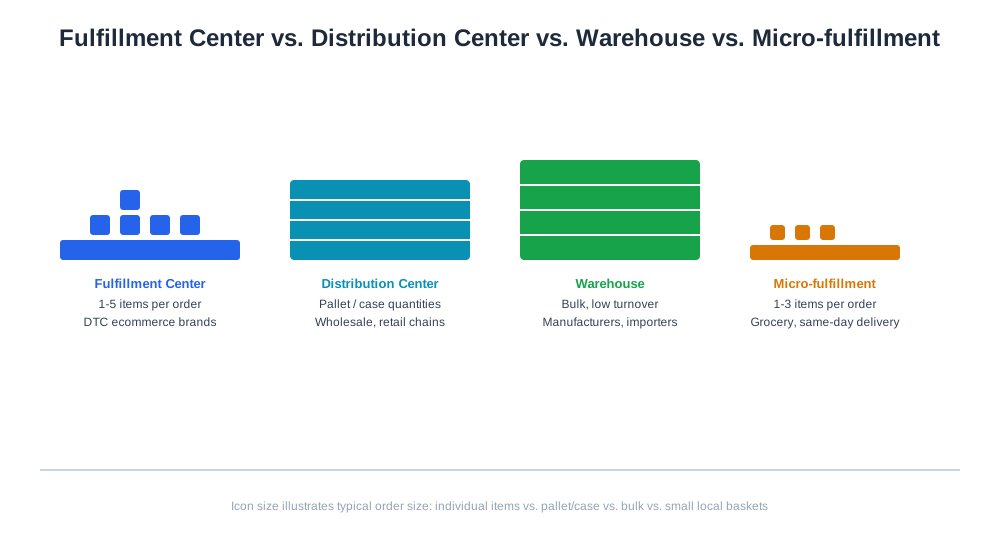
| Facility Type | Primary Function | Typical Order Size | Common User |
|---|---|---|---|
| Fulfillment Center | Individual order picking, packing, shipping direct to consumer | 1-5 items per order | DTC ecommerce brands |
| Distribution Center | Bulk movement of goods to retail stores or other warehouses | Pallet or case quantities | Wholesale, retail chains |
| Warehouse | Long-term storage of inventory | Bulk, low turnover | Manufacturers, importers |
| Micro-fulfillment Center | Small, urban facility for very fast local delivery | 1-3 items per order | Grocery, same-day delivery brands |
Stay Updated on AI Visibility Trends
Get the latest insights on AI mentions, brand monitoring, and optimization strategies.
Fulfillment Centers and AI-Driven Commerce
As AI shopping assistants like ChatGPT Shopping and Amazon’s Rufus increasingly surface delivery-time estimates as part of the purchase decision, the fulfillment network behind a listing has started to matter for AI-mediated discovery, not just traditional storefront browsing. A product listing that can credibly promise 2-day delivery because it’s stocked in a well-distributed fulfillment network may be favored in AI-generated comparisons over an otherwise-identical product shipping from a single, distant warehouse. On the analytics side, merchants need visibility into what fulfillment actually costs per order, since fulfillment and shipping fees are one of the largest variable costs behind gross margin for a physical-goods ecommerce business. Tools that reconcile store orders against actual landed cost — including fulfillment fees — let a merchant see whether a given product line is still profitable once real fulfillment cost, not just product cost, is subtracted from revenue.
Best Practices for Choosing a Fulfillment Center
- Match the fulfillment network’s warehouse locations to where your actual customer base is concentrated, not just where the cheapest storage rate is offered
- Get a fee breakdown against your real order profile (average items per order, average SKU count) rather than relying on a generic published rate card
- Confirm integration compatibility with your ecommerce platform before committing, since manual order transmission defeats much of the value
- Ask about returns handling and restocking policy up front — reverse logistics fees are often underestimated
- Start with a small subset of SKUs or a single region before migrating an entire catalog, to validate accuracy and speed
- Track fulfillment cost per order over time, not just at onboarding, since fee schedules and shipping surcharges change
Common Fulfillment Center Mistakes
A common early mistake is signing with a fulfillment center based on its published per-order fee alone, without accounting for storage fees on slow-moving inventory — a SKU that sells slowly can accumulate storage charges that quietly erode margin far more than the pick-and-pack fee ever does. The fix is reviewing storage cost against actual inventory turnover for each SKU, not just the headline pick-and-pack rate. Another frequent issue is underestimating integration lead time: merchants assume connecting their store to a new fulfillment center is a same-week task, when in practice testing inventory sync, shipping rules, and packaging requirements can take several weeks, leaving a gap where orders risk delay if the switch isn’t staged carefully. A third mistake is treating all fulfillment centers in a network as interchangeable — inventory split unevenly across warehouse locations can mean an order gets shipped from a distant facility even when a closer one exists, simply because that’s where the stock happened to be allocated; solving this requires either better inventory distribution rules or accepting the added shipping cost and time as a known tradeoff. Finally, many merchants fail to reconcile fulfillment invoices against actual orders shipped, missing billing errors (duplicate charges, incorrect weight-based shipping tiers) that a monthly audit against order data would catch.