


Marketplace Fees
Marketplace fees are the charges a platform like Amazon, Etsy, or eBay deducts from a seller's revenue in exchange for access to its marketplace, typically including a referral or commission percentage, listing fees, and payment processing costs. They directly reduce the margin a seller keeps on every sale made through that channel.
Definition of Marketplace Fees
Marketplace fees are the charges a third-party sales platform — such as Amazon, Etsy, eBay, or Walmart Marketplace — deducts from a seller’s revenue in exchange for access to its audience, infrastructure, and payment systems. These fees typically combine several components: a referral or commission percentage taken from each sale, sometimes a flat listing fee charged regardless of whether the item sells, payment processing costs, and, for sellers who use the platform’s own fulfillment network, additional per-order fulfillment charges. Because these fees are deducted automatically as part of doing business on the platform, they function as a direct, ongoing reduction to margin on every marketplace sale.
How Marketplace Fees Work
Most marketplaces structure fees around a percentage-based commission tied to the final sale price, often varying by product category to reflect typical margins in that category. On top of the commission, a seller using the platform’s fulfillment service pays additional per-unit fees for storage, picking, packing, and shipping. Listing fees, where they exist, are usually small flat charges per item listed regardless of whether it sells, more common on platforms like Etsy than Amazon.
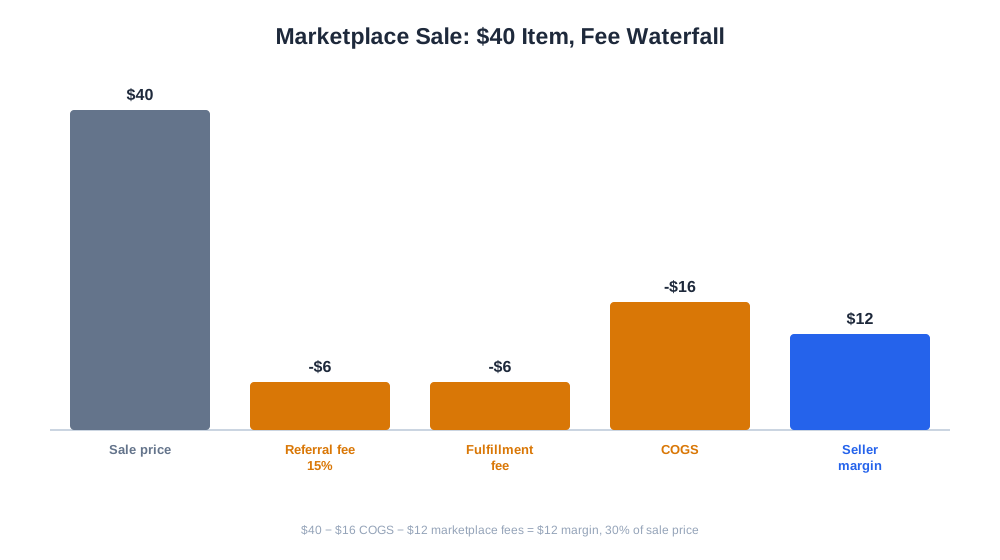
Worked example: a seller lists a $40 product on a marketplace with an 15% referral fee and uses the platform’s fulfillment service, which charges roughly $6 per order for storage and shipping on an item this size. Total marketplace fees per sale = $6 (referral, 15% of $40) + $6 (fulfillment) = $12. On a product with a $16 cost of goods, the seller’s margin after marketplace fees is $40 − $16 − $12 = $12, or 30% of the sale price — meaningfully lower than the margin the same product would generate sold directly through the seller’s own website, where no referral fee applies.

Ready to Monitor Your AI Visibility?
Track how AI chatbots mention your brand across ChatGPT, Perplexity, and other platforms.
Why Marketplace Fees Matter for E-commerce Brands
Marketplace fees can quietly erode margin to the point where a product that looks profitable on paper is barely breaking even once all platform charges are included. This makes it essential to calculate true per-channel margin rather than assuming the same product generates the same profit regardless of where it’s sold. It also affects pricing strategy: a seller listing identical products on their own site and on a marketplace often needs to price the marketplace listing higher to offset the fee, while staying competitive against other sellers on that same platform who are pricing in the same fees.
Marketplace Fees and AmICited’s Tools
AmICited’s eshop_get_cost_mix tool breaks revenue down against cost of goods sold and other cost drivers, giving sellers the visibility needed to see real, per-channel margin after marketplace fees are factored in, rather than judging channel performance on revenue alone.
Stay Updated on AI Visibility Trends
Get the latest insights on AI mentions, brand monitoring, and optimization strategies.
Marketplace Fees and Multi-Channel Selling
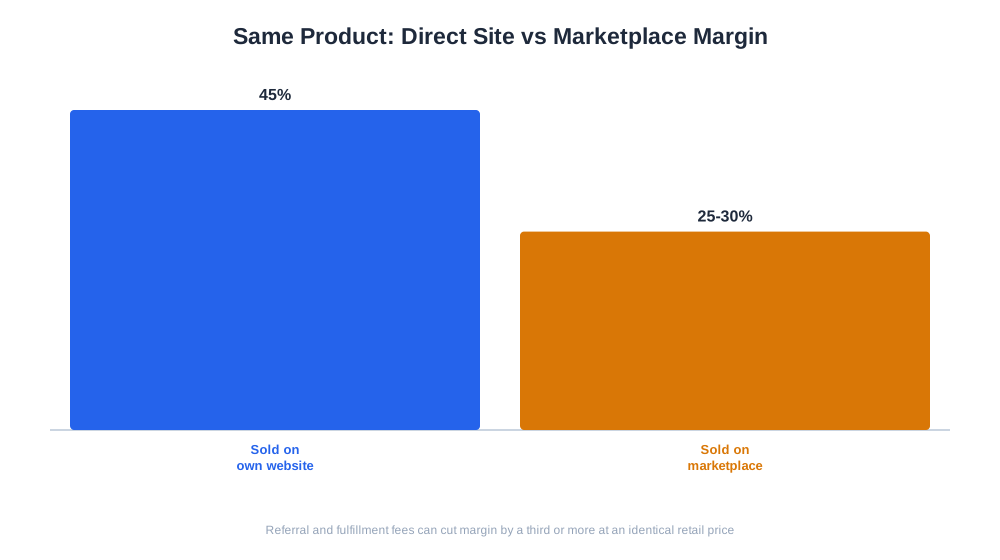
Sellers who list the same product across their own website and one or more marketplaces effectively run several different margin profiles for a single SKU at once. A product that returns a healthy 45% margin sold direct can easily fall to 25-30% once a marketplace’s referral and fulfillment fees are subtracted, even at an identical retail price. This gap matters most when deciding where to invest promotional budget or which channel to prioritize during a stock shortage — the channel with the highest revenue is not necessarily the one generating the most profit once fees are properly accounted for. It also affects how a seller should think about marketplace-exclusive discounts or coupons, since a discount stacked on top of an already fee-reduced margin can turn a marginally profitable sale into a loss.
Best Practices for Marketplace Fees
- Calculate true margin per channel, factoring in the specific fee structure of each marketplace separately from your own site
- Check category-specific commission rates before listing, since misclassifying a product category can mean paying a higher fee rate than necessary
- Price marketplace listings to account for the fee, rather than applying an identical price across every sales channel
- Periodically re-check marketplace fee schedules, since platforms adjust rates and fee structures over time
- Avoid stacking promotional discounts on marketplace listings without first checking the post-fee margin, since a discount that looks minor on a direct-sold item can erase profit entirely once fees are subtracted
Common Marketplace Fees Mistakes
A frequent mistake is pricing a marketplace listing identically to a direct-website listing without accounting for the fee difference, which quietly shrinks marketplace margin below what the seller assumes when reviewing overall revenue. Another common issue is misclassifying a product into a marketplace category with a higher commission rate than a more accurate category would carry, an error that’s easy to make at listing time and easy to overlook afterward since it doesn’t show up unless margin is checked channel by channel. Sellers also sometimes evaluate marketplace channel performance purely on revenue or unit volume, missing that a channel driving the most sales can simultaneously be the least profitable one once its specific fee structure is applied.