


- SEO copywriting is writing web pages that rank in search and get the reader to act, such as product, category, service and landing pages, plus their titles and meta descriptions.
- Start from the live results for your keyword: if they are product listings, a long guide will not fit, and if they are guides, a sales page will not.
- Answer the main question in the first lines, then add specific details, proof and a clear next step. AI answers lift clear, specific sentences more readily than vague marketing copy.
- Writing to a keyword density target still reads badly and gains nothing, because Google understands synonyms and context.
Where AmICited fits
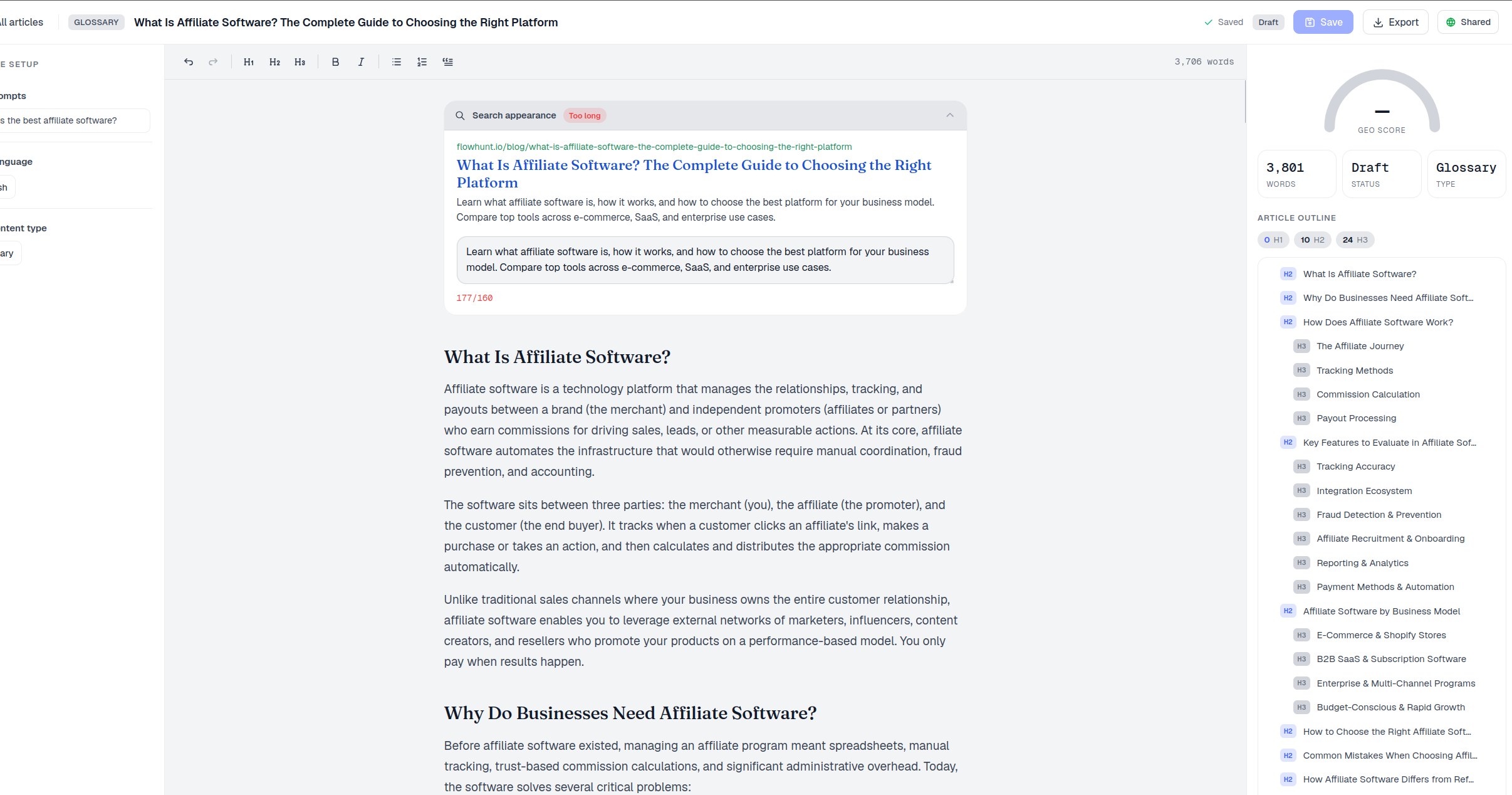
AmICited’s AI content generation starts from a prompt where competitors win in AI answers and drafts a page aimed at it, with a GEO score and a search appearance preview that checks the title and meta description length before you publish.
See AI content generation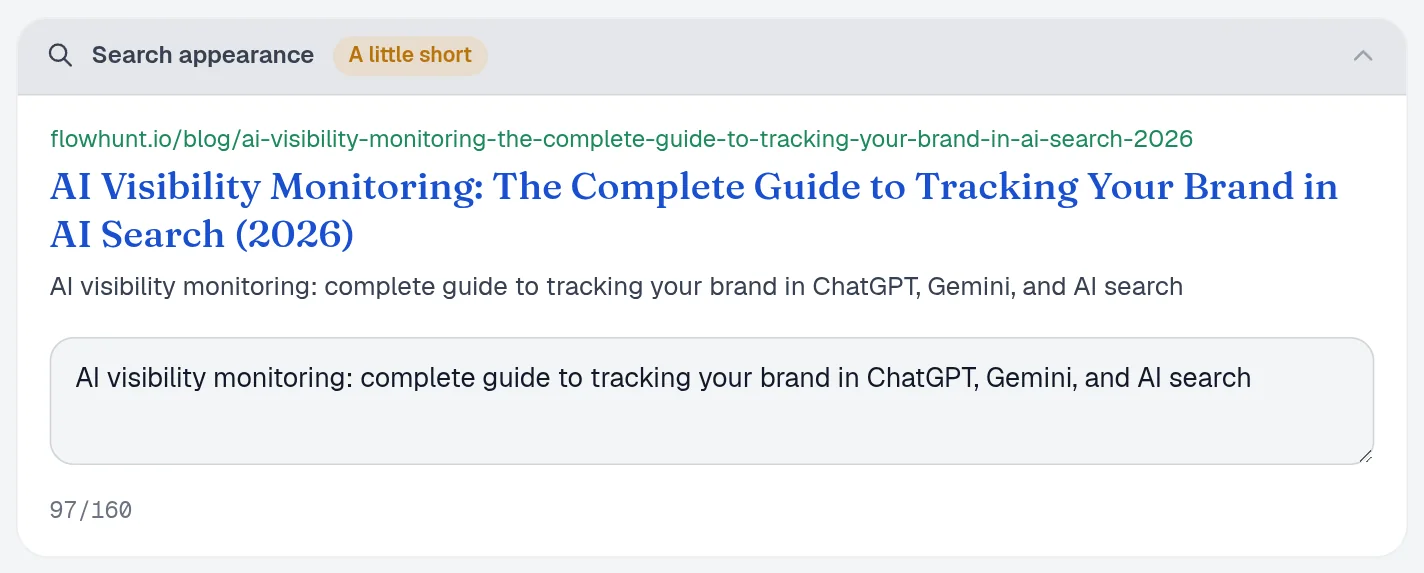
What Is SEO Copywriting?
SEO copywriting is the practice of writing web pages that both rank in search results and get readers to do something: buy, sign up, call or keep reading. It joins two skills that used to sit in separate teams. Classic copywriting is about persuasion. SEO is about being found. An SEO copywriter has to do both on the same page.
You see SEO copywriting on product and category pages, service and landing pages, homepages, and the title tags and meta descriptions that appear in Google. Agencies, in-house marketing teams and freelance writers all do it, usually with keyword research tools, Google Search Console data and a look at what already ranks for the target query.
How SEO Copywriting Works
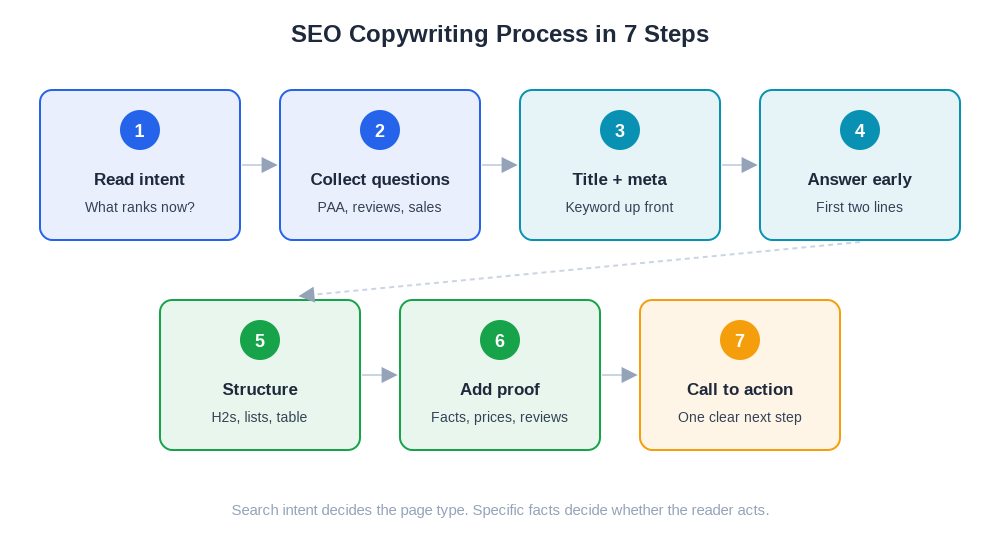
Good SEO copy starts before the first sentence. The process usually looks like this:
- Pick the target keyword and read its intent. Search the query and look at what ranks. If the top results are product listings, a 2,000-word guide will not fit. If they are guides, a sales page will not fit. Search intent decides the page type.
- Collect the questions the reader has. Use People Also Ask boxes, related searches, support tickets and sales calls. These become your headings and sections.
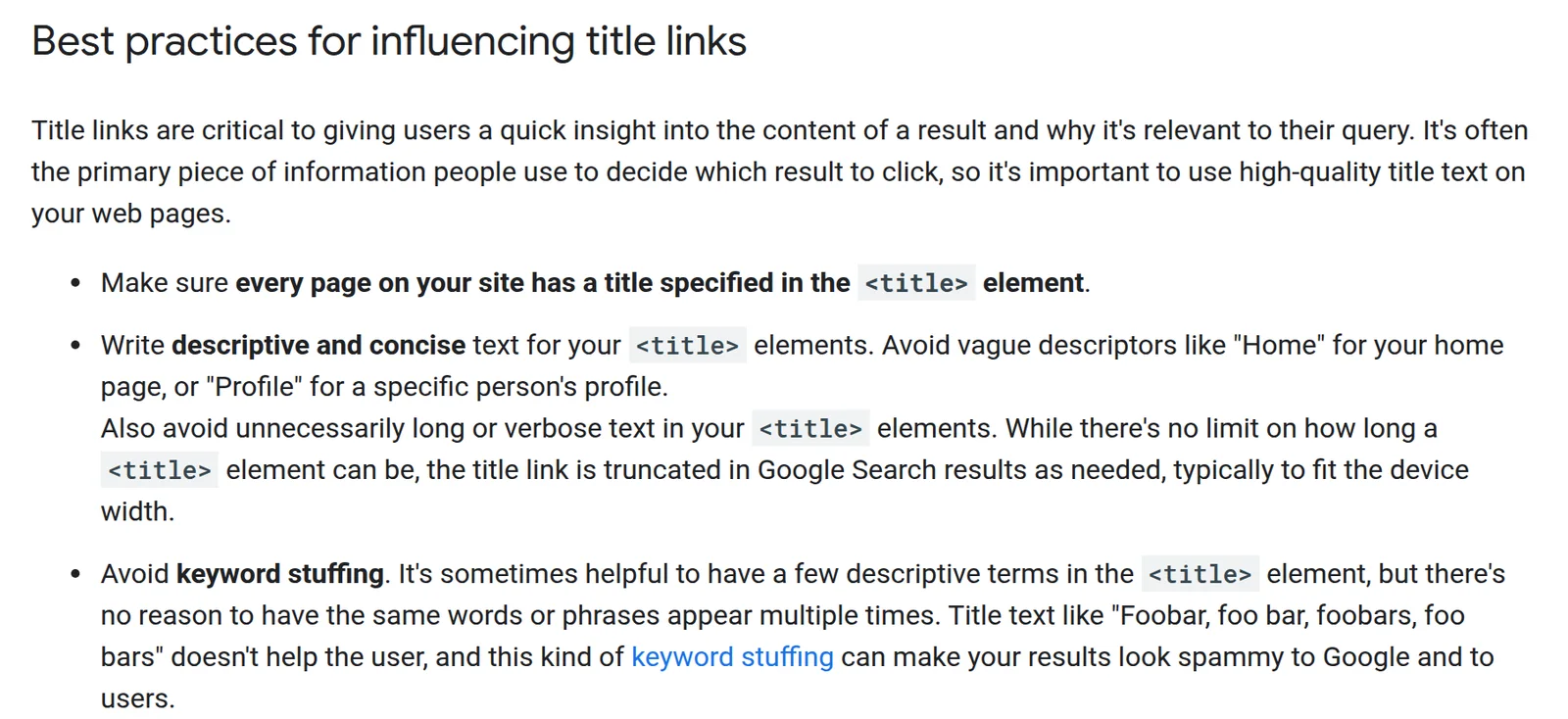
- Write the title and meta description. The title tag puts the main keyword near the front and gives a reason to click. The meta description sums up what the page offers.
- Answer early. Put the direct answer or the core offer in the first paragraph. Readers decide fast, and Google often pulls snippets from the top of the page.
- Structure for scanning. Use descriptive H2s, short paragraphs, lists and a table where comparison helps.
- Make the case. Add specifics: prices, dimensions, timelines, examples, proof such as reviews or case studies. Specific details are what persuade.
- Close with one clear action. A single call to action that fits the reader’s stage in the funnel.
Here is a quick example for the keyword “standing desk for small spaces”. A weak opening says “Welcome to our store, where we sell high-quality furniture.” A stronger one says “Our compact standing desks are 40 inches wide or less, fit a 5-foot wall, and raise from 25 to 50 inches in about 20 seconds.” The second matches the search, uses the keyword idea naturally, and gives the specific facts a buyer needs.
SEO Copywriting vs Content Writing vs Traditional Copywriting
The three disciplines overlap, and many writers do all of them. Their goals differ.
| SEO copywriting | Content writing | Traditional copywriting | |
|---|---|---|---|
| Main goal | Rank and convert | Inform, educate, build trust | Persuade and sell |
| Typical formats | Product, service, landing pages, titles, metas | Blog posts, guides, how-tos | Ads, emails, brochures, scripts |
| Keyword research | Central | Important | Rarely used |
| Length | Whatever the intent needs | Often longer | Usually short |
| Success measure | Rankings, clicks, conversions | Traffic, engagement, links | Response and sales |
In practice, the line between SEO copywriting and content writing is blurry. A buying guide can be both. What makes it SEO copywriting is that the page is built for a specific query and has a commercial job to do.
The same process scales down to small pieces of copy. A category page intro of 80 words still needs the keyword idea, a clear statement of what the category contains, and one reason to buy here rather than elsewhere. A meta description of 150 characters still needs a promise and a reason to click. SEO copywriting is less about length than about making every line earn its place for both the searcher and the search engine.
SEO Copywriting and AI Search
AI answers in ChatGPT, Perplexity, Gemini and Google AI Overviews pull sentences and facts from pages they can parse. Copy that states a clear answer in the first lines of a section, uses specific numbers and names, and avoids vague marketing language is easier for those systems to quote. The same habits that help a featured snippet help here.
If you want to know which prompts competitors win in AI answers and draft copy aimed at them, AI content generation starts from a losing prompt and produces a GEO-scored draft for review.

Stay Updated on AI Visibility Trends
Get the latest insights on AI mentions, brand monitoring, and optimization strategies.
Best Practices for SEO Copywriting
- Check the live search results for your keyword before writing, and match the format that ranks.
- Write an SEO title that puts the main keyword near the start and fits in about 50–60 characters.
- Answer the main question or present the core offer in the first two sentences.
- Use the reader’s words. Pull phrases from reviews, support emails and search queries.
- Replace adjectives with facts: dimensions, prices, delivery times, results.
- Keep one primary call to action per page, and repeat it near the end on longer pages.
- Update copy when the search results change. A page written for last year’s intent can slip without any technical issue.
Common SEO Copywriting Mistakes
The oldest mistake is still around: writing for a keyword density target. Copy that repeats “best cheap running shoes” ten times reads badly and gains nothing, because Google understands synonyms and context. The opposite mistake is just as common: beautiful brand copy that never uses the words people actually search, so the page has no chance to rank.
Other mistakes include burying the answer under a long intro, writing one generic page that tries to rank for several different intents, and copying manufacturer descriptions that appear on hundreds of other sites. Finally, many teams publish and never look again. Checking Search Console for queries the page ranks for, but does not mention, is one of the quickest ways to improve existing copy.